Abstract
Adolescents are growing up in a highly digital environment in which online technologies play a central role in shaping education, social interaction, and personal development. Although digital tools offer significant opportunities, they also expose young people to online risks such as harmful content, unsafe interactions, cyberbullying, and technology-related stress. These challenges highlight the need to foster digital resilience among adolescents, understood as the ability to navigate, manage, recover from, and adapt positively to adverse online experiences. This systematic review, conducted in accordance with PRISMA guidelines, synthesizes findings from 15 peer-reviewed studies published between 2021 and 2025 and retrieved from major academic databases, including Google Scholar, ERIC, EBSCO, and SpringerLink. The included studies represented qualitative (40%), quantitative (46.7%), and mixed-method (13.3%) designs and were conducted across North America, Europe, Asia, and Australia. The review aimed to examine how digital resilience is defined, which theories and models are used to explain it, and how these frameworks are applied in adolescent-focused research. The findings indicate that digital resilience is conceptualized as a psychological, behavioural, and socio-contextual process shaped by individual capacities, technological conditions, and social support systems. Frequently used theoretical perspectives include Psychological Resilience Theory, Bronfenbrenner’s Socio-Ecological Theory, and socio-technological models. The review highlights the need for stronger theoretical integration and more context-sensitive research to support healthy adolescent development in an increasingly digital world.
|
Published in
|
American Journal of Applied Psychology (Volume 15, Issue 2)
|
|
DOI
|
10.11648/j.ajap.20261502.13
|
|
Page(s)
|
53-63 |
|
Creative Commons
|

This is an Open Access article, distributed under the terms of the Creative Commons Attribution 4.0 International License (http://creativecommons.org/licenses/by/4.0/), which permits unrestricted use, distribution and reproduction in any medium or format, provided the original work is properly cited.
|
|
Copyright
|
Copyright © The Author(s), 2026. Published by Science Publishing Group
|
Keywords
Digital Resilience, Adolescents, Digital Well-being, Online Risk, Digital Literacy, Socio-ecological Model
1. Introduction
The immerse improvement in digital technologies and impact of social media is turning over the development of adolescents, and which would create a lot of space for learning new things, staying connected with the society, to be impressive, but the hidden fact is, also turning them over as victims of digital attacks and digital challenges. Digital natives or Gen z, whatever might be the appropriate term for this generational adolescent, move through a lot of hard and complex online/environment. These young minds often termed "digital natives," go through complex online environments where cyberbullying, infringement in private space, exposure to harmful content, and technology-related stress, cognitive impairment, memory manipulation, duplication of self-identity, have become toxic concerns affecting their psychological wellbeing and academic performance. Due to rapid increase in digital engagement, this would stimulate the need of identity formation, social development and which in turn would alert the inevitable need of digital resilience among adolescents. The research study made by
| [13] | Qi, C., & Yang, N. (2024). Digital resilience and technological stress in adolescents: A mixed-methods study of factors and interventions. Education and Information Technologies, 29, 19067–19113. https://doi.org/10.1007/s10639-024-12595-1 |
[13]
, the findings indicate an indirect relationship between digital resilience and stress induced by technology, that is adolescents with higher levels of digital resilience tend to experience lower levels of technology-induced stress, highlighting the protective role that digital coping skills may play in justifying the adverse effects of technology use across various life settings. The idea of digital resilience had gained more attention once after the increased recognition of challenges. This leads to define digital resilience as the capacity to predict, adapt to, and recover from adverse online experiences while maintaining healthy digital usage patterns. Digital resilience encompasses not only the ability to recognize and manage online risks but also the skills to recover constructively from negative digital experiences and continue engaging with technology in beneficial ways. Despite of the vital importance of digital resilience among young age people in this technological era, it is essential to unfold the, the theoretical foundations underlying digital resilience which remain fragmented across multiple disciplines, with limited weightage on its conceptualization, measurement, and practical applications in adolescent populations.
2. Conceptualizing Digital Resilience
The need of digital resilience
| [13] | Qi, C., & Yang, N. (2024). Digital resilience and technological stress in adolescents: A mixed-methods study of factors and interventions. Education and Information Technologies, 29, 19067–19113. https://doi.org/10.1007/s10639-024-12595-1 |
[13]
in the context of school education which could be understood as the ability to identify online risks, find out suitable solutions, possess the needed digital knowledge and skills, manage stress efficiently, and maintain improvement through self-efficacy. Digital resilience represents an evolution of formal resilience concepts, adapted to meet out the tailored challenges and opportunities present in digital environments. Formal resilience theory, is embedded in life span psychology and psychological research, and defines resilience as the ability to bounce back in times of adversity, meanwhile its adapting meaningfully with the unprecedented challenges that an individual face off. While in means of digital context this definition expands to encompass the specific challenges associated with technology use, including cyberbullying, digital addiction, information overload, privacy concerns, and technology-facilitated abuse, cognitive impairment, memory manipulation. Digital resilience is a form of resilience that enables students to adaptively manage digital challenges by drawing on protective factors at the individual, relational, and environmental levels. Digitally resilient students reveal key capacities such as possessing digital skills to navigate online contexts, maintaining technological self-efficacy to address problems and assert themselves supporting peers as upstanders, and seeking guidance from trusted resources like parents and teachers
| [7] | Lee, A. Y., & Hancock, J. T. (2023). Developing digital resilience: An educational intervention improves elementary students’ response to digital challenges. Computers and Education Open, 5, 100144.
https://doi.org/10.1016/j.caeo.2023.100144 |
[7]
. The conceptualization of digital resilience has evolved from prime focus on risk reduction to a more comprehensive understanding that includes proactive capacity building and positive adaptation. Primary and initial researches have examined how adolescents cope up with negative digital experiences as cyberbullying or inappropriate content exposure. Recent approaches prioritize digital resilience in confining both preventive mechanisms and constructive approaches with digital technologies for learning, creativity, and being connected in virtual media.
3. Research Questions
In spite of various and expanding researches in digital resilience there exist some gaps in the current literature. First, there is limited solidary on operational definitions of digital resilience, leading to inconsistent measurement approaches across studies. Secondly, much of the existing research tends to highlight particular digital risks rather than taking a complete perspective on digital well-being. Further, very little consideration has been given to the cultural and contextual factors that shape the development of digital resilience. Also, very few longitudinal studies explore how digital resilience evolves over time. Based on these understanding this study would answer these questions.
1) How Digital Resilience is termed based on these studies among adolescents? (R1)
2) Whats the widely used theoretical model to describe Digital Resilience among adolescents? (R2)
The findings of this systematic research would answer the above research questions there by filling the gaps in figuring out the coherent theoretical framework that would adequately explain how digital resilience develops, functions, and can be effectively fostered among young people.
4. Methodology
The review was limited to studies published between 2021 and 2025 because research on digital resilience among adolescents has gained increased empirical and theoretical attention only in recent years, particularly following the extent usage of adolescents ‘in digital engagement during and after the COVID-19 period. This period reflects a shift in educational practices, online social interaction, digital risk exposure, and technology-mediated coping behaviors. Restricting the review to this time frame ensured the inclusion of contemporary evidence relevant to current digital contexts, emerging online challenges, and recent theoretical developments in adolescent digital resilience. Based on the Preferred Reporting Items for Systematic Reviews and Meta-Analyses (PRISMA) guidelines, this systematic review was conducted with the focus to identify concepts, theoretical foundations, and models of digital resilience among adolescents in the context of evolving digital environments. Multiple stages were involved in the review process. Initially, all records retrieved from the databases were screened based on titles and abstracts to eliminate studies that did not align with the research objectives. Full-text screening was then conducted to confirm eligibility. Studies were included if they explicitly discussed digital resilience among adolescents or digital natives (Gen Z), offered theoretical or conceptual frameworks, and provided empirical evidence on the development of digital resilience. Studies were excluded if they focused solely on adults, did not provide a conceptual or theoretical perspective, and were limited to non-empirical commentary. This systematic approach ensured the inclusion of literature directly relevant to the scope of the study.
5. Search Strategy
A comprehensive systematic search was conducted across four major academic databases such as Google Scholar (which provide platform to all kind of articles), ERIC Educational Resources Information Centre Specially for researches that focus in educational settings, Springer Link – for interdisciplinary coverage and EBSCOhost which provide comprehensive database access. between January 2021 and August 2025 for broad coverage of academic literature. The following terms were used to find out the exact studies that conceptualize digital resilience and the widely used theoretical framework were "digital resilience" OR "cyber resilience" OR "online resilience" OR "digital wellness" OR "cyber wellness" OR "digital coping" OR "technology resilience”, combined with terms like adolescents or young people or digital natives or Gen Z.
6. Inclusion and Exclusion Criteria
The researcher included double blinded peer reviewed articles from the afore mentioned databases from the year 2021-2025. The studies which had the target population of adolescents and digital natives were selected. The articles which were based on the theoretical frameworks and measured digital resilience, digital coping, cyber wellness, cyber bullying techniques and related constructs and articles with only full paper access were selected. Since the researcher is from one of the developing countries in Asian continent and have knowledge only in English, articles only in English were chosen. The articles in other language or having no full paper access or have any other target population, not confined within the selected timeline, having no or clear theoretical framework, dissertation works were excluded.
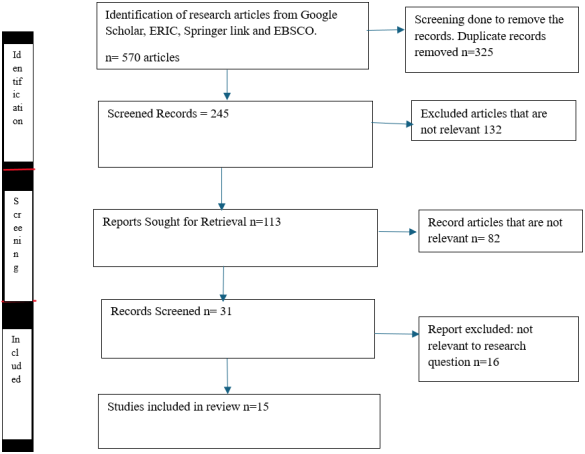
Figure 1 presents the literature selection process undertaken for this systematic review, following the PRISMA guidelines.
Figure 1. PRISMA Diagram.
7. Results and Discussions
The 15 included studies represented diverse methodological approaches, with 6 qualitative studies (40%), 7 quantitative studies (46.7%), and 2 mixed-method investigations (19.3%). Sample sizes ranged from 24 to 45,989 participants, with a combined total of approximately 7,200 adolescents across all studies. The studies conducted across various geographical contexts such as North America (n=3), Europe (n=5), Asia (n=6), and Australia (n=1), provides cross-cultural perspectives on digital resilience. From the given
Table 1 it could be summarized that the selected studies provide various insights about digital resilience, but there exists a clear gap in the theoretical framing across contexts. Though the models such as ecological theory
| [2] | Freed, D., Bazarova, N., Consolvo, S., Cosley, D., & Gage Kelley, P. (2025). PROTECT: A Framework to Foster Digital Resilience for Youth Navigating Technology-Facilitated Abuse. Social Sciences, 14(6), 378.
https://doi.org/10.3390/socsci14060378 |
| [5] | Hammond, S. P., Polizzi, G., & Bartholomew, K. J. (2023). Using a socio-ecological framework to understand how 8-12-year-olds build and show digital resilience: A multi-perspective and multimethod qualitative study. Education and Information Technologies, 28(4), 3681–3709.
https://doi.org/10.1007/s10639-022-11240-z |
[2, 5]
, (socio-ecological frameworks
| [4] | Gomersall, S., & Floyd, A. (2023). Resilience: Myanmar students' experiences of overcoming eLearning challenges during COVID 19 and political instability. Asia Pacific Education Review, 24, 447–459.
https://doi.org/10.1007/s12564-022-09781-6 |
| [13] | Qi, C., & Yang, N. (2024). Digital resilience and technological stress in adolescents: A mixed-methods study of factors and interventions. Education and Information Technologies, 29, 19067–19113. https://doi.org/10.1007/s10639-024-12595-1 |
[4, 13]
, and coping mechanisms
| [17] | Yang, F. (2021). Coping strategies, cyberbullying behaviors, and depression among Chinese netizens during the COVID-19 pandemic: a web-based nationwide survey. Journal of Affective Disorders, 281, 138-144. |
[17]
have been widely used, there is a lack of integration between these perspectives to capture the multi-layered and dynamic nature of digital resilience. Most studies are either context-specific (e.g., cyberbullying, online learning, or media use) or population-limited to adolescents and young adults, leaving gaps in cross-cultural validation, longitudinal evidence, and holistic models that connect individual, interpersonal, organizational, community, and societal levels
| [1] | Eri, R., Gudimetla, P., Star, S., Rowlands, J., & Girgla, A. (2021). Digital resilience in higher education in response to covid-19 pandemic: student perceptions from Asia and Australia. Journal of University Teaching & Learning Practice, 18(5). |
| [8] | Li, F., Ma, Q., Yang, C., & Zhong, M. (2025). Investigating key elements of digital resilience among nursing undergraduates: a qualitative study. Frontiers in Medicine, 11, 1452580.
https://doi.org/10.3389/fmed.2024.1452580 |
[1, 8]
.
Table 1. Summary of Systematically Review Studies.
S.No | Study | Country | Method | Sample Size | Age Range | Theoretical Framework | Key Focus |
1 | Freed et al. (2025) | USA | Mixed | 34 | 13-17 | Ecological Theory | Technology-facilitated abuse |
2 | Uddin & Hasan (2023) | USA | Quantitative | 45,989 | 9-17 | Stress-buffering Model | Media use and mental health |
3 | Paetzold et al. (2022) | Germany | Quantitative | 46 | 14-25 | Ecological Momentary Intervention | Compassion-focused intervention |
4 | Hammond et al. (2023) | UK | Qualitative | 59 | 8-12 | Socio-ecological Framework | Building digital resilience |
5 | Li et al. (2025) | China | Qualitative | 20 | 18-22 | Conceptual Model of Digital Resilience | Digital Resilience |
6 | Eri et al. (2021) | Australia/Asia | Qualitative | 687 | 18-20 | Pragmatism | COVID-19 digital adaptation |
7 | Ge (2025) | China | Quantitative | 2182 | 18-20 | Self-regulated Learning Theory | Online learning engagement |
8 | Qi & Yang (2024) | China | Mixed | 856 | 12-18 | Socio-ecological Model | Technological stress |
9 | Martzoukou (2022) | UK | Qualitative | 30 | 9-12 | Socio-cultural Theory | Educational intervention |
10 | Gomersall & Floyd (2023) | Myanmar | Qualitative | 12 | 19-22 | Socio-ecological Model | Crisis resilience |
11 | O'Reilly et al. (2024) | UK | Qualitative | 18 | 10-11 | Digital Ethics of Care | Digital citizenship |
12 | Yang (2021) | China | Quantitative | 5,608 | 16-18 | Coping Strategy Mechanism | Cyberbullying and depression |
13 | Lutz & Schneider (2021) | Germany | Quantitative | 211 | 16-19 | Temporal Need-Threat Model | Social media rejection |
14 | Wang et al. (2023) | China | Quantitative | 154 | 11-13 | AttenReleConfiSatis Model | Game-based learning |
15 | Hanurawan et al. (2021) | Indonesia | Quantitative | 291 | 15-21 | Theory of Planned Behavior | Cyber aggression |
7.1. Critical Synthesis of Reviewed Studies
The reviewed studies show that digital resilience is increasingly recognized as an important psychological trait for adolescents. Whilst many of the studies view it as the ability to manage and recover from online challenges, few studies assume it as the knowledge about digital literacy, aware of emotions and handling emotions, coping strategies, and positive online engagement. This variation recommends that the field is still developing conceptually. The studies also draw on different theoretical perspectives, such as socio-ecological theory, coping theory, and self-regulation, but these are often used separately rather than in an integrated manner. In terms of methodology, the studies offer valuable insights through qualitative, quantitative, and mixed-method approaches; however, most of the studies adopt on cross-sectional designs and self-report measures, which limit a deeper understanding of how digital resilience develops over time. Another noticeable gap is the limited attention given to cultural and contextual differences in adolescents’ digital experiences. Despite these limitations, the reviewed literature consistently highlights the role of digital literacy, emotional regulation, self-efficacy, coping ability, and social support in shaping digital resilience. Overall, the findings suggest that digital resilience is not a fixed trait, but a dynamic process influenced by personal, social, and environmental factors.
7.2. (RQ1) Digital Resilience Conceptualizations and Definitions
Through analysing the included studies, it’s identified that diverse conceptualizations of digital resilience, reflecting the emerging nature of this construct. Through systematically reviewing the included fifteen studies it has been evidenced that the conceptualisation of digital resilience is an evolving, with various definitions reflecting the novelty of this construct. By framing out the research studies that were included in digital resilience, it can be figured out that digital resilience as adaptive capacity, in which six studies emphasised the ability of adolescents and young people to cope, learn, and grow in response to challenges encountered in digital environments. Based on these perceptions, it can be well understood that digital resilience cannot be constrained digital resilience as a fixed trait, but also a continuous process of learning and adjustment, and also as broader ideas of resilience that focus on adapting positively to difficult situations
| [13] | Qi, C., & Yang, N. (2024). Digital resilience and technological stress in adolescents: A mixed-methods study of factors and interventions. Education and Information Technologies, 29, 19067–19113. https://doi.org/10.1007/s10639-024-12595-1 |
[13]
. Contradict to this ideology, four studies highlighted the need of protective mechanisms, focusing on digital resilience as resistance against risks such as cyberbullying, misinformation, and privacy violations. Here, the emphasis was placed on cultivating risk awareness, developing proactive safety strategies, and minimising vulnerability to online harms
| [6] | Hanurawan, F., Chusniyah, T., Rahmawati, H., & Hutagalung, F. D. (2021). Cyber Aggression between Intentions and Cyber Wellness of Students: An Application of TPB Models. International Journal of Instruction, 14(2), 67-82. |
[6]
in their study emphasise the importance of cultivating risk awareness, developing proactive safety strategies thereby reducing the risks of online harm. Also a few studies look at digital resilience as a form of protection, highlighting how it helps young people guard themselves against risks such as cyberbullying, misinformation, and privacy issues.
Adding to these ideas and approaches, out of three studies define digital resilience mainly through coping strategies, emphasising adolescents’ problem-solving skills, emotion regulation, and confidence in responding to digital stressors. In particular, this strand points out the practical, everyday tactics employed by young people to manage challenges such as information overload, cyber aggression, or compulsive technology use
| [13] | Qi, C., & Yang, N. (2024). Digital resilience and technological stress in adolescents: A mixed-methods study of factors and interventions. Education and Information Technologies, 29, 19067–19113. https://doi.org/10.1007/s10639-024-12595-1 |
[13]
. A couple of studies adopted a wider construction of digital wellness, suggesting resilience not just as risk avoidance but also as a holistic commitment to balanced, mindful, and positive engagement with digital technologies
| [6] | Hanurawan, F., Chusniyah, T., Rahmawati, H., & Hutagalung, F. D. (2021). Cyber Aggression between Intentions and Cyber Wellness of Students: An Application of TPB Models. International Journal of Instruction, 14(2), 67-82. |
[6]
. Collectively, these findings suggest that digital resilience among adolescents may be understood as both reactive and proactive: encompassing the ability to withstand risks, adapt to challenges, and simultaneously cultivate well-being and positive digital practices. The range of conceptualisations identified across the studies is summarised in
Table 2, which provides details on the definitional approaches, number of studies, and key elements associated with each perspective.
7.3. Digital Resilience Conceptualizations Across Studies
Table 2. Conceptualizations of digital resilience.
Conceptualization | Studies | Definition Focus | Key Elements |
Adaptive Capacity | 6 studies | The capacity to cope up and to move forward in digital environment | Flexibility, learning, growth |
Protective Mechanisms | 4 studies | Resistance against digital risks and harms | Risk awareness, safety strategies |
Coping Strategies | 3 studies | Responses to digital stressors and challenges | Problem-solving, emotion regulation |
Digital Wellness | 2 studies | Overall well-being in digital contexts | Balance, mindful use, positive engagement |
Through rigorous study, Digital Resilience among adolescents/young people or digital natives can be termed as coping / adapting to the digital/ cyber risks in digital environments and being digitally /cyber aware of the growing online/digital environment risks.
7.4. (RQ2) Theoretical Foundations in Digital Resilience Research
The outlook for theoretical framework of digital resilience is being systematically framed out by various theories like ecological systems theory, cognitive-behavioural frameworks, social learning theory, and technological acceptance models. Bronfenbrenner's ecological systems theory, provides a framework for understanding how multiple environmental factors interact to influence adolescent digital experiences. Thereby providing a new idea that digital resilience develops within nested systems including family, peer, school, and community contexts. Cognitive-behavioural theories provide an understanding of the cognitive processes involved in digital resilience, digital skills, cognitive restructuring, emotional regulation and social cognition. Social learning theory by Albert Bandura offers understanding into how adolescents acquire digital skills and adaptive strategies through observation, imitation, and social interaction within digital environments. Further Digital skills can be understood as the capacity to handle the opportunities and challenges in digital environment effectively. In mean time adolescents develop digital skills more efficiently when they recurrently navigate in online, virtual media.
8. Theoretical Frameworks Analysis
8.1. Cultural and Socio-ecological Models (n=6, 33.33%)
The ecological and socio-ecological frameworks emerged as the most prevalent theoretical approach, employed in 6 of 15 studies. These models conceptualize digital resilience as developing within nested environmental systems that influence adolescent adaptation to digital challenges.
PROTECT framework developed by
| [2] | Freed, D., Bazarova, N., Consolvo, S., Cosley, D., & Gage Kelley, P. (2025). PROTECT: A Framework to Foster Digital Resilience for Youth Navigating Technology-Facilitated Abuse. Social Sciences, 14(6), 378.
https://doi.org/10.3390/socsci14060378 |
[2]
grounded in ecological theory to address technology-facilitated abuse among youth. Their model identifies protective factors across individual (digital literacy, self-efficacy), relationship (family support, peer networks), community (school policies, community resources), and societal levels (legal frameworks, cultural norms). This framework helps to conceptualize to know about the interconnected nature of these systems in fostering resilience.
The socio-ecological mode used by
| [13] | Qi, C., & Yang, N. (2024). Digital resilience and technological stress in adolescents: A mixed-methods study of factors and interventions. Education and Information Technologies, 29, 19067–19113. https://doi.org/10.1007/s10639-024-12595-1 |
[13]
l to analyze digital resilience and technological stress among adolescents. This research adopted mixed-methods study which identified factors at multiple levels: individual factors (self-efficacy, emotional regulation), interpersonal factors (peer support, family communication), and environmental factors (school climate, community resources).
A socio-ecological framework implemented by
| [4] | Gomersall, S., & Floyd, A. (2023). Resilience: Myanmar students' experiences of overcoming eLearning challenges during COVID 19 and political instability. Asia Pacific Education Review, 24, 447–459.
https://doi.org/10.1007/s12564-022-09781-6 |
[4]
to find out how children of 8-12 build digital resilience. This multi-perspective qualitative study revealed that digital resilience emerges through dynamic interactions between personal agency, social relationships, and environmental supports. The key findings include the importance of scaffolded learning experiences and gradual autonomy development.
To measure the sustainability and resilience among Pre university students in Myanmar
| [3] | Ge, D. (2025). Resilience and online learning emotional engagement among college students in the digital age: a perspective based on self-regulated learning theory. BMC Psychology, 13(1), 326. https://doi.org/10.1186/s40359-025-02631-1 |
[3]
also used a Socio- ecological model. This study employed a relativist ontological approach informed by social constructivism. The findings identified six major themes, out of five were highly related to Resilience were focusing on goals, serving the community, drawing on past experiences, involvement of significant others, and fulfilment of basic needs.
Vygotsky's socio-cultural theory of cognitive development was utilized
| [9] | Lutz, S., & Schneider, F. M. (2021). Is receiving dislikes in social media still better than being ignored? The effects of ostracism and rejection on need threat and coping responses online. Media Psychology, 24(6), 741-765. |
[9]
in developing educational interventions for digital literacy and resilience. The study emphasized the role of social interaction, cultural tools, and zone of proximal development in building digital competencies.
Ecological Momentary Intervention employed by
| [11] | O'Reilly, M., Levine, D., Batchelor, R., & Adams, S. (2024). Digital ethics of care and digital citizenship in UK primary schools: Children as interviewers. Journal of Children and Media, 18(4), 585–604.
https://doi.org/10.1080/17482798.2024.2394932 |
[11]
among help seeking young people. The findings reveals that EMI have the potential to significantly advance preventive interventions in youth mental health provision.
8.2. Cognitive and Self-regulation Theories (n=4, 26.7%)
Two studies employed cognitive and self-regulation theoretical frameworks, emphasizing the role of metacognitive processes, emotional regulation, and learning strategies in digital resilience development.
Self-regulated learning theory
| [3] | Ge, D. (2025). Resilience and online learning emotional engagement among college students in the digital age: a perspective based on self-regulated learning theory. BMC Psychology, 13(1), 326. https://doi.org/10.1186/s40359-025-02631-1 |
[3]
and Gross's model of emotional regulation to examine resilience and online learning engagement. The study revealed that digital resilience involves three key self-regulation components: cognitive strategies (goal setting, planning), motivational beliefs (self-efficacy, value beliefs), and behavioural strategies (help-seeking, time management).
The adaptation of conceptual model
| [7] | Lee, A. Y., & Hancock, J. T. (2023). Developing digital resilience: An educational intervention improves elementary students’ response to digital challenges. Computers and Education Open, 5, 100144.
https://doi.org/10.1016/j.caeo.2023.100144 |
[7]
of Digital resilience to measure Digital resilience among undergraduate nursing students and find out five major themes understanding digital threats, knowing coping strategies, learning knowledge and skills, overcoming digital threats stress and adapt to digital environment.
The stress-buffering model
| [14] | Sun, H., Yuan, C., Qian, Q., He, S., & Luo, Q. (2022). Digital Resilience Among Individuals in School Education Settings: A Concept Analysis Based on a Scoping Review. Frontiers in psychiatry, 13, 858515.
https://doi.org/10.3389/fpsyt.2022.858515 |
[14]
employed by to understand how family resilience moderates the relationship between digital media use and mental health. Their findings suggest that cognitive appraisal processes and coping resources serve as protective mechanisms against digital stressors.
Attention-Relevance-Confident-Satisfaction model
employed by
| [15] | Uddin, H., & Hasan, M. K. (2023). Family resilience and neighborhood factors affect the association between digital media use and mental health among children: does sleep mediate the association? European Journal of Pediatrics, 182(6), 2521–2534. https://doi.org/10.1007/s00431-023-04898-1 |
[15]
to measure Cyber wellness among Secondary school students who practice Digital Game Based Learning (DGBL). The findings revealed DGBL enhanced Cyber wellness literacy and also prevented Internet addiction also effectively improved their motivations and emotional engagement.
8.3. Social Learning and Constructivist Approaches (n=3, 20%)
Three studies drew from social learning and constructivist theories to understand how adolescents develop digital resilience through social interaction and cultural participation.
Exploration of digital ethics
| [10] | Martzoukou, K. (2022). "Maddie is online": an educational video cartoon series on digital literacy and resilience for children. Journal of Research in Innovative Teaching & Learning, 15(1), 64–82. https://doi.org/10.1108/JRIT-06-2020-0031 |
[10]
through a constructivist lens, examining how children develop understanding of digital citizenship through peer interaction and collaborative meaning-making.
Theory of Planned behavior
| [5] | Hammond, S. P., Polizzi, G., & Bartholomew, K. J. (2023). Using a socio-ecological framework to understand how 8-12-year-olds build and show digital resilience: A multi-perspective and multimethod qualitative study. Education and Information Technologies, 28(4), 3681–3709.
https://doi.org/10.1007/s10639-022-11240-z |
[5]
utilized by to employ exploratory approach among school students to measure cyber wellness and cyber aggression.
Pragmatistic approach employed by
| [1] | Eri, R., Gudimetla, P., Star, S., Rowlands, J., & Girgla, A. (2021). Digital resilience in higher education in response to covid-19 pandemic: student perceptions from Asia and Australia. Journal of University Teaching & Learning Practice, 18(5). |
[1]
among to measure digital competence and resilience among tertiary students from Australia, Cambodia, China, India, and Malaysia. The findings revealed barriers that impact the digital transformation of undergraduate students which can be used to recommend necessary teaching and learning support frameworks to enhance their digital competence and resilience.
8.4. Coping and Adaptation Models (n=2, 13.3%)
Two studies specifically focused on coping mechanisms and adaptation processes in digital contexts.
Coping strategies were
| [16] | Wang, K., Liu, P., Zhang, J., Zhong, J., Luo, X., Huang, J., & Zheng, Y. (2023). Effects of Digital Game-Based Learning on Students' Cyber Wellness Literacy, Learning Motivations, and Engagement. Sustainability, 15(7), 5716.
https://doi.org/10.3390/su15075716 |
[16]
examined by using the mechanism of coping strategy framework, identifying problem-focused coping, emotion-focused coping, and avoidance coping as key strategies adolescents employ when facing cyberbullying and digital stressors.
Williams' temporal need-threat model was
| [8] | Li, F., Ma, Q., Yang, C., & Zhong, M. (2025). Investigating key elements of digital resilience among nursing undergraduates: a qualitative study. Frontiers in Medicine, 11, 1452580.
https://doi.org/10.3389/fmed.2024.1452580 |
[8]
applied by to understand responses to social media rejection and ostracism, revealing temporal patterns in threat perception and coping responses.
Table 3. Theoretical Framework Distribution and Key Components.
Theoretical Category | Studies (n) | Percentage | Key Components | Focus Area |
Ecological/Socio-ecological | 6 | 33.3% | Multi-level systems, environmental factors | Contextual influences |
Cognitive/Self-regulation | 4 | 27% | Metacognition, emotional regulation | Individual processes |
Social Learning/Constructivist | 3 | 20% | Social interaction, cultural participation | Social development |
Coping/Adaptation | 2 | 13% | Stress response, adaptation mechanisms | Response strategies |
However, as shown in
Table 2, the socio-ecological theory was the most frequently applied framework, while cognitive-behavioural, stress and coping, and positive psychology models were also utilized, reflecting the multidimensional nature of digital resilience (see
Table 3). This multi-level perspective positioned digital resilience as both a personal competence and a socially embedded capacity, highlighting its relevance for education, family contexts, and policy interventions.
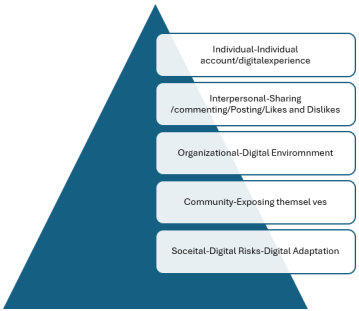
The most adopted model that had been used is Socio-Ecological Theory- Urie Bronfenbrenner
Figure 2. Socio ecological theory vs Digital Resilience. Socio ecological theory vs Digital Resilience.
The above figure explains the ecological model of Urie Bronfenbrenner relates the framework of healthy behaviours with conceptualizations of Digital resilience.
9. Synthesis of Theoretical Frameworks
This systematic analysis of exploring theoretical frameworks in digital resilience draws out valuable perceptions into the phenomenon. Mainly the digital resilience has its strong roots in the theories of ecological and Socio ecological theory. Across the reviewed studies, digital resilience is most convincingly explained through a socio-ecological lens that situates adolescents within nested systems, individual, relational, community, and societal shaping risk and protection
| [3] | Ge, D. (2025). Resilience and online learning emotional engagement among college students in the digital age: a perspective based on self-regulated learning theory. BMC Psychology, 13(1), 326. https://doi.org/10.1186/s40359-025-02631-1 |
| [4] | Gomersall, S., & Floyd, A. (2023). Resilience: Myanmar students' experiences of overcoming eLearning challenges during COVID 19 and political instability. Asia Pacific Education Review, 24, 447–459.
https://doi.org/10.1007/s12564-022-09781-6 |
| [6] | Hanurawan, F., Chusniyah, T., Rahmawati, H., & Hutagalung, F. D. (2021). Cyber Aggression between Intentions and Cyber Wellness of Students: An Application of TPB Models. International Journal of Instruction, 14(2), 67-82. |
| [12] | Paetzold, I., Schick, A., Rauschenberg, C., Hirjak, D., Banaschewski, T., Meyer-Lindenberg, A., Butz, S., Floesser, C., Schueltke, L., Boehnke, J. R., Boecking, B., & Reininghaus, U. (2022). A Hybrid Ecological Momentary Compassion-Focused Intervention for Enhancing Resilience in Help-Seeking Young People: Prospective Study of Baseline Characteristics in the EMIcompass Trial. JMIR Formative Research, 6(11), e39511. https://doi.org/10.2196/39511 |
[3, 4, 6, 12]
. These models exhibit how digital resilience is interconnected within digital environment, human cognition and adoptive behaviours. Ecological applications such as the PROTECT framework translate this system view into actionable levers spanning digital literacy, family support, school policies, and cultural norms
| [2] | Freed, D., Bazarova, N., Consolvo, S., Cosley, D., & Gage Kelley, P. (2025). PROTECT: A Framework to Foster Digital Resilience for Youth Navigating Technology-Facilitated Abuse. Social Sciences, 14(6), 378.
https://doi.org/10.3390/socsci14060378 |
[2]
. Complementing this, cognitive and self-regulation perspectives clarify the intra-individual mechanisms of metacognition, goal setting, emotional regulation, and adaptive help-seeking through which young people navigate online challenges
| [3] | Ge, D. (2025). Resilience and online learning emotional engagement among college students in the digital age: a perspective based on self-regulated learning theory. BMC Psychology, 13(1), 326. https://doi.org/10.1186/s40359-025-02631-1 |
| [7] | Lee, A. Y., & Hancock, J. T. (2023). Developing digital resilience: An educational intervention improves elementary students’ response to digital challenges. Computers and Education Open, 5, 100144.
https://doi.org/10.1016/j.caeo.2023.100144 |
| [14] | Sun, H., Yuan, C., Qian, Q., He, S., & Luo, Q. (2022). Digital Resilience Among Individuals in School Education Settings: A Concept Analysis Based on a Scoping Review. Frontiers in psychiatry, 13, 858515.
https://doi.org/10.3389/fpsyt.2022.858515 |
| [15] | Uddin, H., & Hasan, M. K. (2023). Family resilience and neighborhood factors affect the association between digital media use and mental health among children: does sleep mediate the association? European Journal of Pediatrics, 182(6), 2521–2534. https://doi.org/10.1007/s00431-023-04898-1 |
[3, 7, 14, 15]
. Social learning and constructivist approach further show that resilience is co-constructed via observation, peer interaction, and shared meaning-making in cultural contexts
| [1] | Eri, R., Gudimetla, P., Star, S., Rowlands, J., & Girgla, A. (2021). Digital resilience in higher education in response to covid-19 pandemic: student perceptions from Asia and Australia. Journal of University Teaching & Learning Practice, 18(5). |
| [5] | Hammond, S. P., Polizzi, G., & Bartholomew, K. J. (2023). Using a socio-ecological framework to understand how 8-12-year-olds build and show digital resilience: A multi-perspective and multimethod qualitative study. Education and Information Technologies, 28(4), 3681–3709.
https://doi.org/10.1007/s10639-022-11240-z |
| [10] | Martzoukou, K. (2022). "Maddie is online": an educational video cartoon series on digital literacy and resilience for children. Journal of Research in Innovative Teaching & Learning, 15(1), 64–82. https://doi.org/10.1108/JRIT-06-2020-0031 |
[1, 5, 10]
, while coping/adaptation models illuminate how adolescents select problem-focused, emotion-focused, or avoidance strategies in response to discrete digital stressors, including rejection and ostracism
| [8] | Li, F., Ma, Q., Yang, C., & Zhong, M. (2025). Investigating key elements of digital resilience among nursing undergraduates: a qualitative study. Frontiers in Medicine, 11, 1452580.
https://doi.org/10.3389/fmed.2024.1452580 |
| [16] | Wang, K., Liu, P., Zhang, J., Zhong, J., Luo, X., Huang, J., & Zheng, Y. (2023). Effects of Digital Game-Based Learning on Students' Cyber Wellness Literacy, Learning Motivations, and Engagement. Sustainability, 15(7), 5716.
https://doi.org/10.3390/su15075716 |
[8, 16]
. By including all the conclusions, these studies highlight digital resilience as both a personal competence and a socially embedded capacity, responsive to interventions at multiple levels: individual skills, family/school climates, and broader policy/cultural settings
| [2] | Freed, D., Bazarova, N., Consolvo, S., Cosley, D., & Gage Kelley, P. (2025). PROTECT: A Framework to Foster Digital Resilience for Youth Navigating Technology-Facilitated Abuse. Social Sciences, 14(6), 378.
https://doi.org/10.3390/socsci14060378 |
| [9] | Lutz, S., & Schneider, F. M. (2021). Is receiving dislikes in social media still better than being ignored? The effects of ostracism and rejection on need threat and coping responses online. Media Psychology, 24(6), 741-765. |
| [11] | O'Reilly, M., Levine, D., Batchelor, R., & Adams, S. (2024). Digital ethics of care and digital citizenship in UK primary schools: Children as interviewers. Journal of Children and Media, 18(4), 585–604.
https://doi.org/10.1080/17482798.2024.2394932 |
[2, 9, 11]
.
These theoretical constructs explain how the reforming digital environment influences adolescents’ digital experiences The integration of cognitive and self-regulation theories invokes valuable ideas into the individual-level processes involved in digital resilience. The stress on self-regulated learning and emotional regulation suggests that digital resilience involves active, intentional processes rather than passive adaptation. This has important implications for intervention design, suggesting that effective programs should focus on developing metacognitive awareness and self-regulation skills.
10. Theoretical Gaps and Inconsistencies
Although there were many theories tied up with digital resilience, there exists some gaps and unpredictability. Since there is limited unification across theoretical constructs, with most studies employing single theoretical lenses rather than integrative and multiple approaches.
| [3] | Ge, D. (2025). Resilience and online learning emotional engagement among college students in the digital age: a perspective based on self-regulated learning theory. BMC Psychology, 13(1), 326. https://doi.org/10.1186/s40359-025-02631-1 |
| [16] | Wang, K., Liu, P., Zhang, J., Zhong, J., Luo, X., Huang, J., & Zheng, Y. (2023). Effects of Digital Game-Based Learning on Students' Cyber Wellness Literacy, Learning Motivations, and Engagement. Sustainability, 15(7), 5716.
https://doi.org/10.3390/su15075716 |
[3, 16]
. This may constrain the overall understanding of digital resilience as a complex phenomenon requiring multiple theoretical perspectives. Also, studies confirm cultural factors, most theoretical construct lack explicit consideration of how cultural values, norms, and practices influence digital resilience development
| [1] | Eri, R., Gudimetla, P., Star, S., Rowlands, J., & Girgla, A. (2021). Digital resilience in higher education in response to covid-19 pandemic: student perceptions from Asia and Australia. Journal of University Teaching & Learning Practice, 18(5). |
| [3] | Ge, D. (2025). Resilience and online learning emotional engagement among college students in the digital age: a perspective based on self-regulated learning theory. BMC Psychology, 13(1), 326. https://doi.org/10.1186/s40359-025-02631-1 |
| [10] | Martzoukou, K. (2022). "Maddie is online": an educational video cartoon series on digital literacy and resilience for children. Journal of Research in Innovative Teaching & Learning, 15(1), 64–82. https://doi.org/10.1108/JRIT-06-2020-0031 |
[1, 3, 10]
. And at last, temporal dimensions of digital resilience receive limited attention in existing theoretical frameworks. Most models present static representations of resilience rather than capturing the dynamic, evolving nature of digital challenges and adaptive responses over time
| [7] | Lee, A. Y., & Hancock, J. T. (2023). Developing digital resilience: An educational intervention improves elementary students’ response to digital challenges. Computers and Education Open, 5, 100144.
https://doi.org/10.1016/j.caeo.2023.100144 |
| [11] | O'Reilly, M., Levine, D., Batchelor, R., & Adams, S. (2024). Digital ethics of care and digital citizenship in UK primary schools: Children as interviewers. Journal of Children and Media, 18(4), 585–604.
https://doi.org/10.1080/17482798.2024.2394932 |
[7, 11]
. To answer these limitations, future research should concentrate on developing multi-level and longitudinal models that bridge socio-ecological factors with metacognitive, emotional regulation, and adaptive coping processes. Such models should also incorporate cross-cultural perspectives to capture variations in resilience shaped by diverse social and institutional contexts. Moreover, employing time-sensitive research designs, including ecological momentary assessments (EMA), ecological momentary interventions (EMI), and longitudinal cohort studies, would provide greater insight into the evolving nature of digital resilience and the long-term impact of targeted interventions
| [2] | Freed, D., Bazarova, N., Consolvo, S., Cosley, D., & Gage Kelley, P. (2025). PROTECT: A Framework to Foster Digital Resilience for Youth Navigating Technology-Facilitated Abuse. Social Sciences, 14(6), 378.
https://doi.org/10.3390/socsci14060378 |
| [12] | Paetzold, I., Schick, A., Rauschenberg, C., Hirjak, D., Banaschewski, T., Meyer-Lindenberg, A., Butz, S., Floesser, C., Schueltke, L., Boehnke, J. R., Boecking, B., & Reininghaus, U. (2022). A Hybrid Ecological Momentary Compassion-Focused Intervention for Enhancing Resilience in Help-Seeking Young People: Prospective Study of Baseline Characteristics in the EMIcompass Trial. JMIR Formative Research, 6(11), e39511. https://doi.org/10.2196/39511 |
| [15] | Uddin, H., & Hasan, M. K. (2023). Family resilience and neighborhood factors affect the association between digital media use and mental health among children: does sleep mediate the association? European Journal of Pediatrics, 182(6), 2521–2534. https://doi.org/10.1007/s00431-023-04898-1 |
[2, 12, 15]
. This approach will advance theoretical development and inform more effective educational, familial, and policy-based strategies to foster digital resilience across contexts.
Despite the existence of growing frame work to explore digital resilience, there were some areas still remains un earthed. It has been identified as the lack of integrated theoretical frameworks most studies tend to rely on a single lens rather than integrating multiple perspective
| [3] | Ge, D. (2025). Resilience and online learning emotional engagement among college students in the digital age: a perspective based on self-regulated learning theory. BMC Psychology, 13(1), 326. https://doi.org/10.1186/s40359-025-02631-1 |
| [16] | Wang, K., Liu, P., Zhang, J., Zhong, J., Luo, X., Huang, J., & Zheng, Y. (2023). Effects of Digital Game-Based Learning on Students' Cyber Wellness Literacy, Learning Motivations, and Engagement. Sustainability, 15(7), 5716.
https://doi.org/10.3390/su15075716 |
[3, 16]
. This straitened approach can limit the understanding of digital resilience, which is inherently complex and multifaceted. Another concern is the limited attention given to cultural influences. Despite of this research acknowledging cultural values and norms play a role, many theoretical models fail to openly account for how these factors mold the development of digital resilience
| [1] | Eri, R., Gudimetla, P., Star, S., Rowlands, J., & Girgla, A. (2021). Digital resilience in higher education in response to covid-19 pandemic: student perceptions from Asia and Australia. Journal of University Teaching & Learning Practice, 18(5). |
| [3] | Ge, D. (2025). Resilience and online learning emotional engagement among college students in the digital age: a perspective based on self-regulated learning theory. BMC Psychology, 13(1), 326. https://doi.org/10.1186/s40359-025-02631-1 |
| [10] | Martzoukou, K. (2022). "Maddie is online": an educational video cartoon series on digital literacy and resilience for children. Journal of Research in Innovative Teaching & Learning, 15(1), 64–82. https://doi.org/10.1108/JRIT-06-2020-0031 |
[1, 3, 10]
. Finally, the temporal aspect of digital resilience is mostly overlooked. Most existing models offer static snapshots rather than capturing how resilience evolves in response to ongoing digital challenges
| [8] | Li, F., Ma, Q., Yang, C., & Zhong, M. (2025). Investigating key elements of digital resilience among nursing undergraduates: a qualitative study. Frontiers in Medicine, 11, 1452580.
https://doi.org/10.3389/fmed.2024.1452580 |
| [11] | O'Reilly, M., Levine, D., Batchelor, R., & Adams, S. (2024). Digital ethics of care and digital citizenship in UK primary schools: Children as interviewers. Journal of Children and Media, 18(4), 585–604.
https://doi.org/10.1080/17482798.2024.2394932 |
[8, 11]
. To address these issues, future research should aim to build multi-level, longitudinal models that connect socio-ecological contexts with internal processes like metacognition, emotional regulation, and adaptive coping. Including cross-cultural perspectives will also be key to understanding how resilience varies across different social and institutional settings. In addition, using time-sensitive research methods—such as ecological momentary assessments (EMA), ecological momentary interventions (EMI), and longitudinal cohort studies—can offer deeper insights into how digital resilience develops and how interventions can have lasting impact
| [2] | Freed, D., Bazarova, N., Consolvo, S., Cosley, D., & Gage Kelley, P. (2025). PROTECT: A Framework to Foster Digital Resilience for Youth Navigating Technology-Facilitated Abuse. Social Sciences, 14(6), 378.
https://doi.org/10.3390/socsci14060378 |
| [15] | Uddin, H., & Hasan, M. K. (2023). Family resilience and neighborhood factors affect the association between digital media use and mental health among children: does sleep mediate the association? European Journal of Pediatrics, 182(6), 2521–2534. https://doi.org/10.1007/s00431-023-04898-1 |
| [16] | Wang, K., Liu, P., Zhang, J., Zhong, J., Luo, X., Huang, J., & Zheng, Y. (2023). Effects of Digital Game-Based Learning on Students' Cyber Wellness Literacy, Learning Motivations, and Engagement. Sustainability, 15(7), 5716.
https://doi.org/10.3390/su15075716 |
[2, 15, 16]
. This kind of approach can help refine theory and guide more effective strategies in education, family life, and policy-making.
11. Proposed Integrated Theoretical Framework of Digital Resilience Among Adolescents
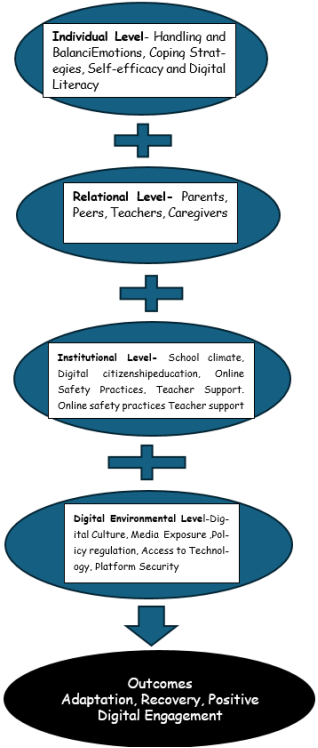
Thus, based on the studies reviewed, it’s proposed that Urie Bronfenbrenner’s Socio ecological theory acts as a primary base for an integrated theoretical framework of digital resilience among adolescents. This framework emphasizes digital resilience as a multi-level and dynamic process structured by four level of influences such as individual, relational, institutional, and societal.
Figure Note: The figure illustrates how digital resilience among adolescents is shaped across four interconnected ecological levels: individual, relational, institutional, and societal/digital environment. These levels collectively contribute to outcomes such as adaptation, recovery, and positive digital engagement.
Digital literacy, handling emotions and regulating, Self-efficacy, coping strategies and reflective online decision making at individual level. At the relational level, support from parents, peers, teachers, and caregivers helps adolescents respond to and recover from online challenges. At the institutional level, schools contribute through digital citizenship education, online safety awareness, and supportive learning environments. At the societal level, broader influences such as digital culture, media environment, policy context, and technological systems shape adolescents’ online experiences.
This framework suggests that digital resilience could not only be assumed as simply as a personal trait, but a developmental capacity influenced by interconnected ecological systems. It therefore provides a more comprehensive understanding of how adolescents can be supported to engage with digital environments in safe, adaptive, and meaningful ways.
12. Conclusion
The key findings highlight that digital resilience can be learnt as by involving cognitive, emotional, social, and behavioural skills to cope up with the digital challenges. The key elements support this capacity include social support, emotional regulation, digital literacy and self -control which eventually can be found in different theories. Social support, emotional regulation, digital literacy, and self-regulation emerge as critical components across multiple theoretical frameworks. The review suggests the requirement for comprehensive, multi-level interventions that marks individual skill development, social support systems, and environmental factors. Future research should concentrate on improving integrated theoretical frameworks, conducting longitudinal studies, examining cultural variations, and evaluating intervention effectiveness. This continuous emerging changes in the digital environment have not only to meet out the technological changes but also on the core concepts of human development process. In practice, the findings of this study emphasize the urge properly developed digital wellness education programmes, which should focus not only on using technology safely or safe from cyber bullying but also on emotional balance, emotional regulation, social competence, ethical reasoning and being emotionally strong. Formal and Informal agencies all play an important role in fostering and constructing emotional resilience among the digital natives or adolescents. Finally, this review contributes to the growing understanding of digital resilience as a critical capacity for adolescent well-being in increasingly digital societies. The theoretical foundations identified provide a strong foundation for future research and practice aimed at supporting positive adolescent development in digital contexts.
Author Contributions
James Edison Jenita Maria Teresa: Conceptualization, Formal Analysis, Writing – original draft
Arul Catherin Jayanthy: Supervision
Melapatti Shanmugam Bhuvaneswari: Methodology
Ganesan Kalaiyarasan: Supervision
Funding
The author is sponsored by ICSSR Scholarship
Data Availability Statement
The data supporting the conclusions of this systematic review are available from the included published studies referenced in this manuscript.
Conflicts of Interest
The authors declare no conflicts of interest.
References
| [1] |
Eri, R., Gudimetla, P., Star, S., Rowlands, J., & Girgla, A. (2021). Digital resilience in higher education in response to covid-19 pandemic: student perceptions from Asia and Australia. Journal of University Teaching & Learning Practice, 18(5).
|
| [2] |
Freed, D., Bazarova, N., Consolvo, S., Cosley, D., & Gage Kelley, P. (2025). PROTECT: A Framework to Foster Digital Resilience for Youth Navigating Technology-Facilitated Abuse. Social Sciences, 14(6), 378.
https://doi.org/10.3390/socsci14060378
|
| [3] |
Ge, D. (2025). Resilience and online learning emotional engagement among college students in the digital age: a perspective based on self-regulated learning theory. BMC Psychology, 13(1), 326.
https://doi.org/10.1186/s40359-025-02631-1
|
| [4] |
Gomersall, S., & Floyd, A. (2023). Resilience: Myanmar students' experiences of overcoming eLearning challenges during COVID 19 and political instability. Asia Pacific Education Review, 24, 447–459.
https://doi.org/10.1007/s12564-022-09781-6
|
| [5] |
Hammond, S. P., Polizzi, G., & Bartholomew, K. J. (2023). Using a socio-ecological framework to understand how 8-12-year-olds build and show digital resilience: A multi-perspective and multimethod qualitative study. Education and Information Technologies, 28(4), 3681–3709.
https://doi.org/10.1007/s10639-022-11240-z
|
| [6] |
Hanurawan, F., Chusniyah, T., Rahmawati, H., & Hutagalung, F. D. (2021). Cyber Aggression between Intentions and Cyber Wellness of Students: An Application of TPB Models. International Journal of Instruction, 14(2), 67-82.
|
| [7] |
Lee, A. Y., & Hancock, J. T. (2023). Developing digital resilience: An educational intervention improves elementary students’ response to digital challenges. Computers and Education Open, 5, 100144.
https://doi.org/10.1016/j.caeo.2023.100144
|
| [8] |
Li, F., Ma, Q., Yang, C., & Zhong, M. (2025). Investigating key elements of digital resilience among nursing undergraduates: a qualitative study. Frontiers in Medicine, 11, 1452580.
https://doi.org/10.3389/fmed.2024.1452580
|
| [9] |
Lutz, S., & Schneider, F. M. (2021). Is receiving dislikes in social media still better than being ignored? The effects of ostracism and rejection on need threat and coping responses online. Media Psychology, 24(6), 741-765.
|
| [10] |
Martzoukou, K. (2022). "Maddie is online": an educational video cartoon series on digital literacy and resilience for children. Journal of Research in Innovative Teaching & Learning, 15(1), 64–82.
https://doi.org/10.1108/JRIT-06-2020-0031
|
| [11] |
O'Reilly, M., Levine, D., Batchelor, R., & Adams, S. (2024). Digital ethics of care and digital citizenship in UK primary schools: Children as interviewers. Journal of Children and Media, 18(4), 585–604.
https://doi.org/10.1080/17482798.2024.2394932
|
| [12] |
Paetzold, I., Schick, A., Rauschenberg, C., Hirjak, D., Banaschewski, T., Meyer-Lindenberg, A., Butz, S., Floesser, C., Schueltke, L., Boehnke, J. R., Boecking, B., & Reininghaus, U. (2022). A Hybrid Ecological Momentary Compassion-Focused Intervention for Enhancing Resilience in Help-Seeking Young People: Prospective Study of Baseline Characteristics in the EMIcompass Trial. JMIR Formative Research, 6(11), e39511.
https://doi.org/10.2196/39511
|
| [13] |
Qi, C., & Yang, N. (2024). Digital resilience and technological stress in adolescents: A mixed-methods study of factors and interventions. Education and Information Technologies, 29, 19067–19113.
https://doi.org/10.1007/s10639-024-12595-1
|
| [14] |
Sun, H., Yuan, C., Qian, Q., He, S., & Luo, Q. (2022). Digital Resilience Among Individuals in School Education Settings: A Concept Analysis Based on a Scoping Review. Frontiers in psychiatry, 13, 858515.
https://doi.org/10.3389/fpsyt.2022.858515
|
| [15] |
Uddin, H., & Hasan, M. K. (2023). Family resilience and neighborhood factors affect the association between digital media use and mental health among children: does sleep mediate the association? European Journal of Pediatrics, 182(6), 2521–2534.
https://doi.org/10.1007/s00431-023-04898-1
|
| [16] |
Wang, K., Liu, P., Zhang, J., Zhong, J., Luo, X., Huang, J., & Zheng, Y. (2023). Effects of Digital Game-Based Learning on Students' Cyber Wellness Literacy, Learning Motivations, and Engagement. Sustainability, 15(7), 5716.
https://doi.org/10.3390/su15075716
|
| [17] |
Yang, F. (2021). Coping strategies, cyberbullying behaviors, and depression among Chinese netizens during the COVID-19 pandemic: a web-based nationwide survey. Journal of Affective Disorders, 281, 138-144.
|
Cite This Article
-
APA Style
Teresa, J. E. J. M., Jayanthy, A. C., Bhuvaneswari, M. S., Kalaiyarasan, G. (2026). Exploring Digital Resilience Among Adolescents:
A Systematic Review of Theoretical Foundations and Models. American Journal of Applied Psychology, 15(2), 53-63. https://doi.org/10.11648/j.ajap.20261502.13
 Copy
|
Copy
|
 Download
ACS Style
Teresa, J. E. J. M.; Jayanthy, A. C.; Bhuvaneswari, M. S.; Kalaiyarasan, G. Exploring Digital Resilience Among Adolescents:
A Systematic Review of Theoretical Foundations and Models. Am. J. Appl. Psychol. 2026, 15(2), 53-63. doi: 10.11648/j.ajap.20261502.13
Copy
|
Download
AMA Style
Teresa JEJM, Jayanthy AC, Bhuvaneswari MS, Kalaiyarasan G. Exploring Digital Resilience Among Adolescents:
A Systematic Review of Theoretical Foundations and Models. Am J Appl Psychol. 2026;15(2):53-63. doi: 10.11648/j.ajap.20261502.13
Copy
|
Download
-
@article{10.11648/j.ajap.20261502.13,
  author = {James Edison Jenita Maria Teresa and Arul Catherin Jayanthy and Melapatti Shanmugam Bhuvaneswari and Ganesan Kalaiyarasan},
  title = {Exploring Digital Resilience Among Adolescents:
A Systematic Review of Theoretical Foundations and Models},
  journal = {American Journal of Applied Psychology},
  volume = {15},
  number = {2},
  pages = {53-63},
  doi = {10.11648/j.ajap.20261502.13},
  url = {https://doi.org/10.11648/j.ajap.20261502.13},
  eprint = {https://article.sciencepublishinggroup.com/pdf/10.11648.j.ajap.20261502.13},
  abstract = {Adolescents are growing up in a highly digital environment in which online technologies play a central role in shaping education, social interaction, and personal development. Although digital tools offer significant opportunities, they also expose young people to online risks such as harmful content, unsafe interactions, cyberbullying, and technology-related stress. These challenges highlight the need to foster digital resilience among adolescents, understood as the ability to navigate, manage, recover from, and adapt positively to adverse online experiences. This systematic review, conducted in accordance with PRISMA guidelines, synthesizes findings from 15 peer-reviewed studies published between 2021 and 2025 and retrieved from major academic databases, including Google Scholar, ERIC, EBSCO, and SpringerLink. The included studies represented qualitative (40%), quantitative (46.7%), and mixed-method (13.3%) designs and were conducted across North America, Europe, Asia, and Australia. The review aimed to examine how digital resilience is defined, which theories and models are used to explain it, and how these frameworks are applied in adolescent-focused research. The findings indicate that digital resilience is conceptualized as a psychological, behavioural, and socio-contextual process shaped by individual capacities, technological conditions, and social support systems. Frequently used theoretical perspectives include Psychological Resilience Theory, Bronfenbrenner’s Socio-Ecological Theory, and socio-technological models. The review highlights the need for stronger theoretical integration and more context-sensitive research to support healthy adolescent development in an increasingly digital world.},
 year = {2026}
}
Copy
|
Download
-
TY  - JOUR
T1  - Exploring Digital Resilience Among Adolescents:
A Systematic Review of Theoretical Foundations and Models
AU  - James Edison Jenita Maria Teresa
AU  - Arul Catherin Jayanthy
AU  - Melapatti Shanmugam Bhuvaneswari
AU  - Ganesan Kalaiyarasan
Y1  - 2026/04/28
PY  - 2026
N1  - https://doi.org/10.11648/j.ajap.20261502.13
DO  - 10.11648/j.ajap.20261502.13
T2  - American Journal of Applied Psychology
JF  - American Journal of Applied Psychology
JO  - American Journal of Applied Psychology
SP  - 53
EP  - 63
PB  - Science Publishing Group
SN  - 2328-5672
UR  - https://doi.org/10.11648/j.ajap.20261502.13
AB  - Adolescents are growing up in a highly digital environment in which online technologies play a central role in shaping education, social interaction, and personal development. Although digital tools offer significant opportunities, they also expose young people to online risks such as harmful content, unsafe interactions, cyberbullying, and technology-related stress. These challenges highlight the need to foster digital resilience among adolescents, understood as the ability to navigate, manage, recover from, and adapt positively to adverse online experiences. This systematic review, conducted in accordance with PRISMA guidelines, synthesizes findings from 15 peer-reviewed studies published between 2021 and 2025 and retrieved from major academic databases, including Google Scholar, ERIC, EBSCO, and SpringerLink. The included studies represented qualitative (40%), quantitative (46.7%), and mixed-method (13.3%) designs and were conducted across North America, Europe, Asia, and Australia. The review aimed to examine how digital resilience is defined, which theories and models are used to explain it, and how these frameworks are applied in adolescent-focused research. The findings indicate that digital resilience is conceptualized as a psychological, behavioural, and socio-contextual process shaped by individual capacities, technological conditions, and social support systems. Frequently used theoretical perspectives include Psychological Resilience Theory, Bronfenbrenner’s Socio-Ecological Theory, and socio-technological models. The review highlights the need for stronger theoretical integration and more context-sensitive research to support healthy adolescent development in an increasingly digital world.
VL  - 15
IS  - 2
ER  -
Copy
|
Download

 ,
Arul Catherin Jayanthy*
,
Arul Catherin Jayanthy*


 Share This Article
 Twitter
 Linked In
 Facebook