Abstract
The successful breeding and nursery rearing of Cirrhinus mrigala (mrigal carp) are essential for ensuring a sustainable supply of quality fish seed in Nepal. However, high mortality during the hatchling stage remains a major constraint to seed production. This study was conducted at the Fisheries Human Resource Development and Technology Validation Centre, Dhanusha, Nepal, from May to June 2024 to evaluate the breeding performance, growth performance, and survival of C. mrigala under induced breeding conditions using WOVA-FH hormone. Twelve female and eighteen male brood fish were used for induced breeding at a female-to-male ratio of 1:1.5. Female and male brood fish were administered WOVA-FH at doses of 0.5 mL kg-1 and 0.25 mL kg-1 body weight, respectively. Breeding performance was assessed using fecundity, fertilization rate, and hatching rate, while growth performance, survival, and selected water quality parameters were monitored during a 15-day nursery rearing period. The fecundity of female brood fish ranged from 85,333 to 170,926 eggs. Fertilization and hatching rates ranged from 80.0% to 86.53% and 77.0% to 83.0%, respectively. After 15 days of nursery rearing, hatchlings attained an average final weight of 0.41 g, with an average weight gain of 0.407 g, an average daily weight gain of 0.027 g fish-1 day-1, and a specific growth rate of 40.07% day-1. The average fry length was 3.1 cm, while the overall survival rate was 48.47%. Water temperature (29.1–32.2°C), pH (6.9–8.7), and dissolved oxygen (5.8–9.4 mg L-1) remained within suitable ranges throughout the study. The findings indicate that WOVA-FH is an effective inducing hormone for the artificial breeding of C. mrigala under the environmental conditions of Dhanusha, Nepal. Further improvements in nursery management, particularly feeding practices, dissolved oxygen management, and larval health management, may enhance hatchling survival and improve seed production.
|
Published in
|
American Journal of Ecology (Volume 1, Issue 1)
|
|
DOI
|
10.11648/j.ajoe.20260101.11
|
|
Page(s)
|
1-9 |
|
Creative Commons
|

This is an Open Access article, distributed under the terms of the Creative Commons Attribution 4.0 International License (http://creativecommons.org/licenses/by/4.0/), which permits unrestricted use, distribution and reproduction in any medium or format, provided the original work is properly cited.
|
|
Copyright
|
Copyright © The Author(s), 2026. Published by Science Publishing Group
|
Keywords
Artificial Breeding, Freshwater Aquaculture, Hatchery Management, Nursery Rearing, Seed Production, WOVA-FH
1. Introduction
Aquaculture has become one of the fastest-growing food production sectors worldwide and plays a significant role in ensuring food security, improving nutrition, and generating rural employment. In Nepal, aquaculture development began in the 1940s with the culture of indigenous major carps and expanded rapidly following the introduction of common carp (
Cyprinus carpio) in the 1950s. Subsequently, the introduction of silver carp (
Hypophthalmichthys molitrix), bighead carp (
Hypophthalmichthys nobilis), and grass carp (
Ctenopharyngodon idella) during the 1970s further accelerated aquaculture development in the country
| [2] | Dhakal, A., Pandey, M., Kayastha, P., Suwal, G., & Suwal, B. (2022). An overview of the status and development trend of aquaculture and fisheries in Nepal. Advances in Agriculture, 2022, Article 4206401. https://doi.org/10.1155/2022/4206401 |
| [3] | FAO. (2003). Review of the state of world aquaculture. FAO Fisheries Circular No. 886 (Rev. 2). Food and Agriculture Organization of the United Nations, Rome. |
[2, 3]
. Today, freshwater aquaculture is an important component of Nepal's agricultural economy and continues to contribute substantially to fish production, food security, and rural livelihoods
| [2] | Dhakal, A., Pandey, M., Kayastha, P., Suwal, G., & Suwal, B. (2022). An overview of the status and development trend of aquaculture and fisheries in Nepal. Advances in Agriculture, 2022, Article 4206401. https://doi.org/10.1155/2022/4206401 |
[2]
.
Mrigal (
Cirrhinus mrigala) is one of the three Indian major carps extensively cultured throughout South Asia because of its rapid growth, adaptability to pond culture, and compatibility with polyculture systems. The species is native to the Indo-Gangetic river system and is widely cultured in Nepal, Bangladesh, India, Pakistan, Myanmar, Thailand, and the Lao People's Democratic Republic
| [9] | Nesa, N. U., Faroque, A. Al, Sarder, M. R. I., & Mollah, M. F. A. (2018). Assessment of genetic structure of wild populations of mrigal carp, Cirrhinus cirrhosus by microsatellite DNA markers. Aquaculture Research, 49(12), 3919–3925.
https://doi.org/10.1111/are.13875 |
[9]
. Owing to its high consumer acceptance, good market value, and efficient utilization of bottom-feeding niches, mrigal contributes significantly to freshwater aquaculture production.
Cirrhinus mrigala generally attains sexual maturity at approximately two years of age and naturally breeds during the monsoon season from May to September under riverine conditions
| [4] | Haider, M. S., Rahman, Q., & Abbasi, A. R. (2018). Assessment of cultural uses of Mrigal carp (Cirrhinus mrigala) in Gujranwala division, Pakistan. 2, 1–9. |
[4]
. However, natural seed availability is insufficient to meet the increasing demand for aquaculture, making induced breeding an essential technique for large-scale seed production. Hormone-induced spawning has become a reliable method for ensuring timely breeding, improving fertilization and hatching success, and supporting continuous fry production in hatcheries
| [10] | Rath, S. C., Sarkar, S. K., Gupta, S. D., & Sarangi, N. (2007). Comparative account of induced breeding of Indian major carps with ovaprim, ovatide, wova- FH and carp pituitary extract. Indian Journal of Animal Sciences, 77(10), 1057–1060. |
[10]
.
The success of induced breeding depends on several factors, including broodstock quality, appropriate hormone dosage, water quality, hatchery management, larval nutrition, and environmental conditions. Among these, maintaining suitable water quality and proper nursery management is particularly important for maximizing fertilization, hatching success, larval growth, and fry survival. Recent studies have demonstrated that improved broodstock management and optimized hatchery practices can significantly enhance reproductive performance and seed quality in Indian major carps
| [12] | Khan, S. A., Sherzada, S., Ahmad, Q. U. A., Hussain, A., Hussain, N., & Nowosad, J. (2024). Captive breeding and early developmental dynamics of Cirrhinus mrigala: Implications for sustainable seed production. Animals, 14(19), 2799.
https://doi.org/10.3390/ani14192799 |
| [13] | Sherzada, S., Ahmad, T., Khan, S. A., Inayat, M., Ahmad, S., & Rahman, A. (2024). Biochemical analysis and fertilization success of Cirrhinus mrigala ova during induced spawning. Animal Reproduction Science, 270, 107617.
https://doi.org/10.1016/j.anireprosci.2024.107617 |
[12, 13]
. Likewise, advances in larval rearing and nursery management have contributed to improved growth and survival under controlled culture conditions
| [14] | Natarajan, K., Karuppiah, K. M., Baby, S. K., Mohammed, S., Aran, S. S., & Eswaran, S. (2024). Induced breeding, embryonic and larval development of koi carp in a recirculatory aquaculture system. Pakistan Journal of Zoology, 56(3), 1059–1067. https://doi.org/10.17582/journal.pjz/20220829060843 |
[14]
.
Despite the expansion of hatchery technology, the production of quality mrigal seed remains a major challenge in many parts of Nepal. High mortality during the hatchling and fry stages substantially reduces seed availability and limits fish production. Broodstock quality, hatchery management, water quality, feeding practices, and environmental conditions are among the major factors influencing breeding success, larval growth, and survival. In Dhanusha District, where fish farming is an important livelihood activity, inadequate seed production due to poor larval survival remains a major constraint to aquaculture development.
Although several studies have reported induced breeding performance of Indian major carps, limited information is available on the combined evaluation of breeding performance, hatchling growth, survival, and water quality under the environmental conditions of Dhanusha, Nepal. Site-specific information is essential because environmental conditions and hatchery management practices vary among production systems and directly influence breeding efficiency and seed quality
| [12] | Khan, S. A., Sherzada, S., Ahmad, Q. U. A., Hussain, A., Hussain, N., & Nowosad, J. (2024). Captive breeding and early developmental dynamics of Cirrhinus mrigala: Implications for sustainable seed production. Animals, 14(19), 2799.
https://doi.org/10.3390/ani14192799 |
| [15] | Das, D. R., Rayhan, S., Haque, M., Begum, N., Hossain, M., & Pandit, D. (2023). Brood rearing and dose optimisation for induced breeding of raikor, Cirrhinus reba (Hamilton, 1822). Aquatic Sciences and Engineering, 38(3), 151–159.
https://doi.org/10.26650/ASE20231262381 |
[12, 15]
. Such information can assist hatchery operators, farmers, and fisheries extension workers in adopting improved breeding and nursery management practices.
Therefore, the present study was conducted to evaluate the breeding performance, growth performance, and survival of Cirrhinus mrigala under induced breeding conditions using WOVA-FH hormone at the Fisheries Human Resource Development and Technology Validation Centre, Dhanusha, Nepal. The findings are expected to provide baseline information for improving hatchery management and enhancing sustainable seed production of mrigal carp in Nepal.
2. Materials and Methods
2.1. Study Area and Experimental Period
The study was conducted at the Fisheries Human Resource Development and Technology Validation Centre, Dhanusha, Nepal, from May to June 2024. The experiment consisted of two phases: (i) evaluation of breeding performance through induced breeding and (ii) assessment of hatchling growth performance and survival under nursery pond conditions.
2.2. Broodstock Management and Induced Breeding
Twelve mature female and eighteen mature male Cirrhinus mrigala brood fish were selected based on their physical condition and sexual maturity. The brood fish were induced to spawn using WOVA-FH hormone at doses of 0.5 mL kg-1 body weight for females and 0.25 mL kg-1 body weight for males. Hormone was administered by intraperitoneal injection near the base of the pectoral fin. Following injection, brood fish were released into breeding tanks at a female-to-male ratio of 1:1.5 and allowed to spawn under continuous water flow.
The latency period was recorded as the time interval between hormone administration and the onset of spawning. After spawning, fertilized eggs were transferred to incubation tanks with continuous water circulation until hatching.
2.3. Assessment of Breeding Performance
Breeding performance was evaluated by determining fecundity, fertilization rate, and hatching rate. Fecundity was estimated using the gravimetric method by counting the number of eggs in 1 g egg samples and multiplying by the total egg mass produced by each female. Fertilization rate was determined by examining eggs at the morula stage and calculating the percentage of fertilized eggs relative to the total number of eggs sampled. Hatching rate was estimated from three subsamples of 100 fertilized eggs each and expressed as the percentage of eggs successfully hatched.
2.4. Nursery Rearing of Hatchlings
Four-day-old hatchlings were transported in oxygen-filled polythene bags and stocked into four nursery ponds (30 × 20 m each) at a density of 150,000 hatchlings per pond. The ponds were drained, limed, and refilled before stocking to provide suitable rearing conditions. Hatchlings were reared for 15 days and fed a mixture of soybean cake, mustard cake, wheat flour, and commercial pellet feed in equal proportions. Feed was prepared as a slurry and applied three times daily.
2.5. Growth Performance and Survival
Growth sampling was carried out at three-day intervals using simple random sampling. Ten hatchlings were collected from each pond during each sampling event, and their body weight was determined using an electronic balance. Final body length was measured on the last day of the experiment using a measuring scale.
Growth performance was evaluated using the following indices:
Daily weight gain (g fish-1day-1
Specific growth rate (SGR, % day-1
Survival rate (%) was calculated as:
Survival rate = (Number of fry harvested / Number of hatchlings stocked) × 100
2.6. Water Quality Monitoring
Water temperature (°C), dissolved oxygen (mg L-1), and pH were monitored every two days using a thermometer, dissolved oxygen meter, and portable pH meter, respectively. Measurements were recorded twice daily (07:00 h and 15:00 h) throughout the experimental period.
2.7. Statistical Analysis
Statistical analyses were performed using Microsoft Excel 2021. One-way analysis of variance (ANOVA) was used to compare growth, survival, and water quality parameters among nursery ponds. When significant differences were detected, means were separated using Tukey's honestly significant difference (HSD) test at P < 0.05.
3. Results
3.1. Breeding Performance
The breeding performance of
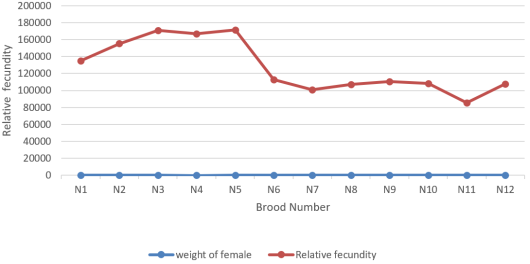
Cirrhinus mrigala was evaluated based on fecundity, fertilization rate, and hatching rate following induced breeding with WOVA-FH hormone. The fecundity of female brood fish ranged from 85,333 to 170,926 eggs (
Figure 1), indicating considerable variation among individual brood fish.
Figure 1. Fecundity of Cirrhinius mrigala.
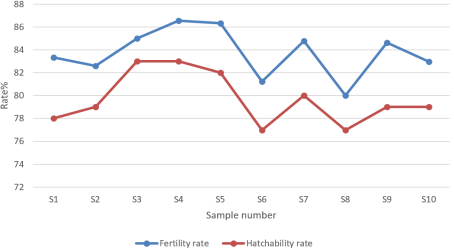
The fertilization rate ranged from 80.0% to 86.53%, while the hatching rate ranged from 77.0% to 83.0% (
Figure 2). Overall, satisfactory fertilization and hatching were achieved under the prevailing hatchery conditions.
Figure 2. Fertility rate and hatching rate of Mrigal carp.
3.2. Growth Performance
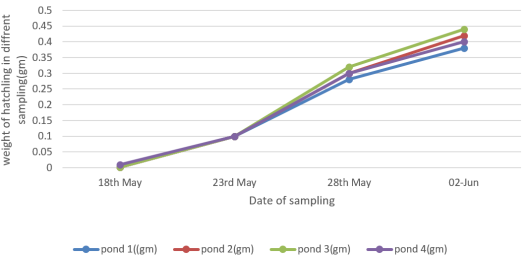
The growth performance of hatchlings during the 15-day nursery rearing period is presented in
Figure 3 and
Table 1. Hatchling weight increased steadily throughout the experimental period in all four nursery ponds (
Figure 3).
Figure 3. Weight of hatchling in different sampling.
The initial average weight of hatchlings was 0.001 g in all ponds. After 15 days of rearing, the average final weight reached 0.41 g, with an average weight gain of 0.41 g. The calculated average daily weight gain and specific growth rate (SGR) were 0.027 g fish
-1 day
-1 and 40.07% day
-1, respectively (
Table 1).
Table 1. Initial weight, Final weight, weight gain, daily weight gain and specific growth rate of hatchling during rearing period.
Growth parameters | Pond 1 | Pond 2 | Pond 3 | Pond 4 | Average |
Initial weight (gm) | 0.001 | 0.001 | 0.001 | 0.001 | 0.001 |
Final weight | 0.38 | 0.41 | 0.44 | 0.40 | 0.41 |
Rearing period (days) | 15 | 15 | 15 | 15 | |
Weight gain (gm) | 0.37 | 0.41 | 0.43 | 0.40 | 0.41 |
Daily weight gain (gm/fish/day) | 0.025 | 0.027 | 0.029 | 0.026 | 0.027 |
Specific growth rate (%/day) | 39.61 | 40.12 | 40.58 | 39.95 | 40.07 |
The average final length of hatchlings after 15 days was 3.1 cm (
Table 2). No significant differences were observed in final length among the four nursery ponds (
P > 0.05).
Table 2. Length of Mrigal carp after rearing for 15 days.
Sample number | Pond 1 (cm) | Pond 2 (cm) | Pond 3 (cm) | Pond 4 (cm) | Average length (cm) | Calculated p-value |
1 | 3 | 3.1 | 3.1 | 3 | | |
2 | 3 | 3 | 3 | 3.1 | | |
3 | 3.2 | 3.2 | 3.2 | 3.2 | 3.1 | 0.998 |
4 | 3.1 | 3.1 | 3.1 | 3.1 | | |
5 | 3.2 | 3.2 | 3.1 | 3 | | |
3.3. Survival of Hatchling
The survival of hatchlings in the four nursery ponds is presented in
Table 3. Each pond was stocked with 150,000 hatchlings. The number of fry harvested ranged from 70,000 to 75,000, resulting in survival rates of 46.6% to 50.0%. The overall average survival rate was 48.47%.
Table 3. Number of hatchlings stocked, number of fries harvested and survival rate (%) of mrigal carp hatchlings in different nursery ponds.
Pond No. | No. of hatchling stocked | No. of fry harvested | Survival rate (%) |
1 | 1,50,000 | 70,000 | 46.6 |
2 | 1,50,000 | 72,000 | 48 |
3 | 1,50,000 | 75,000 | 50 |
4 | 1,50,000 | 74,000 | 49.3 |
Average | 1,50,000 | 73,500 | 48.47 |
3.4. Water Quality
The average values and ranges of water quality parameters recorded during the experimental period are presented in
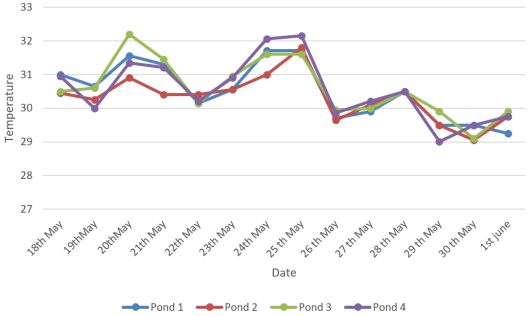
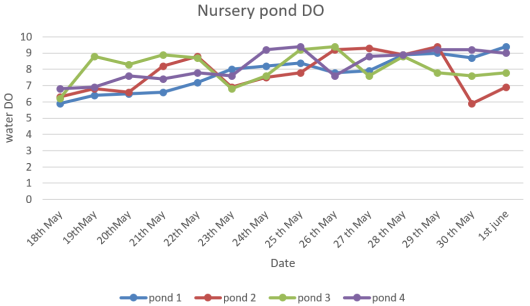
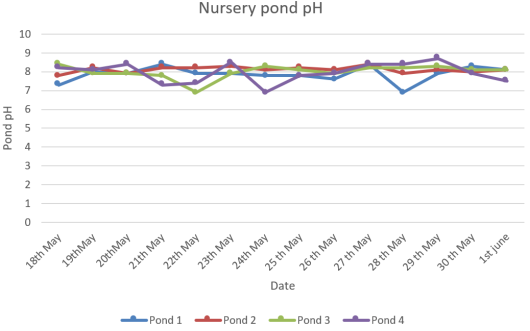
Table 4. Water temperature ranged from 29.1 to 32.2°C, pH ranged from 6.9 to 8.7, and dissolved oxygen ranged from 5.8 to 9.4 mg L
-1.
Table 4. Average value and range of water quality parameters during the experimental period.
Pond No. | Average temperature (°C) | Range | Average pH | Range | Average DO (mg/l) | Range |
1 | 30.4°C | 29.3-31.5 | 7.8 | 7.3-8.4 | 7.7 | 5.9-9.4 |
2 | 30.3°C | 29-31.8 | 8.1 | 7.8-8.4 | 7.8 | 5.9-9.4 |
3 | 30.6°C | 29.1-31.6 | 8 | 6.9-8.4 | 8.1 | 6.2-9.4 |
4 | 30.5°C | 29-32.2 | 7.9 | 6.9-8.7 | 8.2 | 6.8-9.4 |
The temporal variations in water temperature, dissolved oxygen, and pH observed in the four nursery ponds are illustrated in
Figures 4-6. No significant differences were observed among nursery ponds for these water quality parameters (
P > 0.05).
Figure 4. Average water temperature observed in each pond during the experimental period of 15 days.
Figure 5. Average DO observed in each pond during the experimental period of 15 days.
Figure 6. Average pH observed in each pond during the experimental period of 15 days.
4. Discussion
The present study demonstrated that WOVA-FH effectively induced spawning in
Cirrhinus mrigala under the hatchery conditions of Dhanusha, Nepal. The observed latency period of approximately six hours following hormone administration was comparable with that reported by Rath et al.
| [10] | Rath, S. C., Sarkar, S. K., Gupta, S. D., & Sarangi, N. (2007). Comparative account of induced breeding of Indian major carps with ovaprim, ovatide, wova- FH and carp pituitary extract. Indian Journal of Animal Sciences, 77(10), 1057–1060. |
[10]
, who observed a latency period of 5–6 hours in Indian major carps induced with WOVA-FH and other commercial spawning hormones. This finding suggests that WOVA-FH is an effective inducing hormone for artificial breeding of
C. mrigala under subtropical environmental conditions.
The fecundity of female brood fish ranged from 85,333 to 170,926 eggs, indicating considerable reproductive potential among brood fish. Variations in fecundity are expected and may be attributed to differences in body weight, age, gonadal maturity, nutritional status, and physiological condition of the brood fish. Similar observations have been reported by Kaui and Rishi
, who noted that fecundity generally increases with broodstock size and reproductive maturity. The fertilization rate (80.0–86.53%) and hatching rate (77.0–83.0%) obtained in the present study were also comparable with those reported by Azhar et al.
| [1] | Azhar, M. S., Anjum, M. Z., Akhter, S., Khan, M. Q., Ali, A., Farooq, M., & Bibi, S. (2022). Degree-hours to spawning response, fertilization rate and hatching of Labeo rohita and Cirrhinus mrigala through induced breeding under hatchery environment. Journal of Zoo Biology, 5(1), 09–18.
https://doi.org/10.33687/zoobiol.005.01.4487 |
[1]
and Rath et al.
| [10] | Rath, S. C., Sarkar, S. K., Gupta, S. D., & Sarangi, N. (2007). Comparative account of induced breeding of Indian major carps with ovaprim, ovatide, wova- FH and carp pituitary extract. Indian Journal of Animal Sciences, 77(10), 1057–1060. |
[10]
, indicating that proper broodstock management, appropriate hormone dosage, and favourable hatchery conditions contributed to successful induced breeding.
The hatchlings exhibited satisfactory growth during the 15-day nursery rearing period. An average final body weight of 0.41 g, average weight gain of 0.407 g, average daily weight gain of 0.027 g fish
-1 day
-1, and specific growth rate (SGR) of 40.07% day
-1 were recorded. The continuous increase in body weight throughout the rearing period indicates that the feeding regime and nursery management practices adequately supported larval development. Rapid growth during the early life stage is expected because fish larvae have high metabolic activity and efficiently utilize available nutrients for tissue development. Similar growth performance has been reported by Kumar Paul et al.
| [7] | Kumar Paul, S., Islam, M., Alam, M. M., Uddin Ahme, M. B., Robiul Has, M., & Rani Majum, P. (2021). Growth Performance, Feed Conversion and Survival of Cirrhinus mrigala with Feeding Rate in Cage System. Journal of Fisheries and Aquatic Science, 16(1), 26–33.
https://doi.org/10.3923/JFAS.2021.26.33 |
[7]
in
C. mrigala reared under nursery conditions. Recent studies have further demonstrated that appropriate feeding strategies, improved nursery management, and suitable environmental conditions enhance larval growth and seed quality in Indian major carps
| [12] | Khan, S. A., Sherzada, S., Ahmad, Q. U. A., Hussain, A., Hussain, N., & Nowosad, J. (2024). Captive breeding and early developmental dynamics of Cirrhinus mrigala: Implications for sustainable seed production. Animals, 14(19), 2799.
https://doi.org/10.3390/ani14192799 |
| [13] | Sherzada, S., Ahmad, T., Khan, S. A., Inayat, M., Ahmad, S., & Rahman, A. (2024). Biochemical analysis and fertilization success of Cirrhinus mrigala ova during induced spawning. Animal Reproduction Science, 270, 107617.
https://doi.org/10.1016/j.anireprosci.2024.107617 |
[12, 13]
.
The overall survival rate of 48.47% was moderate under the prevailing nursery conditions. Although this survival rate was lower than that reported in some intensive hatchery systems, it falls within the range commonly observed under practical nursery management conditions. Mortality during the larval stage is influenced by several factors, including handling stress, stocking density, feed availability, environmental fluctuations, disease incidence, and natural mortality
| [12] | Khan, S. A., Sherzada, S., Ahmad, Q. U. A., Hussain, A., Hussain, N., & Nowosad, J. (2024). Captive breeding and early developmental dynamics of Cirrhinus mrigala: Implications for sustainable seed production. Animals, 14(19), 2799.
https://doi.org/10.3390/ani14192799 |
| [14] | Natarajan, K., Karuppiah, K. M., Baby, S. K., Mohammed, S., Aran, S. S., & Eswaran, S. (2024). Induced breeding, embryonic and larval development of koi carp in a recirculatory aquaculture system. Pakistan Journal of Zoology, 56(3), 1059–1067. https://doi.org/10.17582/journal.pjz/20220829060843 |
[12, 14]
. Despite maintaining suitable water quality throughout the study, these factors may have contributed to the observed survival rate. Therefore, improvements in nursery management, particularly with respect to dissolved oxygen management, feeding practices, and larval health management, may further enhance hatchling survival and increase seed production.
Water quality remained within suitable ranges throughout the experimental period, with water temperature ranging from 29.1 to 32.2°C, pH from 6.9 to 8.7, and dissolved oxygen from 5.8 to 9.4 mg L
-1. No significant differences (
P > 0.05) were observed among the nursery ponds, indicating relatively uniform environmental conditions during the experiment. Appropriate water quality, particularly temperature, is essential for successful spawning, embryonic development, larval growth, and survival. Similar findings have been reported by Khan et al.
| [6] | Khan, S. A., Sherzada, S., Ashraf, M., Durr-e-Shehwar, Iqbal, S., Atique, U., Abbas, F., Ahmad, S., & Haider, M. S. (2022). Impact of temperature variations on breeding behavior of Cirrhinus mrigala during induced spawning. Pakistan Journal of Zoology, 54(4), 1877–1882.
https://doi.org/10.17582/journal.pjz/20200510140530 |
[6]
, Mohapatra et al.
| [8] | Mohapatra, B. C., Mahanta, S. K., Sahu, H., Majhi, D., & Barik, N. K. (2016). Induced breeding of Indian major carps in FRP hatchery at farmer's field. International Research Journal of Natural and Applied Sciences, 3(5), 249–257. |
[8]
, Verma et al.
| [11] | Verma, H. O., & Mandal, S. C. (2018). Evaluation of growth performance of amur common carp (Cyprinus carpio) and mrigal (Cirrhinus mrigala) with major carps in polyculture system. Journal of Entomology and Zoology Studies, 6(2), 2277–2281. |
[11]
, and recent studies on induced breeding of Indian major carps
| [12] | Khan, S. A., Sherzada, S., Ahmad, Q. U. A., Hussain, A., Hussain, N., & Nowosad, J. (2024). Captive breeding and early developmental dynamics of Cirrhinus mrigala: Implications for sustainable seed production. Animals, 14(19), 2799.
https://doi.org/10.3390/ani14192799 |
[12]
, emphasizing the importance of maintaining optimum water quality throughout the breeding and nursery rearing periods.
Overall, the findings of the present study indicate that induced breeding of Cirrhinus mrigala using WOVA-FH can successfully produce quality fry under the environmental conditions of Dhanusha, Nepal. Although breeding performance and hatchling growth were satisfactory, improving hatchling survival through enhanced nursery management and water quality management remains essential for increasing seed production and supporting sustainable freshwater aquaculture in Nepal.
5. Conclusion
The present study demonstrated that induced breeding of Cirrhinus mrigala using WOVA-FH hormone was successfully achieved under the hatchery conditions of Dhanusha, Nepal. The hormone produced satisfactory breeding performance, with fertilization rates ranging from 80.0% to 86.53% and hatching rates from 77.0% to 83.0%, confirming its effectiveness for artificial seed production. The observed fecundity (85,333–170,926 eggs per female) indicated the high reproductive potential of mature brood fish. During the 15-day nursery rearing period, hatchlings attained an average final weight of 0.41 g, an average weight gain of 0.407 g, an average daily weight gain of 0.027 g fish-1 day-1, and a specific growth rate (SGR) of 40.07% day-1. The average fry length reached 3.1 cm, while the overall survival rate was 48.47%. Although the survival rate was moderate, it reflects the challenges associated with larval rearing under practical nursery conditions. Water temperature, pH, and dissolved oxygen remained within suitable ranges throughout the study and likely contributed to the satisfactory breeding performance and hatchling growth. Overall, the findings indicate that WOVA-FH is an effective inducing hormone for the artificial propagation of Cirrhinus mrigala under the environmental conditions of Dhanusha, Nepal. Further improvements in nursery management, particularly in feeding practices, dissolved oxygen management, and larval health management, may enhance hatchling survival and increase seed production. The findings of this study provide useful baseline information for hatchery operators, fish farmers, and fisheries researchers seeking to improve the breeding efficiency and nursery performance of mrigal carp in Nepal.
Abbreviations
ANOVA | Analysis of Variance |
pH | Potential of Hydrogen |
DO | Dissolved Oxygen |
SGR | Specific Growth Rate |
HSD | Honestly Significant Difference |
WOVA-FH | Water Soluble Ovulating Agent–Fish Hormone |
Author Contributions
Sonali Singh: Conceptualization, Data curation, Formal analysis, Investigation, Methodology, Resources, Validation, Writing – original draft, Writing – review & editing
Abhishek Pokhrel: Conceptualization, Data curation, Formal analysis, Investigation, Methodology, Software, Supervision, Validation, Writing – original draft, Writing – review & editing
Alisha Adhikari: Conceptualization, Data curation, Investigation, Software, Validation, Writing – original draft, Writing – review & editing
Conflicts of Interest
The author declares no conflicts of interest.
References
| [1] |
Azhar, M. S., Anjum, M. Z., Akhter, S., Khan, M. Q., Ali, A., Farooq, M., & Bibi, S. (2022). Degree-hours to spawning response, fertilization rate and hatching of Labeo rohita and Cirrhinus mrigala through induced breeding under hatchery environment. Journal of Zoo Biology, 5(1), 09–18.
https://doi.org/10.33687/zoobiol.005.01.4487
|
| [2] |
Dhakal, A., Pandey, M., Kayastha, P., Suwal, G., & Suwal, B. (2022). An overview of the status and development trend of aquaculture and fisheries in Nepal. Advances in Agriculture, 2022, Article 4206401.
https://doi.org/10.1155/2022/4206401
|
| [3] |
FAO. (2003). Review of the state of world aquaculture. FAO Fisheries Circular No. 886 (Rev. 2). Food and Agriculture Organization of the United Nations, Rome.
|
| [4] |
Haider, M. S., Rahman, Q., & Abbasi, A. R. (2018). Assessment of cultural uses of Mrigal carp (Cirrhinus mrigala) in Gujranwala division, Pakistan. 2, 1–9.
|
| [5] |
Kaui, M., & Rishi, K. K. (1986). Induced spawning of the Indian major carp, Cirrhina mrigala (Ham.), with LH-RH analogue or pimozide. Aquaculture, 54(1–2), 45–48.
https://doi.org/10.1016/0044-8486(86)90253-X
|
| [6] |
Khan, S. A., Sherzada, S., Ashraf, M., Durr-e-Shehwar, Iqbal, S., Atique, U., Abbas, F., Ahmad, S., & Haider, M. S. (2022). Impact of temperature variations on breeding behavior of Cirrhinus mrigala during induced spawning. Pakistan Journal of Zoology, 54(4), 1877–1882.
https://doi.org/10.17582/journal.pjz/20200510140530
|
| [7] |
Kumar Paul, S., Islam, M., Alam, M. M., Uddin Ahme, M. B., Robiul Has, M., & Rani Majum, P. (2021). Growth Performance, Feed Conversion and Survival of Cirrhinus mrigala with Feeding Rate in Cage System. Journal of Fisheries and Aquatic Science, 16(1), 26–33.
https://doi.org/10.3923/JFAS.2021.26.33
|
| [8] |
Mohapatra, B. C., Mahanta, S. K., Sahu, H., Majhi, D., & Barik, N. K. (2016). Induced breeding of Indian major carps in FRP hatchery at farmer's field. International Research Journal of Natural and Applied Sciences, 3(5), 249–257.
|
| [9] |
Nesa, N. U., Faroque, A. Al, Sarder, M. R. I., & Mollah, M. F. A. (2018). Assessment of genetic structure of wild populations of mrigal carp, Cirrhinus cirrhosus by microsatellite DNA markers. Aquaculture Research, 49(12), 3919–3925.
https://doi.org/10.1111/are.13875
|
| [10] |
Rath, S. C., Sarkar, S. K., Gupta, S. D., & Sarangi, N. (2007). Comparative account of induced breeding of Indian major carps with ovaprim, ovatide, wova- FH and carp pituitary extract. Indian Journal of Animal Sciences, 77(10), 1057–1060.
|
| [11] |
Verma, H. O., & Mandal, S. C. (2018). Evaluation of growth performance of amur common carp (Cyprinus carpio) and mrigal (Cirrhinus mrigala) with major carps in polyculture system. Journal of Entomology and Zoology Studies, 6(2), 2277–2281.
|
| [12] |
Khan, S. A., Sherzada, S., Ahmad, Q. U. A., Hussain, A., Hussain, N., & Nowosad, J. (2024). Captive breeding and early developmental dynamics of Cirrhinus mrigala: Implications for sustainable seed production. Animals, 14(19), 2799.
https://doi.org/10.3390/ani14192799
|
| [13] |
Sherzada, S., Ahmad, T., Khan, S. A., Inayat, M., Ahmad, S., & Rahman, A. (2024). Biochemical analysis and fertilization success of Cirrhinus mrigala ova during induced spawning. Animal Reproduction Science, 270, 107617.
https://doi.org/10.1016/j.anireprosci.2024.107617
|
| [14] |
Natarajan, K., Karuppiah, K. M., Baby, S. K., Mohammed, S., Aran, S. S., & Eswaran, S. (2024). Induced breeding, embryonic and larval development of koi carp in a recirculatory aquaculture system. Pakistan Journal of Zoology, 56(3), 1059–1067.
https://doi.org/10.17582/journal.pjz/20220829060843
|
| [15] |
Das, D. R., Rayhan, S., Haque, M., Begum, N., Hossain, M., & Pandit, D. (2023). Brood rearing and dose optimisation for induced breeding of raikor, Cirrhinus reba (Hamilton, 1822). Aquatic Sciences and Engineering, 38(3), 151–159.
https://doi.org/10.26650/ASE20231262381
|
Cite This Article
-
APA Style
Singh, S., Pokhrel, A., Adhikari, A. (2026). Study of Breeding Performance, Growth Performance and Survival of Mrigal Carp: A Case Study of Dhanusha, Nepal. American Journal of Ecology, 1(1), 1-9. https://doi.org/10.11648/j.ajoe.20260101.11
 Copy
|
Copy
|
 Download
ACS Style
Singh, S.; Pokhrel, A.; Adhikari, A. Study of Breeding Performance, Growth Performance and Survival of Mrigal Carp: A Case Study of Dhanusha, Nepal. Am. J. Ecol. 2026, 1(1), 1-9. doi: 10.11648/j.ajoe.20260101.11
Copy
|
Download
AMA Style
Singh S, Pokhrel A, Adhikari A. Study of Breeding Performance, Growth Performance and Survival of Mrigal Carp: A Case Study of Dhanusha, Nepal. Am J Ecol. 2026;1(1):1-9. doi: 10.11648/j.ajoe.20260101.11
Copy
|
Download
-
@article{10.11648/j.ajoe.20260101.11,
  author = {Sonali Singh and Abhishek Pokhrel and Alisha Adhikari},
  title = {Study of Breeding Performance, Growth Performance and Survival of Mrigal Carp: A Case Study of Dhanusha, Nepal},
  journal = {American Journal of Ecology},
  volume = {1},
  number = {1},
  pages = {1-9},
  doi = {10.11648/j.ajoe.20260101.11},
  url = {https://doi.org/10.11648/j.ajoe.20260101.11},
  eprint = {https://article.sciencepublishinggroup.com/pdf/10.11648.j.ajoe.20260101.11},
  abstract = {The successful breeding and nursery rearing of Cirrhinus mrigala (mrigal carp) are essential for ensuring a sustainable supply of quality fish seed in Nepal. However, high mortality during the hatchling stage remains a major constraint to seed production. This study was conducted at the Fisheries Human Resource Development and Technology Validation Centre, Dhanusha, Nepal, from May to June 2024 to evaluate the breeding performance, growth performance, and survival of C. mrigala under induced breeding conditions using WOVA-FH hormone. Twelve female and eighteen male brood fish were used for induced breeding at a female-to-male ratio of 1:1.5. Female and male brood fish were administered WOVA-FH at doses of 0.5 mL kg-1 and 0.25 mL kg-1 body weight, respectively. Breeding performance was assessed using fecundity, fertilization rate, and hatching rate, while growth performance, survival, and selected water quality parameters were monitored during a 15-day nursery rearing period. The fecundity of female brood fish ranged from 85,333 to 170,926 eggs. Fertilization and hatching rates ranged from 80.0% to 86.53% and 77.0% to 83.0%, respectively. After 15 days of nursery rearing, hatchlings attained an average final weight of 0.41 g, with an average weight gain of 0.407 g, an average daily weight gain of 0.027 g fish-1 day-1, and a specific growth rate of 40.07% day-1. The average fry length was 3.1 cm, while the overall survival rate was 48.47%. Water temperature (29.1–32.2°C), pH (6.9–8.7), and dissolved oxygen (5.8–9.4 mg L-1) remained within suitable ranges throughout the study. The findings indicate that WOVA-FH is an effective inducing hormone for the artificial breeding of C. mrigala under the environmental conditions of Dhanusha, Nepal. Further improvements in nursery management, particularly feeding practices, dissolved oxygen management, and larval health management, may enhance hatchling survival and improve seed production.},
 year = {2026}
}
Copy
|
Download
-
TY  - JOUR
T1  - Study of Breeding Performance, Growth Performance and Survival of Mrigal Carp: A Case Study of Dhanusha, Nepal
AU  - Sonali Singh
AU  - Abhishek Pokhrel
AU  - Alisha Adhikari
Y1  - 2026/09/18
PY  - 2026
N1  - https://doi.org/10.11648/j.ajoe.20260101.11
DO  - 10.11648/j.ajoe.20260101.11
T2  - American Journal of Ecology
JF  - American Journal of Ecology
JO  - American Journal of Ecology
SP  - 1
EP  - 9
PB  - Science Publishing Group
UR  - https://doi.org/10.11648/j.ajoe.20260101.11
AB  - The successful breeding and nursery rearing of Cirrhinus mrigala (mrigal carp) are essential for ensuring a sustainable supply of quality fish seed in Nepal. However, high mortality during the hatchling stage remains a major constraint to seed production. This study was conducted at the Fisheries Human Resource Development and Technology Validation Centre, Dhanusha, Nepal, from May to June 2024 to evaluate the breeding performance, growth performance, and survival of C. mrigala under induced breeding conditions using WOVA-FH hormone. Twelve female and eighteen male brood fish were used for induced breeding at a female-to-male ratio of 1:1.5. Female and male brood fish were administered WOVA-FH at doses of 0.5 mL kg-1 and 0.25 mL kg-1 body weight, respectively. Breeding performance was assessed using fecundity, fertilization rate, and hatching rate, while growth performance, survival, and selected water quality parameters were monitored during a 15-day nursery rearing period. The fecundity of female brood fish ranged from 85,333 to 170,926 eggs. Fertilization and hatching rates ranged from 80.0% to 86.53% and 77.0% to 83.0%, respectively. After 15 days of nursery rearing, hatchlings attained an average final weight of 0.41 g, with an average weight gain of 0.407 g, an average daily weight gain of 0.027 g fish-1 day-1, and a specific growth rate of 40.07% day-1. The average fry length was 3.1 cm, while the overall survival rate was 48.47%. Water temperature (29.1–32.2°C), pH (6.9–8.7), and dissolved oxygen (5.8–9.4 mg L-1) remained within suitable ranges throughout the study. The findings indicate that WOVA-FH is an effective inducing hormone for the artificial breeding of C. mrigala under the environmental conditions of Dhanusha, Nepal. Further improvements in nursery management, particularly feeding practices, dissolved oxygen management, and larval health management, may enhance hatchling survival and improve seed production.
VL  - 1
IS  - 1
ER  -
Copy
|
Download





 Share This Article
 Twitter
 Linked In
 Facebook