Kaolin-based ceramic materials include Clay, feldspar, kaolinite and silica clay are important industrial materials which often need treatment, commonly known as beneficiation, to improve the quality of ceramic alumina present in the kaolin materials. However, there is limited information on the impact of beneficiation on the thermophysical properties of kaolin in Nigeria for space application. The kaolin was sourced from Ijero, Ekiti State, Nigeria. Kaolin was wet beneficiated from 0 to 46 hours as established by literature, while compositions were determined using X-Ray Fluorescence (XRF). The thermophysical properties (Water Absorption, porosity, density, and swelling rate) and Thermo-Gravimetric Analysis (TGA) and Differential Thermal Analysis (DTA) of the Beneficiated Kaolin (BK) were determined and compared with Unbeneficiated Kaolin (UBK). The results from XRF yielded for UBK sample 73.0% , 22.22% and 69.94% , 28.23% for BK. This implies an improvement in the chemical composition of the BK sample. A tremendous improvement in porosity and density was noticeable in the sample BK compared to UBK. The TGA and DTA curves revealed a weight loss of 2% to 10% for the UBK sample, but a weight loss of 2% to 5% was observed for BK. This implies an enhancement in the thermophysical properties of BK. The percentage weight loss enhances the stability and contributes to the strength of kaolin-based ceramic materials under temperature loading, and sample BK is hereby recommended for space application.
This is an Open Access article, distributed under the terms of the Creative Commons Attribution 4.0 International License (http://creativecommons.org/licenses/by/4.0/), which permits unrestricted use, distribution and reproduction in any medium or format, provided the original work is properly cited.
With the goal of adding value to Nigeria's otherwise unused vast mineral deposits, research efforts have intensified in response to the country's drive to boost its GDP in accordance with the Vision 20-2020 mandate, as well as the development and application of its natural mineral resources. According to the Ministry of Solid Minerals Development in 2015 and the Raw Materials Research and Development Council (RMRDC), kaolin is one such mineral that has drawn interest, with deposits estimated to be over 3 billion metric tons
[1]
G. P. Ojo, U. G. Igbokwe, C. J. Egbuachor, and K. K. Nwozor, “Geotechnical Properties and Geochemical Composition of Kaolin Deposits in Parts of Ifon, Southwestern Nigeria,” Am. J. Eng. Res. AJER, vol. 6, no. 3, pp. 15-24, 2017.
[1]
. Commercial kaolin comes in a variety of purity levels. The selling price of kaolin increases with its purity level. Kaolin with relatively high impurity levels is typically used as the primary ingredient in ceramics and can be purchased at reasonable cost from chemical stores. Before being used in the space industry, automobile industry and medicinal fields, this kaolin needs to be cleansed.
[2]
A. Ababneh, F. Matalkah, and R. Aqel, “Synthesis of kaolin-based alkali-activated cement: carbon footprint, cost and energy assessment,” J. Mater. Res. Technol., vol. 9, no. 4, pp. 8367-8378, Jul. 2020,
Abdullah-Al-Kafi, M. Z. Abedin, M. D. H. Beg, K. L. Pickering, and M. A. Khan, “Study on the Mechanical Properties of Jute/Glass Fiber-reinforced Unsaturated Polyester Hybrid Composites: Effect of Surface Modification by Ultraviolet Radiation,” J. Reinf. Plast. Compos., vol. 25, no. 6, pp. 575-588, Apr. 2006,
A. Mamudu et al., “Parametric investigation of indigenous Nigeria mineral clay (Kaolin and Bentonite) as a filler in the Fluid Catalytic Cracking Unit (FCCU) of a petroleum refinery,” Alex. Eng. J., vol. 59, no. 6, pp. 5207-5217, Dec. 2020,
A. O. Oke and B. V. Omidiji, “Investigation of Some Moulding Properties of a Nigerian Clay-Bonded Sand,” Arch. Foundry Eng., vol. Vol. 16, iss. 3, 2016,
By removing impurities like iron and undesired elements from kaolin clay, the upgrading process known as "benefication" helps the material reach the proper particle size and size distribution for use in final applications
[6]
M. Jovanovic and A. Mujkanovic “CHARACTERIZATION, BENEFICIATION AND UTILIZATION OF THE CLAY FROM CENTAL BOSNIA, B&H,” 17th Int. Res. Conf.” Trends Dev. Mach. Assoc. Technol., 2013.
[6]
. Chemical, mechanical, and physical techniques are used in well-established beneficiation processes, such as froth flotation, gravity and magnetic separation, reductive roasting, hydrocyclone size reduction, selective flocculation, and acid treatment/leaching. Grinding and drying are also part of the kaolin beneficiation process
[7]
N. Salahudeen, U. Mohammed, and M. N. Yahya, “Chemical, morphological characterizations of Ririwai biotite and determination of yield point of its weighting agent application in drilling mud,” Niger. J. Technol., vol. 40, no. 2, Art. no. 2, Oct. 2021,
M. Mohammed et al., “Challenges and advancement in water absorption of natural fiber-reinforced polymer composites,” Polym. Test., vol. 124, p. 108083, Jul. 2023,
. The quantity and kind of related mineral impurities determine the best techniques for clay mineral beneficiation. Despite being quite effective in eliminating pollutants, these techniques are also expensive, difficult, and harmful to the environment. Unlike other approaches, wet beneficiation processes are typically more cost-effective, environmentally friendly, and energy-efficient
[9]
N. Sazali, Z. Harun, T. Abdullahi, F. H. Azhar, and N. Sazali, “Revolution of Malaysia’s Kaolin to Metakaolin towards various application: A Mini Review,” J. Mod. Manuf. Syst. Technol., vol. 3, pp. 114-119, Oct. 2019,
. In order to employ kaolin minerals as an adsorbent, filler, medicinal excipient, and raw material for refractories, numerous researchers have investigated their beneficiation and characterisation
[10]
T. A. Aragaw and F. T. Angerasa, “Synthesis and characterization of Ethiopian kaolin for the removal of basic yellow (BY 28) dye from aqueous solution as a potential adsorbent,” Heliyon, vol. 6, no. 9, Sep. 2020,
M. Mohammed et al., “Challenges and advancement in water absorption of natural fiber-reinforced polymer composites,” Polym. Test., vol. 124, p. 108083, Jul. 2023,
. Therefore, it is critical to enhance the quality of kaolin clays in order to potentially satisfy the demands of the ceramics sector. Despite the fact that there have been relatively few studies published in the literature about the characterisation and beneficiation of Ijero kaolin
[11]
F. Akasheh and H. Aglan, “Fracture toughness enhancement of carbon fiber-reinforced polymer composites utilizing additive manufacturing fabrication,” J. Elastomers Plast., Dec. 2018,
S. Siengchin, “A review on lightweight materials for defence applications: Present and future developments,” Def. Technol., vol. 24, pp. 1-17, Jun. 2023,
According to reports, 35 million tons of kaolin reserves are available across various sites in Nigeria's Ekiti state, where kaolin was extracted
[13]
R. H. Hilal, “Using Taguchi experimental design to calculate and analyze thermal conductivity for (polyacrylamide - kaolin) composite: Kuwait J. Sci., vol. 50, no. 3A, Art. no. 3A, Jun. 2023,
. Only by studying their properties will these enormous kaolin reserves be able to be used for more significant economic gains. This study's primary goal was to examine how beneficiation affects Nigerian kaolin's mineralogical characteristics and how it improves its thermophysical qualities.
2. Materials and Methodology
The materials used for the research work are kaolin-based ceramic (High alumina brick) materials from the Ijero deposit, Ijero local government area of Ekiti State, south-west, Nigeria. The sampling area is located between 11° 28 and 11°37N, and 19° 00 and 19°13 GPS coordinates.
2.1. Beneficiation Process of Kaolin-based Ceramic Material
To effectively minimise the iron oxide impurities and enrich the alumina content, the wet beneficiation process was employed. Removing iron oxide is crucial to prevent pore blockage, fouling on active catalyst sites, and deactivation and also increase porosity
[14]
O. O. James, M. A. Mesubi, F. A. Adekola, E. O. Odebunmi, and J. I. D. Adekeye, “Beneficiation and Characterisation of a Bentonite from North-Eastern Nigeria,” J. N. C. Acad. Sci., vol. 124, no. 4, pp. 154-158, 2008.
[14]
. The method used in this study is consistent with previous research conducted by
[15]
M. K. Egbo, “A fundamental review on composite materials and some of their applications in biomedical engineering,” J. King Saud Univ. - Eng. Sci., vol. 33, no. 8, pp. 557-568, Dec. 2021,
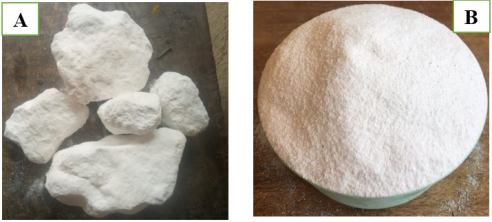
. Prior to processing, the Un-Beneficiated Kaolin (UBK) sample were allowed to air dry. The unbeneficiated kaolin was crushed and ground. The ground kaolin clay was soaked overnight in water in a predetermined ratio of 0.1 g/L. The mixture was plunged by stirred for 2 hours, then left to settle for 30 minutes. The supernatant water was decanted, and the sedimented kaolin clay was sieved using a mesh size 65um. Beneficiated Kaolin (BK) was obtained, and both BK and UBK samples were characterised to examine the highest alumina obtained and their thermophysical properties.
2.2. Characterisation of the Un-Beneficiated (UBK) and Beneficiated (BK) Samples Using X-ray Fluorescence (XRF)
Crystal structure and chemical content are what characterise kaolin-based ceramic materials. The major elements were determined by Energy Dispersive X-ray fluorescence spectrometer (EDX3600B) with a filament current of 350Ua. The pulverised unbeneficiated and beneficiated samples were mixed with lithium tetraborate for chemical analysis.
2.3. Thermophysical Properties
2.3.1. Porosity and Density
Porosity of the sample was determined using Helium Pycnometer plus Bulk volume method through Archimedes setup.
[16]
M. Abubakar et al., “Influence of Firing Temperature on the Physical, Thermal and Microstructural Properties of Kankara Kaolin Clay: A Preliminary Investigation,” Materials, vol. 13, no. 8, Art. no. 8, Jan. 2020,
. The test procedure employed to ascertain these characteristics complies with ASTM C 20-80a, which is the industry standard test procedure for porosity and density. From true and apparent density, the percentage of porosity was calculated through equation (1).
(1)
Using this method, apparent density and percent porosity were measured for all samples, and graphs of porosity against density were plotted to determine the relationship between change in porosity and density of the samples.
2.3.2. Water Absorption
The rate at which materials swell under thermal loading is directly related to their percentage of water absorption. This characteristic is critical, as it indicates the maximum amount of moisture that kaolin-based ceramic materials can absorb without compromising their structural integrity
[16]
M. Abubakar et al., “Influence of Firing Temperature on the Physical, Thermal and Microstructural Properties of Kankara Kaolin Clay: A Preliminary Investigation,” Materials, vol. 13, no. 8, Art. no. 8, Jan. 2020,
. Moisture absorption tests were conducted in accordance with the ASTM C 20-80a standard. The samples underwent a drying process in an oven at 100°C for 4 hours. The dried weight and soaked weight of the samples were measured and recorded. The percentage of water absorption was calculated using Equation (2).
(2)
= Moisture content, = Mass of the wet sample, = Mass of the sample after drying.
2.3.3. Determination of Thermal Conductivity
At room temperature, the thermal conductivity was measured in a steady-state scenario. A heat conduction apparatus was used for the test. The test was conducted using circular test specimens with dimensions of 40 mm in diameter and 4 mm in thickness. The specimens were placed between the equipment's colder and warmer faces and clamped in place. The power input of 5 watts was chosen, and it was kept there for 30 minutes until steady-state conditions were met. All six sensor locations—three on the heater part and three on the cooler section—had their temperatures T recorded. Fourier's law was used to compute the thermal conductivity as follows:
(3)
Where is the quantity of heat supplied, is the specimen thickness, is the cross-sectional area of the specimen, and is the temperature difference between the two circular faces.
2.4. Thermo-Gravimetric Analysis (TGA) and Differential Thermal Analysis (DTA) Behaviors
Thermal analysis of UBK and BK samples of kaolin-based ceramic materials was conducted using a NETZSCH STA 449 F3 Jupiter thermal analyser. This Simultaneous Thermal Analysis (STA) technique enabled the study of Thermogravimetric Analysis (TGA) and Differential Thermal Analysis (DTA) behaviors. The analyzer's temperature range was set between 40°C and 900°C, with a heating rate of 10°C/min in a nitrogen atmosphere. The weight loss and temperature changes during the process were recorded in ThermoGravimetric (TG) and Derivative ThermoGravimetric (DTG) formats.
3. Results and Discussion
3.1. Beneficiation Effect on Kaolin-based Ceramic Materials
Table 1 presents the chemical composition of kaolin-based ceramic materials, both UBK and BK samples. It is essential to determine the highest level of present in the kaolin-based ceramic material because of the attribute under temperature loading. The results presented in Table 1 show the elemental as well as the chemical composition of the investigated kaolin-based ceramic before and after beneficiation. It shows that beneficiation increased the amount of alumina oxide ( in the kaolin-based ceramic from 22.22 to 28.23%, while UBK kaolin-based ceramic was 22.22%. The BK sample showed the highest aluminium oxide obtained. The silicon oxide () decreased from 73.0 to 69.94% for UBK and BK samples, respectively. This is an indication of increased minerals and quartz, although this is in tandem with the claim by
[17]
C. Sergi, F. Sbardella, M. Lilli, J. Tirillò, A. Calzolari, and F. Sarasini, “Hybrid Cellulose-Basalt Polypropylene Composites with Enhanced Compatibility: The Role of Coupling Agent,” Molecules, vol. 25, no. 19, Art. no. 19, Jan. 2020,
. Iron (Fe) behaves differently under thermal conditions, due to the difference in its corrosive nature
[18]
A. Mamudu, M. Emetere, D. Okocha, S. Taiwo, F. Ishola, F. Elehinafe, and E. Okoro, "Parametric investigation of indigenous Nigeria mineral clay (Kaolin and Bentonite) as a filler in the Fluid Catalytic Cracking Unit (FCCU) of a petroleum refinery," Alexandria Engineering Journal, vol. 59, no. 6, pp. 5207-5217, 2020.
[18]
. The results show that the iron (Fe) content was reduced by 49.4% from 4.01 to 2.03% for the UBK and BK samples, respectively. This indicates the reduction of iron in the structure of BK compared to the UBK sample.
Table 1. Chemical composition of Kaolin-based ceramic materials.
Chemical Composition
SiO2
AI2O3
Fe2O3
MnO
CaO
P2O5
K2O
TiO2
MgO
UBK Sample
73.0
22.22
4.01
0.05
0.84
0.72
1.50
0.01
0.45
BK Sample
69.94
28.23
2.03
0.14
0.21
0.41
0.20
0.10
0.34
3.2. Thermophysical Properties
Table 2 displays the thermophysical parameters UBK and BK samples. These values were derived by averaging three (3) readings from the experiment. The explanations of each of the sample’s properties are made in the following subsections.
3.2.1. Porosity and Density
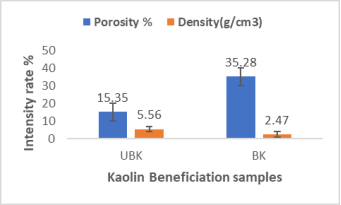
Figure 2 shows that the value of the porosity of the UBK was 15.350%, while BK was 35.28%. It was found that porosity improves tremendously with the BK result and is within the acceptable range of (20-40%) as suggested for ceramic material under temperature loading
[16]
M. Abubakar et al., “Influence of Firing Temperature on the Physical, Thermal and Microstructural Properties of Kankara Kaolin Clay: A Preliminary Investigation,” Materials, vol. 13, no. 8, Art. no. 8, Jan. 2020,
. It was observed from the results of the bulk density test that the values of bulk density significantly decreased from 5.56 to 2.47 (g/cm3). This decrease in bulk density can be traced to an increase in apparent porosity and water absorption. This is in agreement with some research conclusions that noted the correlation between bulk density, apparent porosity and water absorption and hence, stated that less dense materials are highly porous and less likely to shrink
[5]
A. O. Oke and B. V. Omidiji, “Investigation of Some Moulding Properties of a Nigerian Clay-Bonded Sand,” Arch. Foundry Eng., vol. Vol. 16, iss. 3, 2016,
A. Mamudu, M. Emetere, D. Okocha, S. Taiwo, F. Ishola, F. Elehinafe, and E. Okoro, "Parametric investigation of indigenous Nigeria mineral clay (Kaolin and Bentonite) as a filler in the Fluid Catalytic Cracking Unit (FCCU) of a petroleum refinery," Alexandria Engineering Journal, vol. 59, no. 6, pp. 5207-5217, 2020.
[5, 18]
.
Table 2. Thermophysical properties of the UBK and BK samples.
Figure 2. Rate of porosity with density of UBK and BK.
3.2.2. Water Absorption
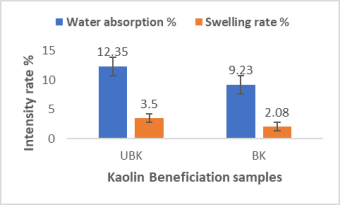
The percentage of water absorption rate of Un-Beneficiated Kaolin (UBK) and Beneficiated Kaolin (BK) samples is presented in Table 2. There was a steady decrease in water intake in the BK sample. At inception, the UBK sample stood at 12.35%, slightly higher than the value of the BK sample at 9.23% However, there was no appreciable change in the rate of absorption at BK because it has attained the saturation stage. Kaolin-based ceramic material that absorbs higher moisture is not desirable for high-strength applications. A comparison of the water absorption and swelling rates between the UBK and BK samples reveals a noticeable disparity, as illustrated in Figure 3. The results indicate that sample BK exhibit a distinct difference in water absorption behaviour, with the overall average water absorption rates being observed. It was observed that the UBK absorbed more moisture than the BK sample. The lesser the moisture absorbance rate of kaolin-based ceramic, the better its strength and compatibility for composite and the indication of suitability in a stringent environment. Also, there was a reduction in the swelling rate of sample BK compared to UBK. The relationship that exists between water absorption and the swelling rate is that the higher the swelling rate, the higher the water absorption of the materials.
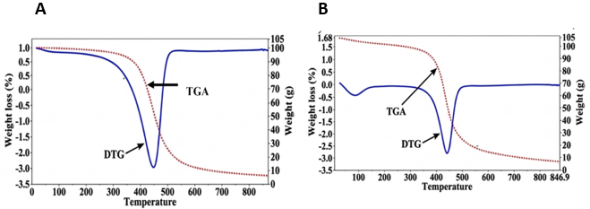
Figure 4. Comparison of TGA/DTA of (a) UBK and (b) BK.
3.3. TGA and DTA
The TGA and DTA are illustrated in Figure 4. The graph provides valuable insights into the thermal stability of both UBK and BK samples. The thermal decomposition of both samples resulted in distinct weight loss patterns, with significant degradation occurring between 400°C and 550°C. Thermal analysis revealed that the evaporation and release of water molecules occurred at similar temperatures for both unbeneficiated and beneficiated kaolin-based ceramic materials (UBK and BK). The initial weight loss phase, spanning 200°C to 350°C, was attributed to moisture loss, resulting in a weight reduction of approximately 9-10% across all samples. As the temperature increased, the initial decomposition temperature (IDT) phase commenced within the range of 400°C to 550°C. For each sample, there were variations in the weight loss and the temperature at which the thermal reaction took place. Three mass losses and three endothermic peaks were seen in the DTA curves for the samples. At temperatures between 100°C and 200°C, the first part of the TGA and DTA curves revealed a negligible weight loss of 2% to 10% for the UBK sample, but a weight loss of 2% to 5% was observed for BK. A significant weight loss was observed in all samples between 400°C and 500°C during the initial decomposition temperature reaction. This weight loss was attributed to the removal of absorbed and interlayer water, consistent with the findings of
[1]
G. P. Ojo, U. G. Igbokwe, C. J. Egbuachor, and K. K. Nwozor, “Geotechnical Properties and Geochemical Composition of Kaolin Deposits in Parts of Ifon, Southwestern Nigeria,” Am. J. Eng. Res. AJER, vol. 6, no. 3, pp. 15-24, 2017.
[1]
. The unique structure and chemical and mineralogical compositions of kaolin-based ceramics distinguish them from one another. According to the illustrations in Figure 4a and 4b, the findings indicate the superiority of the BK sample over the UBK sample, such as reducing the exothermicity of the pyrolysis reaction, limiting the generation of combustible gases, and decreasing the thermal conductivity of the burning materials. Consequently, kaolin-based ceramic samples with a lower percentage of weight loss exhibit good strength, which is also in agreement with the report of
[13]
R. H. Hilal, “Using Taguchi experimental design to calculate and analyze thermal conductivity for (polyacrylamide - kaolin) composite: Kuwait J. Sci., vol. 50, no. 3A, Art. no. 3A, Jun. 2023,
. The percentage weight loss enhances the stability and contributes to the strength of ceramic materials under temperature loading and is hereby recommended for furnace lining application.
4. Applications of BK in the Space Industry
Space hardware cannot tolerate impurities like iron, which creates hot spots, or volatiles that outgas in vacuum. Beneficiation reduces Fe2O3 to <0.5% and delivers predictable shrinkage, strength, and thermal stability. Because it is inexpensive, lightweight, and stable at high temperature, beneficiated kaolin (BK) is used wherever a low outgassing, non-melting ceramic is needed. BK serves as a refractory liner in small thrusters and solid rocket motors. It is also used as a filler in ablative nozzle throats. Also, BK is a good material for Thermal Protection Systems (TPS) with low thermal conductivity and low mass, BK performs well in re-entry materials. When blended into silica/phenolic ablatives, it forms a stable char layer. NASA and other agencies have tested kaolin-based composites for TPS applications. High-purity kaolin fibers and papers are used for internal insulation, gaskets, and cable wraps inside spacecraft. They exhibit minimal outgassing and withstand thermal cycling in vacuum.
5. Conclusion
It has been reported by researchers that millions of tons of kaolin reserves are obtainable across different deposits in Nigeria. These huge kaolin reserves can only be harnessed for greater economic benefits if their characteristics are studied. Therefore, this study investigated the effects of beneficiation on the mineralogical properties and its enhancement on the thermophysical properties of Nigerian kaolin. These findings indicated the superiority of beneficiated kaolin BK over unbeneficiated kaolin UBK, such as reduction of water absorption, swelling rate of BK compared to UBK sample. The exothermicity of the pyrolysis reaction for both UBK and BK shows that the BK sample has high porosity and is less dense compared to UBK, with lower porosity with higher density. Consequently, kaolin-based ceramic samples with a lower percentage of weight loss exhibit good strength and have thermal stability, which has been demonstrated by the BK sample. Based on the tremendous enhancement in the thermophysical properties of the BK sample, it is recommended for space applications.
Abbreviations
XRF
X-Ray Fluorescence
TGA
Thermo-Gravimetric Analysis
DTA
Differential Thermal Analysis
BK
Beneficiated Kaolin
UBK
Un-Beneficiated Kaolin
Moisture Content
Mass of the Wet Sample
Acknowledgments
The authors gratefully acknowledge the support of Department of Mechanical Engineering, University of Ibadan, Ibadan, Nigeria. And Advanced Aerospace Engine Laboratory Oka Akoko, Ondo, Nigeria for granting access to their laboratory.
Author Contributions
Abayomi Cyril Ogundola: Data curation, Formal Analysis, Investigation, Methodology, Software, Validation, Visualization, Writing – original draft
Ayodeji Olaoluwa Alake: Data curation, Software, Writing – original draft
Johnson Oluwasegun Ikare: Data curation, Project administration, Validation
Odunayo Peter Aminu: Project administration, Validation, Visualization
Olugbenga Bamidele Omosola: Data curation, Project administration, Software
Data Availability Statement
All data generated or analyzed during this study are included in this article.
Conflicts of Interest
The authors declare no conflicts of interest.
References
[1]
G. P. Ojo, U. G. Igbokwe, C. J. Egbuachor, and K. K. Nwozor, “Geotechnical Properties and Geochemical Composition of Kaolin Deposits in Parts of Ifon, Southwestern Nigeria,” Am. J. Eng. Res. AJER, vol. 6, no. 3, pp. 15-24, 2017.
[2]
A. Ababneh, F. Matalkah, and R. Aqel, “Synthesis of kaolin-based alkali-activated cement: carbon footprint, cost and energy assessment,” J. Mater. Res. Technol., vol. 9, no. 4, pp. 8367-8378, Jul. 2020,
Abdullah-Al-Kafi, M. Z. Abedin, M. D. H. Beg, K. L. Pickering, and M. A. Khan, “Study on the Mechanical Properties of Jute/Glass Fiber-reinforced Unsaturated Polyester Hybrid Composites: Effect of Surface Modification by Ultraviolet Radiation,” J. Reinf. Plast. Compos., vol. 25, no. 6, pp. 575-588, Apr. 2006,
A. Mamudu et al., “Parametric investigation of indigenous Nigeria mineral clay (Kaolin and Bentonite) as a filler in the Fluid Catalytic Cracking Unit (FCCU) of a petroleum refinery,” Alex. Eng. J., vol. 59, no. 6, pp. 5207-5217, Dec. 2020,
A. O. Oke and B. V. Omidiji, “Investigation of Some Moulding Properties of a Nigerian Clay-Bonded Sand,” Arch. Foundry Eng., vol. Vol. 16, iss. 3, 2016,
M. Jovanovic and A. Mujkanovic “CHARACTERIZATION, BENEFICIATION AND UTILIZATION OF THE CLAY FROM CENTAL BOSNIA, B&H,” 17th Int. Res. Conf.” Trends Dev. Mach. Assoc. Technol., 2013.
[7]
N. Salahudeen, U. Mohammed, and M. N. Yahya, “Chemical, morphological characterizations of Ririwai biotite and determination of yield point of its weighting agent application in drilling mud,” Niger. J. Technol., vol. 40, no. 2, Art. no. 2, Oct. 2021,
M. Mohammed et al., “Challenges and advancement in water absorption of natural fiber-reinforced polymer composites,” Polym. Test., vol. 124, p. 108083, Jul. 2023,
N. Sazali, Z. Harun, T. Abdullahi, F. H. Azhar, and N. Sazali, “Revolution of Malaysia’s Kaolin to Metakaolin towards various application: A Mini Review,” J. Mod. Manuf. Syst. Technol., vol. 3, pp. 114-119, Oct. 2019,
T. A. Aragaw and F. T. Angerasa, “Synthesis and characterization of Ethiopian kaolin for the removal of basic yellow (BY 28) dye from aqueous solution as a potential adsorbent,” Heliyon, vol. 6, no. 9, Sep. 2020,
F. Akasheh and H. Aglan, “Fracture toughness enhancement of carbon fiber-reinforced polymer composites utilizing additive manufacturing fabrication,” J. Elastomers Plast., Dec. 2018,
S. Siengchin, “A review on lightweight materials for defence applications: Present and future developments,” Def. Technol., vol. 24, pp. 1-17, Jun. 2023,
R. H. Hilal, “Using Taguchi experimental design to calculate and analyze thermal conductivity for (polyacrylamide - kaolin) composite: Kuwait J. Sci., vol. 50, no. 3A, Art. no. 3A, Jun. 2023,
O. O. James, M. A. Mesubi, F. A. Adekola, E. O. Odebunmi, and J. I. D. Adekeye, “Beneficiation and Characterisation of a Bentonite from North-Eastern Nigeria,” J. N. C. Acad. Sci., vol. 124, no. 4, pp. 154-158, 2008.
[15]
M. K. Egbo, “A fundamental review on composite materials and some of their applications in biomedical engineering,” J. King Saud Univ. - Eng. Sci., vol. 33, no. 8, pp. 557-568, Dec. 2021,
M. Abubakar et al., “Influence of Firing Temperature on the Physical, Thermal and Microstructural Properties of Kankara Kaolin Clay: A Preliminary Investigation,” Materials, vol. 13, no. 8, Art. no. 8, Jan. 2020,
C. Sergi, F. Sbardella, M. Lilli, J. Tirillò, A. Calzolari, and F. Sarasini, “Hybrid Cellulose-Basalt Polypropylene Composites with Enhanced Compatibility: The Role of Coupling Agent,” Molecules, vol. 25, no. 19, Art. no. 19, Jan. 2020,
A. Mamudu, M. Emetere, D. Okocha, S. Taiwo, F. Ishola, F. Elehinafe, and E. Okoro, "Parametric investigation of indigenous Nigeria mineral clay (Kaolin and Bentonite) as a filler in the Fluid Catalytic Cracking Unit (FCCU) of a petroleum refinery," Alexandria Engineering Journal, vol. 59, no. 6, pp. 5207-5217, 2020.
Ogundola, A. C., Ajide, O. O., Ibigbami, O. N., Lawal, I. O., Fadipe, A. O., et al. (2026). Effects of Beneficiation on the Thermophysical Properties of Kaolin Deposits in Nigeria for Space Applications. American Journal of Science, Engineering and Technology, 11(3), 205-211. https://doi.org/10.11648/j.ajset.20261103.20
Ogundola, A. C.; Ajide, O. O.; Ibigbami, O. N.; Lawal, I. O.; Fadipe, A. O., et al. Effects of Beneficiation on the Thermophysical Properties of Kaolin Deposits in Nigeria for Space Applications. Am. J. Sci. Eng. Technol.2026, 11(3), 205-211. doi: 10.11648/j.ajset.20261103.20
Ogundola AC, Ajide OO, Ibigbami ON, Lawal IO, Fadipe AO, et al. Effects of Beneficiation on the Thermophysical Properties of Kaolin Deposits in Nigeria for Space Applications. Am J Sci Eng Technol. 2026;11(3):205-211. doi: 10.11648/j.ajset.20261103.20
@article{10.11648/j.ajset.20261103.20,
  author = {Abayomi Cyril Ogundola and Olufemi Olusegun Ajide and Oluwole Nelson Ibigbami and Ismail Olusegun Lawal and Abimbola Omoyeni Fadipe and Emmanuel Tunde Daodu and Ayodeji Olaoluwa Alake and Johnson Oluwasegun Ikare and Odunayo Peter Aminu and Olugbenga Bamidele Omosola},
  title = {Effects of Beneficiation on the Thermophysical Properties of Kaolin Deposits in Nigeria for Space Applications},
  journal = {American Journal of Science, Engineering and Technology},
  volume = {11},
  number = {3},
  pages = {205-211},
  doi = {10.11648/j.ajset.20261103.20},
  url = {https://doi.org/10.11648/j.ajset.20261103.20},
  eprint = {https://article.sciencepublishinggroup.com/pdf/10.11648.j.ajset.20261103.20},
  abstract = {Kaolin-based ceramic materials include Clay, feldspar, kaolinite and silica clay are important industrial materials which often need treatment, commonly known as beneficiation, to improve the quality of ceramic alumina present in the kaolin materials. However, there is limited information on the impact of beneficiation on the thermophysical properties of kaolin in Nigeria for space application. The kaolin was sourced from Ijero, Ekiti State, Nigeria. Kaolin was wet beneficiated from 0 to 46 hours as established by literature, while compositions were determined using X-Ray Fluorescence (XRF). The thermophysical properties (Water Absorption, porosity, density, and swelling rate) and Thermo-Gravimetric Analysis (TGA) and Differential Thermal Analysis (DTA) of the Beneficiated Kaolin (BK) were determined and compared with Unbeneficiated Kaolin (UBK). The results from XRF yielded for UBK sample 73.0% , 22.22%  and 69.94% , 28.23%  for BK. This implies an improvement in the chemical composition of the BK sample. A tremendous improvement in porosity and density was noticeable in the sample BK compared to UBK. The TGA and DTA curves revealed a weight loss of 2% to 10% for the UBK sample, but a weight loss of 2% to 5% was observed for BK. This implies an enhancement in the thermophysical properties of BK. The percentage weight loss enhances the stability and contributes to the strength of kaolin-based ceramic materials under temperature loading, and sample BK is hereby recommended for space application.},
 year = {2026}
}
TY  - JOUR
T1  - Effects of Beneficiation on the Thermophysical Properties of Kaolin Deposits in Nigeria for Space Applications
AU  - Abayomi Cyril Ogundola
AU  - Olufemi Olusegun Ajide
AU  - Oluwole Nelson Ibigbami
AU  - Ismail Olusegun Lawal
AU  - Abimbola Omoyeni Fadipe
AU  - Emmanuel Tunde Daodu
AU  - Ayodeji Olaoluwa Alake
AU  - Johnson Oluwasegun Ikare
AU  - Odunayo Peter Aminu
AU  - Olugbenga Bamidele Omosola
Y1  - 2026/09/15
PY  - 2026
N1  - https://doi.org/10.11648/j.ajset.20261103.20
DO  - 10.11648/j.ajset.20261103.20
T2  - American Journal of Science, Engineering and Technology
JF  - American Journal of Science, Engineering and Technology
JO  - American Journal of Science, Engineering and Technology
SP  - 205
EP  - 211
PB  - Science Publishing Group
SN  - 2578-8353
UR  - https://doi.org/10.11648/j.ajset.20261103.20
AB  - Kaolin-based ceramic materials include Clay, feldspar, kaolinite and silica clay are important industrial materials which often need treatment, commonly known as beneficiation, to improve the quality of ceramic alumina present in the kaolin materials. However, there is limited information on the impact of beneficiation on the thermophysical properties of kaolin in Nigeria for space application. The kaolin was sourced from Ijero, Ekiti State, Nigeria. Kaolin was wet beneficiated from 0 to 46 hours as established by literature, while compositions were determined using X-Ray Fluorescence (XRF). The thermophysical properties (Water Absorption, porosity, density, and swelling rate) and Thermo-Gravimetric Analysis (TGA) and Differential Thermal Analysis (DTA) of the Beneficiated Kaolin (BK) were determined and compared with Unbeneficiated Kaolin (UBK). The results from XRF yielded for UBK sample 73.0% , 22.22%  and 69.94% , 28.23%  for BK. This implies an improvement in the chemical composition of the BK sample. A tremendous improvement in porosity and density was noticeable in the sample BK compared to UBK. The TGA and DTA curves revealed a weight loss of 2% to 10% for the UBK sample, but a weight loss of 2% to 5% was observed for BK. This implies an enhancement in the thermophysical properties of BK. The percentage weight loss enhances the stability and contributes to the strength of kaolin-based ceramic materials under temperature loading, and sample BK is hereby recommended for space application.
VL  - 11
IS  - 3
ER  -
Ogundola, A. C., Ajide, O. O., Ibigbami, O. N., Lawal, I. O., Fadipe, A. O., et al. (2026). Effects of Beneficiation on the Thermophysical Properties of Kaolin Deposits in Nigeria for Space Applications. American Journal of Science, Engineering and Technology, 11(3), 205-211. https://doi.org/10.11648/j.ajset.20261103.20
Ogundola, A. C.; Ajide, O. O.; Ibigbami, O. N.; Lawal, I. O.; Fadipe, A. O., et al. Effects of Beneficiation on the Thermophysical Properties of Kaolin Deposits in Nigeria for Space Applications. Am. J. Sci. Eng. Technol.2026, 11(3), 205-211. doi: 10.11648/j.ajset.20261103.20
Ogundola AC, Ajide OO, Ibigbami ON, Lawal IO, Fadipe AO, et al. Effects of Beneficiation on the Thermophysical Properties of Kaolin Deposits in Nigeria for Space Applications. Am J Sci Eng Technol. 2026;11(3):205-211. doi: 10.11648/j.ajset.20261103.20
@article{10.11648/j.ajset.20261103.20,
  author = {Abayomi Cyril Ogundola and Olufemi Olusegun Ajide and Oluwole Nelson Ibigbami and Ismail Olusegun Lawal and Abimbola Omoyeni Fadipe and Emmanuel Tunde Daodu and Ayodeji Olaoluwa Alake and Johnson Oluwasegun Ikare and Odunayo Peter Aminu and Olugbenga Bamidele Omosola},
  title = {Effects of Beneficiation on the Thermophysical Properties of Kaolin Deposits in Nigeria for Space Applications},
  journal = {American Journal of Science, Engineering and Technology},
  volume = {11},
  number = {3},
  pages = {205-211},
  doi = {10.11648/j.ajset.20261103.20},
  url = {https://doi.org/10.11648/j.ajset.20261103.20},
  eprint = {https://article.sciencepublishinggroup.com/pdf/10.11648.j.ajset.20261103.20},
  abstract = {Kaolin-based ceramic materials include Clay, feldspar, kaolinite and silica clay are important industrial materials which often need treatment, commonly known as beneficiation, to improve the quality of ceramic alumina present in the kaolin materials. However, there is limited information on the impact of beneficiation on the thermophysical properties of kaolin in Nigeria for space application. The kaolin was sourced from Ijero, Ekiti State, Nigeria. Kaolin was wet beneficiated from 0 to 46 hours as established by literature, while compositions were determined using X-Ray Fluorescence (XRF). The thermophysical properties (Water Absorption, porosity, density, and swelling rate) and Thermo-Gravimetric Analysis (TGA) and Differential Thermal Analysis (DTA) of the Beneficiated Kaolin (BK) were determined and compared with Unbeneficiated Kaolin (UBK). The results from XRF yielded for UBK sample 73.0% , 22.22%  and 69.94% , 28.23%  for BK. This implies an improvement in the chemical composition of the BK sample. A tremendous improvement in porosity and density was noticeable in the sample BK compared to UBK. The TGA and DTA curves revealed a weight loss of 2% to 10% for the UBK sample, but a weight loss of 2% to 5% was observed for BK. This implies an enhancement in the thermophysical properties of BK. The percentage weight loss enhances the stability and contributes to the strength of kaolin-based ceramic materials under temperature loading, and sample BK is hereby recommended for space application.},
 year = {2026}
}
TY  - JOUR
T1  - Effects of Beneficiation on the Thermophysical Properties of Kaolin Deposits in Nigeria for Space Applications
AU  - Abayomi Cyril Ogundola
AU  - Olufemi Olusegun Ajide
AU  - Oluwole Nelson Ibigbami
AU  - Ismail Olusegun Lawal
AU  - Abimbola Omoyeni Fadipe
AU  - Emmanuel Tunde Daodu
AU  - Ayodeji Olaoluwa Alake
AU  - Johnson Oluwasegun Ikare
AU  - Odunayo Peter Aminu
AU  - Olugbenga Bamidele Omosola
Y1  - 2026/09/15
PY  - 2026
N1  - https://doi.org/10.11648/j.ajset.20261103.20
DO  - 10.11648/j.ajset.20261103.20
T2  - American Journal of Science, Engineering and Technology
JF  - American Journal of Science, Engineering and Technology
JO  - American Journal of Science, Engineering and Technology
SP  - 205
EP  - 211
PB  - Science Publishing Group
SN  - 2578-8353
UR  - https://doi.org/10.11648/j.ajset.20261103.20
AB  - Kaolin-based ceramic materials include Clay, feldspar, kaolinite and silica clay are important industrial materials which often need treatment, commonly known as beneficiation, to improve the quality of ceramic alumina present in the kaolin materials. However, there is limited information on the impact of beneficiation on the thermophysical properties of kaolin in Nigeria for space application. The kaolin was sourced from Ijero, Ekiti State, Nigeria. Kaolin was wet beneficiated from 0 to 46 hours as established by literature, while compositions were determined using X-Ray Fluorescence (XRF). The thermophysical properties (Water Absorption, porosity, density, and swelling rate) and Thermo-Gravimetric Analysis (TGA) and Differential Thermal Analysis (DTA) of the Beneficiated Kaolin (BK) were determined and compared with Unbeneficiated Kaolin (UBK). The results from XRF yielded for UBK sample 73.0% , 22.22%  and 69.94% , 28.23%  for BK. This implies an improvement in the chemical composition of the BK sample. A tremendous improvement in porosity and density was noticeable in the sample BK compared to UBK. The TGA and DTA curves revealed a weight loss of 2% to 10% for the UBK sample, but a weight loss of 2% to 5% was observed for BK. This implies an enhancement in the thermophysical properties of BK. The percentage weight loss enhances the stability and contributes to the strength of kaolin-based ceramic materials under temperature loading, and sample BK is hereby recommended for space application.
VL  - 11
IS  - 3
ER  -





 Share This Article
 Twitter
 Linked In
 Facebook
 Copy
Copy Download