Research Article | | Peer-Reviewed

Experimental Study on In-Situ Combustion and Pyrolysis Characteristics of Low-Mature Shale -- A Case Study of the Songliao Basin

Received: 16 October 2025     Accepted: 19 November 2025     Published: 27 December 2025
Views:       Downloads:
Abstract

Low-mature shale (Ro = 0.5% ~ 1.0%) is an important strategic alternative in China’s oil and gas resource replenishment and production enhancement. In situ conversion technology is considered the key to efficient development. As one of the main methods of in situ conversion, in situ combustion heating technology has advantages such as low cost and high thermal efficiency. However, its combustion characteristics and pyrolysis mechanism in low-mature shale are not yet clear. This study focuses on low-mature shale from the Songliao Basin, using thermogravimetric analysis (TG), total organic carbon (TOC) testing, and one-dimensional physical simulation experiments to systematically explore its in situ combustion and pyrolysis behavior. The results show that the pyrolysis process of low-mature shale can be divided into three stages: low-temperature volatilization (<250°C), organic matter pyrolysis (250-550°C), and inorganic mineral decomposition (>550°C). The optimal temperature range for in situ combustion modification is between 450 and 500°C, where the organic matter pyrolysis conversion rate exceeds 80%, and the produced oil exhibits significant lightening characteristics. The research findings provide important theoretical support for the optimization and field application of in situ combustion technology for low-mature shale and are of great significance for promoting the sustainable development of shale oil resources in China.

Published in Earth Sciences (Volume 14, Issue 6)
DOI 10.11648/j.earth.20251406.16
Page(s) 282-289
Creative Commons

This is an Open Access article, distributed under the terms of the Creative Commons Attribution 4.0 International License (http://creativecommons.org/licenses/by/4.0/), which permits unrestricted use, distribution and reproduction in any medium or format, provided the original work is properly cited.

Copyright

Copyright © The Author(s), 2025. Published by Science Publishing Group

Keywords

Low-mature Shale, In Situ Combustion, Pyrolysis Characteristics, Total Organic Carbon, Experimental Study

1. Introduction
China has abundant land-based shale oil resources, with the resource volume of low-to-moderate mature shale (Ro = 0.5% ~ 1.0%) exceeding 400 billion tons, far higher than the moderate-to-high mature shale (Ro = 1.0% ~ 1.5%, about 100 billion tons), making it a key potential area for future oil and gas reserve growth . Although significant breakthroughs have been made in the development of moderate-to-high mature shale oil, such as in enrichment theory and horizontal well fracturing technologies, challenges remain with low-to-moderate mature shale due to issues such as low movable oil content (<10%), high oil viscosity (>1000 mPa•s), and poor reservoir brittleness, which make conventional extraction techniques ineffective and economically unfeasible . Therefore, in-situ conversion technologies, especially those that promote organic matter pyrolysis to generate hydrocarbons through artificial heating, have become a key technical direction for the development of low-to-moderate mature shale. In-situ combustion technology, which offers the advantage of "heat generation in place without surface heat supply," is widely considered one of the most promising technologies due to its low cost and high thermal efficiency .
In-situ combustion technology originated in the 1950s and was initially applied to heavy oil recovery. Its principle involves injecting air into the oil reservoir, causing the organic matter to combust, and using the heat released by combustion to drive the thermal cracking and displacement of remaining hydrocarbons . However, traditional in-situ combustion technology faces limitations such as shallow well depth (<750 meters), difficulty in combustion control, and solid waste disposal, which hinder its large-scale application . In recent years, with the advancement of deep well drilling and intelligent regulation technologies, the feasibility of in-situ combustion for low-to-moderate mature shale has been reconsidered. The Songliao Basin, as an important shale oil production area in China, has abundant organic matter in its northern low-to-moderate mature shale, which is also buried at moderate depths (1500~2500 meters), making it an ideal target for in-situ combustion technology.
This paper systematically studies the combustion temperature characteristics, organic matter conversion efficiency, and the composition changes of produced oil and gas of low-to-moderate mature shale in the Songliao Basin through pyrolysis experiments, total organic carbon (TOC) tests, and one-dimensional combustion simulations. The study clarifies the in-situ combustion potential of these shales. The results provide a theoretical basis for optimizing and promoting in-situ combustion technology, which is of great significance for the efficient development of low-to-moderate mature shale oil resources.
2. Materials and Equipment
2.1. Experimental Samples
The samples were selected from the low-to-moderate mature shale cores in the northern Songliao Basin, with well depths ranging from 1877 to 1904 meters, and a reflectance of vitrinite (Ro) of 0.986%, representing typical low-to-moderate mature shale. The samples were crushed and sieved, and the following mixed particle sizes were selected: 50% (40-80 mesh), 10% (<6 mesh), 10% (6-20 mesh), 10% (20-40 mesh), 10% (80-100 mesh), and 10% (>100 mesh), to simulate the reservoir pore structure.
2.2. Experimental Instruments and Apparatus
2.2.1. STA-409-PC Comprehensive Thermal Analyzer
Used for pyrolysis characteristic analysis. Experimental conditions: sample mass of 40±10 mg, heating rate of 5°C/min, final pyrolysis temperature of 1000°C, gas injection rate of 40 mL/min, and an air atmosphere.
2.2.2. Vario TOC Cube Total Organic Carbon Analyzer
Used to measure the TOC content of the samples at different constant temperatures. The temperature gradient was set at 250°C, 300°C, 350°C, 400°C, 450°C, 500°C, 550°C, and 600°C.
2.2.3. One-Dimensional Physical Simulation Apparatus
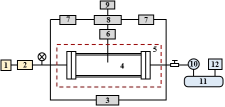
Used for combustion characteristic analysis. The apparatus mainly includes the injection unit, core model unit, data acquisition and control unit, and liquid-gas separation and recovery unit (see Figure 1). The injection unit consists of air bottles, nitrogen bottles, and flow meters, which can adjust the gas injection intensity during the experiment and measure and control the injection speed. The core model unit uses a φ2.5 cm × 45 cm one-dimensional combustion tube, and the model is wrapped with an insulating jacket placed in a temperature control box. The data acquisition and control unit consists of thermocouples, data acquisition boards, back-pressure valves, micro-adjustment valves, etc., to record the temperature at various points in the combustion process and control the internal pressure of the temperature control box through the control unit.
Figure 1. One-Dimensional Physical Simulation Experimental Apparatus.
1—Gas Source; 2—Flow Meter; 3—Confined Pressure Tracking Device; 4—Plunger Model; 5—High-Temperature Constant-Temperature Box; 6—Temperature Measurement System; 7—Pressure Sensor; 8—Data Acquisition Module; 9—Computer; 10—High-Temperature High-Pressure Back Pressure Valve; 11—Gas-Liquid Separation Device; 12—Flue Gas Analyzer.
2.2.4. GC-7890 Gas Chromatograph
Used for analyzing the hydrocarbon components of the produced oil.
3. Experimental Results and Analysis
3.1. TG Thermal Analysis Experiment and Pyrolysis Process Study
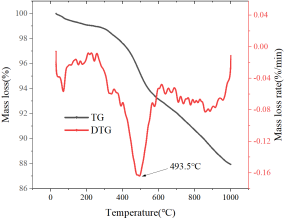
To further study the pyrolysis characteristics of low-to-moderate mature shale, the TG-DTG curves were analyzed, dividing the pyrolysis process of the shale into three stages: low-temperature volatilization, organic matter pyrolysis, and high-temperature inorganic mineral decomposition. This helps to understand the mass loss characteristics and reaction mechanisms of each stage. The pyrolysis data were used to explore and optimize the in-situ combustion process of low-to-moderate mature shale, providing theoretical support for its practical application.
Figure 2. Thermal Analysis Experiment TG-DTG Curve Stage Division.
Figure 2 shows the TG-DTG curves during the sample heating process. The TG curve represents the mass loss of the sample during the heating process, while the DTG curve shows the instantaneous rate of mass change during pyrolysis. Based on the mass loss and pyrolysis mechanism, the reaction process of low-to-moderate mature shale is divided into three stages: low-temperature volatilization, organic matter pyrolysis, and high-temperature inorganic mineral decomposition.
First Stage (<250°C): The TG curve shows a gradual but continuous slight decline, with a mass loss of 0.42%, corresponding to a broad, low peak in the DTG curve. In this stage, the weight loss rate is relatively low, mainly due to the desorption of free water adsorbed in the pores and the gradual release of bound water and interlayer water in clay minerals such as illite and montmorillonite during heating. A small amount of light hydrocarbons, which are either present in the pores or adsorbed on mineral surfaces, also volatilize at low temperatures.
Second Stage (250-550°C): The TG curve shows a sharp, significant decrease with a cumulative mass loss of 6.72%, and the DTG curve shows a major peak at Tmax = 493.5°C. This stage mainly reflects the pyrolysis of organic matter in low-to-moderate mature shale. The mass loss is mainly driven by the thermal cracking of kerogen, where weak chemical bonds in large kerogen molecules, such as C-C bonds, C-O bonds, and sulfur/nitrogen-containing bonds, break under heat, producing small molecule hydrocarbons (oil, gas) and residual coke. Asphalt or heavy soluble organic matter, which may also exist in the sample, undergoes pyrolysis and volatilization in this temperature range, with the cracking of some components overlapping with kerogen. This stage is an important thermal analysis indicator for evaluating the sample's original hydrocarbon generation potential, directly reflecting the total amount of organic matter that can be pyrolyzed.
Third Stage (>550°C): The mass loss in this stage is about 3.89%, and the DTG curve shows several broad, low peaks. This stage mainly represents the deep cracking of residual polycyclic aromatic hydrocarbon structures or coke at higher temperatures, generating methane, hydrogen, and other gases, along with thermal polymerization reactions. Additionally, carbonate minerals and a small amount of sulfides in the sample decompose under high temperatures, leading to slow mass loss.
By analyzing the pyrolysis data at different temperatures, the key temperature intervals for each stage of the in-situ combustion process and their effect on organic matter conversion efficiency can be clarified. In the 250-550°C range, the pyrolysis conversion rate of organic matter increases significantly, thus determining this range as the optimal temperature for in-situ combustion. To further optimize the in-situ combustion process, air injection rate and temperature control can be adjusted based on pyrolysis data, which will improve organic matter conversion efficiency and reduce interference from inorganic minerals. Moreover, by controlling temperature and injection conditions during the high-temperature stage, the pyrolysis efficiency and oil and gas output of low-to-moderate mature shale can be optimized.
3.2. Total Organic Carbon Content and Pyrolysis Conversion Rate Analysis
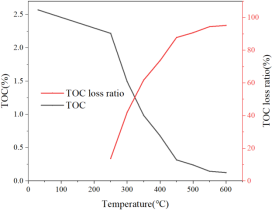
In the pyrolysis process of low-to-moderate mature shale, the core mass loss includes both organic matter conversion loss and inorganic mineral decomposition loss. The decrease in total organic carbon (TOC) content represents the loss of organic matter through oxidation, decomposition, and combustion, defined as the core in-situ combustion pyrolysis rate. The TOC test results under different constant temperature conditions are shown in Table 1.
Table 1. Experimental Results of Total Organic Carbon Content of Samples at Different Temperatures.

Sample

250°C

300°C

350°C

400°C

450°C

500°C

550°C

600°C

TOC, %

2.216

1.492

0.985

0.677

0.315

0.239

0.15

0.124

TOC Loss Value, %

0.3525

1.0765

1.5835

1.8915

2.2535

2.3295

2.4185

2.4445

Loss TOC Rate, %

13.7

41.9

61.7

73.6

87.73

90.7

94.2

95.2

From the TOC measurement results under different constant temperature conditions in Table 1, it can be observed that between 250°C and 600°C, the total organic carbon content, loss values, and TOC loss rates change with temperature. The TOC values represent the amount of total organic carbon in the sample, which decreases as the temperature increases. The loss value indicates the loss of TOC content at specific temperatures, which increases as the temperature rises. The loss TOC rate represents the proportion of TOC loss, which increases with temperature, especially in the 450-500°C range, where the TOC loss rate significantly increases, reaching high values.
Figure 3. Total Organic Carbon Content Test Results of Samples at Different Constant Temperatures.
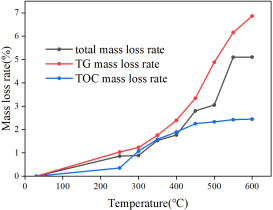
As shown in Figures 3 and 4, at 250°C, the TOC loss rate is only 13.7%, indicating that the decomposition of organic matter is relatively mild. As the temperature increases, the TOC loss rate rapidly increases, especially between 250-500°C, where the loss rate gradually increases. At 400°C, the TOC loss reaches more than 70%, marking a significant pyrolysis of the organic matter in the sample. At this point, organic matter in the sample starts to decompose, producing oil and gas. In the 450-500°C range, the TOC loss rate reaches a high level (over 80%), which is beneficial for maximizing organic matter conversion. During this stage, in-situ combustion is most effective, as the organic matter conversion rate is high, and the interference from inorganic minerals is minimal. Above 500°C, inorganic minerals (e.g., carbonates) in the sample begin to decompose, and the conversion rate of organic matter slows down. Therefore, temperatures above 500°C are mainly used for the decomposition of inorganic minerals.
Figure 4. Comparison of Loss Rate in Different Experimental Methods.
These data show that temperature has a significant impact on the TOC loss rate of the sample. Especially in the 450-500°C range, the conversion efficiency of organic matter is significantly improved, so this temperature range is considered the optimal temperature range for in-situ combustion of low-to-moderate mature shale. These experimental results provide a theoretical basis for in-situ combustion technology, particularly for optimizing temperature control and improving combustion efficiency. Reasonable temperature control can maximize the organic matter conversion rate while avoiding the negative impact of inorganic mineral decomposition caused by excessively high temperatures.
3.3. In-Situ Combustion Characteristics and Pyrolysis Behavior of Low-to-Moderate Mature Shale
3.3.1. Combustion Temperature Analysis
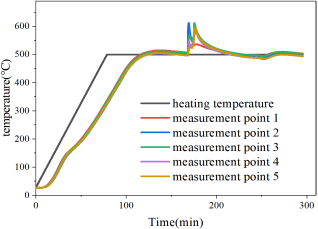
To further analyze the in-situ combustion characteristics and pyrolysis behavior of low-to-moderate mature shale, a series of experiments were conducted to systematically study the pyrolysis behavior, combustion process, and conversion characteristics of low-to-moderate mature shale under different temperature conditions. Figure 5 shows the temperature variation over time under different temperature conditions during the in-situ combustion one-dimensional physical simulation experiment.
Figure 5. Temperature Variation in One-Dimensional In-Situ Combustion Simulation Experiment.
From Figure 5, it can be seen that after setting the constant temperature to 500°C and maintaining it for 1 hour, air injection began, and the temperature inside the combustion tube rapidly increased to 615°C. This temperature increase indicates that the injection of air facilitated the combustion reaction of the organic matter, releasing more heat and causing the temperature to rise rapidly.
However, as the organic matter gradually depletes, the heat generated by the combustion reaction is insufficient to maintain the high-temperature state. As the organic matter (fuel) is gradually consumed, the temperature begins to decrease, gradually dropping from the peak of 615°C to 500°C. This phenomenon indicates that the continuity of the combustion reaction is limited by the fuel supply, with the depletion of organic matter directly leading to the weakening of the combustion reaction, which in turn affects the stability of the temperature.
Finally, the temperature inside the combustion tube stabilizes back at 500°C. This process reflects the characteristics of in-situ combustion in terms of temperature control and reaction continuity. By adjusting the air injection rate and duration, the combustion process can be better maintained and optimized to ensure stable heat release and effectively promote the pyrolysis and conversion of organic matter.
This experimental result provides important data support for temperature control optimization in in-situ combustion technology, especially for the rapid temperature rise and combustion process continuity management.
3.3.2. Gas Product Analysis
Figure 6. Tail Gas Component Variation Characteristics in One-Dimensional In-Situ Combustion Simulation Experiment.
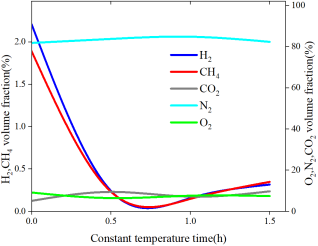
Before air injection, the pyrolysis of organic matter in a sealed state generates methane and other light hydrocarbons, which accumulate at high concentrations. As air is injected and combustion occurs, the accumulated gases inside the combustion tube are rapidly expelled, and the concentration of methane and other light hydrocarbons decreases, indicating that pyrolysis of low-to-moderate mature shale begins to react in a low-oxygen environment. From the analysis of Table 2 and Figure 6, the gas production characteristics during the in-situ combustion process are evident: carbon dioxide and hydrogen are the primary products, indicating that organic matter is extensively converted into these gases during combustion and pyrolysis. The consumption of oxygen and generation of carbon dioxide reflect the ongoing combustion reaction, while the production of hydrogen and methane indicates that organic matter is cracked into light hydrocarbons during pyrolysis.
Table 2. Content of Exhaust gas Components Produced under Different Constant Temperature Durations.

Constant Temperature Time / min

H2 /%

CO2 /%

O2 /%

N2 /%

CH4 /%

CO /%

0

2.208

5.061

9.1186

81.723

1.8894

0

0.5

0.241

9.415

6.4309

83.682

0.2312

0

1

0.156

7.125

7.5699

84.727

0.1469

0.275

1.5

0.316

9.699

7.3829

82.255

0.3475

0

This experiment provides important data for optimizing in-situ combustion technology, especially regarding the relationship between temperature, time, and gas production. This information helps to control gas generation, reaction efficiency, and energy release during the combustion process.
3.3.3. Oil Product Analysis
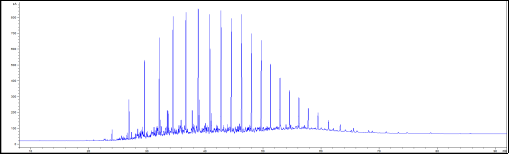
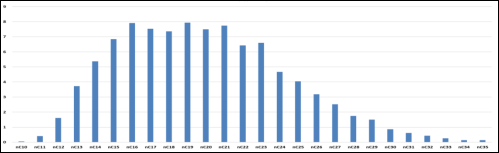
The produced oil is light oil, which is rapidly produced within about 0.5 hours after ignition. Based on the carbon number distribution of the oil components, it ranges from C10 to C35, with the main carbon peak at C19. Some organic matter is oxidized and consumed, generating water. After the experiment, the core was removed, and its color was noticeably lighter, with sintered blocks appearing, indicating that organic matter in the core was greatly consumed and significant pyrolysis and combustion coking reactions occurred. Therefore, under the same heating temperature, the air atmosphere significantly enhances the in-situ combustion pyrolysis effect of low-to-moderate mature shale.
From Figures 7 and 8, it can be seen that the in-situ combustion process significantly increased the conversion rate of organic matter in low-to-moderate mature shale, especially in terms of light oil production. The lightening conversion during combustion causes the hydrocarbon composition of the produced oil to shift towards shorter carbon chain compounds, thus improving the usability of the produced oil.
The carbon chain length of the produced oil mainly ranges from C8 to C25, which matches the typical product characteristics of low-to-moderate mature shale, indicating that the pyrolysis process effectively converts organic matter into usable light hydrocarbons at certain temperatures. The produced oil shows characteristics of shorter carbon chains, which is significant for shale oil development, especially in terms of improving oil and gas yield and quality. These analytical results provide important references for optimizing and applying in-situ combustion technology, especially in improving light oil yield and pyrolysis efficiency.
These data contribute to further optimizing the application of in-situ combustion in low-to-moderate mature shale, improving resource development efficiency, and providing theoretical support for the sustainable development of shale oil resources.
Figure 7. Gas Chromatography of Produced Oil Components from One-Dimensional In-Situ Combustion Pyrolysis Experiment.
Figure 8. Distribution of Full Hydrocarbon Components in Produced Oil from One-Dimensional In-Situ Combustion Pyrolysis Experiment.
4. Conclusion
(1) The optimal temperature range for in-situ combustion is 450°C-500°C, during which the organic matter conversion rate can reach over 80%, and the oil products exhibit significant lightening characteristics.
(2) At 450°C, low-to-moderate mature shale can consume about 2.25% of its mass, with an organic carbon combustion heat of 40 MJ/kg, indicating that in-situ combustion technology has a high pyrolysis conversion efficiency.
(3) Based on the experimental results, an in-situ combustion modification method suitable for low-to-moderate mature shale is proposed, which includes well network development, alternating injection of gas and water, and steam flooding, to effectively improve the pyrolysis and recovery rates of shale oil.
(4) The future work should focus on multi-scale combustion simulations, detailed characterization of combustion products, the mechanisms of mineral-organic matter interactions, combustion parameter optimization, and the deep integration with numerical simulations, in order to promote the transition of in-situ combustion technology from mechanism research to engineering applications..
(5) This technological method not only optimizes the development efficiency of low-to-moderate mature shale but also provides new ideas for the sustainable development of shale oil resources in China.
Abbreviations

TOC

Total Organic Carbon

TG-DTG

Thermogravimetric-Differential Thermogravimetric

Author Contributions
Zhang Hong: Conceptualization, Resources, Writing-original draft, Formal Analysis, Project administration
Zhao Fajun: Data curation, Methodology, Formal Analysis
Wu Xiaolin: Methodology, Writing - review & editing, Supervision
Qian Yu: Formal Analysis, Supervision, Validation
Liu Xin: Data curation, Software, Investigation, Visualization
Funding
This work is supported by the Joint Guidance Project of the Natural Science Foundation of Heilongjiang Province (LH2022E022).
Data Availability Statement
The data is available from the corresponding author upon reasonable request.
Conflicts of Interest
The authors declare no conflicts of interest.
References
[1] Zou, C., Pan, S., Jing, Z., et al. Shale Oil and Gas Revolution and Its Impact. Acta Petrolei Sinica, 2020, 41(01): 1-12. HYPERLINK "
[2] Zou, C., Yang, Z., Cui, J., et al. Formation Mechanism, Geological Characteristics, and Development Strategy of Nonmarine Shale Oil in China. Petroleum Exploration and Development Online, 2013, 40(1): 15-27.
[3] Zhao, W., Zhu, R., Liu, W., et al. Enrichment Conditions and Distribution Characteristics of Marine Shale Oil in China. Earth Science Frontiers, 2023, 30(01): 116-127+242-259. HYPERLINK "
[4] Hu, S., Zhao, W., Hou, L., et al. Development Potential and Technical Countermeasures for Shale Oil in China's Continental Basins. Petroleum Exploration and Development, 2020, 47(04): 819-828. HYPERLINK "
[5] Zhao, W., Hu, S., Hou, L. The Connotation and Strategic Position of In-situ Conversion of Shale Oil. Petroleum Exploration and Development, 2018, 45(04): 537-545. HYPERLINK "
[6] Liu, Q. Current Status and Development Trends of Thermal Recovery Technology for Heavy Oil. Chemical Engineering Management, 2015, (35): 181.
[7] Sun, Y., Guo, W., Deng, S. In-situ Conversion and Drilling Extraction Technologies for Oil Shale: Current Status and Development Trends. Drilling Engineering, 2021, 48(01): 57-67.
[8] Sun, Y., Lapagin, F., Han, W., et al. A Method for In-situ Heating of Oil Shale. Jilin Province: CN201310078978.5, December 2, 2015.
[9] Burnham, A. K., Singleton, M. F. High-Pressure Pyrolysis of Green River Oil Shale. ACS Publications, 1983.
[10] Lu, M., Li, X., Mi, J., et al. Simulation of Oil and Gas Production Characteristics by In-situ Heating of Typical Low-Mature Shale. Acta Petrolei Sinica, 2023, 44(05): 765-777.
[11] Xu, S. Theory and Experimental Research on the In-situ Thermal Triggering Method for Oil Shale. Jilin University, 2023.
[12] Liang, K. Study on the Large-Scale Pyrolysis and Combustion Permeability of Oil Shale Based on In-situ Mining. China University of Mining and Technology (Beijing), 2020.
[13] Wang, L., Yang, D., Kang, Z., et al. Determination of the Pyrolysis Temperature for In-situ Oil Shale Mining by Steam Injection and Feasibility Analysis. Science and Technology and Engineering, 2015, 15(29): 109-113.
[14] He, W., Meng, Q., Lin, T., et al. Evolution of In-situ Permeability with Temperature in the Lower-Mature Shale of the Cretaceous Nenjiang Formation in Northern Songliao Basin. Petroleum Exploration and Development, 2022, 49(3): 453-464.
[15] Sun, L., Liu, H., He, W., et al. Major Scientific Issues and Research Pathways for Daqing Gulong Shale Oil. Petroleum Exploration and Development, 2021, 48(3): 453-463.
Cite This Article
  • APA Style

    Hong, Z., Fajun, Z., Xiaolin, W., Yu, Q., Xin, L. (2025). Experimental Study on In-Situ Combustion and Pyrolysis Characteristics of Low-Mature Shale -- A Case Study of the Songliao Basin. Earth Sciences, 14(6), 282-289. https://doi.org/10.11648/j.earth.20251406.16

    Copy | Download

    ACS Style

    Hong, Z.; Fajun, Z.; Xiaolin, W.; Yu, Q.; Xin, L. Experimental Study on In-Situ Combustion and Pyrolysis Characteristics of Low-Mature Shale -- A Case Study of the Songliao Basin. Earth Sci. 2025, 14(6), 282-289. doi: 10.11648/j.earth.20251406.16

    Copy | Download

    AMA Style

    Hong Z, Fajun Z, Xiaolin W, Yu Q, Xin L. Experimental Study on In-Situ Combustion and Pyrolysis Characteristics of Low-Mature Shale -- A Case Study of the Songliao Basin. Earth Sci. 2025;14(6):282-289. doi: 10.11648/j.earth.20251406.16

    Copy | Download

  • @article{10.11648/j.earth.20251406.16,
      author = {Zhang Hong and Zhao Fajun and Wu Xiaolin and Qian Yu and Liu Xin},
      title = {Experimental Study on In-Situ Combustion and Pyrolysis Characteristics of Low-Mature Shale -- A Case Study of the Songliao Basin},
      journal = {Earth Sciences},
      volume = {14},
      number = {6},
      pages = {282-289},
      doi = {10.11648/j.earth.20251406.16},
      url = {https://doi.org/10.11648/j.earth.20251406.16},
      eprint = {https://article.sciencepublishinggroup.com/pdf/10.11648.j.earth.20251406.16},
      abstract = {Low-mature shale (Ro = 0.5% ~ 1.0%) is an important strategic alternative in China’s oil and gas resource replenishment and production enhancement. In situ conversion technology is considered the key to efficient development. As one of the main methods of in situ conversion, in situ combustion heating technology has advantages such as low cost and high thermal efficiency. However, its combustion characteristics and pyrolysis mechanism in low-mature shale are not yet clear. This study focuses on low-mature shale from the Songliao Basin, using thermogravimetric analysis (TG), total organic carbon (TOC) testing, and one-dimensional physical simulation experiments to systematically explore its in situ combustion and pyrolysis behavior. The results show that the pyrolysis process of low-mature shale can be divided into three stages: low-temperature volatilization (550°C). The optimal temperature range for in situ combustion modification is between 450 and 500°C, where the organic matter pyrolysis conversion rate exceeds 80%, and the produced oil exhibits significant lightening characteristics. The research findings provide important theoretical support for the optimization and field application of in situ combustion technology for low-mature shale and are of great significance for promoting the sustainable development of shale oil resources in China.},
     year = {2025}
    }
    

    Copy | Download

  • TY  - JOUR
    T1  - Experimental Study on In-Situ Combustion and Pyrolysis Characteristics of Low-Mature Shale -- A Case Study of the Songliao Basin
    AU  - Zhang Hong
    AU  - Zhao Fajun
    AU  - Wu Xiaolin
    AU  - Qian Yu
    AU  - Liu Xin
    Y1  - 2025/12/27
    PY  - 2025
    N1  - https://doi.org/10.11648/j.earth.20251406.16
    DO  - 10.11648/j.earth.20251406.16
    T2  - Earth Sciences
    JF  - Earth Sciences
    JO  - Earth Sciences
    SP  - 282
    EP  - 289
    PB  - Science Publishing Group
    SN  - 2328-5982
    UR  - https://doi.org/10.11648/j.earth.20251406.16
    AB  - Low-mature shale (Ro = 0.5% ~ 1.0%) is an important strategic alternative in China’s oil and gas resource replenishment and production enhancement. In situ conversion technology is considered the key to efficient development. As one of the main methods of in situ conversion, in situ combustion heating technology has advantages such as low cost and high thermal efficiency. However, its combustion characteristics and pyrolysis mechanism in low-mature shale are not yet clear. This study focuses on low-mature shale from the Songliao Basin, using thermogravimetric analysis (TG), total organic carbon (TOC) testing, and one-dimensional physical simulation experiments to systematically explore its in situ combustion and pyrolysis behavior. The results show that the pyrolysis process of low-mature shale can be divided into three stages: low-temperature volatilization (550°C). The optimal temperature range for in situ combustion modification is between 450 and 500°C, where the organic matter pyrolysis conversion rate exceeds 80%, and the produced oil exhibits significant lightening characteristics. The research findings provide important theoretical support for the optimization and field application of in situ combustion technology for low-mature shale and are of great significance for promoting the sustainable development of shale oil resources in China.
    VL  - 14
    IS  - 6
    ER  - 

    Copy | Download

Author Information
  • Northeast Petroleum University Key Laboratory of Improving Oil and Gas Recovery, Ministry of Education, Daqing, China;State Key Laboratory of Continental Shale Oil, Daqing, China;Exploration and Development Research Institute, Daqing Oilfield Limited Company, Daqing, China
  • Northeast Petroleum University Key Laboratory of Improving Oil and Gas Recovery, Ministry of Education, Daqing, China

  • State Key Laboratory of Continental Shale Oil, Daqing, China;Daqing Oilfield Limited Company, Daqing, China

  • Exploration and Development Research Institute, Daqing Oilfield Limited Company, Daqing, China

  • State Key Laboratory of Continental Shale Oil, Daqing, China;Exploration and Development Research Institute, Daqing Oilfield Limited Company, Daqing, China