Research Article | | Peer-Reviewed

Research-Ability-Orientated Course Design and Cultivation Examples of Numerical Simulation Technology on Manufacturing Processes for Graduate Students

Received: 23 March 2026     Accepted: 20 April 2026     Published: 30 April 2026
Views:       Downloads:
Abstract

“Numerical Simulation Technology on Manufacturing Processes” is a graduate-level course designed for students majoring in mechanical engineering, especially in manufacturing technology. With the advancement of manufacturing and information technologies, the course has become significantly more applicable and practical for students across various manufacturing fields. To enable students not only to master numerical simulation techniques but also to extract and analyze engineering problems from a scientific perspective, this paper presents the course design, core contents, and representative outcomes as a reference. The main contents include: (1) the course background, target audience, and key instructional procedures, with an emphasis on the rationale behind student presentation sessions; (2) two typical manufacturing process case studies that illustrate how the course systematically enhances students’ research capabilities through the pre-simulation stages of problem extraction and model simplification; (3) a discussion on the application prospects of cutting-edge artificial intelligence (AI) technologies such as physics-informed neural networks (PINN) and graph neural networks (GNN) in simulation curricula, identifying them as key future directions for numerical simulation technology. Through a comprehensive introduction to this course, we aim to contribute to the cultivation of outstanding research-oriented talents for China’s manufacturing engineering sector, which already holds a competitive edge and having the inevitable requirement for a scientific transformation.

Published in Higher Education Research (Volume 11, Issue 2)
DOI 10.11648/j.her.20261102.12
Page(s) 34-42
Creative Commons

This is an Open Access article, distributed under the terms of the Creative Commons Attribution 4.0 International License (http://creativecommons.org/licenses/by/4.0/), which permits unrestricted use, distribution and reproduction in any medium or format, provided the original work is properly cited.

Copyright

Copyright © The Author(s), 2026. Published by Science Publishing Group

Keywords

Intelligent Manufacturing, Precision Machining, Physical Fields Simulation, Practical Project, Numerical Calculation, Experimental Demonstration, AI for Engineering

1. Introduction
The teaching work carried out in this paper is targeted at the course Numerical Simulation Technology on Manufacturing Processes, that is a core course for the professional master degree program entitled Intelligent Manufacturing. This master degree program has been established at Shenzhen International Graduate School (SIGS) of Tsinghua University. The construction goal of this program is, based on the multidisciplinary intersection advantages of Tsinghua University, to build a training system oriented to the major needs of China's manufacturing industry transformation and upgrading. It aims to cultivate leading talents and innovative high-level talents in the field of intelligent manufacturing who have cross-field interdisciplinary and collaborative research backgrounds, excellent innovative thinking and forward-looking prediction capabilities, as well as an international perspective and a holistic systematic vision. This program is intended to promote social and economic development, enhance the innovation capacity of the manufacturing industry, and contribute to accomplishing the strategic task of transforming China's manufacturing from large to strong. The positioning of the master degree program of Intelligent Manufacturing is based on the fact that the manufacturing industry is the core competitiveness for China to achieve the great cause of national rejuvenation. Domestically, the manufacturing industry has long been an important engine for China's rapid economic and national strength development; internationally, it is a key field of current global competition, as well as the confidence and foundation for China to resist external pressures under the current severe international situation. The Guangdong-Hong Kong-Macao Greater Bay Area is an important industrial agglomeration area for China's manufacturing industry, where the manufacturing sector occupies a pivotal position. The intelligent manufacturing discipline is an emerging interdisciplinary subject integrating multiple first-level disciplines such as mechanical engineering, instrumentation, and control science and engineering, all of which are traditional advantageous disciplines of Tsinghua University. Meanwhile, the field of intelligent manufacturing has a sound and solid foundation in Shenzhen.
The master degree program of Intelligent Manufacturing at SIGS is a multidisciplinary interdisciplinary talent training program. Closely aligned with China's manufacturing development strategy, it gives full play to the advantages of the manufacturing industry in the Greater Bay Area and the related disciplinary strengths of Tsinghua University, carries out scientific research on intelligent manufacturing and the construction of talent training bases, and thus plays a positive demonstration and leading role in the training of postgraduates in the field of intelligent manufacturing in domestic universities.
2. Course Layout and Design
The course Numerical Simulation Technology on Manufacturing Processes is a core course for the master degree program of Intelligent Manufacturing in Tsinghua University, it is also offered for the Tsinghua University-RWTH Aachen University Double Master’s Degree Program and delivered entirely in English. The RWTH Aachen Program is the first formal joint education program of our school that dispatches students to study abroad. The majority of students in the RWTH Aachen Program take this course, and there are also master degree and doctoral students from other programs who enroll based on their research project needs.
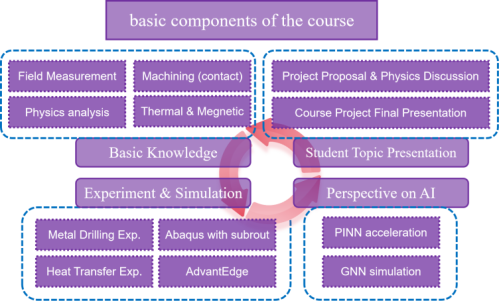
Figure 1. The main modules and components of the course.
Based on the fundamental theories of manufacturing technology, this course focuses on numerical simulation and simulation technology. Adopting an integrated teaching approach combining lectures, software hands-on practice, experiments and project assignments, it emphasizes the multi-physics simulation modeling methodologies for various manufacturing processes and the complete process system of machining simulation technology, while also introducing the latest advancements in process simulation technology and commercial software. The main teaching contents include: an overview of numerical simulation technology for manufacturing processes, material data and models for process simulation, process modeling and simulation for typical cold and hot working processes, analytical methods for process simulation, and the latest developments in commercial process simulation software. It was concluded in Figure 1. Through the study of this course, students can systematically master the basic concepts and key steps of numerical simulation technology for manufacturing processes, realize the mapping of manufacturing technology theories to process simulation, understand the new professional technologies and development trends, expand their professional foundational and adaptive capabilities, and cultivate innovation awareness as well as the ability to analyze and solve practical problems in manufacturing engineering. This course thus lays a solid foundation for in-depth learning of advanced knowledge in the field of intelligent manufacturing and engagement in scientific research work.
3. Representative Cultivation Examples
The distinctive feature of this course lies in its focus on numerical modeling of different categories of manufacturing processes. Each student is required to complete three tasks in a semester: topic selection aligned with their research direction, simplification and extraction of physical features, and a validation report session. This approach ensures that students do not merely learn the operation of simulation software and mechanically follow the course schedule; instead, they systematically engage with the scientific questions underlying an engineering phenomenon, extract essential physical quantities, simplify secondary ones, and ultimately provide a systematic representation of a manufacturing process through numerical simulation. Particularly, the course project is design to align with the main stream of future research topic for each graduate student who chose this course, thus enhancing the understanding of the topic in prior to its practical carrying out in the successive years.
Two representative case studies are presented below to illustrate students’ projects targeting different manufacturing processes. For each student work, the research background, simulation conditions, and industrial significance are systematically discussed.
3.1. Example 1: Ultrasonic Vibration Cutting of Aramid Paper with Straight Blade Tool
3.1.1. Project Background
Aramid paper honeycomb, a core non-metallic component of honeycomb sandwich structures, is extensively applied in aerospace for its superior properties like low relative density, high specific strength/stiffness, excellent thermal insulation and wave penetration. Precise cutting of aramid paper honeycomb is essential for manufacturing high-performance sandwich structures, yet conventional machining technologies easily induce defects such as tearing, deformation and burrs, leading to component scrappage . Ultrasonic cutting emerges as an effective solution, with periodic cutter-workpiece contact reducing cutting resistance and impact. Existing research predominantly focuses on integral honeycomb blocks rather than single-layer aramid paper honeycomb walls, and the machining effects of straight blade ultrasonic cutting on aramid paper honeycomb remain unclear due to the influence of feed rate, blade angle, amplitude and other parameters . In the students' work, the unit features of thin wall were cautioned to measure material damage. Students first simplified the research object in class, clarifying the problem as the ultrasonic vibration cutting of single-layer aramid honeycomb wall by thin-edge cemented carbide tools of different sharpness with specified inclined angles and feed rates.
3.1.2. Simulation Procedure
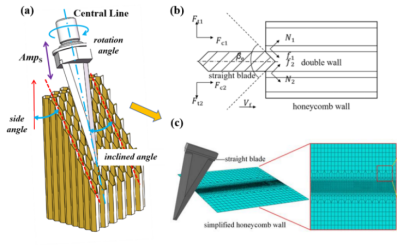
Figure 2. Simulation Outlines of Example 1: (a) working background of aramid paper honeycomb cutting; (b) calculation of feed rate and angle-related parameters; (c) simplified finite element model of analysis.
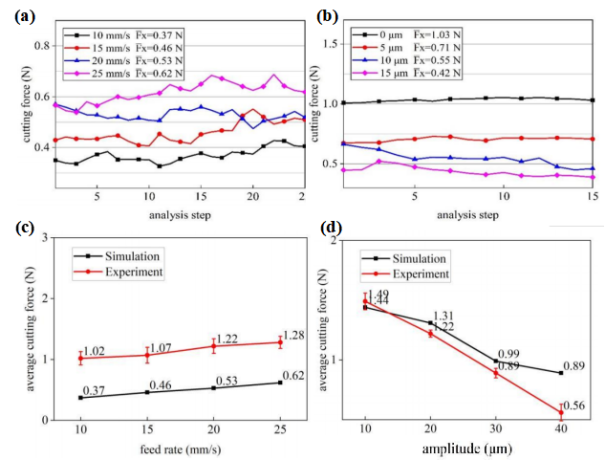
Figure 2 outlines the modeling strategy. Figure 2a depicts the original, geometrically detailed configuration of interaction between tool and honeycomb workpiece, which is complicated in geometry and mesh. Figure 2b is the simplified model after discussion and calculation. The contact between the tool and the single-layer honeycomb wall surface is studied, and the relationships such as feed rate and amplitude of the tool's forward inclination are converted to this model. Figure 2c illustrates the final computational contact formulation, incorporating surface-to-surface contact definitions, frictional behavior, and constraint conditions consistent with the experimental setup.
ABAQUS was adopted for finite element simulation, with the Hashin criterion selected to analyze anisotropic thin plate failure of aramid paper honeycomb, considering fiber rupture, matrix cracking and fiber/matrix debonding. The straight blade was meshed with R3D4 via free meshing, and the single honeycomb wall with C3D8R via sweep meshing. Practical experimental assembly and boundary constraints were replicated, and a periodic amplitude curve defined the cutter’s vibration cutting movement. Stress nephograms of crack zones under different parameters were obtained to analyze cutting force variations with feed rate, inclination angle and amplitude.
3.1.3. Results and Discussion
To ensure the effectiveness of the work, the class also requires students to verify their simulation work through as simple experimental methods as possible. In this experiment, the ultrasonic cutting of the honeycomb wall was verified. It achieved high accuracy in terms of trend, numerical accuracy and parameter verification, and has potential for further application. The details are as follows.
Figure 3. Related findings in exampled project 1: (a) and (b) gives the time-sequenced cutting load under different feed rate and vibration amplitude; (c) and (d) are the comparison of average force of feed direction between experiments and simulation.
Due to the instantaneous and discrete nature of the cutting force data, smoothing the data and extracting the characteristic values are carried out to further analyze the cutting force in the feed direction under different processing conditions, as shown in Figure 3. Simulation and experimental results consistently verified the influence of key parameters on cutting force: feed rate increase led to a 25% rise in cutting force, as enhanced squeezing effect, increased friction energy and more fracture energy from larger material impact jointly raised cutting resistance; inclination angle increase caused a 62% decline in average cutting force, attributed to amplified vibration effect and reduced cutter-paper contact area/friction force; ultrasonic vibration significantly reduced cutting force by 43%, with increasing amplitude strengthening the vibration effect, which constantly changes cutter velocity direction and magnitude, thus greatly lowering shear and friction forces on honeycomb walls. High-frequency ultrasonic vibration elevates the stress intensity factor, making material stress exceed its fracture toughness and realizing efficient cutting. The comparison of simulation and experimental data is presented in Figure 3c-d, from which a clear trend consistency can be observed.
3.1.4. Project Summary
This project established a mechanical model for straight blade ultrasonic vibration cutting of aramid paper, revealing the periodic intermittent contact mode between cutter and workpiece and identifying feed-direction force as the core cause of honeycomb wall fracture. The quantitative impact of feed rate, inclination angle and amplitude on cutting force was clarified. The research confirmed that cutting force rises with feed rate and decreases with increasing inclination angle and amplitude.
The significance of the project lies in the simplification of the process scenario, which reduces computational cost, optimizes the targeted physical model, and enables study of the most complete process parameters based on the model. In the course section on physical model simplification, the most discussed topic between teacher and students is parameter conversion between the 3D generalized model and the 2.5D orthogonal cutting model. Through this project, students recognize that for manufacturing process models, a large comprehensive model is necessary for completeness, while a small accurate model provides clearer mechanistic insight.
3.2. Example 2: Surface Strengthening Process Analysis Using Planar Impact Simulation
3.2.1. Project Background
In addition to shaping and machining, material modification is also important in mechanical manufacturing. Here, we present a simulation case of internal stress on the surface after impact strengthening and its results.
Aviation key components are prone to fatigue failure under complex service conditions, and surface strengthening is critical to improving their fatigue and corrosion resistance . Ultrasonic impact treatment (UIT) performed high quality surface by introducing higher residual compressive stress, forming a deeper strengthened layer, and achieving better surface roughness with advantages of simple operation, environmental friendliness and low energy consumption . Existing research lacks in-depth exploration of the influence mechanisms of tool head parameters, processing variables, and structural characteristics (e.g., chamfers) on UIT effects . This project aims to clarify the ultrasonic impact strengthening mechanism by establishing single-point, multi-channel and chamfered impact finite element models, optimize tool head structures and processing parameters, and reveal the effects of preloading depth, amplitude, rotational speed and thermo-mechanical coupling on residual stress distribution and surface morphology of machined surfaces, providing theoretical and technical guidance for practical UIT engineering applications. The core difficulty of work is the factor consideration necessity, especially the material models and the reliability of simplified simulations required when considering multiple process parameters. After discussion, this research focused on discussing the necessity of comparing chamfer strengthening and planar strengthening and thermal coupling constitutive equation in the simulation.
3.2.2. Simulation Procedure
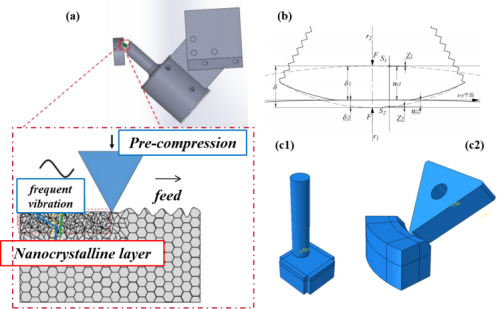
Figure 4 presents the core research content of project. The hole chamfering reinforcement targeted by the experiment is shown in Figure 4a. Periodic vibration combined with rotation is used to optimize the internal stress distribution in the chamfered area. The physical basis is the Hertz stress formula for the contact between a spherical indenter and a large plane. As an illustrative project in the course, under the condition that the experimental test conditions were not fully complete during the course, students determined to use the simulation equivalent comparison as the project topic establishing two models as shown in Figure 4c and studied the effectiveness of the simulation of hole chamfering reinforcement and the necessity of the thermal parameters.
ABAQUS was adopted for simulation, with the tool head defined as a rigid body and the Johnson-Cook constitutive model applied to characterize the workpiece’s elastoplastic behavior under high strain rates. Single-point, multi-channel and chamfered impact models were established. Hexahedral C3D8R elements were used for workpiece meshing (refined at contact zones), and tetrahedral C3D4 elements for tool heads. Boundary conditions included full constraint of workpiece bottoms, predefined initial velocity/displacement load for tool heads, and rotational speed for chamfered workpieces, ignoring temperature effects in basic simulations while with thermo-mechanical coupling analyzed separately.
Figure 4. Simulation Outlines of Example 2: (a) working background of steel impact strengthening process; (b) analytical principle of Hertz contact theory; (c) simplified planar FE model (c1) and process-scale model (c2).
3.2.3. Results and Discussion
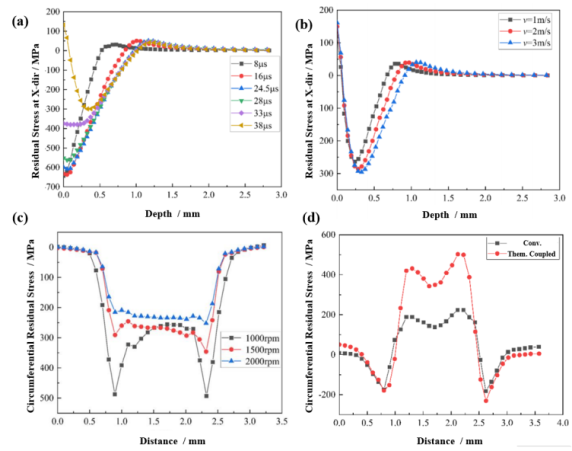
Figure 5. Related findings in exampled project 2: (a) shows the stress distribution in the depth direction during a impact and (b) shows the stress distribution under different impactor speed; (c) and (d) were representative results of process-scale stress distribution under different speed and with/without considering temperature effect in process.
Due to the lack of a verified experimental platformof this work in the classroom, the comparison of the two models and the comparison of the model considerations became effective evaluation criteria for us to test the simulation results and obtain preliminary conclusions.
Single-point impact simulations validated model accuracy via residual stress and pit morphology comparisons; the process involves impact (kinetic energy conversion to workpiece internal energy) and rebound (elastic recovery) stages, with residual compressive stress decreasing and plastic deformation deepening over time. Optimized tool head parameters (2mm short semi-axis, 5mm diameter, 40mm length) and processing parameters (3m/s impact speed, 3 impacts) yielded larger residual compressive stress and thicker strengthened layers. Skewed impact reduced surface tensile stress but offset the maximum compressive stress, while smaller impact spacing enhanced layer uniformity. For multi-channel impact, a 0.5mm lateral distance and 4m/s feed rate achieved a smoother surface; smaller lateral spacing improved stress layer uniformity (with stress offset), and feed rate had little effect on residual stress. Chamfered impact induced plastic accumulation and maximum compressive stress at chamfer edges; 10μm preloading depth increased edge compressive stress but caused excessive tensile stress on the chamfer surface, 5μm amplitude obtained optimal compressive stress and layer depth, and 1000r/min ensured uniform stress distribution. Thermo-mechanical coupling led to higher surface tensile stress, necessitating cutting fluid for cooling and lubrication. The main conclusion of this work was further verified in the subsequent design and process optimization of the rotary edge chamfering device for holes.
3.2.4. Project Summary
This project systematically studied ultrasonic impact surface strengthening via finite element simulation, clarifying the impact-rebound mechanism and validating model effectiveness through single-point impact tests. It optimized tool head and processing parameters for single-point impact, revealed the effects of lateral spacing and feed rate on multi-channel impact performance, and elucidated the residual stress and plastic deformation rules of chamfered impact under preloading depth, amplitude and rotational speed. The study also confirmed the adverse effect of thermo-mechanical coupling and proposed cutting fluid application, providing a comprehensive theoretical basis for the optimization and engineering application of ultrasonic impact surface strengthening technology.
3.3. Further Development of Exampled Projects in Practical Researches
Through this course, students received systematic research training focused on engineering problems in manufacturing process. The numerical simulation methods and results acquired have been widely applied in their subsequent research work, serving as important foundations for interpreting engineering application methods and optimizing manufacturing processes. Taking aforementioned works as examples, the subsequent academic researches completed by students based on the course content are as follows.
Example Project 1: Building on the honeycomb wall simulation identified during the course, students experimentally established a tool impact simulation technique for paper honeycomb core materials based on honeycomb wall impact. Single-layer honeycomb wall cutting simulations were used to interpret impact stress distribution under various parameters, with the related findings published as “dual-periodic impact platform” .
Example Project 2: Students proposed a prediction model coupling analytical and simulation approaches, achieving fast and accurate prediction of residual stress fields in rotary ultrasonic rolling chamfering processes. This provided a comprehensive theoretical analytical perspective on the generation and evolution of surface residual compressive stress in chamfered regions, with related findings published in the field of rotary ultrasonic rolling chamfer research .
4. Perspective for AI + Manufacturing
Numerical simulation technology is crucial in manufacturing processes analysis. Academically, it enables interpretable modeling and analysis of engineering factors while in engineering practice, it has served as a potential method for predictive scheduling optimization (e.g., digital twins). The primary limitation to its large-scale application has been computational efficiency, specifically the solution of physical partial differential equations based on discrete elements hinders real-time implementation. The introduction of artificial-intellegence(AI)-assisted simulation can partially address this challenge. Accordingly, this course introduced two important AI-based numerical simulation optimization methods according to the characteristics of physical fields: Physics-Informed Neural Networks (PINN) and Graph Neural Networks (GNN).
(1) For PINN used for accelerated computation, the course designs a simple uniaxial tensile simulation experiment to obtain a small dataset as the training set. A lightweight surrogate model is then constructed using PINN, allowing students to directly compare: traditional methods require iterative solving of partial differential equations, whereas once trained, PINN can rapidly obtain stress field distributions at any position and time through a single forward calculation. Through this hands-on practice with a simulation dataset, students can personally experience the improvement in computational efficiency offered by PINN.
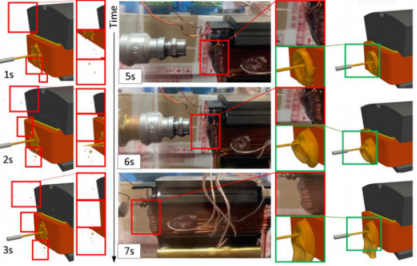
(2) GNN-based simulation was introduced through the engineering scenario of liquid jet cooling, where traditional mesh-based methods face high computational costs and susceptibility to mesh distortion. GNN discretizes the workpiece surface into a graph structure, capturing spatial correlations through geometric features. Information such as liquid jet position and intensity serves as dynamic inputs, and the message passing mechanism is used to learn and predict flow fields. Compared to traditional methods, a trained GNN can rapidly output dynamic responses. In-class instruction incorporates enterprise visualization cases, as illustrated in Figure 6, enabling students to intuitively observe how GNN “captures” medium migration under jet impact .
Figure 6. Cutting-edge GNN-based simulation used in classroom which is applied to simulate the convective cooling process in manufacturing engineering cases.

5. Conclusions
This paper presents the instructional approach and representative cases of the graduate-level course “Numerical Simulation Technology on Manufacturing Processes” developed within a research-ability-oriented curriculum framework, demonstrating the effectiveness of seminar-style teaching format and the research paradigm that integrates theoretical abstraction, hands-on practice, and engineering application in graduate education. The course design focused on three key aspects: (1) theoretical and laboratory sessions are structured according to scientific principles, extraction of key parameters, model simplification, and physical essence of numerical simulations; (2) grounded in real-world manufacturing processes, the course enables students to model and parameterize engineering problems through individual topic selection and group discussions, fostering understanding and engineering validation of multi-field coupling manufacturing processes; (3) leveraging artificial intelligence algorithms to assist in validating and accelerating traditional finite element simulations, the curriculum introduces cutting-edge topics such as PINN acceleration algorithms and GNN-based physical description, offering insights into approaches in current engineering practice. With ongoing advancements in manufacturing technology and computational algorithms, the course holds significant potential for continuous iteration in terms of both case studies and methodologies, making it well-suited as a core course in mechanical manufacturing engineering.
Abbreviations

UIT

Ultrasonic Impact Treatment

AI

Artificial-intellegence

PINN

Physics-Informed Neural Networks

GNN

Graph Neural Networks

Acknowledgments
The authors would like to thank Dr. Guiqiang Liang for his assistance in cutting simulation technology.
Author Contributions
Qizhong Yue: Investigation, Writing – original draft
Yiying Liang: Data curation, Visualization
Shulong Feng: Data curation, Visualization
Jie Xu: Methodology, Writing – review & editing
Feng Feng: Conceptualization, Project administration, Writing – review & editing
Funding
This work is supported by Graduate Quality Course Construction Program in Shenzhen International Graduate School, Tsinghua University (Course No. 80120692).
Data Availability Statement
The data is available from the corresponding author upon reasonable request.
Conflicts of Interest
The authors declare no conflicts of interest.
References
[1] Hu X P, Yu B H, Li X Y, et al. Research on Cutting Force Model of Triangular Blade for Ultrasonic Assisted Cutting Honeycomb Composites. Procedia CIRP, 2017, 66, 159-163.
[2] Liu S, Zhang Y, Liu P. New analytical model for heat transfer efficiency of metallic honeycomb structures. International Journal of Heat and Mass Transfer. 2008, 51(25-26), 6254-6258.
[3] Jaafar M, Atlati S, Makich H, et al. A 3D FE Modeling of Machining Process of Nomex® Honeycomb Core, Influence of the Cell Structure Behaviour and Specific Tool Geometry. Procedia CIRP, 2017, 58, 505-510.
[4] Wang Y, Kang R, Dong Z, et al. A Novel Method of Blade-Inclined Ultrasonic Cutting Nomex Honeycomb Core With Straight Blade. Journal of Manufacturing Science and Engineering, 2021, 143(4), 041012.
[5] Jaafar M, Nouari M, Makich H, et al. 3D numerical modeling and experimental validation of machining Nomex® honeycomb materials. The International Journal of Advanced Manufacturing Technology, 2021, 115(9-10), 2853-2872.
[6] Sun J, Wang Y, Zhou P, et al. Equivalent mechanical model of resin-coated aramid paper of Nomex honeycomb. International Journal of Mechanical Sciences, 2023, 240, 107935.
[7] Xu J, Wang C, Feng P, et al. Meso-scale cracks initiation of Nomex honeycomb composites in orthogonal cutting with a straight blade cutter. Composites Science and Technology, 2023, 233, 109914.
[8] Hu S, Guo C, Wang D, et al. Finite element analysis of residual stress evolution with multiple impacts on one point in ultrasonic impact treatment process. Proceedings of the Institution of Mechanical Engineers, Part B: Journal of Engineering Manufacture, 2018, 232(7), 1201-1211.
[9] Guo C, Wang Z, Wang D, et al. Numerical analysis of the residual stress in ultrasonic impact treatment process with single-impact and two-impact models. Applied Surface Science, 2015, 347, 596-601.
[10] Wang F, Men X, Liu Y, et al. Experiment and simulation study on influence of ultrasonic rolling parameters on residual stress of Ti-6Al-4V alloy. Simulation Modelling Practice and Theory, 2020, 104, 102121.
[11] Teimouri R, Amini S. Analytical modeling of ultrasonic surface burnishing process: evaluation of through depth localized strain. International Journal of Mechanical Sciences, 2019, 151, 118-132.
[12] Liang Y, Feng P, Song Z, et al. Wear mechanisms of straight blade tool by dual-periodic impact platform. International Journal of Mechanical Sciences, 2025, 288, 110031.
[13] Feng S, Feng P, Feng F, et al. Rotary ultrasonic rolling chamfer: impact on surface integrity and fatigue performance of load-bearing holes. International Journal of Fatigue, 2025, 109269.
[14] Feng S, Huang K, Tang M, et al. Comparative Evaluation of Rolling and Ultrasonic Rolling Chamfer for 7050 Aluminum Alloy Load-Bearing Holes. International Journal of Lightweight Materials and Manufacture, 2026.
[15] Nan J, Feng P, Xu J, et al. Efficient modeling of liquid splashing via graph neural networks with adaptive filter and aggregator fusion. International Journal of Numerical Methods for Heat & Fluid Flow. 2024, 34(6), 2513-2538.
Cite This Article
  • APA Style

    Yue, Q., Liang, Y., Feng, S., Xu, J., Feng, F. (2026). Research-Ability-Orientated Course Design and Cultivation Examples of Numerical Simulation Technology on Manufacturing Processes for Graduate Students. Higher Education Research, 11(2), 34-42. https://doi.org/10.11648/j.her.20261102.12

    Copy | Download

    ACS Style

    Yue, Q.; Liang, Y.; Feng, S.; Xu, J.; Feng, F. Research-Ability-Orientated Course Design and Cultivation Examples of Numerical Simulation Technology on Manufacturing Processes for Graduate Students. High. Educ. Res. 2026, 11(2), 34-42. doi: 10.11648/j.her.20261102.12

    Copy | Download

    AMA Style

    Yue Q, Liang Y, Feng S, Xu J, Feng F. Research-Ability-Orientated Course Design and Cultivation Examples of Numerical Simulation Technology on Manufacturing Processes for Graduate Students. High Educ Res. 2026;11(2):34-42. doi: 10.11648/j.her.20261102.12

    Copy | Download

  • @article{10.11648/j.her.20261102.12,
      author = {Qizhong Yue and Yiying Liang and Shulong Feng and Jie Xu and Feng Feng},
      title = {Research-Ability-Orientated Course Design and Cultivation Examples of Numerical Simulation Technology on Manufacturing Processes for Graduate Students},
      journal = {Higher Education Research},
      volume = {11},
      number = {2},
      pages = {34-42},
      doi = {10.11648/j.her.20261102.12},
      url = {https://doi.org/10.11648/j.her.20261102.12},
      eprint = {https://article.sciencepublishinggroup.com/pdf/10.11648.j.her.20261102.12},
      abstract = {“Numerical Simulation Technology on Manufacturing Processes” is a graduate-level course designed for students majoring in mechanical engineering, especially in manufacturing technology. With the advancement of manufacturing and information technologies, the course has become significantly more applicable and practical for students across various manufacturing fields. To enable students not only to master numerical simulation techniques but also to extract and analyze engineering problems from a scientific perspective, this paper presents the course design, core contents, and representative outcomes as a reference. The main contents include: (1) the course background, target audience, and key instructional procedures, with an emphasis on the rationale behind student presentation sessions; (2) two typical manufacturing process case studies that illustrate how the course systematically enhances students’ research capabilities through the pre-simulation stages of problem extraction and model simplification; (3) a discussion on the application prospects of cutting-edge artificial intelligence (AI) technologies such as physics-informed neural networks (PINN) and graph neural networks (GNN) in simulation curricula, identifying them as key future directions for numerical simulation technology. Through a comprehensive introduction to this course, we aim to contribute to the cultivation of outstanding research-oriented talents for China’s manufacturing engineering sector, which already holds a competitive edge and having the inevitable requirement for a scientific transformation.},
     year = {2026}
    }
    

    Copy | Download

  • TY  - JOUR
    T1  - Research-Ability-Orientated Course Design and Cultivation Examples of Numerical Simulation Technology on Manufacturing Processes for Graduate Students
    AU  - Qizhong Yue
    AU  - Yiying Liang
    AU  - Shulong Feng
    AU  - Jie Xu
    AU  - Feng Feng
    Y1  - 2026/04/30
    PY  - 2026
    N1  - https://doi.org/10.11648/j.her.20261102.12
    DO  - 10.11648/j.her.20261102.12
    T2  - Higher Education Research
    JF  - Higher Education Research
    JO  - Higher Education Research
    SP  - 34
    EP  - 42
    PB  - Science Publishing Group
    SN  - 2578-935X
    UR  - https://doi.org/10.11648/j.her.20261102.12
    AB  - “Numerical Simulation Technology on Manufacturing Processes” is a graduate-level course designed for students majoring in mechanical engineering, especially in manufacturing technology. With the advancement of manufacturing and information technologies, the course has become significantly more applicable and practical for students across various manufacturing fields. To enable students not only to master numerical simulation techniques but also to extract and analyze engineering problems from a scientific perspective, this paper presents the course design, core contents, and representative outcomes as a reference. The main contents include: (1) the course background, target audience, and key instructional procedures, with an emphasis on the rationale behind student presentation sessions; (2) two typical manufacturing process case studies that illustrate how the course systematically enhances students’ research capabilities through the pre-simulation stages of problem extraction and model simplification; (3) a discussion on the application prospects of cutting-edge artificial intelligence (AI) technologies such as physics-informed neural networks (PINN) and graph neural networks (GNN) in simulation curricula, identifying them as key future directions for numerical simulation technology. Through a comprehensive introduction to this course, we aim to contribute to the cultivation of outstanding research-oriented talents for China’s manufacturing engineering sector, which already holds a competitive edge and having the inevitable requirement for a scientific transformation.
    VL  - 11
    IS  - 2
    ER  - 

    Copy | Download

Author Information