Research Article | | Peer-Reviewed

A Bibliometric Analysis of Market Sector and Cross-Country Impact on IPO Underpricing: Current Status, Development, and Future Research Directions

Received: 23 February 2026     Accepted: 9 March 2026     Published: 28 July 2026
Views:       Downloads:
Abstract

This study explores current trends in IPO (Initial Public Offering) underpricing by combining macroeconomic and microeconomic viewpoints while also tracking the development of scholarly research in the field. To achieve this goal, the research uses a three-step method that includes citation analysis, keyword analysis, and qualitative content analysis. First, citation analysis is used to identify the most influential publications, authors, and journals that have shaped the understanding of IPO underpricing. This step helps trace the roots of the literature and highlights key contributions that have significantly influenced theoretical and empirical discussions. Second, keyword analysis is performed to identify emerging research themes, main ideas, and changes in scholarly focus over time. By analyzing keyword co-occurrence patterns, the study uncovers the evolving research areas and thematic groups related to IPO underpricing. Lastly, content analysis interprets the insights gained from citation and keyword analyses, providing a deeper understanding of how historical views connect with current empirical findings. The results show that the factors influencing IPO underpricing vary widely across countries and industries due to differences in institutional settings, market maturity, and investor behavior. In developed markets, investors tend to focus more on corporate governance features when evaluating IPO firms. Aspects such as gender diversity on boards, director qualifications, CEO duality, and board independence are seen as signals of transparency, accountability, and strong oversight, which in turn influence investor confidence and pricing decisions. Conversely, investors in developing markets rely more on firm-specific traits, including firm age, size, and the reputation of the underwriter, which act as signs of credibility and reliable information in environments where institutional frameworks and disclosure standards may be weaker. Sector dynamics further demonstrate the diversity of IPO results. In developed economies, sectors like technology, healthcare, finance, and service industries lead IPO activities, driven by rapid digital advances, innovation-focused growth, and investor demand for high returns. On the other hand, in developing economies, sectors such as agriculture, real estate, and fast-moving consumer goods (FMCG) show stronger IPO performance because of their key role in economic growth and the increasing consumer demand linked to expanding middle-class populations. Overall, these findings emphasize the importance of contextual and sectoral factors in shaping IPO underpricing patterns across global markets.

Published in Innovation Business (Volume 1, Issue 3)
DOI 10.11648/j.ib.20260103.11
Page(s) 125-143
Creative Commons

This is an Open Access article, distributed under the terms of the Creative Commons Attribution 4.0 International License (http://creativecommons.org/licenses/by/4.0/), which permits unrestricted use, distribution and reproduction in any medium or format, provided the original work is properly cited.

Copyright

Copyright © The Author(s), 2026. Published by Science Publishing Group

Keywords

Underpricing, Bibliometric Analysis, Market Sectors, Cross-Country Dynamics, Corporate Governance

1. Introduction
An Initial Public Offering (IPO) is a pivotal milestone in a firm's lifecycle, marking the transition from private to public ownership and enabling the company to mobilize substantial external capital . The primary motivation for going public is typically financial: IPO proceeds are frequently deployed to finance future growth, support Research and Development (R&D) initiatives, undertake capital expenditures, or restructure existing debt obligations . Beyond these direct financial considerations, firms also pursue IPOs for indirect strategic benefits, such as enhanced market visibility, greater legitimacy, and signaling effects that strengthen stakeholder confidence . Given the multifaceted implications of an IPO, understanding the complexities and dynamics of the IPO process is essential for scholars, practitioners, and policymakers alike.
Early empirical research in the IPO domain focused on core aspects of the issuance process, including the determinants of IPO activity, methodologies of offer pricing, share allocation mechanisms, and post-issue performance outcomes . Among these topics, IPO underpricing has emerged as one of the most enduring and widely examined phenomena. Underpricing, commonly operationalized as the percentage difference between the issue price and the first trading day’s closing price, reflects the discrepancy between the firm's valuation and investors’ perceived value in the public market . This short-run anomaly is not only central to understanding market efficiency and information asymmetry but also has significant implications for issuer wealth, investor returns, and underwriter incentives.
Although numerous literature reviews have contributed to synthesizing knowledge on IPOs, they have often been limited in scope or temporally constrained. Comprehensive reviews, such as those by , have addressed broad themes, including motives for going public, IPO pricing, and performance. Others, such as , have employed meta-analytical techniques to summarize empirical patterns in the research on underpricing. expanded the disciplinary boundaries of IPO research by mapping themes related to corporate governance, upper echelons theory, social influence, and innovation. However, the rapid expansion and increasing interdisciplinary nature of IPO research over the past decade highlight the need for a renewed synthesis. Recent studies have explored unconventional determinants, such as local corruption , managerial tone in regulatory filings , and strategic customer alliances , reflecting the growing breadth and dynamism of the field. As existing reviews predate many of these developments, there remains a substantive gap in capturing contemporary research trends and emerging scholarly domains.
This paper seeks to address this gap by providing a comprehensive and methodologically rigorous synthesis of IPO underpricing research. Specifically, the study reviews literature related to IPO pricing mechanisms, short-run and long-run performance determinants, macro-level institutional influences, and micro-level firm characteristics, including corporate governance structures, sectoral attributes, and the roles of key intermediaries such as underwriters and auditors. The present study diverges from previous reviews in several significant ways.
First, it identifies the principal topical domains within IPO underpricing through an integrated methodology combining bibliometric analysis and qualitative content analysis. By examining publication patterns, citation structures, and temporal trends, the study traces the evolution of scholarly attention and conceptual development within the field. Second, through citation and co-citation network analysis, the research systematically maps the intellectual structure of IPO underpricing, revealing foundational works, influential authors, and interlinked theoretical clusters. These science-mapping techniques provide deeper insights into how knowledge in this domain has accumulated, diffused, and diversified. Third, through the application of both quantitative and qualitative methods, the study identifies four distinct thematic clusters, each representing a coherent body of literature. These clusters are further examined using content analysis to explicate the underlying theories, methodological approaches, key debates, and emerging issues.
Collectively, the findings offer a structured and holistic representation of the IPO underpricing knowledge base, illuminating the dominant areas of inquiry and highlighting underexplored dimensions that warrant future investigation. In doing so, the study contributes to the advancement of IPO research by proposing new theoretical and empirical directions that can enrich understanding in this dynamic field. Table 1 synthesizes prevailing research trends, existing gaps, and the unique contribution of the present study relative to prior reviews since the 2000s. This paper attempts to address the following research questions (RQs):
RQ1: How does the relationship between corporate governance mechanisms, firm profitability, and IPO underpricing vary between developed and developing economies?
RQ2: To what extent does the industry or sector in which an IPO is issued influence the magnitude of underpricing?
RQ3: What are the historical and evolutionary trends in IPO underpricing, and what directions do these patterns suggest for future research inquiry?
IPO underpricing remains one of the most widely documented yet insufficiently understood phenomena within financial markets. While existing literature provides extensive evidence of factors influencing underpricing, such as information asymmetry, signalling, market sentiment, and institutional quality, the combined role of corporate governance mechanisms and firm profitability, particularly across varying levels of economic development, remains underexplored. The increasing globalization of capital markets and the growing volume of IPOs in emerging economies underscore the need to reassess whether determinants of underpricing behave uniformly across different institutional contexts . This research is thus necessary to deepen our understanding of how governance structures and firm fundamentals interact to shape initial pricing outcomes in heterogeneous economic environments.
Additionally, the sectoral dimension of IPO underpricing has received limited systematic attention. Although sector features such as technological intensity, asset tangibility, and regulatory exposure can significantly influence valuation uncertainty, most previous studies treat IPOs as a uniform group. This creates a blind spot in understanding how risk, information asymmetry, and investor behaviour differ across sectors, and why some industries consistently exhibit higher or lower levels of underpricing. Analyzing sector-specific dynamics provides a more detailed understanding of market behavior and offers practical insights for issuers, underwriters, and policymakers.
Further, despite decades of research, scholars still debate the evolutionary pattern of IPO underpricing, whether underpricing is declining, stabilizing, or intensifying over time, and how structural shifts (such as technological disruption, regulatory reforms, or market integration) influence such patterns. Many studies focus on short time frames or specific markets, limiting the generalizability of findings (Table 1). A comprehensive analysis of the temporal evolution of underpricing can illuminate long-run trends and provide direction for future theoretical and empirical inquiry. Together, they form an integrated research agenda that not only examines what drives underpricing but also how, why, and under what conditions these determinants interact across countries, sectors, and time periods.
The remainder of the paper begins with an overview of the methodology in section 2, which identifies and refines the literature reviewed in the study. Section 3 introduces the method of analysis and tools that will be used in the study. Section 4 presents the evaluation of results, findings, and discussion. Section 5 summarises the concluding remarks and future scope of research.
Table 1. Identification and addressing of Research Gaps.

Citations

Main Research Point

Originality

Ritter and Welch (2002)

Role of underwriters in IPO underpricing,

provide a comprehensive review of the literature on various aspects of IPO underpricing

Ljungqvist and Wilhelm (2003)

Traditional theoretical frameworks explaining the reasons for underpricing,

Loughran and Ritter (2004)

Impact of partial price adjustment phenomenon on initial returns

Includes a comparative view by assessing the factors from Developed and Developing countries

Chambers and Dimson, 2009

Role of venture capital in IPO underpricing.

Engelen and van Essen, 2010

Impact of volatilities and information asymmetry on initial returns.

Aims to identify the principal topical areas of IPO underpricing under different economic scenarios and industry sectors, apart from the already established factors

Lowry et al., (2010)

IPO market cycles and their role in the pricing of issues.

Hanley and Hoberg, (2010)

Variation of IPO returns over time

Chahine et al., 2021

Impact of investor sentiment on IPO pricing

Bridges the gap between previous literature and current research and provides the latest research trends through Bibliometric Analysis

Smith et al. 2021

The long-run performance of IPOs and SEOs

Peng et al. 2021

influence of strategic alliances on IPO underpricing

Figure 1. Research Design.
2. Research Methodology: Word String
This study employs a bibliometric research design to systematically examine the intellectual landscape, thematic evolution, and emerging scholarly conversations within the IPO underpricing literature. Bibliometric analysis has gained prominence as a robust methodological tool for synthesizing large bodies of academic work, offering a longitudinal perspective on knowledge development within a field . It is particularly effective in revealing the intellectual structure, research fronts, and evolving thematic clusters that shape a discipline . Bibliometric methods have been widely adopted across various domains of management and finance research due to their capacity to uncover patterns that may be overlooked in traditional narrative reviews . Against this backdrop, the present study applies bibliometric techniques to map the contours of IPO underpricing research and identify new conceptual and empirical avenues for inquiry.
The study utilizes a quanti-qualitative approach, integrating quantitative bibliometric techniques with qualitative content analysis. This dual strategy allows the research to accomplish two core aims:
1) to assess the evolutionary trajectory, productivity trends, and citation dynamics of IPO underpricing research through citation analysis and keyword co-occurrence mapping; and
2) to identify the conceptual streams, theoretical underpinnings, and dominant research themes through interpretive content analysis. Together, these complementary methods enable a comprehensive understanding of how the field has matured and where future scholarship may be directed.
Data were retrieved from the Institute for Scientific Information (ISI) Web of Science (WoS) Core Collection. The choice of the WoS database is justified by its status as one of the most comprehensive and multidisciplinary scientific indexing platforms, offering high-quality metadata and rigorous inclusion standards . WoS is widely recognized as a preferred data source for bibliometric and science-mapping research across management, finance, and the broader social sciences . Its consistent documentation standards ensure reliable comparison and reproducibility, key methodological requirements for bibliometric studies.
A search string was constructed through an iterative process involving a thorough review of existing literature, benchmarking against prior bibliometric studies , and consultations with domain experts and senior faculty members specializing in IPO and capital markets research. The search string was designed to capture both conceptual components of IPO underpricing:
1) the issuance event (“Initial Public Offering,” “new issue,” “listing”), and
2) the pricing anomaly (“underpricing,” “initial returns,” “short-run performance”).
To maximize coverage and reduce omission bias, the search was conducted in the topic field, encompassing the title, abstract, author keywords, and Keywords Plus® domains within WoS.
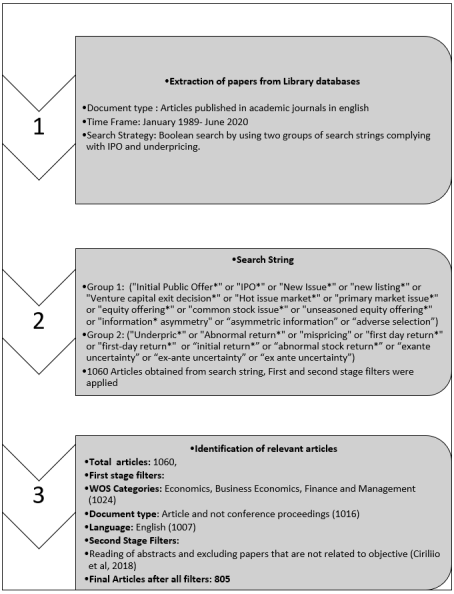
The initial search yielded 1,060 documents. A systematic two-stage filtering protocol was then applied to refine the dataset. In the first stage, exclusion criteria were imposed for Web of Science categories, non-English publications, and unwanted document types (e.g., editorials, book reviews, conference abstracts). In the second stage, a manual screening of abstracts was undertaken to ensure thematic relevance and alignment with the study’s objective of mapping IPO underpricing research. After completing the filtration process, the final dataset comprised 805 articles published across 163 academic journals.
A schematic representation of the search and screening strategy, including inclusion–exclusion criteria and document selection flow, is presented in Figure 1.
3. Method of Analysis
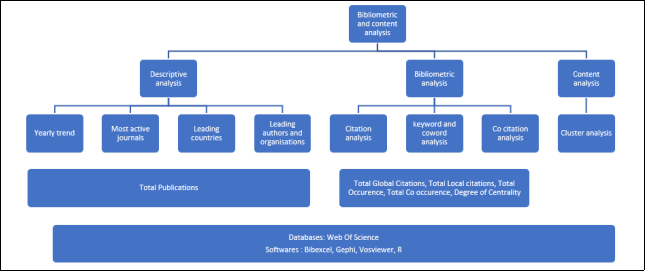
Drawing upon , Bibliometric analysis is used to illustrate the central themes of research. It enables us to identify and highlight the prominent current trends and forecast the future scope of the study. Authors use various tools, such as citation, co-citation analysis, keyword occurrence analysis, and page rank analysis (Figure 2) in this study .
Figure 2. Research Structure.
Bibliometric analysis has been facilitated by a range of specialized software packages, each characterized by distinct analytical capabilities, methodological orientations, and technical constraints . The selection of appropriate tools is therefore guided by the objectives of the study, the nature of the dataset, and the type of bibliometric indicators required. In the present study, a multi-software approach was adopted to ensure analytical robustness, cross-validation of results, and comprehensive visualization of bibliometric structures.
Initially, bibliometric data were processed using Bibexcel, an open-source software specifically designed for bibliometric and scientometric research. Bibexcel is particularly valued for its flexibility in handling large bibliographic datasets and for its capacity to generate structured outputs suitable for further statistical and network analysis . The software was used to clean and preprocess raw bibliographic records, including standardizing author names, institutional affiliations, and keywords. In addition, it was used to extract descriptive statistics such as frequency distributions of authors, institutions, countries, keywords, and publication sources. A further advantage of Bibexcel lies in its ability to generate co-occurrence matrices and prepare network files in compatible formats for advanced network visualization tools.
For network-based analysis, the prepared files were subsequently imported into Gephi. Gephi is a widely used open-source network analysis and visualization platform known for its compatibility with multiple data formats and its comprehensive suite of built-in algorithms . In this study, Gephi was employed to construct and analyze co-authorship networks, citation networks, and keyword co-occurrence networks. The software’s layout algorithms (e.g., force-directed layouts), modularity detection techniques, and centrality measures enabled the identification of influential authors, collaborative clusters, and thematic concentrations within the field. Its interactive visualization features further facilitated the exploration of structural relationships and network density patterns.
Complementing the network analysis, VOSviewer was utilized for graphical representation of citation-based relationships. VOSviewer is particularly effective for constructing bibliometric maps based on co-citation, bibliographic coupling, and keyword co-occurrence. Its strength lies in its visualization of similarity (VOS) mapping technique, which allows for the clear depiction of research clusters and intellectual structures within a discipline. In this study, VOSviewer was primarily used to generate citation maps and cluster visualizations, thereby enhancing the interpretability of thematic and intellectual linkages among publications.
Furthermore, descriptive bibliometric statistics were extracted using the Bibliometrix package through Biblioshiny, a web-based interface operating within the R environment, and implemented via RStudio. Biblioshiny provides an integrated framework for comprehensive science mapping and performance analysis. Through this tool, the study generated detailed descriptive indicators, including annual scientific production, most productive authors, leading journals, most cited documents, keyword frequency analysis, and the geographical distribution of publications . The package also facilitated country-level collaboration analysis and trend evaluation over time.
By integrating Bibexcel for data preprocessing, Gephi for advanced network analysis, VOSviewer for bibliometric visualization, and Biblioshiny for descriptive and performance metrics, the study ensures methodological triangulation and analytical depth. This combined approach enhances the reliability of findings while providing both structural and performance-based insights into the evolution and intellectual landscape of the research domain under investigation.
4. Analysis and Findings
This section depicts the research trend in IPO underpricing. It aims to identify the research trend using annual publications in the domain. Furthermore, the study highlights top journals and authors contributing to this field.
4.1. Bibliometric Analysis
4.1.1. Citation Analysis
Citation analysis identifies influential contributions within a research field by measuring the frequency with which other scholarly works cite each publication. In the present study, Table 2 presents the ten most highly cited articles drawn from a dataset of 805 publications, reporting both local citations, citations within the dataset, and global citations across the broader Web of Science database. Highly cited works typically signify papers that have played a formative role in shaping theoretical foundations and empirical debates in IPO underpricing research. For example, the seminal review by , which examines the underlying motivations for firms to compensate investors through underpricing, is the most influential, with 233 local and 813 global citations. Similarly, , which interrogates the dramatic rise in underpricing during the dot-com boom, has also garnered substantial scholarly attention, underscoring its importance in contextualizing market-level anomalies.
An examination of the most frequently cited studies, summarized in Table 3, reveals that early influential work predominantly adopted a macroeconomic orientation, emphasizing information asymmetry, market cycles, investor sentiment, agency conflicts, and allocation mechanisms as key explanations for underpricing. These foundational perspectives correspond closely with RQ3, which seeks to understand the evolutionary pattern of IPO underpricing; indeed, much of the early literature focused on broad market cycles and structural anomalies observable over time. However, contemporary research trends, as reflected in the keyword co-occurrence analysis, show a marked shift toward firm-level characteristics, corporate governance mechanisms, sectoral conditions, and institutional environments, themes directly linked to RQ1 and RQ2. Increasing attention to board composition, ownership structures, underwriter reputation, and sector-specific dynamics indicates that scholars are now more interested in understanding how micro-level governance attributes and industry heterogeneity shape underpricing outcomes. At the same time, geopolitical and macro-financial factors continue to influence the situation. Still, the research increasingly combines these broad factors with firm- and sector-specific factors, showing a more layered analytical approach.
Table 2. Top 10 papers by local citation.

Author (year)

LCS

GCS

Ritter and Welch (2002)

233

813

Loughran and Ritter (2004)

222

860

Loughran and Ritter (2002)

193

461

Allen and Faulhaber (1989)

186

502

Welch (1989)

179

474

Hanley (1993)

175

337

Carter et al. (1998)

164

612

Habib and Ljungqvist (2001)

112

213

Ljungqvist and Wilhelm (2003)

112

279

Michaely and Shaw (1994)

95

243

This alignment between citation patterns, keyword trends, and the present research questions demonstrate a clear evolution in the field: from macro-level explanations toward an integrated, multi-dimensional understanding of IPO underpricing. The citation analysis not only highlights the intellectual foundations of the discipline but also underscores the relevance and timeliness of the current study’s objectives, which aim to contrast governance and profitability influences across economic contexts (RQ1), assess industry-specific determinants of underpricing (RQ2), and map the developmental trajectory of IPO research (RQ3). This reinforces the value of a bibliometric approach in synthesizing past contributions while illuminating emerging directions for future inquiry.
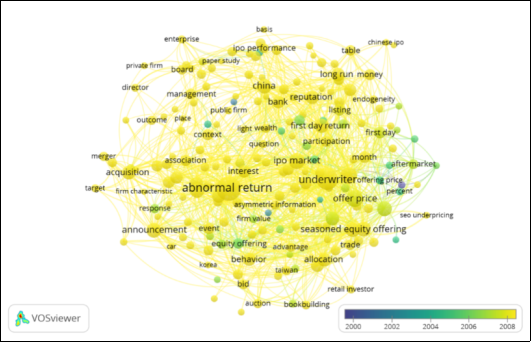
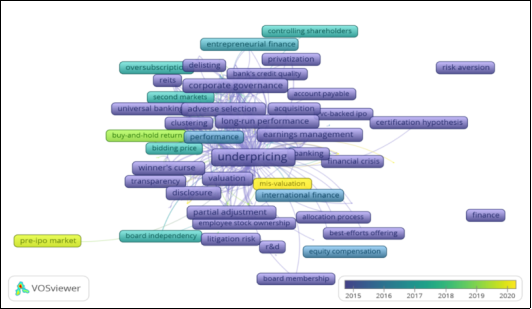
Figure 3. Keyword co-occurrence network on IPO Underpricing (2000-2008).
This figure presents the analysis of the top keyword using VOSviewer software. The size of the bubble indicates the most frequent keyword in the literature. A threshold of at least 30 occurrences is applied.
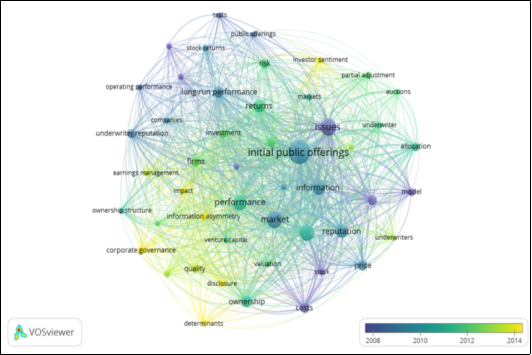
Figure 4. Keyword co-occurrence network on IPO Underpricing (2008-2014).
This figure presents the analysis of the top keyword using VOSviewer software. The size of the bubble indicates the most frequent keyword in the literature. A threshold of at least 30 occurrences is applied.
Figure 5. Keyword co-occurrence network on IPO Underpricing (2015-2020).
This figure presents the analysis of the top keyword using VOSviewer software. The size of the bubble indicates the most frequent keyword in the literature. A threshold of at least 30 occurrences is applied.
4.1.2. Keyword and Co-word Analysis
Co-word analysis serves as a powerful technique for uncovering the conceptual structure of a research domain by mapping the co-occurrence of keywords and visually representing thematic linkages . Figures 3, 4, and 5 illustrate the most frequently occurring keywords in IPO underpricing research across different time periods. In the earlier stages of scholarship, as shown in Figure 4, “Initial Public Offering” appears at the center of the conceptual network and is strongly associated with terms such as “underwriter reputation,” “markets,” and “cost.” This pattern reflects the historical focus of researchers on the informational role and certification function of underwriters in reducing valuation uncertainty. However, over time, the intellectual emphasis has shifted toward corporate governance–oriented themes, including ownership structure, earnings management, and board composition. Figure 5 further indicates the emergence of behavioral and governance-based perspectives, such as directors’ networks, board independence, investor sentiment, and managerial incentives, signaling a broader, more nuanced understanding of the drivers of underpricing.
These evolving themes are closely intertwined with the economic conditions of the countries studied, highlighting an important intersection between institutional environments and market behavior. For instance, empirical evidence from Pakistan shows that family-owned firms exhibit a higher tendency toward opportunistic behavior and agency conflicts, which can elevate underpricing risks. Yet paradoxically, these firms often show higher profitability due to long-standing ownership concentration and active managerial involvement, a finding that aligns with RQ1, which aims to understand whether corporate governance and firm profitability influence IPO underpricing differently in developed and developing economies. Similarly, while CEO duality and board size were found to be insignificant determinants of earnings in the Pakistani context, studies in Malaysia provide contrasting evidence, indicating that CEO duality can strengthen managerial control and positively affect firm performance. These divergent findings underscore how governance mechanisms do not operate uniformly across institutional environments, reinforcing the need for cross-country comparative analysis.
Sector-specific differences also play a crucial role in shaping underpricing outcomes, directly linked to RQ2. Research on Jordanian IPOs by shows that insider ownership significantly affects earnings management in the Heavy Industry and Real Estate sectors because of directors' deeper firm-specific knowledge, while such effects are not seen in the Banking and Agricultural sectors. Similarly, corporate governance features like gender diversity and board experience are associated with lower underpricing, although underwriter reputation has no significant impact in that market. In contrast, a global comparative study by Jamaani and Ahmed (2021) indicates that underwriter reputation increases underpricing in emerging markets due to higher valuation uncertainty but decreases underpricing in developed markets where regulatory environments promote better information symmetry (Kwabi et al., 2020). Notably, even with stronger governance frameworks, developed markets still show higher average underpricing, attributed to issuers’ incentives and the economic importance of firms relative to national economies, highlighting the complexity of underpricing beyond simple geographic categorization.
These insights collectively map the evolution of IPO underpricing research, as shown in RQ3, and highlight strong connections among governance structures, sectoral trends, institutional frameworks, and investor behavior. The move from broad, macro explanations to detailed, multi-layered governance and behavioral themes shows a maturing field that increasingly considers the real-world experiences of firms, investors, and regulators across various economic contexts. This development emphasizes the importance of ongoing interdisciplinary research to better understand the complexity of IPO pricing decisions in both emerging and developed markets.
4.2. Literature Classification: Data Clustering
Clustering is seen as a group of well-connected publications in a research area with limited interrelatedness in publications of other research areas. Data clustering, also famous for modularity, is being used in the literature as a classification tool . A modularity index measures the density of the connections both within and outside the clusters. Such clusters could be created using the default tool in Gephi. The software employs the Louvain algorithm, which uses iterative techniques to determine the optimal model that aims to determine the optimum number of partitions that can maximise the modularity index. The modularity index Q is calculated as:
Q=12mij[Aij-kikj2m (ci,cj)
Where Aij is the weight of the edge between i and j; ki is the sum of weights of the edges attached to node i, ci is the community to which node i is assigned, and m is the sum of all edges. This algorithm was applied to the 460-node co-citation network in Gephi and created 4 clusters. The number of papers in each cluster varies i.e., 145 articles in cluster 1, 129 articles in cluster 2, 96 articles in cluster 3, and 90 articles in cluster 4. Table 3 shows the top ten papers by page rank for each article. Figure 6 shows the evolution of research on underpricing over time.
4.2.1. Content Analysis
Table 3. The lead papers using a PageRank measure.

Cluster 1

Cluster 2

(Rock, 1986)

(Megginson and Weiss, 1991)

(Carter and Manaster, 1990)

(Carter et al., 1998)

(Beatty and Ritter, 1986)

(Barry et al., 1990)

(Benveniste and Spindt, 1989)

(Gompers et al., 2003)

(Loughran et al., 2002)

(Lee and Wahal, 2004)

(Allen and Faulhaber, 1989)

(Ellul and Pagano, 2006)

(Welch, 1989)

(Chambers and Dimson, 2009)

(Grinblatt and Hwang, 1989)

(Ljungqvist, 2007)

(Chen and Ritter, 2000)

(Engelen and van Essen, 2010)

(Habib and Ljungqvist, 2001)

(Chan et al., 2004)

Cluster 3

Cluster 4

(Ljungqvist and Wilhelm, 2003)

(Loughran and Ritter, 1995)

(Ritter and Welch, 2002)

(Ritter, 1991)

(Lowry and Schwert, 2005)

(Brav, 2000)

(Bradley and Jordan, 2002)

(Brav and Gompers, 1997)

(Derrien, 2005)

(Lyon et al., 1999)

(Cornelli et al., 2006)

(Mitchell and Stafford, 2000)

(Lowry et al., 2010)

(Álvarez and González, 2005)

(Hanley and Hoberg, 2010)

(Schultz, 2003)

(Purnanandam and Swaminathan, 2004)

(Fama, 1998)

(Ljungqvist et al., 2006)

(Chemmanur and Paeglis, 2005)

Table 4. Research themes of the clusters.

Cluster

No of papers

Area of Research focus

1 (Green)

145

Role of underwriters in IPO underpricing, Explanation of underpricing at the market level (Macro level) rather than at the firm level (Micro Level), Impact of agency theory, signalling model, winners’ curse, and incentive to manipulate financial statements by managers

2(Pink)

129

Role of venture capital and direct costs in IPO underpricing. Impact of country and company-level governance on initial returns.

3 (Orange)

96

Impact of firm-level dynamics and market economy on initial returns Influence of the IPO sector on the volatility of initial returns Impact of investor sentiment and country-level factors on IPO pricing

4 (Blue)

90

Impact of venture capital on long-run performance of IPOs and SEOs Dependency of the market economy on the IPO sector to assess the long-run performance of VC-backed and non VC-backed firms.

This section details the theme found within each cluster (Table 4). The top 10 papers, according to PageRank, are studied to analyse the themes in the cluster, as done in the previous bibliometric studies (Table 3) .
The intellectual structure of IPO underpricing research, as revealed through clustering analysis, shows a clear progression from basic theory to broader empirical and behavioral views. Cluster 1 represents the core ideas of the field, including key studies that establish the theoretical reasons for underpricing in initial equity offerings. This cluster lays the groundwork by examining information asymmetry, intermediary certification, and, especially, the important role of underwriters in determining IPO pricing. The theories developed here form the foundation for further empirical research. Building on these basic insights, Cluster 2 advances the literature with solid empirical validation. Studies in this cluster look at how venture capital (VC) involvement, legal and regulatory quality, shareholder protections, and country-specific institutions impact IPO pricing. Using cross-country comparisons and market-level analysis, this cluster tests and improves on the ideas from Cluster 1, helping to deepen the understanding of how governance and institutions influence underpricing.
Moving beyond traditional finance and institutional explanations, Cluster 3 introduces a behavioral finance perspective. This research examines how investor sentiment, market emotions, and psychological biases influence IPO pricing decisions. By showing how non-rational factors interact with market fundamentals, Cluster 3 broadens the discussion on underpricing and highlights the growing recognition of behavioral influences in financial markets. Finally, Cluster 4 shifts focus from short-term pricing issues to the long-term performance of both seasoned and new issues. This cluster studies post-IPO returns, market behavior after listing, and whether firms tend to underperform or outperform over long periods. The insights from this cluster complement earlier work focused on immediate pricing and help place underpricing within the overall lifecycle of public companies.
Altogether, these clusters depict a research landscape where theoretical foundations (Cluster 1) lead to empirical testing (Cluster 2), which is then enriched by behavioral insights (Cluster 3) and further extended into long-term performance (Cluster 4). This integrated view emphasizes the complex, multi-layered nature of IPO underpricing and reflects the field's move toward more detailed and nuanced explanations.
The thematic clustering of IPO underpricing research reveals a structured intellectual evolution that mirrors the field’s expansion from foundational theory to more nuanced behavioural, institutional, and long-run perspectives. Cluster 1 (Green), the earliest and most densely populated group, forms the conceptual core of the domain. This cluster focuses on the mechanisms through which underwriters influence IPO pricing and allocation decisions, grounding much of the early literature in theories of information asymmetry and incentive alignment. Seminal contributions such as Benveniste and Spindt (1989) demonstrate how underwriters elicit truthful information from investors by embedding underpricing as a compensatory mechanism, while Beatty and Ritter (1986) emphasize the role of underwriter reputation in maintaining pricing equilibria. The cluster further integrates foundational theoretical explanations, including the signalling model , prospect theory , dynamic information acquisition , and the winner’s curse hypothesis , thereby providing the theoretical scaffolding for all subsequent inquiry. These works not only define the phenomenon of underpricing but also lay the groundwork for RQ1, which examines whether the relationship among governance, firm performance, and underpricing varies across market contexts.
Building on these foundational theories, Cluster 2 (Pink) advances the field by empirically validating and extending the propositions established in Cluster 1. A central theme within this cluster is the role of venture capital (VC) participation in certifying issue quality and reducing information asymmetry. While several studies report that VC backing mitigates underpricing and reduces direct flotation costs , contrasting evidence, such as , highlights scenarios in which young VC firms “grandstand,” deliberately accepting higher underpricing to build reputation. The cluster also broadens the inquiry to incorporate country-specific legal and institutional characteristics, demonstrating that stronger investor protection and legal frameworks are associated with lower underpricing . Complementing these market-level determinants, studies exploring corporate governance dimensions, board structure, independence, and oversight mechanisms show that firms intentionally deploy governance features to signal quality , though findings remain mixed across contexts. Together, these insights directly support RQ1, illustrating how governance and institutional factors jointly shape underpricing dynamics and establish a critical foundation for comparing developed and developing markets.
Cluster 3 (Orange) shifts the analytical lens toward volatility, investor sentiment, and sector-specific effects, thereby offering insights highly relevant to RQ2, which explores the role of industry sectors in underpricing outcomes. This cluster includes influential work on pricing behaviour during periods of heightened uncertainty, such as the dot-com bubble, where shifts in ownership and insider selling patterns offered stronger explanatory power than traditional asymmetry-based theories . As behavioural finance gained prominence, studies increasingly emphasized how investor sentiment, often measured using grey market data or pre-market indicators, drives first-day returns, especially in environments where valuation uncertainty is particularly pronounced . Importantly, sector-specific differences emerge as significant determinants of volatility and post-IPO performance, with technology, healthcare, and retail IPOs typically exhibiting higher underpricing due to greater valuation ambiguity compared to more established industries such as real estate or agriculture. These findings underscore that sectoral dynamics intersect with country-level conditions, making it essential to examine IPO underpricing through a multi-layered lens of behavioural, institutional, and industrial factors. Thus, Cluster 3 not only reinforces the contextual sensitivity of underpricing phenomena (supporting RQ1) but also elucidates the importance of sectoral heterogeneity (supporting RQ2).
Finally, Cluster 4 (Blue) extends the discussion beyond the immediate IPO event to examine long-run performance patterns, thereby contributing directly to RQ3, which investigates the evolutionary trajectory of IPO underpricing and identifies avenues for future inquiry. Literature in this cluster documents the persistent puzzle of high initial returns followed by long-run underperformance , with outcomes shown to depend heavily on issue timing, sectoral dynamics, and underwriter reputation . Empirical evidence suggests that long-run performance deteriorates due to declines in post-IPO operational efficiency, financial metrics, or firm fundamentals , and is exacerbated by firms exploiting “windows of opportunity” during hot markets . Studies comparing venture-backed and non-venture-backed IPOs further highlight that long-run performance advantages are not universal but vary based on country-specific governance structures, technological advancement, and sectoral attributes . Additional contributions show that patterns of acquisition activity and methodological limitations in long-run performance measurement complicate interpretation, reinforcing the need for more rigorous, context-sensitive approaches . Collectively, Cluster 4 portrays a maturing research stream that moves beyond short-term pricing anomalies toward a broader understanding of how IPOs evolve within diverse market architectures, directly informing the future research trajectory outlined in RQ3.
4.2.2. Papers Published in Recent Years and State of the Art
286 articles have been published in recent years, i.e., 2018 and above, and not included in 460 articles from the co-citation analysis due to the low number of citations. Following , we filter 53 out of 203 articles published in AJG Grade 3, 4, and 4* journals. Considering the significant influence of these articles, we perform the content analysis of the same.
It is found that 7 empirical papers have analysed the different aspects of the intermediaries involved in the IPO process and fall in the domain of Cluster 1, which discusses the role of underwriter reputation in the IPO process. Chang and Hong (2019) establish that firms with high information asymmetry benefit more from reputed underwriters, whereas productive firms benefit more from talented CEOs. In the same vein, Chiang, Lowry, & Qian (2019) argue that lead underwriter trades are significantly related to subsequent IPO returns. This relation was found to be prominent for firms characterized by high information asymmetry.
Several lines of evidence extensively discuss the role of board characteristics and venture capital in the IPO process, which falls under Cluster 2. Gounopoulos et al. (2021) report that IPO firms led by CEOs with superior educational credentials are associated with lower levels of IPO underpricing. This implies that it is worth paying more for firms with highly educated CEOs, as even long-term performance is positively correlated with CEO education. In addition to educational credentials, inside the debt holdings of the CEO, political and social connections also impact the returns . find a negative relationship between CEO credentials, inside debt holdings, and the cost of equity capital. It is also evident that inside debt lowers the cost of equity more for excessively levered firms.
Cross-country differences in IPO underpricing have been studied extensively, revealing significant variations across markets due to cultural, economic, institutional, and regulatory differences. Key drivers of cross-country differences in IPO underpricing include:
a. Legal and Regulatory Environments
Investor Protection: Countries with stronger investor protection laws tend to have lower levels of IPO underpricing . This is because stringent regulations reduce information asymmetry between the firm and investors, thereby leading to a more accurate pricing of IPOs. In contrast, markets with weaker legal frameworks often witness higher underpricing as investors demand a premium for bearing higher risk .
Market Transparency: Countries with higher transparency in financial reporting, stricter auditing standards, and more robust disclosure requirements typically have lower IPO underpricing. Transparency mitigates information asymmetry, leading to a better-informed market and more accurate IPO pricing .
b. Institutional Factors
Underwriting Practices: The practices of underwriters and the degree of involvement of institutional investors in the IPO process can vary significantly across countries . In some countries, the underwriters may play a more active role in controlling IPO pricing, which can influence the degree of underpricing. Countries with a larger presence of institutional investors may experience less underpricing due to their more sophisticated understanding of the market and the IPO valuation process .
Stock Market Development: Developed financial markets with high liquidity and strong institutional frameworks tend to experience lower levels of IPO underpricing. In contrast, emerging markets with nascent capital markets may experience higher levels of underpricing due to market inefficiencies, lower liquidity, and investor uncertainty .
c. Cultural and Behavioral Factors
Cultural Perceptions of Risk: Cross-cultural studies have shown that the cultural attitudes toward risk and uncertainty can influence IPO pricing. In countries with higher risk aversion (such as many European countries), IPO underpricing may be more moderate as investors seek more stable, predictable returns. Conversely, in countries where investors are more willing to take on risk (such as the U.S. or certain emerging markets), IPOs might be priced lower to entice investors seeking higher returns .
Social Networks and Reputation: In some countries, particularly in markets with less developed legal and regulatory systems, the reputation and social networks of the underwriters, the issuing firm, and even government actors can influence IPO underpricing. In these settings, underpricing may be used as a tool to signal trustworthiness and build long-term relationships .
d. Macroeconomic Conditions
Economic Development: Economic conditions such as GDP growth, inflation rates, and interest rates can also influence IPO underpricing. In countries experiencing rapid economic growth, there may be more optimism surrounding IPOs, which can lead to higher underpricing as investors are more willing to take risks. Conversely, in more stable or slower-growing economies, IPO underpricing may be lower as investor expectations are more tempered .
Market Sentiment and Global Factors: Cross-border influences, such as global market sentiment and international financial crises, can also affect IPO underpricing. For example, during periods of global economic instability, IPO underpricing tends to increase, especially in emerging markets where investor confidence is more volatile .
For cluster 4, research has shown that sectoral differences can significantly influence the degree of underpricing. The key factors at play include:
a. Industry-Specific Characteristics
Risk and Uncertainty: IPOs in sectors with higher uncertainty and growth potential, such as technology, biotechnology, or emerging industries, tend to experience higher underpricing. This is because investors demand a risk premium for investing in sectors that may have uncertain prospects .
Information Asymmetry: Industries that are less transparent or have complex products (e.g., biotechnology or high-tech sectors) exhibit higher underpricing. The lack of information about the company's prospects increases perceived risk, prompting underwriters to price the IPO more conservatively to ensure a successful market debut .
Investor Sentiment and Hype: Certain sectors, particularly those that are emerging or experiencing a boom (e.g., the dot-com bubble of the late 1990s), are more susceptible to market sentiment and speculation, leading to higher levels of IPO underpricing. Investors’ enthusiasm for high-growth sectors can push the market price beyond the intrinsic value, exacerbating underpricing .
b. Sectoral Competition
IPOs within highly competitive sectors may also experience higher levels of underpricing due to the need to differentiate themselves from numerous similar offerings. Underwriters may lower the offering price to ensure their IPO is more attractive than competitors .
c. Market Maturity
Sectors in fast-paced or developed markets (such as utilities or established industrial sectors) may exhibit lower levels of underpricing. This is because these industries are generally perceived as having more predictable cash flows and lower levels of risk, making the valuation of their IPOs less uncertain .
Few studies have established that initial returns are mainly caused by over-optimistic trading behaviour in the secondary market . Bathia & Bredin (2018) suggest that incorporating the sentiment index in asset pricing models significantly increases their predictive power. Consistent with this, Chang and Kwon (2020) find that underpricing is positively associated with investor attention, measured as Google searches for IT firms. The firm's long-term value also increases in conjunction with increased investor attention as it continues to exert influence over the long term. In recent years, Cluster 4 consisted of papers focused on assessing the long-run performance and follow-up offerings of the issues . The current trends suggest that country-level institutional quality plays an important role in a firm’s long-run performance as it influences the accounting practices applicable for valuation and the legal framework and dictates the market environment .
After analysing the above clusters and considering all this evidence, a few unique areas that do not belong to the predefined clusters have emerged. Some of these areas are Initial Coin Offerings (ICO), the impact of peer firms' earnings predictability on IPO underpricing, and the CEO's use of tax advantage trusts and IPO underpricing . Fisch & Momtaz (2020) analysed the impact of Institutional investors on ICO long-run performance for 565 ICO ventures and found a positive impact of institutional investor backing on ICO performance, thereby explaining the positive impact of institutional investors' screening and coaching abilities. Dambra, Gustafson, & Quinn (2020) examine the prevalence of CEO's use of tax advantage trusts and its relationship with IPO returns. Authors find that trust use is linked to 12 percent higher one-year post-IPO returns but is not significantly related to the IPO's valuation, filing price revision, or underpricing. An additional unique area identified was the impact of peer firms' earnings predictability on the pricing efficiency of IPOs. Gao, Rezaee, & Yu (2020) found that peer firms' earning predictability, product market competition from peer firms, and managerial ability impact IPO underpricing. Investors interpret long-run peer firms' earnings predictability as a signal that most firms in the industry have stable cash flows.
4.2.3. Avenues for Future Research
Despite the extensive research on IPO underpricing, several important areas remain underexplored and deserve further study. One promising avenue involves a deeper look into venture capital (VC) syndicates and their complex impact on IPO pricing outcomes. While earlier research mainly compared VC-backed to non-VC-backed IPOs and highlighted the certification role of venture capitalists , recent evidence indicates that most VC investments are made by syndicates rather than individual firms. These syndicates vary widely in their composition, size, age, affiliation, and reputation (Falconieri et al., 2019; Filatotchev et al., 2005). Such diversity creates intricate internal agency dynamics that may influence monitoring efforts, certification strength, and ultimately the degree of underpricing. Moreover, as Chahine et al. (2021) demonstrate, the reputation of the lead VC firm significantly impacts IPO valuation since young firms with limited operating histories depend on the legitimacy provided by their VC connections . However, reputational capital is complex and shaped by factors such as past deal performance, previous syndicated participation, and the status hierarchy within VC networks. Future research could thus benefit from a micro-level perspective to better understand how intra-syndicate reputation, power imbalances, and strategic incentives collectively influence IPO pricing.
Additionally, although there is extensive literature on corporate governance and IPO valuation, important gaps remain, especially regarding how governance features interact with market context and industry variables. Much existing work examines isolated governance factors, often trying to generalize findings across countries and sectors without considering different market structures. Since investor sentiment, valuation norms, and volatility patterns are strongly affected by country-specific economic conditions and sector traits, a more contextual approach is needed. Governance attributes like gender and ethnic diversity, director interlock networks, managerial risk appetite, and other upper-echelon traits deserve further study through comparative cross-country and cross-sector analyses. Understanding how these governance factors interact with sectoral uncertainty, technological change, and macroeconomic cycles can offer more detailed insights into their influence on underpricing.
Future research might also explore how market timing and governance mechanisms work together to shape investor demand, especially in sectors with high information asymmetry. For instance, differences in how directors’ networks or managers’ risk preferences influence investor perceptions could vary significantly between technology-driven industries and more traditional sectors. Similarly, examining the evolving relationship between managerial incentives, risk-taking, and IPO valuations offers a promising research area, given the crucial role top executives play in disclosure, pricing strategies, and long-term performance.
These research directions could be expanded in two major ways. First, conducting a cross-country analysis on how the gross spread and market share of investment banks differ across legal and regulatory environments can enhance understanding of how financial intermediaries influence IPO pricing strategies. Second, since this study relies on static, cross-sectional data on legal systems, future work should consider the dynamic development of legal institutions and their interaction with growing financial market integration. Investigating how changes in legal enforcement, investor protections, and regulatory quality impact IPO underpricing over time can provide valuable insights into the institutional factors shaping valuation outcomes. Overall, these avenues offer great potential to deepen both the theoretical framework and empirical analysis of IPO underpricing. Table 5 gives five research questions that need to be answered, which can essentially provide direction for future research.
Table 5. Future research directions and unanswered questions.

Research question

Proposed Theory /hypothesis /theoretical argument

Suggested data sources

Does the internal agency problem of diverse VC syndicates impact the IPO performance?

Diversification hypothesis, second opinion hypothesis, window-dressing hypothesis and value-added hypothesis

It depends on the market setting of the study

Does the top-level managers' risk-taking appetite impact the amount of money left on the table?

Role congruity theory, contingency theory

It depends on the market setting of the study

During the crisis time (e.g., dot com bubble, Global financial crisis, Covid-19), does the individual characteristics of top-level managers affect the level of IPO underpricing?

Diversification hypothesis, signalling theory and resource dependency theory

It depends on the market setting of the study

Does the environment, social and governance disclosure impact the level of IPO underpricing?

Signalling theory

Company prospectus listed on the registered website

Does the affiliation to business group and networking skills of issuers play a role in IPO underpricing?

Resource dependency theory

It depends on the market setting of the study

5. Results and Discussion
The results of the citation, keyword, and content analyses collectively reveal a clear intellectual evolution in IPO underpricing research. Citation analysis shows that foundational contributions in the field overwhelmingly emphasize theoretical explanations, particularly information asymmetry, underwriter reputation, investor compensation, and signalling theory. Highly cited papers also demonstrate that early academic interest is predominantly centred on underwriters as certifiers and on macro-level explanations for underpricing. However, keyword and co-word analyses indicate a substantial shift in recent years toward themes related to corporate governance, ownership structure, earnings management, and investor sentiment. This transition suggests a broadening of scholarly attention from market-level mechanisms to more granular firm-level factors, governance attributes, and behavioural drivers.
The cluster analysis further confirms this developmental trajectory by mapping four interconnected research clusters. Cluster 1 establishes the theoretical foundations of underpricing, while Cluster 2 synthesizes empirical evidence relating to venture capital, legal and regulatory quality, and corporate governance mechanisms. Cluster 3 introduces behavioural finance dimensions, revealing how investor sentiment, industry sectors, and country-specific dynamics influence IPO pricing. Cluster 4 shifts the focus to long-run performance, demonstrating that initial underpricing often coexists with post-IPO underperformance, dependent on sectoral characteristics, timing conditions, and governance structures. Together, these clusters illustrate a maturing research landscape in which micro-level governance variables, sectoral differentiation, and cross-country institutional settings increasingly shape the discourse on IPO underpricing.
The findings strongly support the argument that corporate governance mechanisms influence IPO underpricing in ways that differ across economic contexts. Keyword trends and Clusters 2 and 3 highlight that governance variables, such as board independence, ownership structure, director networks, and managerial risk-taking play a more pronounced role in emerging markets, where institutional environments are weaker and information asymmetry is higher. Studies indicate that underwriter reputation and venture capital certification have stronger price effects in developing markets marked by opacity and investor scepticism. Conversely, in developed countries, robust legal systems mitigate the need for excessive signalling, but greater issuer bargaining power and market incentives still lead to non-trivial underpricing. These findings suggest that governance–underpricing relationships are context-dependent, shaped by the interaction between institutional quality, information environments, and sectoral dynamics.
The results from the co-word analysis and Clusters 3 and 4 provide strong evidence that IPO sector characteristics significantly influence underpricing and post-IPO performance. Sector-based differences arise due to varying degrees of ex-ante uncertainty, information transparency, firm age, technological intensity, and investor familiarity. High-innovation sectors (IT, healthcare) generally exhibit greater underpricing because of high growth expectations and valuation uncertainty, particularly in developing markets. Conversely, established sectors (real estate, heavy industry) show lower underpricing but may display stable long-run performance, depending on economic cycles and regulatory frameworks. Sectoral dynamics also influence investor sentiment, volatility patterns, and the need for stronger governance signalling. Thus, sectoral variation is a critical and previously underexamined determinant of IPO pricing behaviour, directly tied to both market maturity and firm characteristics.
The bibliometric analysis reveals a chronological progression from theoretical exploration (early work) to empirical validation (mid-era research) and finally to behavioural and governance-driven perspectives (recent research). Over time, the field has expanded from traditional information asymmetry explanations toward more complex, multi-level frameworks incorporating governance mechanisms, institutional environments, and investor behaviour. The clusters highlight emerging themes such as director networks, market timing, investor sentiment modelling, and cross-country institutional heterogeneity.
6. Conclusion and Policy Recommendations
Since the 1960s, IPO underpricing has remained a central puzzle in finance, and this study advances the understanding of its intellectual evolution by examining 805 articles through comprehensive bibliometric and network analyses. By mapping publication trends, influential scholars, and dominant journals, the study reveals that research on IPO underpricing has expanded from foundational theories to multifaceted inquiries encompassing governance, market institutions, behavioural dynamics, and sectoral heterogeneity. Highly cited works by Ritter, Loughran, and Welch continue to anchor the discourse, while emergent topics increasingly reflect global, interdisciplinary, and context-sensitive perspectives.
In response to RQ1, the findings demonstrate that the relationship between corporate governance, firm profitability, and IPO underpricing varies significantly across developed and developing economies. Developed markets typically exhibit lower underpricing due to stronger institutional quality, transparency, and legal enforcement. In contrast, developing markets show higher initial returns driven by information asymmetry, investor incentives, and reliance on reputable underwriters for certification. Governance preferences also differ across contexts: investors in advanced economies respond more strongly to board diversity, experience, CEO duality, and independence, whereas investors in developing markets prioritize firm size, age, and underwriter reputation. These differences reflect not only institutional disparities but also cultural expectations and market maturity.
Regarding RQ2, the study finds that sectoral dynamics critically shape underpricing outcomes. High-tech, healthcare, finance, and service sectors tend to perform better in developed markets due to technological infrastructure, digital adoption, and innovation-driven growth. Conversely, agriculture, real estate, and heavy industries dominate in developing markets owing to structural economic dependence, raw material availability, and labor-driven production. The influence of sector also varies with market cycles: manufacturing and agriculture thrived in the 1990s during globalization, while technology-driven sectors outperformed in the 2000s due to digitization and internet penetration. These findings underscore the need for sector-sensitive valuation approaches and caution against uniform global generalizations.
Addressing RQ3, the study identifies a notable shift from early research focused on long-run performance, underwriter reputation, and allocation mechanisms toward contemporary themes rooted in behavioural finance, including investor sentiment, media tone, and emotional biases. This shift reveals a field that is increasingly sensitive to psychological and market-level dynamics. Several promising avenues for future research emerge, such as assessing gender and family ties in board structures, understanding director networks, investigating VC syndicate dynamics, and examining the role of corporate hedging in IPO pricing. Such micro-level factors, when contextualized within market timing and institutional frameworks, may significantly refine existing theories of underpricing.
From a policy perspective, the study provides important insights into the economic consequences of institutional quality and market transparency. In highly transparent environments, issuers need not rely heavily on reputable underwriters, as the additional certification they provide becomes marginal. Conversely, in countries with weak formal institutions, underpricing is significantly higher up to 36% of its variability is attributable to institutional quality, resulting in substantial capital being “left on the table.” This elevates the cost of capital for entrepreneurial founders, discourages potential public listings, and places developing economies at a competitive disadvantage in global capital markets. Policymakers, therefore, must prioritize strengthening legal frameworks, improving transparency, and supporting investor protection mechanisms to reduce informational frictions and enhance market efficiency.
Furthermore, the findings have important implications for market integration. As global financial integration lowers IPO costs and increases capital availability, firms are incentivized to seek listings in more integrated markets. Policymakers in emerging markets must therefore balance the benefits of integration, such as easier access to foreign capital, with the necessity of improving domestic regulatory quality to remain competitive. Understanding how institutional features interact with global market forces will be critical for fostering sustainable financial development.
Finally, this study offers meaningful research implications. By identifying key research clusters and emerging areas, it provides scholars with a roadmap for future inquiry. Opportunities exist to deepen cross-country comparative work, explore sector-specific variations, and investigate behavioural and governance factors at more granular levels. Expanding bibliometric datasets beyond Web of Science and refining search methodologies will enable more comprehensive insights. Additionally, future analyses could employ longitudinal cluster mapping to unravel deeper temporal patterns within each research stream. In summary, this study contributes theoretically by clarifying the conceptual evolution of IPO underpricing and practically by offering insights that benefit issuers, underwriters, investors, and policymakers. By synthesizing decades of research and identifying future directions, it lays the foundation for a more nuanced, context-dependent understanding of IPO markets across varied institutional, sectoral, and economic landscapes.
Abbreviations

IPO

Initial Public Offering

VC

Venture Capital

FMCG

Fast-moving Consumer Goods

CEO

Chief Executive Officer

ISI

Scientific Information

WoS

Web of Science

Author Contributions
Abhrajit Sarkar: Conceptualization, Data curation, Methodology, Resources, Software, Writing – original draft, Writing – review & editing
Funding
The authors did not receive support from any organization for the submitted work.
Conflicts of Interest
All authors declare that they have no conflicts of interest. All authors certify that they have no affiliations with or involvement in any organization or entity with any financial interest or non-financial interest in the subject matter or materials discussed in this manuscript.
References
[1] Al-Fayoumi, N., Abuzayed, B. and Alexander, D., 2010. Ownership structure and earnings management in emerging markets: The case of Jordan. International Research Journal of Finance and Economics, 38(1), pp. 28-47.
[2] Allen, F. and Faulhaber, G.R. (1989), “Signalling by underpricing in the IPO market”, Journal of Financial Economics, Vol. 23 No. 2, pp. 303–323.
[3] Ali, S.M., Salleh, N.M. and Hassan, M.S., 2008. Ownership structure and earnings management in Malaysian listed companies: The size effect. Asian Journal of Business and Accounting, 1(2), pp. 89-116.
[4] Asad, F., Gulzar, S., Bangassa, K. and Khan, M.J. (2020), “Capital structure adjustment and market reaction following seasoned equity offerings”, International Journal of Finance & Economics, Vol. 25 No. 3, pp. 388–411.
[5] Avcı, S.B., 2021. IPO valuation and IPO inter-industry effects. Ekonomi Politika ve Finans Araştırmaları Dergisi, 6(2), pp. 418-438.
[6] Azimli, Asil. "The impact of IFRS mandate and institutional governance on underpricing and aftermarket performance of IPO shares in Turkey." Financial Innovation 9, no. 1 (2023): 121.
[7] Barry, C.B., Muscarella, C.J., Peavy, J.W. and Vetsuypens, M.R. (1990), “The role of venture capital in the creation of public companies. Evidence from the going-public process”, Journal of Financial Economics, Vol. 27 No. 2, pp. 447–471.
[8] Bathia, D. and Bredin, D. (2018), “Investor sentiment: Does it augment the performance of asset pricing models?”, International Review of Financial Analysis, Vol. 59, pp. 290–303.
[9] Beatty, R.P. and Ritter, J.R. (1986), “Investment banking, reputation, and the underpricing of initial public offerings”, Journal of Financial Economics, Vol. 15 No. 1, pp. 213–232.
[10] Benveniste, L.M. and Spindt, P.A. (1989), “How investment bankers determine the offer price and allocation of new issues”, Journal of Financial Economics, Vol. 24 No. 2, pp. 343–361.
[11] Bian, S., Jia, D., Li, R., Sun, W., Yan, Z. and Zheng, Y. (2021), “Can management tone predict IPO performance? – Evidence from mandatory online roadshows in China”, Pacific-Basin Finance Journal, Vol. 68, p. 101588.
[12] Bigus, Jochen, and Florian Dreyer. "Country‐level Accounting Enforcement and IPO Underpricing." Abacus 59, no. 3 (2023): 735-775.
[13] Boulton, Thomas J. "Does sustainable development matter for initial public offering underpricing?" Business Strategy and the Environment 33, no. 8 (2024): 8361-8387.
[14] Boulton, Thomas J., and Lisa M. Ellram. "The intersection of supply chain operations and finance: Logistics uncertainty and International IPO underpricing." Transportation Research Part E: Logistics and Transportation Review 189 (2024): 103641.
[15] Boulton, T.J., Smart, S.B. and Zutter, C.J. (2010), “IPO underpricing and international corporate governance”, Journal of International Business Studies, Vol. 41 No. 2, pp. 206–222.
[16] Brau, J.C., Couch, R.B. and Sutton, N.K. (2012), “The Desire to Acquire and IPO Long-Run Underperformance”, Journal of Financial and Quantitative Analysis, Vol. 47 No. 3, pp. 493–510.
[17] Brau, J.C., Francis, B. and Kohers, N. (2003), “The Choice of IPO versus Takeover: Empirical Evidence”, Journal of Business, Vol. 76 No. 4, pp. 583–612.
[18] Burton, B., Helliar, C. and Power, D. (2004), “The role of corporate governance in the IPO process: A note”, Corporate Governance: An International Review, Vol. 12 No. 3, pp. 353–360.
[19] Carter, r. And Manaster, s. (1990), “Initial Public Offerings and Underwriter Reputation”, The Journal of Finance, Vol. 45 No. 4, pp. 1045–1067.
[20] Castriotta, M., Loi, M., Marku, E. and Naitana, L. (2019), “What’s in a name? Exploring the conceptual structure of emerging organizations”, Scientometrics, Vol. 118 No. 2, pp. 407–437.
[21] Certo, S.T., Covin, J.G., Daily, C.M. and Dalton, D.R. (2001), “Wealth and the effects of founder management among IPO-stage new ventures”, Strategic Management Journal, Vol. 22 No. 6–7, pp. 641–658.
[22] Certo, S.T., Holcomb, T.R. and Holmes, R.M. (2009), “IPO Research in Management and Entrepreneurship: Moving the Agenda Forward”, Journal of Management, CA, Vol. 35 No. 6, pp. 1340–1378.
[23] Chahine, S. and Filatotchev, I. (2008), “Board Independence on IPO Discount”, Journal of Small Business Management, Vol. 46 No. 2, pp. 219–241.
[24] Chahine, S., Filatotchev, I., Bruton, G.D. and Wright, M. (2021), “‘Success by Association’: The Impact of Venture Capital Firm Reputation Trend on Initial Public Offering Valuations”, Journal of Management, Vol. 47 No. 2, pp. 368–398.
[25] Chang, B. and Hong, H. (2019), “Selection versus talent effects on firm value”, Journal of Financial Economics, Vol. 133 No. 3, pp. 751–763.
[26] Chang, Y.B. and Kwon, Y.O. (2020), “Attention-grabbing IPOs in early stages for IT firms: An empirical analysis of post-IPO performance”, Journal of Business Research, Vol. 109, pp. 111–119.
[27] Chen, H.C. and Ritter, J.R. (2000), “The seven percent solution”, Journal of Finance, Vol. 55 No. 3, pp. 1105–1131.
[28] Chen, Y., Chui, A.C., Goyal, A. and Veeraraghavan, M., 2022. Societal secrecy and IPO underpricing. Journal of Corporate Finance, 76, p. 102257.
[29] Chhabra, S. and Kiran, R. (2020), “Impact of information on winners’ curse and long run performance of initial public offerings”, International Journal of Finance & Economics
[30] Chiang, Y.M., Lowry, M. and Qian, Y. (2019), “The information advantage of underwriters in IPOs”, Management Science, Vol. 65 No. 12, pp. 5721–5740.
[31] Cirillo, A., Mussolino, D., Saggese, S. and Sarto, F. (2018), “Looking at the IPO from the ‘top floor’: a literature review”, Journal of Management and Governance, Vol. 22 No. 3, pp. 661–688.
[32] Cobo, M.J., López‐Herrera, A.G., Herrera‐Viedma, E. and Herrera, F. (2011), “Science Mapping Software Tools: Review, Analysis, and Cooperative Study Among Tools”, Journal of the American Society for Information Science and Technology, Vol. 62 No. 7, pp. 1382–1402.
[33] Cornelli, F., Goldreich, D. and Ljungqvist, A. (2006), “Investor Sentiment and Pre-IPO Markets”, The Journal of Finance, Vol. 61 No. 3, pp. 1187–1216.
[34] Daily, C.M., Certo, S.T. and Dalton, D.R. (2005), “Investment bankers and IPO pricing: does prospectus information matter?”, Journal of Business Venturing, Vol. 20 No. 1, pp. 93–111.
[35] Daily, C.M., Certo, S.T., Dalton, D.R. and Roengpitya, R. (2003), “IPO Underpricing: A Meta–Analysis and Research Synthesis”, Entrepreneurship Theory and Practice, Vol. 27 No. 3, pp. 271–295.
[36] Dambra, M.J., Gustafson, M. and Quinn, P.J. (2020), “Tax-advantaged trust use among IPO executives: Determinants and implications for valuation and future performance”, Accounting Review, Vol. 95 No. 3, pp. 145–175.
[37] Derrien, F. (2005), “IPO pricing in ‘hot’ market conditions: Who leaves money on the table?”, Journal of Finance, Vol. 60 No. 1, pp. 487–521.
[38] Do, T.T. and Mai, N.K. (2021), “A systematic review on high performance organization”, Management Research Review, Vol. 44 No. 1, pp. 181–208.
[39] Donthu, N., Kumar, S., Mukherjee, D., Pandey, N. and Lim, W.M. (2021), “How to conduct a bibliometric analysis: An overview and guidelines”, Journal of Business Research, Vol. 133 No. May, pp. 285–296.
[40] Duong, V. H. (2023). Natural resource underpricing in WTO subsidies rules and beyond: a reflection of north-south divide in globalization. Lex Portus, 9, 28.
[41] Ellegaard, O. and Wallin, J.A. (2015), “The bibliometric analysis of scholarly production: How great is the impact?”, Scientometrics, Vol. 105 No. 3, pp. 1809–1831.
[42] Ertug, G., Yogev, T., Lee, Y.G. and Hedström, P. (2016), “The art of representation: How audience-specific reputations affect success in the contemporary art field”, Academy of Management Journal, Vol. 59 No. 1, pp. 113–134.
[43] Fahimnia, B., Sarkis, J. and Davarzani, H. (2015), “Green supply chain management: A review and bibliometric analysis”, International Journal of Production Economics,Vol. 162, pp. 101-114.
[44] Falconieri, S., Filatotchev, I. and Tastan, M. (2019), “Size and diversity in VC syndicates and their impact on IPO performance”, The European Journal of Finance, Vol. 25 No. 11, pp. 1032–1053.
[45] Feng, Y., Song, K. and Tian, Y.S. (2019), “Director networks and initial public offerings”, Journal of Banking and Finance, Vol. 106, pp. 246–264.
[46] Filatotchev, I., Chahine, S., Wright, M. and Arberk, M. (2005), “Founders’ Characteristics, Venture Capital Syndication and Governance in Entrepreneurial IPOs”, The International Entrepreneurship and Management Journal, Vol. 1 No. 4, pp. 419–439.
[47] Fisch, C. and Momtaz, P.P. (2020), “Institutional investors and post-ICO performance: an empirical analysis of investor returns in initial coin offerings (ICOs)”, Journal of Corporate Finance, Vol. 64, p. 101679.
[48] Gao, L., Rezaee, Z. and Yu, J. (2020), “Peer firms’ earnings predictability and pricing efficiency–evidence from IPOs*”, European Journal of Finance, Vol. 26 No. 13, pp. 1332–1353.
[49] Garfield, E. (2009), “From the science of science to Scientometrics visualizing the history of science with HistCite software”, Journal of Informetrics, Vol. 3 No. 3, pp. 173–179.
[50] Geng, P. and Tan, Q., 2021. Cultural values, economic growth, and international IPO underpricing: Evidence from Chinese companies. Journal of Business Economics and Management, 22(2), pp. 537-556.
[51] Gompers, P., Ishii, J. and Metrick, A. (2003), “Corporate governance and equity prices”, Quarterly Journal of Economics, Vol. 118 No. 1, pp. 107–155.
[52] Gompers, P.A. and Lerner, J. (1997), “Venture Capital and the Creation of Public Companies”, The Journal of Private Equity, Vol. 1 No. 1, pp. 15–32.
[53] Gounopoulos, D., Loukopoulos, G. and Loukopoulos, P. (2021), “CEO education and the ability to raise capital”, Corporate Governance: An International Review, Vol. 29 No. 1, pp. 67–99.
[54] Grammenos, C.T. and Papapostolou, N.C., 2012. US shipping initial public offerings: Do prospectus and market information matter?. Transportation Research Part E: Logistics and Transportation Review, 48(1), pp. 276-295.
[55] Grossmann, Axel, Thanh Ngo, and Marc W. Simpson. "Societal secrecy and ADR IPOs underpricing." Journal of Behavioral and Experimental Finance 41 (2024): 100888.
[56] Guo, X., Li, K., Yu, S., & Wei, B. (2021). Enterprises’ R&D investment, venture capital syndication and IPO underpricing. Sustainability, 13(13), 7290.
[57] Kamran, K. and Shah, A., 2014. The impact of corporate governance and ownership structure on earnings management practices: Evidence from listed companies in Pakistan. The Lahore Journal of Economics, 19(2), pp. 27-70.
[58] Kazemian, S. and Sanusi, Z.M., 2015. Earnings management and ownership structure. Procedia Economics and Finance, 31, pp. 618-624.
[59] Klova, V., 2017. IPO underpricing: What about the shipping sector? Journal of Multinational Financial Management, 42, pp. 95-115.
[60] Kwabi, F.O., Boateng, A. and Du, M., 2020. Impact of central bank independence and transparency on international equity portfolio allocation: A cross-country analysis. International Review of Financial Analysis, 69, p. 101464.
[61] Jain, B.A. and Kini, O., 1994. The post‐issue operating performance of IPO firms. The journal of finance, 49(5), pp. 1699-1726.
[62] Jamaani, Fouad, and Abdullahi D. Ahmed. "The psychological and economic roles of culture on global underpricing difference: a new hierarchical evidence." Journal of Behavioral and Experimental Finance 33 (2022): 100615.
[63] Judge, W.Q., Witt, M.A., Zattoni, A., Talaulicar, T., Chen, J.J., Lewellyn, K., Hu, H.W., et al. (2015), “Corporate governance and IPO underpricing in a cross-national sample: A multilevel knowledge-based view”, Strategic Management Journal, Vol. 36 No. 8, pp. 1174–1185.
[64] Kent Baker, H., Pandey, N., Kumar, S. and Haldar, A. (2020), “A bibliometric analysis of board diversity: Current status, development, and future research directions”, Journal of Business Research, Vol. 108 No. August 2019, pp. 232–246.
[65] Lei, L. and Zhang, Y. (2018), “Lack of Improvement in Scientific Integrity: An Analysis of WoS Retractions by Chinese Researchers (1997–2016)”, Science and Engineering Ethics, Vol. 24 No. 5, pp. 1409–1420.
[66] Li, C., Wu, K. and Wu, J. (2017), “A bibliometric analysis of research on haze during 2000–2016”, Environmental Science and Pollution Research, Vol 24 No. 32, pp. 24733-24742.
[67] Ljungqvist, A. and Wilhelm, W.J. (2003), “IPO Pricing in the Dot-com Bubble”, Journal of Finance, Vol 58 No. 2, pp. 723-752.
[68] Loughran, T. and Ritter, J. (2004), “Why Has IPO Underpricing Changed over Time?” Financial Management, Vol. 33 No. 3, pp. 5–37.
[69] Loughran, T. and Ritter, J.R. (1995), “The New Issues Puzzle”, The Journal of Finance, Vol. 50 No. 1, pp. 23–51.
[70] Loughran, T., Ritter, J.R., Chen, H.-C., Daniel, K., Deangelo, H., Dunbar, C., Foerster, B., et al. (2002), Why Don’t Issuers Get Upset About Leaving Money on the Table in IPOs?, The Review of Financial Studies Special, Vol. 15.
[71] Lowry, M., Officer, M.S. and Schwert, G.W. (2010), “The Variability of IPO Initial Returns”, Journal of Finance, Vol. 65 No. 2, pp. 425–465.
[72] Marcato, G., Milcheva, S., & Zheng, C. (2018). Market integration, country institutions and IPO underpricing. Journal of Corporate Finance, 53, 87-105.
[73] Megginson, W.L. and Weiss, K.A. (1991), “Venture Capitalist Certification in Initial Public Offerings”, The Journal of Finance, Vol. 46 No. 3, pp. 879–903.
[74] Mitchell, M.L. and Stafford, E. (2000), “Managerial decisions and long-term stock price performance”, Journal of Business, Vol. 73 No. 3, pp. 287–329.
[75] Pattnaik, D., Kumar, S. and Vashishtha, A. (2020), “Research on trade credit – a systematic review and bibliometric analysis”, Qualitative Research in Financial Markets, Vol. 12 No. 4, pp. 367–390.
[76] Paul, S. (2017), “IPO Underpricing in India”, IMI Konnect, Vol. 6 No. 2, pp. 33–43.
[77] Peng, X., Jia, Y., Chan, K.C. and Wang, X. (2021), “Let us work together: The impact of customer strategic alliances on IPO underpricing and post-IPO performance”, Journal of Corporate Finance, Vol. 67, p. 101899.
[78] Persson, O., Danell, R. and Wiborg Schneider, J. (2009), “How to use Bibexcel for various types of bibliometric analysis”, Celebrating Scholarly Communication Studies: A Festschrift for Olle Persson at His 60th Birthday, pp. 9–24.
[79] Purayil, P.V. and Lukose P.J, J. (2019), “Ownership dilution and earnings management: evidence from Indian IPOs”, Managerial Finance, Vol. 46 No. 3, pp. 344–359.
[80] Radicchi, F., Castellano, C., Cecconi, F., Loreto, V. and Paris, D. (2004), “Defining and identifying communities in networks”, Proceedings of the National Academy of Sciences of the United States of America, Vol. 101 No. 9, pp. 2658–2663.
[81] Ritter, J. R. (1991). The long‐run performance of initial public offerings. The journal of finance, 46(1), 3-27.
[82] Ritter, J.R. and Welch, I. (2002), “A review of IPO activity, pricing, and allocations”, Journal of Finance, Vol. 57 No. 4, pp. 1795–1828.
[83] Rock, K. (1986), “Why new issues are underpriced”, Journal of Financial Economics, Vol. 15 No. 1–2, pp. 187–212.
[84] Satta, G., Notteboom, T., Parola, F. and Persico, L., 2017. Determinants of the long-term performance of initial public offerings (IPOs) in the port industry. Transportation Research Part A: Policy and Practice, 103, pp. 135-153.
[85] Shen, C.H. han and Zhang, H. (2020), “What’s good for you is good for me: The effect of CEO inside debt on the cost of equity”, Journal of Corporate Finance, Vol. 64, p. 101699.
[86] Singh, S., Bhardwaj, N., Sharma, G.D., Kaya, T., Mahendru, M. and Erkut, B. (2019), “Research in market-calibrated option pricing analysis: A systematic review and research agenda”, Qualitative Research in Financial Markets, Vol. 12 No. 2, pp. 159–176.
[87] Smith, M. and Sarabi, Y. (2021), “‘What do interlocks do’ revisited – a bibliometric analysis”, Management Research Review, Vol. 44 No. 4, pp. 642–659.
[88] Srivastava, M., Sharma, G.D., Srivastava, A.K. and Kumaran, S.S. (2020), “What’s in the brain for us: a systematic literature review of neuroeconomics and neurofinance”, Qualitative Research in Financial Markets, Vol. 12 No. 4, pp. 413–435.
[89] Wang, X. and Song, D. (2021), “Does local corruption affect IPO underpricing? Evidence from China”, International Review of Economics & Finance, Vol. 73, pp. 127–138.
[90] Wei, Haitian, Rasidah Mohd‐Rashid, Waqas Mehmood, and Ahmad Hakimi Tajuddin. "Institutional quality and initial public offering underpricing: evidence from Hong Kong." Journal of Public Affairs 22, no. 4 (2022): e2676.
[91] Welch, I. (1989), “Seasoned Offerings, Imitation Costs, and the Underpricing of Initial Public Offerings”, The Journal of Finance, Vol. 44 No. 2, pp. 421–449.
[92] Xu, X., Chen, X., Jia, F., Brown, S., Gong, Y. and Xu, Y. (2018), “Supply chain finance: A systematic literature review and bibliometric analysis”, International Journal of Production Economics, Vol 204 September 2016, pp. 160-173.
[93] Yan, B.N., Lee, T.S. and Lee, T.P. (2015), “Mapping the intellectual structure of the Internet of Things (IoT) field (2000–2014): a co-word analysis”, Scientometrics, Vol. 105 No. 2, pp. 1285–1300.
[94] Zhang, Z., Zhang, D., Jiang, S., Li, A., & Yu, W. (2023). The effect of language on IPO underpricing: Evidence from a multinational research. International Review of Financial Analysis, 89, 102717.
[95] Zhu, H., Zhang, C., Li, H. and Chen, S. (2015), “Information environment, market-wide sentiment and IPO initial returns: Evidence from analyst forecasts before listing”, China Journal of Accounting Research, Vol. 8 No. 3, pp. 193–211.
[96] Zupic, I. and Čater, T. (2015), “Bibliometric Methods in Management and Organization”, Organizational Research Methods, Vol. 18 No. 3, pp. 429–472.
Cite This Article
  • APA Style

    Sarkar, A. (2026). A Bibliometric Analysis of Market Sector and Cross-Country Impact on IPO Underpricing: Current Status, Development, and Future Research Directions. Innovation Business, 1(3), 125-143. https://doi.org/10.11648/j.ib.20260103.11

    Copy | Download

    ACS Style

    Sarkar, A. A Bibliometric Analysis of Market Sector and Cross-Country Impact on IPO Underpricing: Current Status, Development, and Future Research Directions. Innov. Bus. 2026, 1(3), 125-143. doi: 10.11648/j.ib.20260103.11

    Copy | Download

    AMA Style

    Sarkar A. A Bibliometric Analysis of Market Sector and Cross-Country Impact on IPO Underpricing: Current Status, Development, and Future Research Directions. Innov Bus. 2026;1(3):125-143. doi: 10.11648/j.ib.20260103.11

    Copy | Download

  • @article{10.11648/j.ib.20260103.11,
      author = {Abhrajit Sarkar},
      title = {A Bibliometric Analysis of Market Sector and Cross-Country Impact on IPO Underpricing: Current Status, Development, and Future Research Directions},
      journal = {Innovation Business},
      volume = {1},
      number = {3},
      pages = {125-143},
      doi = {10.11648/j.ib.20260103.11},
      url = {https://doi.org/10.11648/j.ib.20260103.11},
      eprint = {https://article.sciencepublishinggroup.com/pdf/10.11648.j.ib.20260103.11},
      abstract = {This study explores current trends in IPO (Initial Public Offering) underpricing by combining macroeconomic and microeconomic viewpoints while also tracking the development of scholarly research in the field. To achieve this goal, the research uses a three-step method that includes citation analysis, keyword analysis, and qualitative content analysis. First, citation analysis is used to identify the most influential publications, authors, and journals that have shaped the understanding of IPO underpricing. This step helps trace the roots of the literature and highlights key contributions that have significantly influenced theoretical and empirical discussions. Second, keyword analysis is performed to identify emerging research themes, main ideas, and changes in scholarly focus over time. By analyzing keyword co-occurrence patterns, the study uncovers the evolving research areas and thematic groups related to IPO underpricing. Lastly, content analysis interprets the insights gained from citation and keyword analyses, providing a deeper understanding of how historical views connect with current empirical findings. The results show that the factors influencing IPO underpricing vary widely across countries and industries due to differences in institutional settings, market maturity, and investor behavior. In developed markets, investors tend to focus more on corporate governance features when evaluating IPO firms. Aspects such as gender diversity on boards, director qualifications, CEO duality, and board independence are seen as signals of transparency, accountability, and strong oversight, which in turn influence investor confidence and pricing decisions. Conversely, investors in developing markets rely more on firm-specific traits, including firm age, size, and the reputation of the underwriter, which act as signs of credibility and reliable information in environments where institutional frameworks and disclosure standards may be weaker. Sector dynamics further demonstrate the diversity of IPO results. In developed economies, sectors like technology, healthcare, finance, and service industries lead IPO activities, driven by rapid digital advances, innovation-focused growth, and investor demand for high returns. On the other hand, in developing economies, sectors such as agriculture, real estate, and fast-moving consumer goods (FMCG) show stronger IPO performance because of their key role in economic growth and the increasing consumer demand linked to expanding middle-class populations. Overall, these findings emphasize the importance of contextual and sectoral factors in shaping IPO underpricing patterns across global markets.},
     year = {2026}
    }
    

    Copy | Download

  • TY  - JOUR
    T1  - A Bibliometric Analysis of Market Sector and Cross-Country Impact on IPO Underpricing: Current Status, Development, and Future Research Directions
    AU  - Abhrajit Sarkar
    Y1  - 2026/07/28
    PY  - 2026
    N1  - https://doi.org/10.11648/j.ib.20260103.11
    DO  - 10.11648/j.ib.20260103.11
    T2  - Innovation Business
    JF  - Innovation Business
    JO  - Innovation Business
    SP  - 125
    EP  - 143
    PB  - Science Publishing Group
    SN  - 3142-8681
    UR  - https://doi.org/10.11648/j.ib.20260103.11
    AB  - This study explores current trends in IPO (Initial Public Offering) underpricing by combining macroeconomic and microeconomic viewpoints while also tracking the development of scholarly research in the field. To achieve this goal, the research uses a three-step method that includes citation analysis, keyword analysis, and qualitative content analysis. First, citation analysis is used to identify the most influential publications, authors, and journals that have shaped the understanding of IPO underpricing. This step helps trace the roots of the literature and highlights key contributions that have significantly influenced theoretical and empirical discussions. Second, keyword analysis is performed to identify emerging research themes, main ideas, and changes in scholarly focus over time. By analyzing keyword co-occurrence patterns, the study uncovers the evolving research areas and thematic groups related to IPO underpricing. Lastly, content analysis interprets the insights gained from citation and keyword analyses, providing a deeper understanding of how historical views connect with current empirical findings. The results show that the factors influencing IPO underpricing vary widely across countries and industries due to differences in institutional settings, market maturity, and investor behavior. In developed markets, investors tend to focus more on corporate governance features when evaluating IPO firms. Aspects such as gender diversity on boards, director qualifications, CEO duality, and board independence are seen as signals of transparency, accountability, and strong oversight, which in turn influence investor confidence and pricing decisions. Conversely, investors in developing markets rely more on firm-specific traits, including firm age, size, and the reputation of the underwriter, which act as signs of credibility and reliable information in environments where institutional frameworks and disclosure standards may be weaker. Sector dynamics further demonstrate the diversity of IPO results. In developed economies, sectors like technology, healthcare, finance, and service industries lead IPO activities, driven by rapid digital advances, innovation-focused growth, and investor demand for high returns. On the other hand, in developing economies, sectors such as agriculture, real estate, and fast-moving consumer goods (FMCG) show stronger IPO performance because of their key role in economic growth and the increasing consumer demand linked to expanding middle-class populations. Overall, these findings emphasize the importance of contextual and sectoral factors in shaping IPO underpricing patterns across global markets.
    VL  - 1
    IS  - 3
    ER  - 

    Copy | Download

Author Information