Abstract
The enhancement of the community's standard of living has intensified the desire for an improved environment. Nonetheless, new issues have arisen concurrently with a notable increase in energy consumption, particularly in type 36 residential dwellings in Palapa Village Housing, Lhokseumawe, Aceh. Excessive energy use elevates indoor temperatures and undermines the thermal comfort of the inhabitants. This study seeks to examine the impact of building orientation on thermal comfort in residential properties within the region. This study employs a quantitative methodology on 53 residential samples to assess the impact of solar exposure on achieving optimal interior thermal conditions. The research findings demonstrate that northern orientation is superior in mitigating heat load from noon to evening, consistently offering enhanced thermal performance compared to western and southern orientations. Furthermore, it is particularly advantageous in tropical climates, especially when integrated with designs that facilitate cross-ventilation and natural shading. The building's orientation significantly influences airflow and the efficacy of natural ventilation. Under diurnal simulation settings, the building orientation in Palapa Village significantly affects airflow patterns and ventilation efficacy, although the surface temperature distribution remains rather consistent across orientations. In conclusion, a correlation exists between building orientation and thermal performance, yielding design recommendations that can improve thermal comfort and promote energy efficiency in comparable housing in the future.
Keywords
Influence, Building Orientation, Thermal Performance, Palapa Village Housing, Lhokseumawe
1. Introduction
The implementation of Green Architecture principles is expected to make a significant contribution to efforts to reduce the impact of global warming and support long-term environmental sustainability. However, as the quality of life in society improves, the demand for a better environment also becomes stronger, creating new challenges in managing the increasingly significant surge in energy consumption
| [5] | Dai, J., Wang, J., Bart, D., & Gao, W. (2023). The impact of building enclosure type and building orientation on indoor thermal comfort -A case study of Kashgar in China. Case Studies in Thermal Engineering, 49(March), 103291.
https://doi.org/10.1016/j.csite.2023.103291 |
[5]
. Excessive energy consumption causes heat to be trapped indoors, affecting the thermal comfort of the occupants
| [3] | Ayuningtyas, N. V., & Suryabrata, J. A. (2019). Analysis of wall materials that influence the level of thermal comfort of buildings; a case study of residential building design from the Housing and Settlement Research and Development Center of the Ministry of Public Works. Journal of Arsitektur Pendapa, 2(1), 11–19. https://doi.org/10.37631/pendapa.v2i1.64 |
[3]
.
The sun is the main source of light that has a direct relationship with indoor thermal comfort through the regulation of the amount of sunlight entering the building
| [6] | González, J., Da Costa, B. B. F., Tam, V. W. Y., & Haddad, A. (2024). Effects of latitude and building orientation in indoor-illuminance levels towards energy efficiency. International Journal of Construction Management, 24(7), 784–798.
https://doi.org/10.1080/15623599.2023.2215087 |
[6]
. The high energy consumption is caused by a lack of understanding of basic thermal needs, which results in thermal discomfort not being adequately addressed
| [27] | Zhou, S., Li, B., Du, C., Liu, H., Wu, Y., Hodder, S., Chen, M., Kosonen, R., Ming, R., Ouyang, L., & Yao, R. (2023). Opportunities and challenges of using thermal comfort models for building design and operation for the elderly: A literature review. Renewable and Sustainable Energy Reviews, 183(July), 113504. https://doi.org/10.1016/j.rser.2023.113504 |
[27]
. This thermal discomfort negatively affects human productivity, making thermal sensation a very important factor
| [9] | Lamsal, P., Bajracharya, S. B., & Rijal, H. B. (2023). A Review on Adaptive Thermal Comfort of Office Building for Energy-Saving Building Design. Energies, 16(3).
https://doi.org/10.3390/en16031524 |
[9]
. Therefore, researchers are increasingly interested in exploring thermal performance
| [5] | Dai, J., Wang, J., Bart, D., & Gao, W. (2023). The impact of building enclosure type and building orientation on indoor thermal comfort -A case study of Kashgar in China. Case Studies in Thermal Engineering, 49(March), 103291.
https://doi.org/10.1016/j.csite.2023.103291 |
[5]
.
The thermal performance of a building has a significant impact on the comfort of its occupants, particularly in influencing room temperature
| [4] | Cung, R., & Rosetia, A. (2023). Identifying Thermal Comfort of Tropical Architectural Concept Building: A Case Study of Expandable House. Journal of Architectural Research and Education, 5(1), 61–72. |
[4]
. The human body's metabolism, which continuously requires and generates heat, demands a balanced heat exchange with the surrounding environment
| [4] | Cung, R., & Rosetia, A. (2023). Identifying Thermal Comfort of Tropical Architectural Concept Building: A Case Study of Expandable House. Journal of Architectural Research and Education, 5(1), 61–72. |
[4]
. An optimal balance between body temperature and environmental temperature is the key to achieving thermal comfort, involving various complex processes such as evaporation, convection, conduction, and radiation
| [4] | Cung, R., & Rosetia, A. (2023). Identifying Thermal Comfort of Tropical Architectural Concept Building: A Case Study of Expandable House. Journal of Architectural Research and Education, 5(1), 61–72. |
[4]
. Therefore, to ensure thermal comfort and maintain stable human body temperature, indoor conditions must be maintained thru thermal comfort standards
| [23] | Tsolkas, C., Spiliotis, E., Sarmas, E., Marinakis, V., & Doukas, H. (2023). Dynamic energy management with thermal comfort forecasting. Building and Environment, 237(April), 110341.
https://doi.org/10.1016/j.buildenv.2023.110341 |
[23]
. Thermal comfort standards are necessary to assist building designers in providing a thermally comfortable indoor environment for building occupants
| [9] | Lamsal, P., Bajracharya, S. B., & Rijal, H. B. (2023). A Review on Adaptive Thermal Comfort of Office Building for Energy-Saving Building Design. Energies, 16(3).
https://doi.org/10.3390/en16031524 |
[9]
. Thermal comfort standards define temperature increases as a negative factor with limited values to create comfortable conditions with air conditioning systems. These standards require temperatures of 22.5°C to 26°C for summer indoors
| [25] | Wu, Y., Zhang, Z., Liu, H., Li, B., Chen, B., Kosonen, R., & Jokisalo, J. (2023). Age differences in thermal comfort and physiological responses in thermal environments with temperature ramp. Building and Environment, 228(August 2022), 109887. https://doi.org/10.1016/j.buildenv.2022.109887 |
[25]
. However, if the temperature decreases, it creates a more thermally comfortable environment for the building's occupants. A decrease in temperature can enhance the well-being and productivity of the occupants, as a cooler environment tends to improve concentration and work comfort
| [21] | Su, X., Yuan, Y., Wang, Z., Liu, W., Lan, L., & Lian, Z. (2023). Human thermal comfort in non-uniform thermal environments: A review. Energy and Built Environment, June 2023.
https://doi.org/10.1016/j.enbenv.2023.06.012 |
[21]
.
In addition to discussing temperature, there are several factors that influence the thermal performance of buildings, such as building shape, insulation level, thermal comfort management, and airtightness effectiveness. The presence of shading devices, space distribution, quantity, and size also play important roles in achieving optimal and sustainable environmental conditions
| [6] | González, J., Da Costa, B. B. F., Tam, V. W. Y., & Haddad, A. (2024). Effects of latitude and building orientation in indoor-illuminance levels towards energy efficiency. International Journal of Construction Management, 24(7), 784–798.
https://doi.org/10.1080/15623599.2023.2215087 |
[6]
. However, among all these factors, building orientation emerges as a key factor that is increasingly important in addressing thermal performance challenges in buildings. Optimal building orientation is not only an economical solution but also significantly reduces energy consumption in the building sector. The orientation of the building also affects the position of the building openings, where the placement of external openings will influence the amount of solar radiation entering the building. Thus, the size and position of openings have a direct impact on the building's ability to regulate and retain heat
| [18] | Sihombing, S. B., itonga, I. T., Erwina, Tedja, E., & Yang, N. (2022). Analysis of Building Orientation Towards Thermal Conditions at Fave Hotel In Medan City Sanggam. Journal of Darma Agung, 20(1), 105–123. |
[18]
.
A good building orientation can actually be adapted from the traditional Acehnese house, known as Rumoh Aceh. This traditional Acehnese house reflects wisdom in adapting to natural conditions and religious beliefs. Rumoh Aceh is a stilt house with pillars 2.5 to 3 meters high from the ground. The entire house is made of wood, except for the roof, which is made of woven rumbia or enau leaves, and the floor, which is made of bamboo. This house faces North and South, extending from East to West, to avoid winds blowing from East to West or vice versa, which could potentially topple the structure. This orientation also allows sunlight to enter the rooms, both on the East and West sides. The orientation of the Rumoh Aceh reflects the Acehnese community's response to climatic conditions.
However, modern architecture tends to overlook local principles in favor of adopting modernization in housing construction. One of the housing types that adopts modernization and is most in demand is type 36. Based on BTN data, in June 2018, type 36 houses recorded the highest property price index, which was 167.74 with an annual increase of 8.4%. In comparison, type 45 recorded an index of 143.97 and type 70 an index of 141.20. This shows that from January 2014 to June 2018, the price of type 36 houses increased by 67.74%
. The popularity of type 36 houses is driven by a combination of affordable prices and a size that is quite ideal for many families, making it the primary choice for people who want to own a private home
. This type comes in two land size options, namely 6 meters x 6 meters and 9 meters x 4 meters. Additionally, there are also options for type 36/60 and 36/72, which refer to land areas of 60 square meters and 72 square meters, respectively. Type 36 houses typically have a layout consisting of two bedrooms, one bathroom, a living room, and a kitchen
.
Suboptimal orientation can cause problems such as increased heat in the rooms, especially in the summer, if the house is not designed or positioned well to take advantage of sunlight and optimal air circulation
| [11] | Miko, Y. B. (2023). The Effect of Openings in Type 36 House Rooms on Thermal Comfort According to User Perception. 1(2), 121–131. |
[11]
. As a result, these houses tend to experience excessive heat, especially in the summer. This is due to the lack of attention to building orientation because the optimal level of understanding and concept has not yet been achieved
| [14] | Raihan Mufida, A. S. S. O. F. E. N. (2022). The Effect of Building Orientation on Thermal Comfort. Journal of Arsitektur Zonasi, 5(2), 361–368. |
[14]
. Additionally, the rapid growth of type 36 housing in Lhokseumawe is often constrained by land limitations, resulting in suboptimal designs. This condition affects the thermal comfort and energy efficiency of these houses due to the lack of variation in orientation and design.
Compared to other regions, Lhokseumawe is known as a special economic zone that impacts weather changes in the area
. The presence of export processing zones, logistics zones, industrial zones, energy zones, and tourism zones adds a dimension to the environmental development in this city
. The Meteorology, Climatology, and Geophysics Agency (BMKG) Malikussaleh Station stated that extreme air temperatures often occur in Lhokseumawe, reaching temperatures of 30-34 degrees Celsius. According to the Lhokseumawe City Government, the area also experienced significant growth in built-up land from 1992 to 2012, reaching 26.29%, which included substantial changes in various types of land use
| [12] | Muhyi, A. (2016). The mechanism of physical development of the city and the direction of physical development of the city to understand the development process. Journal of Tata Kota Dan Daerah, 8(2), 71–78. |
[12]
.
Therefore, the climate issues in the Lhokseumawe area have resulted in increasingly significant problems with building orientation and thermal comfort in type 36 housing. However, the lack of understanding about the importance of building orientation and thermal comfort often leads to these issues being overlooked (B. Saputra, 2023). As a result, type 36 houses in Lhokseumawe often experience excessive heat and discomfort, which negatively impacts the quality of life of their residents. Thus, this research is interested in further investigating the influence of building orientation on thermal performance in the Palapa Village housing in Lhokseumawe.
Research on building orientation and thermal comfort has attracted the interest of several researchers
| [7] | Gumelar, & Aji, W. (2019). The Effect of Orientation and Position on Temperature and Humidity Reduction Performance in Student Flats at the University of Muhammadiyah Malang. In Journal of Mahasiswa Jurusan Arsitektur (Vol. 6, Issue 4). |
[7,
,
26]. However, previous research tends to be limited to the island of Java due to the high population density, which can result in low thermal comfort for the inhabitants. However, to expand the diversity of research references, this study focuses on the Aceh region, specifically Lhokseumawe, which offers a dimension of uniqueness and stronger relevance in the local context. Several previous studies, were also interested in researching thermal comfort, which showed that the role of building orientation is more significant in reducing cooling energy consumption compared to interior lighting or other uses. This is because climate-oriented buildings are believed to consume less energy
| [24] | Vanhoutteghem, L., Skarning, G. C. J., Hviid, C. A., & Svendsen, S. (2015). Impact of façade window design on energy, daylighting and thermal comfort in nearly zero-energy houses. Energy and Buildings, 102, 149–156.
https://doi.org/10.1016/j.enbuild.2015.05.018 |
[24]
. Further analysis thru research
| [1] | Aflaki, A., Mahyuddin, N., & Baharum, M. R. (2016). The influence of single-sided ventilation towards the indoor thermal performance of high-rise residential building: A field study. Energy and Buildings, 126, 146–158.
https://doi.org/10.1016/j.enbuild.2016.05.017 |
[1]
using two scenarios revealed that indoor air temperature and relative humidity are influenced by orientation and elevation, with air velocity in the living room in the best scenario being almost eight times higher compared to the same room in the worst scenario
| [1] | Aflaki, A., Mahyuddin, N., & Baharum, M. R. (2016). The influence of single-sided ventilation towards the indoor thermal performance of high-rise residential building: A field study. Energy and Buildings, 126, 146–158.
https://doi.org/10.1016/j.enbuild.2016.05.017 |
[1]
.
Thus, further testing is needed regarding the relationship between building orientation and heat reduction, especially in the context of type 36 residential houses in the Palapa Village housing complex in Lhokseumawe. The results of this research are expected not only to complement architectural literature but also to provide practical guidance for professionals in creating energy-efficient and adaptive designs to various orientations, while enriching the understanding of the complex interactions between building design and environmental conditions. Moreover, this research can serve as a starting point for refining architectural design practices in tropical regions, creating sustainable solutions to face increasingly extreme climate challenges. Thus, this research is expected to contribute to the development of architectural knowledge and provide a strong foundation for more sustainable and climate-responsive building designs in the future.
2. Materials and Methods
2.1. Type of Research
This research uses a quantitative method because quantitative research employs careful design, control, and precise measurement to examine phenomena. Additionally, quantitative research focuses on objectivity and is highly relevant when measurement variables and outcomes can be collected from a sample population.
2.2. Duration
This research was conducted over 3 days on sample houses located in different orientations, namely north, east, south, and west. With three measurement sessions each day for three days, this study produced a total of 21 data points per sample house.
2.3. Location
This research was conducted on type 36 residential houses in the Palapa Village housing complex, Lhokseumawe. The location of this research was chosen based on the unique characteristics of Lhokseumawe as a special economic zone with significant weather conditions. The presence of various industrial, energy, logistics, and tourism zones in this city substantially affects the environment, creating extreme air temperatures that frequently occur (BMKG Malikussaleh Station). This research was conducted over three consecutive days with varying weather conditions but still reflecting the characteristics of the dominant humid tropical climate in Lhokseumawe City. Based on measurement data at various building orientations, the air temperature during the research was recorded in the range of 29°C to 34.7°C during the day and evening, with the lowest temperature generally occurring in the morning at around 26°C to 27°C.
2.4. Population and Research Sample
The population of this study includes all type 36 residential houses in Palapa Village Housing, which consists of 63 houses. The selection of this population provides a representative picture of the variations in building orientation, physical structure of the houses, and environmental conditions within the housing complex. This study uses purposive sampling as the sampling method, which involves selecting samples based on specific criteria relevant to the research objectives.
2.5. Variables Measurement
This research uses building orientation as the independent variable and thermal performance as the dependent variable. To measure the orientation of the building, this study considers four openings: north, south, east, and west. Meanwhile, thermal performance is measured based on temperature, humidity, wind speed, solar radiation, and ventilation. The variables in this study were measured using various accurate and reliable tools and standards. The researchers calculated the PMV (Predicted Mean Vote) and PPD (Predicted Percentage of Dissatisfied) values to assess thermal sensation. PMV is an index used to estimate a person's thermal comfort in an environment, while PPD estimates the percentage of people who are uncomfortable under those conditions
| [4] | Cung, R., & Rosetia, A. (2023). Identifying Thermal Comfort of Tropical Architectural Concept Building: A Case Study of Expandable House. Journal of Architectural Research and Education, 5(1), 61–72. |
[4]
.
Additionally, for natural lighting analysis, the Ecotect application is used. A thermohygrometer is employed to directly measure thermal conditions, ensuring that the obtained data is accurate and reliable. This research also uses the Ansys architectural software to conduct simulations and in-depth analyzes related to the thermal performance of the building. Ansys is used to model the temperature distribution within the building based on orientation and external climate factors, as well as to study how airflow occurs in different rooms, such as the living room, bedroom, kitchen, and bathroom. This allows researchers to better understand the effects of ventilation and air circulation.
2.6. Testing Instruments
Research on the effect of building orientation on heat reduction in type 36 residential houses in the Palapa Village Housing Complex in Lhokseumawe requires several testing instruments to carry it out.
Temperature measuring device: This device is needed to measure the air temperature inside and around the house. Temperature measuring devices such as digital thermometers or infrared thermometers can be used to measure temperatures accurately.
Software: To simulate the effect of building orientation on heat reduction, thermal simulation software such as Ansys is required.
Survey instruments: To collect subjective data from residents, survey instruments such as questionnaires are required.
Recording tools: Materials such as paper, pens, or spreadsheet software are needed to record and analyse data from measurements, simulations, and surveys.
Housing documents: Information about building construction and materials, as well as information related to spatial planning, will assist in analysing the effects of building orientation, such as maps or floor plans of Palapa Village Lhokseumawe housing, which are needed to identify building orientation and geographical position.
3. Results
3.1. Building Description
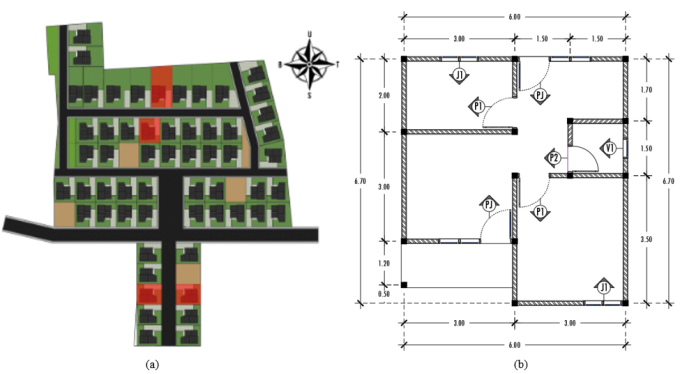
The buildings in Palapa Village Housing entirely use a simple type 36 house design, with a growable house concept that allows for future space development. This type 36 house has a building area of 36 square meters, standing on a plot measuring 72 square meters. The facade design of the buildings in the entire area is relatively uniform, following the developer's design standards.
Figure 1. (a) Village Position of Doors and Windows in Palapa Village Housing, (b) Village Position in Palapa Village Housing.
The orientation of buildings in this area varies following the plot patterns and the direction of the local roads, resulting in houses facing east, west, north, or south. This variation in orientation is an important focus of the research because it affects the extent of solar radiation exposure on the buildings. The basic shape of the building is a single-story house with a gable roof of minimal vertex.
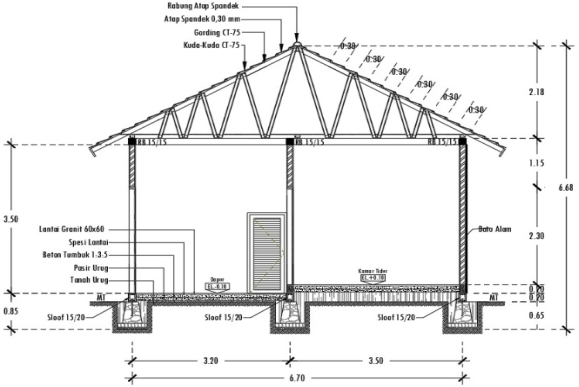
Figure 2. Type of Housing of Palapa Village.
The building materials used in Palapa Village Housing are classified as economic standards, which generally do not provide optimal protection against the humid tropical climate. The building walls use red brick masonry plastered and smoothed with cement, while the roof uses metal tiles with a lightweight steel frame. These two materials are known to be quite high thermal conductors, thus capable of increasing the indoor temperature, especially during the day when the intensity of solar radiation peaks. This condition will be worse if not accompanied by additional thermal insulation, which in reality is not available in the majority of houses.
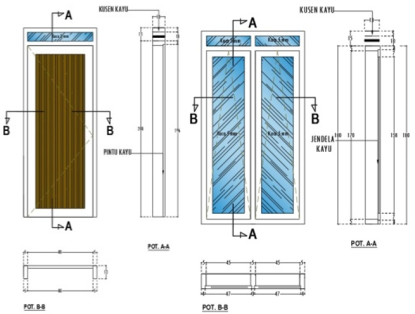
Figure 3. Housing Open of Palapa Village.
Opening elements such as windows and ventilation have not yet been designed to optimize thermal comfort. Small, unshaded plain glass windows are the only source of natural light and air.
Coming. While additional ventilation is small grilles above doors or windows, which do not allow for cross ventilation. This combination makes the air circulation in the house very limited, causing hot air to become trapped and thermal comfort to be difficult to achieve, especially from noon to the afternoon.
The gable roof design also has minimal overhang, so most of the house walls are directly exposed to solar radiation without protection. The effect will be very noticeable on houses facing east and west, which each receive direct sunlight intensity in the morning and evening. When combined with limited ventilation and the absence of vegetative or architectural shields, the buildings become more susceptible to excessive heat accumulation. Although from the perspective of residential health requirements, the houses in this area have met the minimum standards, such as the use of waterproof ceramic floors and adequate natural lighting, the overall building design has not fully responded to the characteristics of the humid tropical climate. The lack of sun protection, limited air circulation, and the use of materials with high thermal conductivity make the residents highly dependent on adaptive strategies, such as the use of fans or air conditioning. In other words, thermal comfort has not yet been achieved through the passive design of the building, but rather relies more on additional energy interventions from the occupants.
3.2. Results of PMV Measurements at Various Orientations
The PMV value is used as the main indicator of the thermal comfort level experienced by building occupants, where a higher PMV value indicates increasingly hotter and more uncomfortable thermal conditions, while a PMV value approaching zero reflects neutral and comfortable thermal conditions.
Measurements were taken on the four main orientations of the building, namely east, west, south, and north, within the time range from 08:00 to 17:00 each day. Data were obtained thru direct observation over three consecutive days, namely Monday (September 2, 2024), Tuesday (September 3, 2024), and Wednesday (September 4, 2024). To facilitate reading and analysis, the measurement results are presented in the form of PMV development graphs for each building orientation on each day. These graphs illustrate the fluctuations in thermal comfort levels throughout the day and serve as the basis for drawing conclusions and providing recommendations related to building designs that are more adaptive to the tropical climate.
3.2.1. PMV First Day Research
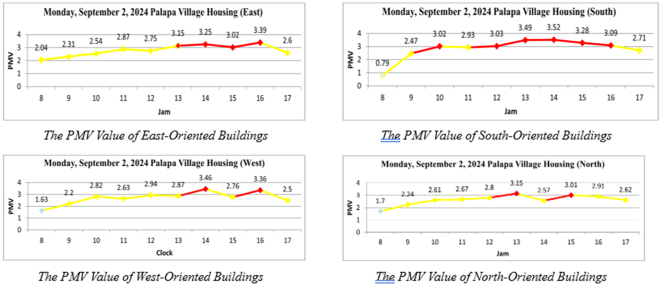
Figure 4. The PMV Value of Oriented Buildings.
The building facing east shows a PMV pattern that continues to increase from morning to afternoon. At 08:00, the PMV value was recorded at 2.04, which is still in the warm category. Over time, the PMV increased to 2.31 at 09:00, 2.54 at 10:00, and 2.87 at 11:00. Approaching noon, the PMV slightly decreased to 2.75 at 12:00, but then rose again to 3.15 at 13:00 and peaked at 3.39 at 16:00. This indicates that the east orientation causes the building to receive increasing heat exposure throughout the day. Although the main exposure should occur in the morning, these results suggest that heat accumulates and is trapped inside the building, leading to a decrease in thermal comfort in the afternoon. This condition highlights the need for design strategies such as cross ventilation or the use of roofing and wall materials with high reflective capabilities.
West-oriented buildings show the lowest PMV value in the morning at 08:00, which is 1.63. The PMV value sharply increases to 2.2 at 09:00 and reaches 2.82 at 10:00. A fluctuation pattern is observed with a slight decrease at 11:00 (2.63), but it stabilizes above 2.8 approaching noon. The peak PMV occurs at 14:00 with a value of 3.46. This pattern describes the characteristics of west-oriented buildings, which are relatively cooler in the morning but experience a heat spike as the sun moves westward from noon to evening. This makes west-oriented buildings tend to be less comfortable, especially during the late afternoon hours, so it is very important to anticipate this with sun protection on the west facade and optimal ventilation design.
The southern orientation results in the lowest initial PMV at 08:00 (0.79), indicating relatively cool conditions in the morning. However, the PMV value increases drastically as the sun rises, reaching 2.47 at 09:00 and 3.02 at 10:00. The PMV value remains high throughout the day, peaking at 14:00 with a value of 3.52. Buildings with a southern orientation in this study experience very intense heat exposure from noon to evening. This is due to the position of the sun in Lhokseumawe, which is located north of the equator, causing the southern side of the building to receive accumulated indirect radiation. The rapid increase in PMV indicates that the southern orientation at this location has a high risk of thermal discomfort.
North-oriented buildings show a more stable PMV increase pattern compared to other orientations. The initial value of 1.7 at 08:00 gradually increased to 2.24 at 09:00, 2.61 at 10:00, and 2.8 at 12:00. The peak PMV was recorded at 13:00 at 3.15. and afterward the value decreased to 2.57 at 2:00 PM. This shows that the north orientation is relatively better at reducing heat load from noon to evening. The decrease in PMV value after its peak indicates that buildings with a north orientation lose heat more quickly, resulting in a more comfortable thermal condition for occupants compared to west and south orientations.
3.2.2. Research Day Two of PMV
Figure 5. The PMV Value of Oriented Buildings.
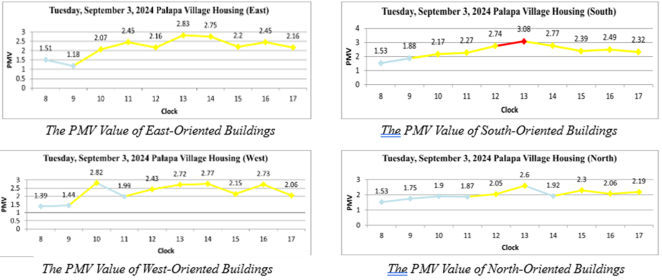
The building with an east orientation on Tuesday showed a moderate PMV pattern. The lowest PMV was recorded at 09:00 at 1.18, while the highest PMV occurred at 13:00 with a value of 2.83. The PMV increase pattern appeared gradual, with a value of 1.51 at 08:00, rising to 2.07 at 10:00, and 2.45 at 11:00 AM. After reaching its peak at 1:00 PM, the PMV value slightly decreased and stabilized in the range of 2.16 to 2.45 until the evening. Compared to the previous day, the PMV on the east orientation on Tuesday tends to be lower. This indicates that the weather conditions or solar radiation intensity on Tuesday were more favorable, or the eastern building benefited from more effective natural ventilation and cooling on that day. However, the PMV value remained at a warm level (2 < PMV < 3) for most of the time, which means the occupants still experienced thermal discomfort from noon to afternoon.
In the western orientation, the lowest PMV was recorded at 08:00 at 1.39, and the highest value occurred at 10:00 at 2.82. Interestingly, the PMV spike occurred quite rapidly from the morning until 10:00 AM, but after that, the PMV remained relatively stable and did not show significant increases. The PMV was recorded at 2.43 at 12:00 PM, 2.72 at 1:00 PM, and slightly increased to 2.77 at 2:00 PM. After that, the PMV value gradually decreased to 2.06 at 5:00 PM. This pattern shows that west-facing buildings heat up quite quickly in the morning leading to noon. However, after reaching their peak, the buildings do not experience further spikes. This may be influenced by clouds or changes in solar radiation intensity in the afternoon, or due to more effective heat release compared to the previous day. Nevertheless, a PMV above 2 throughout the day until the evening indicates a level of thermal discomfort that is quite bothersome to the occupants.
The south-oriented building shows a PMV pattern with a gradual and quite high increase during the day. The initial PMV at 08:00 was recorded at 1.53, rising to 1.88 at 09:00, and continuing to increase to 2.17 at 10:00 and 2.27 at 11:00. The peak PMV occurred at 13:00 with a value of 3.08, indicating excessive heat conditions. After the peak, the PMV gradually decreased to 2.77 at 14:00 and continued to decrease to 2.32 at 17:00. These results are consistent with the pattern of the previous day, where the south orientation continued becomes an orientation with the worst thermal performance, especially during the day. The position of the sun crossing the north in the tropical region causes strong indirect radiation on the southern side of the building. This emphasizes that the southern orientation in this area should be equipped with additional protection in the form of shading devices or radiation barriers to reduce heat load.
North-oriented buildings show a rising pattern. On the north orientation, Tuesday's PMV showed the most stable and not too high pattern compared to other orientations. The initial PMV at 08:00 was recorded at 1.4 (data on the graph), rising to around 2.0 at 10:00, and peaking at 13:00 at 2.7 (referring to the data of graphic). After this peak, the PMV gradually decreased to 2.3 at 5:00 PM. This PMV value confirms that the north orientation still provides better thermal performance compared to the west and south orientations. The temperature difference is not too extreme, and the heat decline occurs more quickly after its peak. This demonstrates the advantage of the northern orientation in reducing the heat load due to direct sunlight exposure at this location.
3.2.3. PMV Research Day Three
Figure 6. The PMV Value of East-Oriented Buildings.
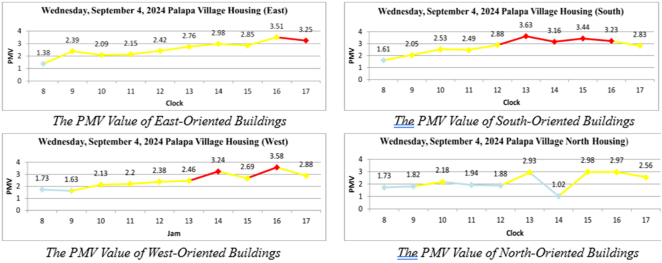
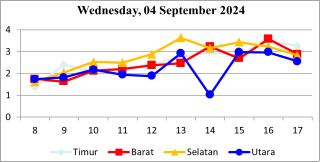
The east-oriented building on Wednesday showed a continuously increasing PMV pattern from morning to afternoon. At 08:00, the PMV was recorded at 1.38, indicating thermal conditions that were starting to feel warm. Over time, the PMV value continued to gradually increase: 2.39 at 09:00, 2.09 at 10:00, and 2.15 at 11:00. This value kept rising until it reached 2.42 at 12:00, 2.76 at 13:00, and peaked at 16:00 with a PMV of 3.51. At 17:00, the PMV value slightly decreased to 3.25, but it remained at a very hot and uncomfortable level. This pattern indicates that the east-facing orientation experienced a significant accumulation of heat on Wednesday. Although the east-facing orientation usually only receives sunlight exposure in the morning, under today's conditions, the building appears to retain heat until the afternoon. This is likely exacerbated by the low wind speed and high air temperature, as well as the radiation trapped inside the building. The east orientation today is one of the major contributors to the thermal discomfort of the occupants, especially in the afternoon.
Buildings with a western orientation show a PMV pattern that is quite consistent with the characteristics of this orientation in tropical regions. The initial PMV at 08:00 was 1.73 and remained relatively low until 09:00 (1.63). However, by 10:00, the PMV began to rise to 2.13 and continued to increase until it reached 2.20 at 11:00. The PMV value kept rising over time, recording 2.38 at 12:00, 2.46 at 13:00, and peaking at 16:00 with a value of 3.58. At 17:00, the PMV slightly decreased to 2.88 but was still considered very hot. This condition reflects the character of west-facing buildings that are vulnerable to direct sunlight exposure in the late afternoon. The heat from solar radiation on the west side causes a high accumulation of temperature and drastically reduces thermal comfort in the afternoon. This result emphasizes the importance of using passive architectural designs such as window shades, canopies, and protective vegetation on the western side of buildings in this area.
The southern orientation once again became the orientation with the most challenging thermal performance on Wednesday. The PMV at 08:00 started at 1.61, then significantly increased to 2.05 at 09:00 and 2.53 at 10:00. This value continued to rise, reaching 2.88 at 12:00 and peaking at 3.63 at 13:00. After that, the PMV slightly decreased but remained at a very hot level, recording 3.16 at 14:00, 3.44 at 15:00, and 3.23 at 16:00. At 17:00, the PMV dropped to 2.83, but it remained in the hot category. These results indicate that the southern orientation of the Palapa Village Housing is significantly exposed to indirect heat radiation, primarily due to radiation reflection and heat accumulation around the building. This condition serves as a strong indicator that building designs with a southern orientation in tropical locations must receive serious attention in terms of radiation protection and ventilation design.
North-oriented buildings on Wednesday showed a more moderate PMV pattern compared to other orientations, although they remained at a high heat level. The PMV at 08:00 was recorded at 1.73, increasing to 1.82 at 09:00, 2.18 at 10:00, and 1.94 at 11:00. The PMV value rose again to 1.88 at 12:00 and 2.93 at 13:00. The peak occurred at 15:00 with a PMV value of 2.98, then remained high until 16:00 (2.97) and slightly decreased at 17:00 to 2.56. Compared to other orientations, the north orientation is relatively better at controlling extreme temperature spikes, although it still shows a significant increase in heat from noon to afternoon. This supports the conclusion that the north orientation is more ideal in the context of a tropical climate, especially if equipped with designs that support cross-ventilation and natural shading.
3.3. Ansys Measurements
3.3.1. Ansys Measurement on Airflow and Ventilation Direction
Airflow is one of the important factors that affects thermal comfort in buildings. The presence of effective natural ventilation highly depends on the direction and speed of the wind in the surrounding environment. The proper orientation of buildings allows for air exchange (cross ventilation), which serves to lower room temperature, maintain air quality, and reduce dependence on artificial cooling systems. Therefore, analyzing the dominant wind direction and airflow patterns in the research area is an important initial step to understand the impact of building orientation on thermal performance.
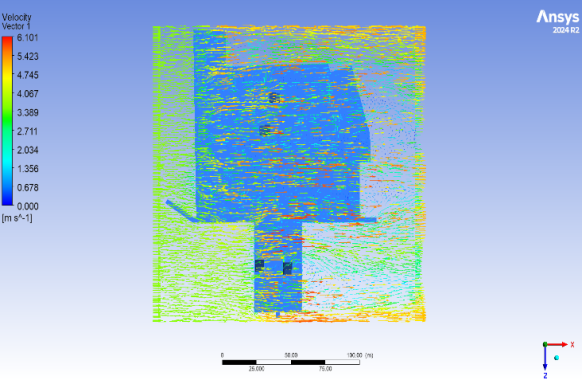
Figure 7. Ansys Simulation on Wind.
Field measurements using a weather station show that the dominant wind direction moves from west to east at an average speed of 3.6 m/s. This condition is consistent with the local climate pattern of Lhokseumawe, which is influenced by the west monsoon wind, typically blowing in a relatively stable direction during certain periods. This data provides a basis that houses with openings aligned with the dominant wind direction have the potential to achieve more optimal airflow.
Next, the simulation results using ANSYS 2024 R2 show the distribution of air velocity vectors around the building. The airflow pattern shows that houses with an east-west orientation are more effective in utilizing the dominant wind direction, as the openings on the front and back sides of the house are aligned with the wind's approach. This allows for cross ventilation, where air can enter from one side of the building and exit thru the opposite side. This cross ventilation is one of the passive strategies that has been proven to enhance the thermal comfort of occupants.
On the contrary, houses with north and south orientations do not receive optimal airflow. The openings on the front and back sides are not aligned with the dominant wind direction, so the airflow only passes by the sides of the building without entering the interior space. As a result, there is a limitation in natural air exchange, which has the potential to reduce thermal comfort levels and increase dependence on mechanical cooling systems.
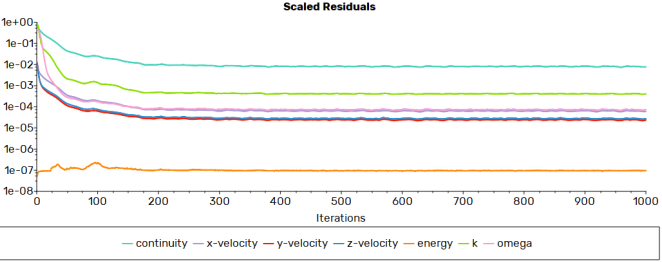
Figure 8. Air residual value.
The stability of the simulation results is reinforced by the scaled residuals graph in the image above. The residuals for the energy, velocity, and turbulence (k–ω) parameters have reached values below 10⁻³, in accordance with the convergence criteria in CFD analysis. This indicates that the simulation results can be considered valid and representative in depicting real field conditions.
Thus, it can be concluded that the orientation of the building has a significant impact on air flow and natural ventilation performance. Houses oriented west and east are more capable of utilizing the dominant wind direction to create cross ventilation, whereas houses with north and south orientation are relatively less effective. These findings support the concept of green architecture, which emphasizes the importance of building orientation as a passive strategy to enhance thermal comfort while reducing energy needs in housing.
3.3.2. Ansys Measurement on Buildings
In addition to analysing the direction and pattern of air flow, this research also conducts simulations of temperature distribution in buildings. Temperature analysis is necessary to understand how the thermal conditions around the building are influenced by orientation and interactions with wind and solar radiation.
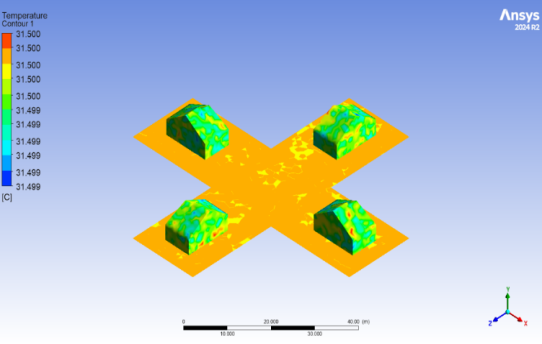
The results of the temperature distribution simulation using ANSYS 2024 R2 at 12:00 noon are shown in the figure above. Based on the temperature contours, it can be seen that the temperature values around the building are relatively uniform, ranging from 31.499°C to 31.500°C. The differences that appear only occur on certain sides of the building's surface that directly interact with air flow and solar radiation intensity.
Figure 9. Simulation on Wind.
This condition indicates that the difference in building orientation does not cause significant temperature variations on the building surface during daytime measurements. This can be explained because the dominant wind direction moving from west to east plays a more significant role in air circulation compared to the distribution of surface temperature. In other words, although the direction and intensity of the wind affect natural ventilation, the distribution of building surface temperatures during the day tends to remain stable within the same range.
This phenomenon is consistent with previous research that states that the contribution of cross ventilation is more dominant in influencing indoor thermal comfort compared to changes in building surface temperature. Therefore, it can be concluded that under daytime simulation conditions, the orientation of buildings in Palapa Village has a greater influence on airflow patterns and ventilation effectiveness, while the surface temperature distribution is relatively uniform across orientations.
4. Discussion
4.1. The Influence of Building Orientation on Thermal Performance in Palapa Village Housing, Lhokseumawe
Global temperature changes have increased the urgency for climate-responsive building designs, especially in the face of more extreme heat. In the context of housing in tropical climates such as Lhokseumawe, building orientation becomes one of the important factors that can influence thermal comfort within the residence
| [2] | Afrizal, Z. (2025). Study of the Building Envelope Design of the Wates Regional Hospital Apartments on Solar Radiation Study of the Building Envelope Design of the Wates Regional Hospital Apartment Against Solar Radiation Pemanasan global. Journal of Architecture and Urbanism Research, 8(April), 417–427. https://doi.org/10.31289/jaur.v8i2.14455 |
[2]
. This study shows that the orientation of buildings significantly affects the thermal comfort levels of occupants, as measured by the PMV value. Buildings facing east and west exhibit higher levels of thermal discomfort, especially in the morning and evening, due to direct exposure to solar radiation. In contrast, houses oriented toward the north tend to have more stable and lower PMV values, indicating relatively better thermal performance.
These results support previous findings
| [8] | Gupta, L. N., Mark, J., & Fray, A. (2023). Innovative Glass Materials for Passive Cooling. Journal of Building Materials, 29(7), 442–457. |
| [10] | Liu, Z., Chen, Y., & Zhao, W. (2023). Thermal Comfort in Green Buildings. International Journal of Green Building, 12(05), 287–300. https://doi.org/10.1109/igb.2023.302900 |
| [13] | Nurazizah, S., & Wibawa, B. A. (2024). Thermal Comfort Analysis of Lecturer Room Using Cbe Thermal Comfort. 3(2), 69–75. https://doi.org/10.24167/joda.v3i2.12673 |
[8, 10, 13]
, which state that the orientation of buildings toward sunlight plays a significant role in determining the need for passive cooling. East and west orientations tend to receive a greater heat load because the morning and evening sun directly shines on the facade surface, which often has minimal protection. With minimal cross-ventilation and limited natural shading in this residential environment, the effect of orientation on indoor temperature becomes increasingly significant. Therefore, the orientation of the building and the enhancement of passive design features such as roof overhangs or the addition of shading vegetation can be important strategies to improve the overall thermal comfort of the residence.
Additionally, the results of numerical simulations using ANSYS 2024 R2 provide further insight into the role of building orientation on thermal conditions. Airflow simulations show that houses with east-west orientation can take advantage of the dominant wind direction from west to east, resulting in cross-ventilation that supports indoor air exchange. Conversely, houses with north-south orientation are relatively less optimal, as the wind tends to pass by the sides of the building without entering the interior, leading to limited air circulation. These findings confirm that, in addition to solar radiation, wind patterns and natural ventilation also play a crucial role in determining the thermal comfort of the occupants.
Furthermore, the simulation of surface temperature distribution of the building at 12:00 PM shows that the temperature values around the house are relatively uniform, ranging from 31.499°C to 31.500°C. This indicates that the building's orientation has a greater influence on air flow patterns than on surface temperature distribution during the day. Thus, strategies for improving thermal comfort should not only focus on controlling solar radiation exposure but also consider utilizing the dominant wind direction thru effective cross-ventilation design.
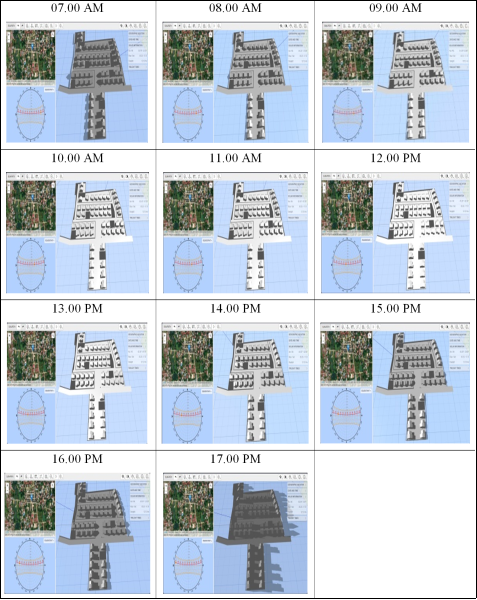
In addition to the PMV results and ANSYS numerical simulations, further testing thru sun path analysis using Andrew Marsh's device also reinforces the findings of this research.
Figure 10. The Movement of the Sun and the Characteristics of Shading.
The sun path data shows that the direction of the sun's movement at the study location tends to lean toward the north and is not perpendicular to the equator. This condition has implications for the building's shadow patterns, where the facades facing north and south receive relatively balanced radiation exposure, while the east and west facades continue to receive high radiation intensity in the morning and evening. This explains why houses with east and west orientations tend to experience a more significant increase in heat load compared to houses with north and south orientations.
Thus, Andrew Marsh's solar path analysis further emphasizes that thermal comfort in the Palapa Village housing in Lhokseumawe is not only influenced by cross ventilation and surface temperature distribution factors as seen in the ANSYS results and field measurements, but is also closely related to the geographical position of the tropical region, which causes the direction of incoming radiation to be asymmetrical to the building. Therefore, passive design strategies such as the use of shading devices, optimization of orientation, and the utilization of shading vegetation become crucial solutions in reducing direct exposure to solar radiation and improving the thermal performance of the residence.
4.2. Comparison of Building Orientation to Thermal Performance in Palapa Village Housing, Lhokseumawe
The Predicted Mean Vote (PMV) value is used in this study to evaluate the thermal comfort levels of various building orientations in the Palapa Village Housing area. Measurements were taken at four main orientations: east, west, south, and north, during the time period from 08:00 to 17:00 WIB. The results of the conducted research indicate that each orientation has different thermal characteristics, influenced by the direction of incoming solar radiation and the peak exposure time. Buildings facing east and west tend to experience sharp fluctuations in PMV values, while south and north orientations have more stable values but still experience spikes at certain times.
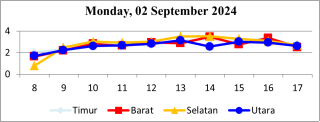
Figure 11. Building PMV Value on Monday.
On the first day (Monday), the eastern orientation recorded a quite drastic increase in PMV since the morning. Direct exposure to the morning sun caused the PMV value to exceed 3 (the "hot" category) from 1:00 PM to 5:00 PM. Meanwhile, the western orientation had a relatively low PMV value in the morning but increased significantly toward the afternoon, in line with the sun's movement. The southern orientation showed high values from 10:00 AM and became one of the most thermally uncomfortable during the day. In contrast, the northern orientation recorded a more stable PMV value, although it remained in the uncomfortable range (>2), but its fluctuations were not as intense as the other three orientations.
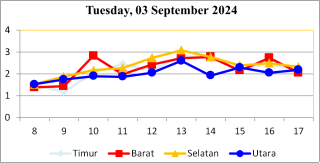
Figure 12. Building PMV Value on Tuesday.
On the second day (Tuesday), a similar thermal pattern was repeated. The southern orientation recorded the highest PMV value at 1:00 PM with a figure of 3.08, indicating a fairly heavy heat load. The eastern orientation again showed an upward trend since morning, reflecting prolonged thermal discomfort. It is perhaps interesting that the western orientation was slightly lower than the previous day, peaking at 2:00 PM. The northern orientation remained the most stable, within the range of 1.5 to 2.6, and demonstrated relatively better thermal performance in terms of comfort.
Figure 13. Building PMV Value on Wednesday.
The third day (Wednesday) reinforced the tendency for high heat accumulation in certain orientations. The highest PMV occurred in the western orientation with a value of 3.58 at 4:00 PM. The eastern orientation also recorded a significant spike at the same time (3.51), while the southern orientation peaked at 1:00 PM with a PMV of 3.63, the highest value observed throughout the study. Interestingly, the north orientation, which had previously been stable, began to record an increase in value in the afternoon (2.98 at 3:00 PM), indicating a possible effect of heat accumulation and radiation reflection from the surrounding environment.
The results show that the east and west orientations are most vulnerable to thermal discomfort due to direct sunlight exposure in the morning and afternoon. The south orientation shows a high thermal load during the day, while the north orientation remains the most stable, although it still shows an increasing trend at certain times. This variation shows that the orientation of the building plays an important role in thermal comfort and needs to be taken seriously in the design of tropical residences. Passive design strategies such as adding shading, cross ventilation, and roof insulation become crucial to reduce heat impact based on the building's orientation.
4.3. Building Orientation Recommendations to Improve Thermal Comfort
Based on the results of thermal comfort analysis using PMV, airflow simulation thru ANSYS, and visual reinforcement from Andrew Marsh's solar path test, several building orientation recommendations can be formulated to improve the thermal comfort of Palapa Village Lhokseumawe.
First, the orientation of the building toward the north and south has proven to be the most ideal in reducing exposure to direct radiation throughout the day. However, the analysis results show that window and door openings in buildings facing only north and south are not effective enough in supporting air circulation into the room. Therefore, additional openings facing west and east are needed to enable cross ventilation. This configuration helps improve the natural airflow into the building so that heat can be released more optimally, supporting the creation of a cooler indoor environment.
Second, the orientation of the building must be a primary consideration in the application of passive design. Identifying the direction and speed of the wind at the location is necessary to maximize natural air flow. By utilizing local climatological data, the position of openings, ceiling height, and room layout can be arranged in such a way as to take advantage of the dominant wind and reduce dependence on mechanical cooling.
Third, the implementation of a roof garden is recommended as an additional strategy to minimize heat entering thru the building's roof. The roof area is one of the building components that receives the most solar radiation, so the presence of a layer of vegetation on it can lower the surface temperature, increase the humidity of the surrounding air, and contribute to the reduction of the indoor temperature below it.
By combining appropriate orientation strategies, optimizing openings for cross ventilation, utilizing local wind direction and speed, and adding a roof garden, buildings in this area can be designed to be more responsive to the humid tropical climate and support the creation of better thermal comfort without a significant increase in energy consumption.
5. Conclusions
The orientation of buildings has been proven to affect the level of thermal comfort. Houses with an east orientation show the most unstable thermal conditions, with relatively high temperatures in the morning due to exposure to early morning solar radiation. Houses with a west orientation are relatively cool in the morning but experience a significant increase in heat in the afternoon. South-oriented houses receive a higher heat load during the day, causing indoor temperatures to rise. Meanwhile, the northern orientation is the most stable, with lower temperature variations throughout the day.
The results of the PMV measurements and ANSYS simulations show consistency with field conditions. The east and west orientations yield higher PMV values (tending to be hot), while the north and south orientations show PMV values closer to neutral. This confirms that north and south orientations are more supportive of thermal comfort compared to east and west. Moreover, although the north-south orientation is better in terms of heat exposure, the position and number of window openings do not yet support cross ventilation. The direction of airflow from east to west has not been maximized, so indoor air quality can still be improved, indicating that air circulation is not optimal in all orientations.
Recommendations for improving orientation to enhance thermal comfort are as follows: Establish the main orientation of the building toward the north and south to reduce excessive heat load; Add openings on the east and west sides to support more effective cross ventilation; Use shading vegetation and a roof garden on the roof and open areas as additional heat reduction strategies.
Abbreviations
PMV | Predicted Mean Vote |
PPD | Predicted Percentage of Dissatisfied |
Author Contributions
Rifar Manani: Data curation, Resources, Writing – original draft
Cut Nursaniah: Conceptualization, Data curation, Formal Analysis, Methodology, Writing – review & editing
Irin Caisarina: Conceptualization, Data curation, Formal Analysis, Methodology, Writing – review & editing
Funding
This work is not supported by any external funding.
Conflicts of Interest
The authors declare no conflicts of interest.
References
| [1] |
Aflaki, A., Mahyuddin, N., & Baharum, M. R. (2016). The influence of single-sided ventilation towards the indoor thermal performance of high-rise residential building: A field study. Energy and Buildings, 126, 146–158.
https://doi.org/10.1016/j.enbuild.2016.05.017
|
| [2] |
Afrizal, Z. (2025). Study of the Building Envelope Design of the Wates Regional Hospital Apartments on Solar Radiation Study of the Building Envelope Design of the Wates Regional Hospital Apartment Against Solar Radiation Pemanasan global. Journal of Architecture and Urbanism Research, 8(April), 417–427.
https://doi.org/10.31289/jaur.v8i2.14455
|
| [3] |
Ayuningtyas, N. V., & Suryabrata, J. A. (2019). Analysis of wall materials that influence the level of thermal comfort of buildings; a case study of residential building design from the Housing and Settlement Research and Development Center of the Ministry of Public Works. Journal of Arsitektur Pendapa, 2(1), 11–19.
https://doi.org/10.37631/pendapa.v2i1.64
|
| [4] |
Cung, R., & Rosetia, A. (2023). Identifying Thermal Comfort of Tropical Architectural Concept Building: A Case Study of Expandable House. Journal of Architectural Research and Education, 5(1), 61–72.
|
| [5] |
Dai, J., Wang, J., Bart, D., & Gao, W. (2023). The impact of building enclosure type and building orientation on indoor thermal comfort -A case study of Kashgar in China. Case Studies in Thermal Engineering, 49(March), 103291.
https://doi.org/10.1016/j.csite.2023.103291
|
| [6] |
González, J., Da Costa, B. B. F., Tam, V. W. Y., & Haddad, A. (2024). Effects of latitude and building orientation in indoor-illuminance levels towards energy efficiency. International Journal of Construction Management, 24(7), 784–798.
https://doi.org/10.1080/15623599.2023.2215087
|
| [7] |
Gumelar, & Aji, W. (2019). The Effect of Orientation and Position on Temperature and Humidity Reduction Performance in Student Flats at the University of Muhammadiyah Malang. In Journal of Mahasiswa Jurusan Arsitektur (Vol. 6, Issue 4).
|
| [8] |
Gupta, L. N., Mark, J., & Fray, A. (2023). Innovative Glass Materials for Passive Cooling. Journal of Building Materials, 29(7), 442–457.
|
| [9] |
Lamsal, P., Bajracharya, S. B., & Rijal, H. B. (2023). A Review on Adaptive Thermal Comfort of Office Building for Energy-Saving Building Design. Energies, 16(3).
https://doi.org/10.3390/en16031524
|
| [10] |
Liu, Z., Chen, Y., & Zhao, W. (2023). Thermal Comfort in Green Buildings. International Journal of Green Building, 12(05), 287–300.
https://doi.org/10.1109/igb.2023.302900
|
| [11] |
Miko, Y. B. (2023). The Effect of Openings in Type 36 House Rooms on Thermal Comfort According to User Perception. 1(2), 121–131.
|
| [12] |
Muhyi, A. (2016). The mechanism of physical development of the city and the direction of physical development of the city to understand the development process. Journal of Tata Kota Dan Daerah, 8(2), 71–78.
|
| [13] |
Nurazizah, S., & Wibawa, B. A. (2024). Thermal Comfort Analysis of Lecturer Room Using Cbe Thermal Comfort. 3(2), 69–75.
https://doi.org/10.24167/joda.v3i2.12673
|
| [14] |
Raihan Mufida, A. S. S. O. F. E. N. (2022). The Effect of Building Orientation on Thermal Comfort. Journal of Arsitektur Zonasi, 5(2), 361–368.
|
| [15] |
Ratnasari, A., & Asharhani, I. S. (2023). Potential Reduction of Overall Building Heat Transfer Values through Effective Shading Design Configurations. Journal of Arsitektur Pendapa, 6(1), 98–105.
https://doi.org/10.37631/pendapa.v6i1.521
|
| [16] |
Reda, N. (2023). 7 Most Popular House Types in Indonesia: Engineering Structure Houses.
https://rumahstruktur.co.id/tipe-rumah/
|
| [17] |
Sekretariat Kabinet Republik Indonesia. (2017). The Government Establishes the Arun Lhokseumawe Special Economic Zone. Cabinet Secretariat of the Republic of Indonesia.
https://setkab.go.id/pemerintah-tetapkan-kawasan-ekonomi-khusus-arun-lhokseumawe/
|
| [18] |
Sihombing, S. B., itonga, I. T., Erwina, Tedja, E., & Yang, N. (2022). Analysis of Building Orientation Towards Thermal Conditions at Fave Hotel In Medan City Sanggam. Journal of Darma Agung, 20(1), 105–123.
|
| [19] |
Simorangkir, E. (2018). This is the Most Popular Home Type in Indonesia. Detik Finance.
https://finance.detik.com/properti/d-4209825/ini-tipe-rumah-paling-diminati-orang-ri
|
| [20] |
Sinarmas. (2024). 5 Most Popular House Types. Sinarmas Land.
https://ecatalog.sinarmasland.com/article/5-tipe-rumah-yang-paling-diminati-masyarakat
|
| [21] |
Su, X., Yuan, Y., Wang, Z., Liu, W., Lan, L., & Lian, Z. (2023). Human thermal comfort in non-uniform thermal environments: A review. Energy and Built Environment, June 2023.
https://doi.org/10.1016/j.enbenv.2023.06.012
|
| [22] |
Syahfitri, W. I. T., Nabilah, F., Puspita, A., & Indah, S. (2015). Building Orientation Towards Thermal Comfort in Leuw Igajah Apartments, Cimahi. Journal of Reka Karsa, 3(1), 1–12.
|
| [23] |
Tsolkas, C., Spiliotis, E., Sarmas, E., Marinakis, V., & Doukas, H. (2023). Dynamic energy management with thermal comfort forecasting. Building and Environment, 237(April), 110341.
https://doi.org/10.1016/j.buildenv.2023.110341
|
| [24] |
Vanhoutteghem, L., Skarning, G. C. J., Hviid, C. A., & Svendsen, S. (2015). Impact of façade window design on energy, daylighting and thermal comfort in nearly zero-energy houses. Energy and Buildings, 102, 149–156.
https://doi.org/10.1016/j.enbuild.2015.05.018
|
| [25] |
Wu, Y., Zhang, Z., Liu, H., Li, B., Chen, B., Kosonen, R., & Jokisalo, J. (2023). Age differences in thermal comfort and physiological responses in thermal environments with temperature ramp. Building and Environment, 228(August 2022), 109887.
https://doi.org/10.1016/j.buildenv.2022.109887
|
| [26] |
Yuwono, A. B. (2017). The Effect of Building Orientation on the Heat Retention Capacity of Residential Houses in the Wonorejo Housing Complex in Surakarta. Journal of Chemical Information and Modeling, 110(9), 1689–1699.
|
| [27] |
Zhou, S., Li, B., Du, C., Liu, H., Wu, Y., Hodder, S., Chen, M., Kosonen, R., Ming, R., Ouyang, L., & Yao, R. (2023). Opportunities and challenges of using thermal comfort models for building design and operation for the elderly: A literature review. Renewable and Sustainable Energy Reviews, 183(July), 113504.
https://doi.org/10.1016/j.rser.2023.113504
|
Cite This Article
-
APA Style
Manani, R., Nursaniah, C., Caisarina, I. (2026). The Influence of Building Orientation on Thermal Performance in Palapa Village Housing, Lhokseumawe. International Journal of Architecture, Arts and Applications, 12(1), 1-16. https://doi.org/10.11648/j.ijaaa.20261201.11
 Copy
|
Copy
|
 Download
ACS Style
Manani, R.; Nursaniah, C.; Caisarina, I. The Influence of Building Orientation on Thermal Performance in Palapa Village Housing, Lhokseumawe. Int. J. Archit. Arts Appl. 2026, 12(1), 1-16. doi: 10.11648/j.ijaaa.20261201.11
Copy
|
Download
AMA Style
Manani R, Nursaniah C, Caisarina I. The Influence of Building Orientation on Thermal Performance in Palapa Village Housing, Lhokseumawe. Int J Archit Arts Appl. 2026;12(1):1-16. doi: 10.11648/j.ijaaa.20261201.11
Copy
|
Download
-
@article{10.11648/j.ijaaa.20261201.11,
  author = {Rifar Manani and Cut Nursaniah and Irin Caisarina},
  title = {The Influence of Building Orientation on Thermal Performance in Palapa Village Housing, Lhokseumawe},
  journal = {International Journal of Architecture, Arts and Applications},
  volume = {12},
  number = {1},
  pages = {1-16},
  doi = {10.11648/j.ijaaa.20261201.11},
  url = {https://doi.org/10.11648/j.ijaaa.20261201.11},
  eprint = {https://article.sciencepublishinggroup.com/pdf/10.11648.j.ijaaa.20261201.11},
  abstract = {The enhancement of the community's standard of living has intensified the desire for an improved environment. Nonetheless, new issues have arisen concurrently with a notable increase in energy consumption, particularly in type 36 residential dwellings in Palapa Village Housing, Lhokseumawe, Aceh. Excessive energy use elevates indoor temperatures and undermines the thermal comfort of the inhabitants. This study seeks to examine the impact of building orientation on thermal comfort in residential properties within the region. This study employs a quantitative methodology on 53 residential samples to assess the impact of solar exposure on achieving optimal interior thermal conditions. The research findings demonstrate that northern orientation is superior in mitigating heat load from noon to evening, consistently offering enhanced thermal performance compared to western and southern orientations. Furthermore, it is particularly advantageous in tropical climates, especially when integrated with designs that facilitate cross-ventilation and natural shading. The building's orientation significantly influences airflow and the efficacy of natural ventilation. Under diurnal simulation settings, the building orientation in Palapa Village significantly affects airflow patterns and ventilation efficacy, although the surface temperature distribution remains rather consistent across orientations. In conclusion, a correlation exists between building orientation and thermal performance, yielding design recommendations that can improve thermal comfort and promote energy efficiency in comparable housing in the future.},
 year = {2026}
}
Copy
|
Download
-
TY  - JOUR
T1  - The Influence of Building Orientation on Thermal Performance in Palapa Village Housing, Lhokseumawe
AU  - Rifar Manani
AU  - Cut Nursaniah
AU  - Irin Caisarina
Y1  - 2026/01/29
PY  - 2026
N1  - https://doi.org/10.11648/j.ijaaa.20261201.11
DO  - 10.11648/j.ijaaa.20261201.11
T2  - International Journal of Architecture, Arts and Applications
JF  - International Journal of Architecture, Arts and Applications
JO  - International Journal of Architecture, Arts and Applications
SP  - 1
EP  - 16
PB  - Science Publishing Group
SN  - 2472-1131
UR  - https://doi.org/10.11648/j.ijaaa.20261201.11
AB  - The enhancement of the community's standard of living has intensified the desire for an improved environment. Nonetheless, new issues have arisen concurrently with a notable increase in energy consumption, particularly in type 36 residential dwellings in Palapa Village Housing, Lhokseumawe, Aceh. Excessive energy use elevates indoor temperatures and undermines the thermal comfort of the inhabitants. This study seeks to examine the impact of building orientation on thermal comfort in residential properties within the region. This study employs a quantitative methodology on 53 residential samples to assess the impact of solar exposure on achieving optimal interior thermal conditions. The research findings demonstrate that northern orientation is superior in mitigating heat load from noon to evening, consistently offering enhanced thermal performance compared to western and southern orientations. Furthermore, it is particularly advantageous in tropical climates, especially when integrated with designs that facilitate cross-ventilation and natural shading. The building's orientation significantly influences airflow and the efficacy of natural ventilation. Under diurnal simulation settings, the building orientation in Palapa Village significantly affects airflow patterns and ventilation efficacy, although the surface temperature distribution remains rather consistent across orientations. In conclusion, a correlation exists between building orientation and thermal performance, yielding design recommendations that can improve thermal comfort and promote energy efficiency in comparable housing in the future.
VL  - 12
IS  - 1
ER  -
Copy
|
Download






 Share This Article
 Twitter
 Linked In
 Facebook