Abstract
Ethiopia possesses one of the world’s most remarkable geological landscapes, shaped by the East African Rift System and marked by active volcanism, extensive escarpments, deep gorges, alkaline lakes, and globally significant paleoanthropological sites. Despite this exceptional geoheritage, geotourism remains an underdeveloped niche within the country’s tourism sector, which has historically focused on cultural and ecological attractions. This systematic review synthesizes existing academic, policy, and geological literature to assess Ethiopia’s geotourism resources and critically examine their actual and potential contributions to Local Economic Development (LED). Using an integrated Sustainable Geotourism Development Framework, the study classifies geotourism assets, evaluates current development conditions, and analyzes socio-economic benefits, constraints, and future opportunities. Findings indicate that geotourism can significantly enhance LED by generating employment, stimulating micro- and small-scale enterprises, improving infrastructure, promoting gender-inclusive livelihoods, and strengthening cultural and geological stewardship within local communities. However, the sector is constrained by severe infrastructural gaps, weak geo-interpretative services, environmental degradation, policy fragmentation, and limited community participation. Case studies from the Simien Mountains and the Afar Depression highlight both the transformative potential of geotourism and the persistent challenge of revenue leakage away from host communities. Despite these constraints, Ethiopia holds substantial opportunities to position geotourism as a strategic pillar of sustainable development through policy reform, institutional coordination, UNESCO Global Geopark initiatives, technological innovation, and community-based enterprise models. The review concludes by proposing a comprehensive set of policy, institutional, and community-level recommendations aimed at embedding geotourism within Ethiopia’s broader economic and conservation agendas. Overall, geotourism represents a promising, yet underutilized pathway for inclusive, resilient, and place-based development in Ethiopia.
|
Published in
|
Innovation Management (Volume 1, Issue 2)
|
|
DOI
|
10.11648/j.im.20260102.11
|
|
Page(s)
|
74-84 |
|
Creative Commons
|

This is an Open Access article, distributed under the terms of the Creative Commons Attribution 4.0 International License (http://creativecommons.org/licenses/by/4.0/), which permits unrestricted use, distribution and reproduction in any medium or format, provided the original work is properly cited.
|
|
Copyright
|
Copyright © The Author(s), 2026. Published by Science Publishing Group
|
Keywords
Geotourism, Geoheritage, Sustainable Tourism, Ecotourism
1. Introduction
Tourism is universally recognized as a powerful driver of socio-economic development, particularly for developing nations rich in natural and cultural capital
| [16] | Dwyer, L. (2022). Tourism economics and policy. In D. Gursoy & C. G. Chi (Eds.), Encyclopedia of Tourism Management and Marketing. Edward El- gar Publishing. |
| [24] | Manzoor, F., Wei, L., Asif, M., Haq, M. Z., & Rehman, H. U. (2019). The contribution of sus- tainable tourism to economic growth and employ- ment in Pakistan. International Journal of Envi- ronmental Research and Public Health, 16(19), 3785. |
[16, 24]
. Ethiopia, a country of profound historical significance and staggering ecological diversity, has long positioned tourism as a strategic sector within its successive Growth and Transformation Plans (GTP I & II). Traditionally, Ethiopia's tourism appeal has been anchored in its exceptional cultural heritage exemplified by the rock-hewn churches of Lalibela, the castles of Gondar, and the ancient stelae of Axum, as well as its unique biodiversity within national parks such as the Simien and Bale Mountains
| [35] | Teshome, E. (2018). Wunania Kosoye natural at- traction, Ethiopia: Conservation values and their relevance to community-based ecotour- ism. Journal of Hospitality Management and Tourism, 9(2), 14-24. |
[35]
. However, a third, equally magnificent pillar of attraction remains critically underexploited: its geoheritage.
Ethiopia sits astride the geologically dynamic East African Rift System (EARS), an active continental rift zone that is gradually separating the African plate
| [13] | Chorowicz, J. (2005). The East African rift sys- tem. Journal of African Earth Sciences, 43(1-3), 379-410. |
[13]
. This tectonic setting has sculpted a landscape of dramatic extremes and remarkable geological diversity, ranging from the below sea-level Danakil Depression, home to the hydrothermal features of Dallol and the persistent lava lake of Erta Ale, to the alpine heights of the Simien Mountains. The landscape encompasses extensive rift valley floors dotted with alkaline lakes, towering escarpments, deep river gorges, and vast cave networks. It also includes sites that have yielded some of the world's most important hominid fossils documenting the story of human evolution
| [14] | de la Torre, I., Mora, R., Arroyo, A., & Beni- to-Calvo, A. (2014). Acheulean technological be- haviour in the middle Pleistocene landscape of Mieso (East-Central Ethiopia). Journal of Human Evolution, 76, 1-25. |
| [21] | Kappelman, J., Ketcham, R. A., Pearce, S., Todd, L., Akins, W., Colbert, M. W.,... & Witzel, A. (2016). Perimortem fractures in Lucy suggest mortality from fall out of tall tree. Nature, 537(7621), 503-507. |
[14, 21]
. These geological features form the fundamental foundation upon which the country’s ecosystems and human civilizations have evolved.
Despite this immense geological potential, systematic assessment, conservation, and promotion of geological assets for tourism commonly referred to as geotourism remain at an early stage in Ethiopia. While concepts such as ecotourism and cultural tourism are widely discussed in policy frameworks and academic literature, the concept of geotourism is still relatively underrepresented, resulting in fragmented understanding and management of non-living natural resources. Strategically developing geotourism presents a transformative opportunity for Ethiopia. It can diversify the national tourism product, reduce seasonality, distribute tourism benefits to remote and geologically unique regions, promote scientific literacy, and foster a conservation ethic while contributing significantly to Local Economic Development (LED) in communities that are often marginalized from mainstream economic growth.
The concept of geotourism has evolved significantly since its early definitions. Early interpretations emphasized the provision of interpretive services to help tourists understand geological and geomorphological features
| [20] | Hose, T. A. (1995). Selling the story of Britain's stone. Environmental Interpretation, 10(2), 16-17. |
[20]
. Over time, the concept has expanded to incorporate broader elements of sustainability and community well-being. A widely accepted contemporary definition describes geotourism as tourism that sustains or enhances the geographical character of a place, including its environment, culture, aesthetics, heritage, and the well-being of local residents
| [27] | National Geographic Society. (2007). Geotourism Charter. |
[27]
. This holistic definition highlights the interconnected relationship between geological landscapes, ecological systems, cultural heritage, and local communities.
A parallel conceptual development emerged from the geo-conservation movement, particularly through initiatives such as UNESCO Global Geoparks, where geotourism is viewed as a tool for celebrating geological heritage, promoting geo-education, and achieving sustainable local development
| [39] | UNESCO. (2015). Statutes of the International Geoscience and Geoparks Programme (IGGP). |
[39]
. Within this framework, a geopark is defined as a unified geographical area where sites of international geological significance are managed with an integrated approach to protection, education, and sustainable development.
Geotourism can therefore be understood as a form of sustainable, place-based tourism that focuses on the appreciation, education, and conservation of geological and geomorphological features within their broader ecological and cultural contexts, while simultaneously promoting the well-being of host communities.
Importantly, geotourism does not function as an isolated tourism sector but rather as a complementary niche that interacts strongly with other sustainable tourism forms. While ecotourism focuses primarily on living ecosystems and biodiversity, geotourism emphasizes the abiotic foundations of those ecosystems
| [29] | Newsome, D., & Dowling, R. K. (Eds.). (2010). Geotourism: The tourism of geology and landscape. Goodfellow Publishers. |
[29]
. In many cases, geology and culture are closely intertwined as geo-cultural heritage, such as in the rock-hewn churches of Lalibela, where cultural architecture is directly influenced by the geological properties of volcanic rock formations
| [22] | Kiyuev, S. (2020). The results of new studies of the rock-hewn churches of the historical regions of Endarta and Tamben (Tigray region, Ethiopia). In The 2nd International Conference on Architec- ture: Heritage, Traditions and Innovations (AHTI 2020) (pp. 38-46). Atlantis Press. |
[22]
. Consequently, the development of geotourism in Ethiopia does not require the creation of an entirely separate tourism industry; rather, it involves adding interpretive value and diversification to existing tourism experiences, thereby enhancing their sustainability, educational value, and economic contribution.
The rationale for this comprehensive review is fourfold. First, there is a clear absence of a synthesized nationwide assessment of Ethiopia’s geotourism resources and their economic potential, as existing studies are often localized or embedded within broader tourism literature
| [36] | Teshome, E., Dereje, M., & Asfaw, Y. (2022). Po- tentials, challenges and economic contributions of tourism resources in the South Achefer district, Ethiopia. Cogent Social Sciences, 8(1), 2041290. |
| [37] | Tessema, G. A., van der Borg, J., Minale, A. S., Van Rompaey, A., Adgo, E., Nyssen, J.,... & Poesen, J. (2021). Inventory and assessment of geosites for geotourism development in the Eastern and Southeast Lake Tana Region, Ethio- pia. Geoheritage, 13(2), 43. |
[36, 37]
. Second, with a large youth population and an economy heavily reliant on agriculture, Ethiopia needs to identify new and sustainable drivers of job creation and Local Economic Development, particularly in peripheral regions where many geosites are located
| [17] | Getahun, B. T., & Yeshanew, Y. A. (2016). Sus- tainable ecotourism potentials and its challenges in Ethiopia: The Awash National Park in Fo- cus. International Journal of Humanities and Social Science Research, 2, 41-49. |
[17]
. Third, many of Ethiopia’s unique geoheritage sites face increasing threats from activities such as uncontrolled mining, quarrying, and deforestation
| [4] | Aseres, S. A., & Sira, R. K. (2021). Ecotourism development in Ethiopia: costs and benefits for protected area conservation. Journal of Ecotourism, 20(3), 224-249. |
| [8] | Beyene, B. (2016). Review on ecotourism oppor- tunities and the challenges for natural resource management in Ethiopia. Journal of Tourism, Hos- pitality and Sports, 21, 28-34. |
[4, 8]
. Properly managed geotourism can provide strong economic incentives for their conservation. Finally, policymakers and tourism stakeholders require a comprehensive and evidence-based analysis to guide future strategies, policies, and investment decisions in this emerging tourism sector. Consequently, this review provides an essential foundation for researchers, policymakers, tourism planners, conservation practitioners, local communities, and investors seeking to integrate geotourism into Ethiopia’s broader sustainable development agenda.
2. Research Objectives
The overarching aim of this paper is to conduct a systematic review to assess Ethiopia's geotourism resources and critically evaluate their contribution and potential to Local Economic Development.
Specific objectives are to:
1) Systematically inventory and classify the major geotourism resources of Ethiopia based on a coherent typology.
2) Assess the current state of development, use, and conservation of these geosites.
3) Analyze the existing and potential contributions of geotourism to local economies, including employment, enterprise development, and infrastructure.
4) Identify and critically examine the key challenges and constraints hindering the development of sustainable geotourism.
5) Explore the opportunities and strategic directions for leveraging geotourism for sustainable LED.
6) Propose an integrated framework and actionable recommendations for stakeholders.
3. Structure of the Review
This review is structured to logically flow from conceptual foundations to empirical assessment and finally to strategic recommendations. Following this introduction, Section 2 details the methodology. Section 3 provides essential geo- logical background. Section 4 presents the core inventory and assessment of geotourism resources. Section 5 analyzes the LED linkages. Section 6 and 7 delve into challenges and opportunities, respectively. Section 8 proposes a develop- ment framework. The paper concludes with a summary, implications, and specific recommendations in Sections 9 and 10, followed by an extensive reference list.
4. Methodology
This study adopts a systematic literature review design, recognized as a rigorous, transparent, and replicable methodology for identifying, evaluating, and synthesizing existing research around a clearly defined question
| [31] | Snyder, H. (2019). Literature review as a research methodology: An overview and guide- lines. Journal of Business Research, 104, 333-339. |
[31]
. Given the exploratory character of geotourism in Ethiopia a relatively nascent field this approach is particularly suitable for mapping the current knowledge landscape, highlighting areas of consensus, revealing critical gaps, and establishing a solid evidence base to inform future investigations.
Data were collected from diverse secondary sources to promote triangulation and ensure comprehensiveness.
Primary sources included major academic databases such as Google Scholar, ScienceDirect, Scopus, ResearchGate, and JSTOR; grey literature comprising government reports from the Ethiopian Ministry of Tourism, the Ethiopian Wildlife Conservation Authority (EWCA), and regional bureaus, alongside policy documents (e.g., Growth and Transformation Plans [GTP] and the Tourism Development Policy) and publications from international organizations (UNWTO, UNESCO, World Bank); geological publications from the Geological Survey of Ethiopia; and relevant theses and dissertations from both Ethiopian and international universities.
The search strategy proceeded in multiple phases. Phase 1 involved broad keyword searches using combinations such as ("geotourism" OR "geo-tourism" OR "geological tourism" OR "geoheritage") AND ("Ethiopia" OR "East African Rift"). Phase 2 refined the focus by integrating specific geographical and thematic terms, for example, ("Erta Ale" OR "Dallol" OR "Danakil") AND tourism, or ("Simien Mountains" OR "Bale Mountains") AND geomorphology AND tourism, as well as ("Lalibela" OR "rock-hewn church") AND geology. Phase 3 employed citation chaining (snow- balling) from the reference lists of key publications to identify additional relevant sources.
Table 1. Major Geotourism Sites in Ethiopia and Their Tourism Potential.
Geosite / Area | Geological Significance | Tourism Potential | Current Development Status |
Danakil Depression | Active rifting zone, salt flats, hydrothermal features | Very High | Limited infrastructure, emerging tourism |
Erta Ale Volcano | Persistent lava lake, active volcanism | Very High | Partially developed, safety and access constraints |
Simien Mountains | Volcanic plateau, escarpments, geomorphology | High | Relatively developed, protected area |
Bale Mountains | Volcanic landforms, Afro-alpine landscapes | High | Moderately developed, conservation-focused |
Blue Nile Gorge | Tectonic incision, stratigraphic exposure | Moderate–High | Underdeveloped, limited visitor facilities |
Afar Rift Valley | Plate tectonics, geothermal features | Very High | Poor accessibility, minimal services |
Lalibela Rock-Hewn Churches | Rock-cut geomorphology and cultural integration | High | Well-developed cultural tourism site |
Table 1 This section synthesizes Ethiopia’s major geotourism assets, highlighting their geological significance, tourism potential, and current development status. The comparison illustrates the country’s strong geoheritage base alongside uneven levels of tourism development.
The inventory and classification of geosites in this review were guided by established methodological frameworks for the systematic identification, selection, and quantitative evaluation of geological heritage assets. In particular, the approach draws on comprehensive procedures for developing national or regional geosite inventories, including criteria for assessing scientific, educational, and touristic values
| [9] | Bogale, N. T. (2015). College Of Business And Economics Department Of Tourism Management. University of Gondar. |
[9]
. This ensures a transparent and replicable process and addresses common limitations in prior Ethiopian studies where geosite prioritization has often been qualitative or ad hoc.
To ensure relevance and scholarly quality, strict inclusion and exclusion criteria were applied. Included materials encompassed publications from 2000 to 2023 that directly addressed geological features in Ethiopia in relation to tourism or economic development; studies on Ethiopian tourism that, even without explicitly using the term “geotourism,” described activities or sites aligning with its core definition (e.g., volcano tourism or trekking in geologically significant landscapes); research on community-based, sustainable, or ecotourism initiatives in geologically rich areas; and documents in English or with English abstracts. Excluded materials included purely technical geological studies lacking connections to tourism, conservation, or socio-economic dimensions; non-analytical marketing brochures; and pre-2000 publications, except for seminal works.
Data extraction involved compiling relevant information from each source into a standardized matrix capturing details such as author and year, study location, geosites discussed, key findings on resources and attractions, economic contributions, challenges, opportunities, and methodological approaches.
Given the predominantly qualitative and descriptive nature of the literature, a thematic synthesis approach was employed to identify recurring themes, patterns, and relationships
| [33] | Tesfaye, S. (2017b). A review paper on challenges and opportunities for community based ecotourism development in Ethiopia. Journal of Tourism, Hospitality and Sports, 30, 24-29. |
[33]
. This inductive coding process helped organize the findings in line with the study’s objectives, particularly regarding resource typologies, contributions to local economic development (LED), challenges, and opportunities.
The analysis was structured around a Sustainable Geotourism Development Framework adapted from established models in the field
| [15] | Dowling, R. K. (2011). Geotourism's global growth. Geoheritage, 3(1), 1-13. |
| [29] | Newsome, D., & Dowling, R. K. (Eds.). (2010). Geotourism: The tourism of geology and landscape. Goodfellow Publishers. |
[15, 29]
. This framework integrates five interconnected pillars:
(1) Geoheritage Inventory and Conservation,
(2) Interpretation and Education,
(3) Community Involvement and Benefit,
(4) Tourist Management and Experience, and
(5) Strategic Planning and Partnerships.
Through this analytical lens, the study evaluates the current state of geotourism in Ethiopia and its implications for fostering sustainable Local Economic Development.
Despite the comprehensive scope of this systematic review, several limitations must be acknowledged. The existing literature on geotourism in Ethiopia is overwhelmingly qualitative and descriptive, with a pronounced lack of consistent and site-specific quantitative data. Empirical statistics on geotourism-related visitor numbers, revenue generation, employment creation, and local economic retention are either fragmented, embedded within broader tourism datasets, or entirely absent. This scarcity of quantitative evidence limits the ability to conduct comparative economic analyses, model multiplier effects, or rigorously estimate the contribution of geotourism to Local Economic Development. In addition, the absence of standardized indicators across studies constrains longitudinal assessment and cross-site benchmarking. As a result, this review relies primarily on qualitative synthesis and case-based inference, highlighting the urgent need for future field-based and mixed-methods research that systematically collects and analyzes quantitative geotourism data.
This study followed a systematic literature review procedure guided by PRISMA (Preferred Reporting Items for Systematic Reviews and Meta-Analyses) principles to ensure transparency and methodological rigor. A comprehensive literature search was conducted using major academic databases, including Scopus, Web of Science, Google Scholar, and relevant institutional repositories. Search strings combined keywords such as geotourism, geoheritage, geosites, sustainable tourism, and Ethiopia.
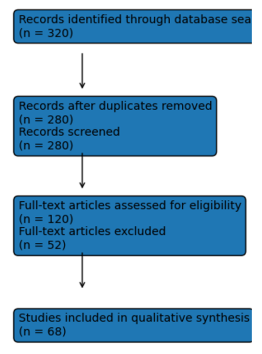
The initial search yielded a broad set of records, which were subsequently screened through a multi-stage process. First, duplicate records were removed. Second, titles and abstracts were reviewed to exclude studies not directly related to geotourism, geoheritage, or tourism development in Ethiopia. Third, full-text assessments were conducted to evaluate eligibility based on predefined inclusion criteria, including relevance to the research objectives, academic quality, and empirical or conceptual contributions to geotourism studies.
Only peer-reviewed journal articles, academic books, book chapters, and authoritative institutional reports published in English were included. Studies lacking sufficient methodological clarity or relevance were excluded. The final set of publications formed the basis for qualitative synthesis and thematic analysis. The overall selection and screening process is illustrated in
Figure 1, which presents a PRISMA-style flow diagram summarizing the identification, screening, eligibility, and inclusion stages.
Figure 1. Systematic Review Procedure.
5. Overview of Ethiopia's Geological Setting and Geoheritage
Ethiopia's dramatic and diverse landscape is fundamentally shaped by its complex geological history, spanning over a billion years and dominated by Precambrian basement rocks, Mesozoic sedimentary sequences, and extensive Cenozoic volcanism and rifting associated with the East African Rift System (EARS)
| [2] | Ambaw, Z. G., Nigatu, T. F., & Masrie, F. A. (2022). Multidimensional impacts of covid-19 pandemic on cultural heritage management (CHM) and conservation practices in North-Central Ethiopia Geo Journal of Tourism and Geosites, 45, 1552-1559. |
| [23] | Lema, S. T. (2016). Challenges and Opportunities of Community Based Ecotourism Development in Ethiopia. |
[2, 23]
. The country's geological foundation comprises Precambrian metamorphic rocks formed during the Neoproterozoic East African Orogeny (ca. 880–550 Ma), overlain by thick Paleozoic–Mesozoic sedimentary successions, particularly within the Ogaden and Mekele Basins
| [2] | Ambaw, Z. G., Nigatu, T. F., & Masrie, F. A. (2022). Multidimensional impacts of covid-19 pandemic on cultural heritage management (CHM) and conservation practices in North-Central Ethiopia Geo Journal of Tourism and Geosites, 45, 1552-1559. |
[2]
. However, Ethiopia's modern physiography is primarily the result of geological processes beginning in the Oligocene (ca. 30 Ma), driven by the Afar mantle plume and the uplift of the Ethiopian Plateau
| [23] | Lema, S. T. (2016). Challenges and Opportunities of Community Based Ecotourism Development in Ethiopia. |
[23]
. This uplift triggered voluminous flood basalt eruptions collectively known as the Ethiopian Traps, which covered vast areas with thick tholeiitic basalts and evolved volcanic products, setting the stage for subsequent crustal extension that initiated the ongoing rifting of the Afro-Arabian Dome and established Ethiopia as one of the most geologically dynamic regions on Earth
| [10] | Bosellini, A., Russo, A., Fantozzi, P. L., Assefa, G., & Solomon, T. (2001). The Mesozoic succession of the Mekele Outlier (Tigrai Province, Ethio- pia). Memorie di Scienze Geologiche, 53, 95-116. |
| [11] | Brilha, J. (2016). Inventory and quantitative as- sessment of geosites and geodiversity sites: a re- view. Geoheritage, 8(2), 119-134. |
[10, 11]
.
Within this tectonic framework, the East African Rift System in Ethiopia forms a triple junction in the Afar Depression, where the Red Sea Rift, Gulf of Aden Rift, and Main Ethiopian Rift (MER) converge at the intersection of the Arabian, Nubian, and Somalian plates
| [11] | Brilha, J. (2016). Inventory and quantitative as- sessment of geosites and geodiversity sites: a re- view. Geoheritage, 8(2), 119-134. |
[11]
. This configuration produces three distinct rift arms: the Main Ethiopian Rift (MER), a seismically and volcanically active southwest–northeast trending valley characterized by chains of alkaline lakes such as Ziway, Langano, Abijata, Shala, and Awasa, as well as young silicic volcanoes and prominent fault scarps; the Afar Depression, a hyper-arid, sub-sea-level basin transitioning from continental rifting to incipient oceanic spreading, featuring active volcanoes including Erta Ale with its persistent lava lake, extensive salt flats such as the Dallol hydrothermal field, and intense geothermal activity; and the Southeastern Rift extending toward Kenya and influencing the Bale and Arsi mountain systems
| [10] | Bosellini, A., Russo, A., Fantozzi, P. L., Assefa, G., & Solomon, T. (2001). The Mesozoic succession of the Mekele Outlier (Tigrai Province, Ethio- pia). Memorie di Scienze Geologiche, 53, 95-116. |
| [25] | Mekonnen, A., Fashing, P. J., Chapman, C. A., Venkataraman, V. V., & Stenseth, N. C. (2022). The value of flagship and umbrella species for restoration and sustainable development: Bale monkeys and bamboo forest in Ethiopia. Journal for Nature Conservation, 65, 126117. |
[10, 25]
. The rifting process has generated classic horst–graben topography, with uplifted fault-bounded blocks forming mountain ranges and down-dropped grabens creating rift valley floors, illustrating the region’s active tectonic evolution
| [19] | Haile-Selassie, Y., Latimer, B. M., Alene, M., De- ino, A. L., Gibert, L., Melillo, S. M.,... & Lovejoy, C. O. (2010). An early Australopithecus afarensis postcranium from Woranso-Mille, Ethio- pia. Proceedings of the National Academy of Sci- ences, 107(27), 12121-12126. |
[19]
.
Building on this tectonic setting, Ethiopia's major physiographic regions each possess exceptional geoheritage significance, providing valuable opportunities for scientific research and geotourism development. These include the Western and Northwestern Highlands, dominated by the uplifted Ethiopian Plateau and deeply incised gorges of the Blue Nile (Abbay) and Tekeze rivers, with the Simien Mountains representing a spectacular erosional remnant of the plateau; the Main Ethiopian Rift, characterized by alkaline lakes, hot springs, young volcanoes, and dramatic escarpments; the Afar Depression, which serves as a natural laboratory for active rifting and volcanism; the Southeastern Highlands, including the Bale Mountains, a high volcanic plateau with evidence of past glaciation; and the Southern and Western Lowlands, including the Omo River Basin and Gambella region, which preserve important sedimentary sequences and paleoanthropological records
| [19] | Haile-Selassie, Y., Latimer, B. M., Alene, M., De- ino, A. L., Gibert, L., Melillo, S. M.,... & Lovejoy, C. O. (2010). An early Australopithecus afarensis postcranium from Woranso-Mille, Ethio- pia. Proceedings of the National Academy of Sci- ences, 107(27), 12121-12126. |
[19]
.
Beyond its tectonic and scenic importance, Ethiopia’s geoheritage holds profound global scientific value as the “Cradle of Humankind,” due to major paleoanthropological discoveries that have significantly contributed to understanding human evolution
| [7] | Bantider, A., Tadesse, B., Mersha, A. N., Zeleke, G., Alemayehu, T., Nagheeby, M., & Amezaga, J. (2023). Voices in shaping water governance: ex- ploring discourses in the Central Rift Valley, Ethi- opia. Water, 15(4), 803. |
| [21] | Kappelman, J., Ketcham, R. A., Pearce, S., Todd, L., Akins, W., Colbert, M. W.,... & Witzel, A. (2016). Perimortem fractures in Lucy suggest mortality from fall out of tall tree. Nature, 537(7621), 503-507. |
| [38] | Thomas, J., & Harden, A. (2008). Methods for the thematic synthesis of qualitative research in sys- tematic reviews. BMC Medical Research Method- ology, 8(1), 45. |
[7, 21, 38]
. Notable discoveries include early hominid fossils from the Omo Valley and Afar region, most famously the discovery of “Lucy” (Australopithecus afarensis) at Hadar in 1974, as well as continuing excavations in the Awash Valley, Dikika, and Ledi-Geraru areas that have yielded important Pliocene and Pleistocene fossil evidence attracting researchers and educational visitors
| [7] | Bantider, A., Tadesse, B., Mersha, A. N., Zeleke, G., Alemayehu, T., Nagheeby, M., & Amezaga, J. (2023). Voices in shaping water governance: ex- ploring discourses in the Central Rift Valley, Ethi- opia. Water, 15(4), 803. |
| [38] | Thomas, J., & Harden, A. (2008). Methods for the thematic synthesis of qualitative research in sys- tematic reviews. BMC Medical Research Method- ology, 8(1), 45. |
[7, 38]
. In addition to its paleoanthropological significance, Ethiopia’s volcanic landscapes also provide important opportunities for geochemical and volcanological research. Investigations of high-temperature fumarolic gases at Erta Ale have revealed extreme enrichment in trace elements and distinctive degassing processes, highlighting the site’s importance as a natural laboratory for active volcanism and its strong potential for scientific geotourism
| [40] | Zelenski, M. E., Fischer, T. P., De Moor, J. M., Marty, B., Zimmermann, L., Ayalew, D.,... & Karandashev, V. K. (2013). Trace elements in the gas emissions from the Erta Ale volcano, Afar, Ethiopia. Chemical Geology, 357, 95-116. |
[40]
. Collectively, this geological framework underpins Ethiopia’s remarkable landscapes and positions the country as a global hotspot for geoheritage conservation, scientific research, and sustainable geotourism development, with important implications for local economic growth and cultural preservation.
6. Major Findings
6.1. Geotourism Significantly Enhances Local Economic Development (LED)
LED as a Community Centered Development Process:
Local Economic Development (LED) in the context of geotourism is conceptualized as a participatory and community-driven process in which economic gains are intentionally retained within the locality rather than flowing outward to external operators or investors. As emphasized in the paper, LED is not simply a by-product of national tourism expansion but a deliberate developmental practice rooted in local empowerment, community ownership, and pro-poor tourism principles
| [30] | Rodríguez-Pose, A. (2020). The rise of populism and the revenge of the places that don’t mat- ter. LSE Public Policy Review, 1(1), 4. |
[30]
. This framing is particularly relevant in Ethiopia, where many geosites are located in economically marginalized regions that stand to benefit from locally anchored value chains. By ensuring that income generated from visitation, geoheritage conservation, and site management circulates within the community, geotourism supports equitable development and sustainable livelihood diversification. This approach aligns well with Ethiopia’s policy emphasis on inclusive growth and community participation in natural-resource management, as demonstrated in studies highlighting the importance of local involvement and benefit-sharing in tourism and conservation initiatives
| [3] | Amogne, A. E. (2010). Community based ecotour- ism development as a viable strategy for sustaina- ble natural resource management: opportunities and challenges. The case of borana-saynt park: south wollo, Ethiopia. Mekelle University. |
| [32] | Tesfaye, S. (2017a). Challenges and opportunities for community based ecotourism development in Ethiopia. African Journal of Hospitality, Tourism and Leisure, 6(1), 1-10. |
[3, 32]
. Consequently, geotourism serves as a strategic pathway for bottom-up territorial development in Ethiopia.
Direct Contributions: Employment and Revenue Generation:
Geotourism directly stimulates employment creation across diverse sectors including specialized guiding, hospitality, local transportation, and artisan production, thereby expanding economic opportunities in remote and low-income regions. Empirical evidence from the Simien Mountains and the Erta Ale volcanic landscape shows that local youth are engaged as scouts, guides, pack-animal handlers, cooks, and camp assistants, providing critical income for households with limited agricultural productivity
| [36] | Teshome, E., Dereje, M., & Asfaw, Y. (2022). Po- tentials, challenges and economic contributions of tourism resources in the South Achefer district, Ethiopia. Cogent Social Sciences, 8(1), 2041290. |
[36]
.
Revenue generation is similarly significant: entrance fees, guiding charges, campsite fees, and income from locally owned accommodations ensure that economic gains remain within the community. In the Simien Mountains National Park, for example, a designated portion of entrance fee revenue is reinvested into community development projects, demonstrating a functioning model of local revenue retention
| [32] | Tesfaye, S. (2017a). Challenges and opportunities for community based ecotourism development in Ethiopia. African Journal of Hospitality, Tourism and Leisure, 6(1), 1-10. |
[32]
. These mechanisms underscore geotourism’s role as a direct and reliable source of local income that complements traditional livelihoods.
Indirect Contributions: MSME Growth and Infrastructure Development: Beyond direct employment, geotourism catalyzes indirect and induced economic benefits by stimulating micro- and small-scale enterprises (MSMEs) engaged in supplying agricultural products, construction materials, handicrafts, and transport services. Hotels, campsites, and restaurants near major geosites rely heavily on local supplies of teff, vegetables, livestock products, honey, and coffee, integrating rural producers into the tourism value chain and strengthening backward linkages. Geotourism also attracts substantial public and private investment in infrastructure such as road improvements, electricity expansion, telecommunications networks, and water systems, especially near gateway towns like Debark, Arba Minch, and Semera
| [2] | Ambaw, Z. G., Nigatu, T. F., & Masrie, F. A. (2022). Multidimensional impacts of covid-19 pandemic on cultural heritage management (CHM) and conservation practices in North-Central Ethiopia Geo Journal of Tourism and Geosites, 45, 1552-1559. |
| [34] | Teshome, E., Ayalew, G., & Workie, A. (2020). Community based ecotourism development in Meogha Amba, Ethiopia: Current development barriers. Journal of Hospitality Management and Tourism, 11(1), 12-20. |
[2, 34]
. These improvements not only enhance visitor experiences but also elevate the quality of life for residents, reinforcing the developmental ripple effects of tourism-centered infrastructure development.
Non-Monetary Social and Cultural Contributions: Geotourism contributes meaningfully to socio-cultural revitalization, indigenous knowledge preservation, and community empowerment. Recognition of geological landscapes strengthens the importance of cultural traditions that are geographically anchored, such as the Oromo Gada system, whose sacred sites often coincide with distinctive geological formations
| [12] | Chimdesa, G. (2016). Historical perspectives and present scenarios of watershed management in Ethiopia. International Journal of Natural Re- source Ecology and Management, 1(3), 115-127. |
| [28] | Negari, W. (2018). Indigenous knowledge for good governance and development: Unleashing the wisdom of the Gada System. *UARIIE-ISSN (O)-2395-4396, 6*. |
[12, 28]
. Interpretive programs and geo-education initiatives further promote geo-literacy, instilling stewardship values among local communities and fostering collective responsibility for landscape preservation. Additionally, geotourism expands opportunities for women as craft producers, lodge managers, cooks, preparers of traditional foods, and even as emerging local guides, enhancing gender equity and improving women’s social and economic status. These non-monetary contributions enrich community cohesion, cultural pride, and long-term conservation ethics.
Case Studies Illustrating LED Impact: The Ethiopian case studies of the Simien Mountains and the Afar Depression offer clear evidence of geotourism’ s LED potential while also highlighting structural challenges. In the Simien Mountains, community-guided trekking supported by mandatory scout systems ensures that a substantial portion of tourist spending directly benefits local households, providing sustainable income opportunities in a region where agricultural capacity is limited
| [36] | Teshome, E., Dereje, M., & Asfaw, Y. (2022). Po- tentials, challenges and economic contributions of tourism resources in the South Achefer district, Ethiopia. Cogent Social Sciences, 8(1), 2041290. |
[36]
. In contrast, the expedition economy of the Danakil Depression and Erta Ale demonstrates both opportunities and vulnerabilities: while Afar communities benefit from employment as guides, camel handlers, and logistics providers, a significant share of high-value revenue flows to tour operators based in Addis Ababa, illustrating persistent leakage
| [17] | Getahun, B. T., & Yeshanew, Y. A. (2016). Sus- tainable ecotourism potentials and its challenges in Ethiopia: The Awash National Park in Fo- cus. International Journal of Humanities and Social Science Research, 2, 41-49. |
[17]
. These contrasting cases reveal the importance of community ownership, transparent revenue-sharing frameworks, and locally embedded tourism enterprises to ensure that geotourism functions as an effective LED mechanism.
6.2. Multiple Structural and Environmental Constraints Undermine Geotourism Development
Infrastructural and Accessibility Deficiencies:
Despite Ethiopia’s exceptional geoheritage potential, the development of geotourism remains constrained by a combination of infrastructural, institutional, socio-political, and environmental challenges. One of the most persistent barriers is inadequate infrastructure, particularly poor road accessibility, limited accommodation facilities, and insufficient visitor services in remote yet geologically significant areas such as the Danakil Depression, the Afar Rift Valley, and the Blue Nile Gorge. Similar constraints have been widely identified as critical limiting factors for geotourism development in developing countries, where high geoheritage value often contrasts sharply with weak tourism infrastructure
| [16] | Dwyer, L. (2022). Tourism economics and policy. In D. Gursoy & C. G. Chi (Eds.), Encyclopedia of Tourism Management and Marketing. Edward El- gar Publishing. |
| [20] | Hose, T. A. (1995). Selling the story of Britain's stone. Environmental Interpretation, 10(2), 16-17. |
[16, 20]
.
Governance- and policy-related challenges further limit the effective utilization of Ethiopia’s geoheritage resources. The absence of a dedicated national geotourism policy, weak institutional coordination among tourism, environmental, and cultural authorities, and limited integration of geoheritage conservation into national tourism planning frameworks constrain strategic implementation
| [39] | UNESCO. (2015). Statutes of the International Geoscience and Geoparks Programme (IGGP). |
[39]
. In Ethiopia, tourism development policies have traditionally prioritized cultural and wildlife tourism, leaving geotourism marginally addressed despite its strong alignment with sustainable development objectives
| [7] | Bantider, A., Tadesse, B., Mersha, A. N., Zeleke, G., Alemayehu, T., Nagheeby, M., & Amezaga, J. (2023). Voices in shaping water governance: ex- ploring discourses in the Central Rift Valley, Ethi- opia. Water, 15(4), 803. |
| [36] | Teshome, E., Dereje, M., & Asfaw, Y. (2022). Po- tentials, challenges and economic contributions of tourism resources in the South Achefer district, Ethiopia. Cogent Social Sciences, 8(1), 2041290. |
[7, 36]
.
Community participation also remains uneven across geotourism destinations. Although local communities are the primary custodians of geological heritage, their involvement in planning, management, and benefit-sharing mechanisms is often limited. This lack of meaningful engagement reduces local ownership and may lead to resistance or unsustainable resource use
| [29] | Newsome, D., & Dowling, R. K. (Eds.). (2010). Geotourism: The tourism of geology and landscape. Goodfellow Publishers. |
[29]
. Furthermore, environmental management challenges such as inadequate site monitoring, limited conservation funding, and the absence of site-specific management guidelines pose significant risks to fragile geological landscapes, particularly in volcanically active and erosion-prone areas
| [36] | Teshome, E., Dereje, M., & Asfaw, Y. (2022). Po- tentials, challenges and economic contributions of tourism resources in the South Achefer district, Ethiopia. Cogent Social Sciences, 8(1), 2041290. |
[36]
.
Knowledge and Interpretation Gaps:
A major constraint to geotourism growth is the absence of a systematic national geosite inventory, leading to fragmented planning, uneven site prioritization, and missed opportunities for conservation and market positioning
| [37] | Tessema, G. A., van der Borg, J., Minale, A. S., Van Rompaey, A., Adgo, E., Nyssen, J.,... & Poesen, J. (2021). Inventory and assessment of geosites for geotourism development in the Eastern and Southeast Lake Tana Region, Ethio- pia. Geoheritage, 13(2), 43. |
[37]
. Furthermore, most guides at national parks and local sites are trained in wildlife or cultural tourism rather than geology, limiting the interpretive depth and educational value of tourist experiences. The lack of interpretive signage, panels, and visitor centers with geological content further diminishes site quality
| [26] | Mekonnen, H., & Mekonen, S. (2023). Potentials, opportunities and challenges of ecotourism devel- opment in selected historical and sacred sites of North Shewa Zone, Amhara region, Ethio- pia. International Journal of Tourism Cities. |
[26]
.
These knowledge and interpretation gaps restrict Ethiopia’s ability to position itself competitively in the global geotourism niche, where educational and knowledge-based experiences are central to market demand.
Threats from Mining, Quarrying, and Unregulated Development:
Geotourism’s long-term sustainability is threatened by competing land-use activities, particularly mining, quarrying, geothermal development, and unregulated construction. In regions such as Afar, mineral exploration and industrial extraction threaten globally significant sites including hydrothermal fields, salt flats, and volcanic craters. Unregulated quarrying of basalt, limestone, and sandstone for construction creates irreversible scars on landscapes with high scientific and tourism value. Infrastructure projects such as roads, dams, and geothermal plants, when poorly planned, disrupt geological integrity and scenic quality. These pressures highlight the urgent need for Ethiopia to develop a dedicated geoconservation policy supported by strong regulatory enforcement.
Environmental and Climate-Related Vulnerabilities:
Environmental degradation poses significant risks to the landscapes that underpin Ethiopia’s geotourism sector. Deforestation, overgrazing, and agricultural expansion on steep slopes accelerate soil erosion and trigger landslides, particularly in areas like the Simien escarpment
| [9] | Bogale, N. T. (2015). College Of Business And Economics Department Of Tourism Management. University of Gondar. |
[9]
. Meanwhile, Rift Valley lakes including Tana, Abijata, and Shala are experiencing sedimentation, eutrophication, and pollution from agricultural runoff and urban waste, reducing their ecological and aesthetic appeal
| [1] | Abera, M. (2018). Impact of water hyacinth, Eichhornia crassipes (Martius) (Pontederiaceae) in Lake Tana Ethiopia: a review. Journal of Aquacul- ture Research and Development, 9, 520. |
| [18] | Goshu, G., & Aynalem, S. (2017). Problem over- view of the lake Tana basin. In Social and Ecolog- ical System Dynamics (pp. 9-23). Springer, Cham. |
[1, 18]
. Climate change intensifies these challenges by altering hydrological cycles, reducing waterfall flows, accelerating desertification in arid environments like Afar, and increasing the frequency of extreme weather events. These vulnerabilities complicate tourism planning and require climate-resilient geotourism strategies.
Policy and Governance Constraints:
Fragmented governance remains a persistent challenge to effective geotourism development. Although several policies touch on tourism, conservation, or natural-resource management, Ethiopia lacks a unified framework specifically addressing geotourism or geoconservation. Overlapping mandates among the Ministry of Tourism, Ethiopian Wildlife Conservation Authority (EWCA), regional bureaus, and the Geological Survey result in coordination gaps and regulatory inefficiencies
| [7] | Bantider, A., Tadesse, B., Mersha, A. N., Zeleke, G., Alemayehu, T., Nagheeby, M., & Amezaga, J. (2023). Voices in shaping water governance: ex- ploring discourses in the Central Rift Valley, Ethi- opia. Water, 15(4), 803. |
[7]
. Limited budgets and the absence of sustained financial mechanisms further impede activities such as geosite inventory development, geological guide training, and interpretive infrastructure investment. These policy and governance weaknesses hinder strategic planning and long-term site protection.
Community-Level and Market-Related Challenges:
Local communities often face barriers to meaningful participation in geotourism due to limited awareness, inadequate business skills, and conflicts with traditional livelihood activities
| [33] | Tesfaye, S. (2017b). A review paper on challenges and opportunities for community based ecotourism development in Ethiopia. Journal of Tourism, Hospitality and Sports, 30, 24-29. |
[33]
. Resource competition between tourism operations and pastoralism, farming, or grazing is particularly visible in Borana areas, where access to water and land remains a contentious issue
| [5] | Asfaw, E., Zewdie, T., & Usmane, I. (2020). Im- pacts of climatic factors on vegetation species di- versity, herbaceous biomass in Borana, Southern Ethiopia. Global Journal of Ecology, 5(1), 33-37. |
[5]
. In addition, Ethiopia’s geotourism sector suffers from weak branding, low visibility in niche markets, and seasonal fluctuations in demand driven by rains and regional insecurity
| [6] | Ayalew, H. (2021). *Assessment of challenges in tourism marketing practices during covid-19 in the case of travel agency in Addis Abeba*. St. Mary’s University. |
[6]
.
These dynamics restrict consistent visitor flows and reduce local income reliability.
Table 2. Key Constraints Affecting Geotourism Development in Ethiopia.
Constraint Category | Description | Affected Geosites | Implications for Geotourism |
Infrastructure | Poor road access, limited accommodation, weak utilities | Danakil, Afar Rift, Blue Nile Gorge | Limits visitor numbers and length of stay |
Safety and Security | Volcanic hazards, political instability in some regions | Danakil, Erta Ale, Afar | Restricts market confidence and tour operations |
Governance and Policy | Weak coordination, lack of geotourism-specific policy | Nationwide | Hinders strategic planning and investment |
Community Engagement | Limited local participation and benefit-sharing | Rural geosites | Reduces sustainability and local support |
Environmental Management | Lack of conservation guidelines and monitoring | Protected and fragile geosites | Risks degradation of geoheritage |
Promotion and Marketing | Low international visibility of geosites | Nationwide | Underutilization of tourism potential |
Table 2 summarizes the major structural, institutional, and environmental constraints limiting geotourism development in Ethiopia, emphasizing the need for integrated planning, infrastructure investment, and community-based management.
7. Synthesis and Implications
Addressing the identified constraints requires an integrated and multi-level development approach that balances tourism growth with geoheritage conservation. Improving basic infrastructure, especially transport access, visitor facilities, and safety services, should be prioritized in high-potential geotourism destinations, while ensuring that infrastructure development adheres to environmental sustainability principles
| [15] | Dowling, R. K. (2011). Geotourism's global growth. Geoheritage, 3(1), 1-13. |
| [39] | UNESCO. (2015). Statutes of the International Geoscience and Geoparks Programme (IGGP). |
[15, 39]
. Strategic investment in low-impact infrastructure can significantly enhance accessibility without compromising geological integrity.
Strengthening governance frameworks is equally critical for sustainable geotourism development. The formulation of a national geotourism strategy, embedded within Ethiopia’s broader tourism and sustainable development policies, would provide clearer institutional direction and improve coordination among key stakeholders. International experience demonstrates that well-defined governance structures and policy integration are essential for effective geotourism planning and management
| [7] | Bantider, A., Tadesse, B., Mersha, A. N., Zeleke, G., Alemayehu, T., Nagheeby, M., & Amezaga, J. (2023). Voices in shaping water governance: ex- ploring discourses in the Central Rift Valley, Ethi- opia. Water, 15(4), 803. |
| [20] | Hose, T. A. (1995). Selling the story of Britain's stone. Environmental Interpretation, 10(2), 16-17. |
[7, 20]
.
Community-based geotourism models offer a viable pathway to enhance local participation and equitable benefit distribution. Capacity-building initiatives, local guiding programs, and transparent revenue-sharing mechanisms can strengthen community ownership while contributing to conservation outcomes
| [29] | Newsome, D., & Dowling, R. K. (Eds.). (2010). Geotourism: The tourism of geology and landscape. Goodfellow Publishers. |
[29]
. In addition, targeted marketing and branding strategies that emphasize Ethiopia’s unique geoheritage, such as active volcanism, rift valley tectonics, and rock-hewn geomorphology, can improve international visibility and diversify the country’s tourism portfolio beyond traditional cultural and wildlife attractions
| [16] | Dwyer, L. (2022). Tourism economics and policy. In D. Gursoy & C. G. Chi (Eds.), Encyclopedia of Tourism Management and Marketing. Edward El- gar Publishing. |
| [36] | Teshome, E., Dereje, M., & Asfaw, Y. (2022). Po- tentials, challenges and economic contributions of tourism resources in the South Achefer district, Ethiopia. Cogent Social Sciences, 8(1), 2041290. |
[16, 36]
.
8. Conclusion
This comprehensive review has established that Ethiopia is endowed with a geoheritage of exceptional diversity, scale, activity, and scientific importance, positioning it as a poten- tial global leader in geotourism. This resource base, en- compassing volcanic wonders, tectonic landscapes, deep gorges, karstic caves, and paleoanthropological treasures, offers a compelling foundation for sustainable tourism de- velopment.
The contribution of this nascent sector to Local Economic Development is both tangible and promising. It holds the potential to create employment, stimulate local enterprises, improve infrastructure, and foster cultural pride in some of Ethiopia's most remote and economically marginalized re- gions. However, this potential is currently constrained by a formidable array of challenges. These range from acute infrastructural deficits and a near-total absence of geo-interpretation to profound policy and institutional gaps, environmental threats, and insufficient community engage- ment and benefit-sharing.
The path forward is not one of simple promotion, but of integrated and strategic development. The opportunities from policy alignment and UNESCO geopark potential to digital tools and growing niche markets provide a clear roadmap. Central to success is a paradigm shift from view- ing geology merely as a scenic backdrop to recognizing it as a core, interpretable, and conservable heritage asset that can drive sustainable and inclusive development.
Realizing the vision of geotourism as a pillar of Ethiopia's economy and a force for LED requires deliberate, coordi- nated, and patient action from all stakeholders. It demands investment not just in roads and lodges, but in knowledge, capacity, governance, and, most importantly, in the people who are the true stewards of these magnificent landscapes.
9. Recommendations Policy and Strategic Recommendations
For Federal and Regional Governments
1) Initiate Policy Reform: Mandate the Ministry of Tourism to lead the development of a comprehen- sive National Geoconservation and Geotourism Strategy and Action Plan within two years, ensur- ing alignment with national development and con- servation frameworks.
2) Pilot a UNESCO Global Geopark: Establish an in- tergovernmental working group to prepare a nom- ination dossier for a proposed Danakil Afar Global Geopark, elevating it as a flagship national initia- tive.
3) Fund Strategic Infrastructure: Allocate dedicated capital budgets to upgrade critical access roads and essential services for priority geotourism destina- tions such as the Simien Mountains, Bale Moun- tains, and Dallol trailheads.
4) Strengthen Institutional Coordination: Legislate the formation of a National Geoheritage Council com- prising federal agencies, regional bureaus, aca- demia, and community representatives to harmo- nize geosite planning, oversight, and enforcement.
For Local Communities and Local Administrations
1) Build Local Capacity: Engage actively with gov- ernment institutions, NGOs, and technical partners to receive training on establishing and managing Community-Based Tourism Enterprises (CBTEs), cooperative models, and financial management.
2) Document Indigenous Knowledge: Collaborate with researchers and universities to systematically document indigenous geological knowledge, oral histories, and cultural narratives for integration into interpretive materials and guided experiences.
3) Develop Local Agreements: Establish clear, written community protocols governing relationships with tour operators, including guiding rights, campsite usage, revenue-sharing, cultural performances, and environmental responsibilities.
For the Private Sector and Investors
1) Adopt Best Practices: Commit to internationally recognized sustainability principles such as those of the Global Sustainable Tourism Council (GSTC) and prioritize local hiring, local sourcing, environmental protection, and fair partnership agree- ments with communities.
2) Invest in Geo-Interpretation: Integrate high-quality interpretive content (digital apps, AR tools, guide- books, training programs, and certified guides) as a core component of tourism product development rather than an optional add-on.
3) Explore Innovative Finance: Utilize emerging fi- nancing models including impact investment, blended finance, and public–private–community partnerships to support community-owned tourism facilities and small-scale infrastructure.
For Academia and Research Institutions
1) Lead the National Geosite Inventory: Mobilize ge- ology, geography, and tourism departments to un- dertake a nationwide geosite inventory and as- sessment, ideally structured as a coordinated series of graduate research projects.
2) Develop Targeted Curriculum: Design and imple- ment certified short courses, diploma programs, and professional development modules in Geotourism and Geoheritage Management, tailored for guides, park rangers, tourism officers, and local adminis- trators.
3) Establish a Research and Training Center: Create a Center for Geoheritage and Sustainable Tourism to serve as a national hub for research, training, in- novation, and evidence-based policy advisory ser- vices.
For Development Partners and NGOs
1) Strengthen Community Institutions: Provide grants, mentorship, and technical assistance to build the capacity of community cooperatives, women’s as- sociations, youth groups, and CBTEs operating in or near geosites.
2) Fund Integrated Pilot Projects: Support multicomponent pilot projects in two to three regions that combine geosite assessment, community enterprise development, guide training, small-scale interpretive infrastructure, and conservation activities.
3) Facilitate Knowledge Exchange: Sponsor professional exchanges, study tours, and cross-learning opportunities for Ethiopian practitioners to visit established geoparks in Iceland, Jordan, Vietnam, and other successful models, while hosting inter- national experts in Ethiopia.
10. Final Remark
Developing geotourism in Ethiopia is inherently a long-term, multi-stakeholder endeavor. Success depends on integrating scientific rigor, community empowerment, and sustainable management principles. By adopting these recommendations, Ethiopia can ensure that its extraordinary geological land- scapes are not only visited, but also understood, valued, and preserved transforming them into engines of shared pros- perity for generations to come.
Recommendations for Future Research and Monitoring
To address existing quantitative data gaps and strengthen evidence-based planning, future geotourism research in Ethiopia should adopt standardized and measurable indicators. These should include site-specific visitor numbers (by season and visitor type), revenue generated from tourism activities, employment created within host communities(direct and indirect), local income retention rates, and investment in geosite conservation and management.
Systematic monitoring of these indicators would support more accurate economic impact assessment, enable comparison across geosites, and inform adaptive policy and investment decisions in Ethiopia’s developing geotourism sector.
Abbreviations
AHTI | Addis Ababa Hospitality and Tourism Institute |
BMC | BioMed Central |
CHM | Cultural Heritage Management |
EARS | East African Rift System |
EWCA | Ethiopian Wildlife Conservation Authority |
GSTC | Global Sustainable Tourism Council |
GTP | Growth and Transformation Plan |
IGGP | International Geoscience and Geoparks Programme |
LED | Local Economic Development |
LSE | London School of Economics |
MER | Main Ethiopian Rift |
MSME | Micro, Small, and Medium Enterprises |
ORCID | Open Researcher and Contributor ID |
PRISMA | Preferred Reporting Items for Systematic Reviews and Meta-Analyses |
UNESCO | United Nations Educational, Scientific and Cultural Organization |
UNWTO | United Nations World Tourism Organization |
Author Contributions
Amana Omer Adem: Conceptualization, Data curation, Funding acquisition, Methodology, Writing – original draft
Belayihun Shewangzaw Birara: Data curation, Resources, Writing – review & editing
Conflicts of Interest
The authors declare no conflicts of interest.
References
| [1] |
Abera, M. (2018). Impact of water hyacinth, Eichhornia crassipes (Martius) (Pontederiaceae) in Lake Tana Ethiopia: a review. Journal of Aquacul- ture Research and Development, 9, 520.
|
| [2] |
Ambaw, Z. G., Nigatu, T. F., & Masrie, F. A. (2022). Multidimensional impacts of covid-19 pandemic on cultural heritage management (CHM) and conservation practices in North-Central Ethiopia Geo Journal of Tourism and Geosites, 45, 1552-1559.
|
| [3] |
Amogne, A. E. (2010). Community based ecotour- ism development as a viable strategy for sustaina- ble natural resource management: opportunities and challenges. The case of borana-saynt park: south wollo, Ethiopia. Mekelle University.
|
| [4] |
Aseres, S. A., & Sira, R. K. (2021). Ecotourism development in Ethiopia: costs and benefits for protected area conservation. Journal of Ecotourism, 20(3), 224-249.
|
| [5] |
Asfaw, E., Zewdie, T., & Usmane, I. (2020). Im- pacts of climatic factors on vegetation species di- versity, herbaceous biomass in Borana, Southern Ethiopia. Global Journal of Ecology, 5(1), 33-37.
|
| [6] |
Ayalew, H. (2021). *Assessment of challenges in tourism marketing practices during covid-19 in the case of travel agency in Addis Abeba*. St. Mary’s University.
|
| [7] |
Bantider, A., Tadesse, B., Mersha, A. N., Zeleke, G., Alemayehu, T., Nagheeby, M., & Amezaga, J. (2023). Voices in shaping water governance: ex- ploring discourses in the Central Rift Valley, Ethi- opia. Water, 15(4), 803.
|
| [8] |
Beyene, B. (2016). Review on ecotourism oppor- tunities and the challenges for natural resource management in Ethiopia. Journal of Tourism, Hos- pitality and Sports, 21, 28-34.
|
| [9] |
Bogale, N. T. (2015). College Of Business And Economics Department Of Tourism Management. University of Gondar.
|
| [10] |
Bosellini, A., Russo, A., Fantozzi, P. L., Assefa, G., & Solomon, T. (2001). The Mesozoic succession of the Mekele Outlier (Tigrai Province, Ethio- pia). Memorie di Scienze Geologiche, 53, 95-116.
|
| [11] |
Brilha, J. (2016). Inventory and quantitative as- sessment of geosites and geodiversity sites: a re- view. Geoheritage, 8(2), 119-134.
|
| [12] |
Chimdesa, G. (2016). Historical perspectives and present scenarios of watershed management in Ethiopia. International Journal of Natural Re- source Ecology and Management, 1(3), 115-127.
|
| [13] |
Chorowicz, J. (2005). The East African rift sys- tem. Journal of African Earth Sciences, 43(1-3), 379-410.
|
| [14] |
de la Torre, I., Mora, R., Arroyo, A., & Beni- to-Calvo, A. (2014). Acheulean technological be- haviour in the middle Pleistocene landscape of Mieso (East-Central Ethiopia). Journal of Human Evolution, 76, 1-25.
|
| [15] |
Dowling, R. K. (2011). Geotourism's global growth. Geoheritage, 3(1), 1-13.
|
| [16] |
Dwyer, L. (2022). Tourism economics and policy. In D. Gursoy & C. G. Chi (Eds.), Encyclopedia of Tourism Management and Marketing. Edward El- gar Publishing.
|
| [17] |
Getahun, B. T., & Yeshanew, Y. A. (2016). Sus- tainable ecotourism potentials and its challenges in Ethiopia: The Awash National Park in Fo- cus. International Journal of Humanities and Social Science Research, 2, 41-49.
|
| [18] |
Goshu, G., & Aynalem, S. (2017). Problem over- view of the lake Tana basin. In Social and Ecolog- ical System Dynamics (pp. 9-23). Springer, Cham.
|
| [19] |
Haile-Selassie, Y., Latimer, B. M., Alene, M., De- ino, A. L., Gibert, L., Melillo, S. M.,... & Lovejoy, C. O. (2010). An early Australopithecus afarensis postcranium from Woranso-Mille, Ethio- pia. Proceedings of the National Academy of Sci- ences, 107(27), 12121-12126.
|
| [20] |
Hose, T. A. (1995). Selling the story of Britain's stone. Environmental Interpretation, 10(2), 16-17.
|
| [21] |
Kappelman, J., Ketcham, R. A., Pearce, S., Todd, L., Akins, W., Colbert, M. W.,... & Witzel, A. (2016). Perimortem fractures in Lucy suggest mortality from fall out of tall tree. Nature, 537(7621), 503-507.
|
| [22] |
Kiyuev, S. (2020). The results of new studies of the rock-hewn churches of the historical regions of Endarta and Tamben (Tigray region, Ethiopia). In The 2nd International Conference on Architec- ture: Heritage, Traditions and Innovations (AHTI 2020) (pp. 38-46). Atlantis Press.
|
| [23] |
Lema, S. T. (2016). Challenges and Opportunities of Community Based Ecotourism Development in Ethiopia.
|
| [24] |
Manzoor, F., Wei, L., Asif, M., Haq, M. Z., & Rehman, H. U. (2019). The contribution of sus- tainable tourism to economic growth and employ- ment in Pakistan. International Journal of Envi- ronmental Research and Public Health, 16(19), 3785.
|
| [25] |
Mekonnen, A., Fashing, P. J., Chapman, C. A., Venkataraman, V. V., & Stenseth, N. C. (2022). The value of flagship and umbrella species for restoration and sustainable development: Bale monkeys and bamboo forest in Ethiopia. Journal for Nature Conservation, 65, 126117.
|
| [26] |
Mekonnen, H., & Mekonen, S. (2023). Potentials, opportunities and challenges of ecotourism devel- opment in selected historical and sacred sites of North Shewa Zone, Amhara region, Ethio- pia. International Journal of Tourism Cities.
|
| [27] |
National Geographic Society. (2007). Geotourism Charter.
|
| [28] |
Negari, W. (2018). Indigenous knowledge for good governance and development: Unleashing the wisdom of the Gada System. *UARIIE-ISSN (O)-2395-4396, 6*.
|
| [29] |
Newsome, D., & Dowling, R. K. (Eds.). (2010). Geotourism: The tourism of geology and landscape. Goodfellow Publishers.
|
| [30] |
Rodríguez-Pose, A. (2020). The rise of populism and the revenge of the places that don’t mat- ter. LSE Public Policy Review, 1(1), 4.
|
| [31] |
Snyder, H. (2019). Literature review as a research methodology: An overview and guide- lines. Journal of Business Research, 104, 333-339.
|
| [32] |
Tesfaye, S. (2017a). Challenges and opportunities for community based ecotourism development in Ethiopia. African Journal of Hospitality, Tourism and Leisure, 6(1), 1-10.
|
| [33] |
Tesfaye, S. (2017b). A review paper on challenges and opportunities for community based ecotourism development in Ethiopia. Journal of Tourism, Hospitality and Sports, 30, 24-29.
|
| [34] |
Teshome, E., Ayalew, G., & Workie, A. (2020). Community based ecotourism development in Meogha Amba, Ethiopia: Current development barriers. Journal of Hospitality Management and Tourism, 11(1), 12-20.
|
| [35] |
Teshome, E. (2018). Wunania Kosoye natural at- traction, Ethiopia: Conservation values and their relevance to community-based ecotour- ism. Journal of Hospitality Management and Tourism, 9(2), 14-24.
|
| [36] |
Teshome, E., Dereje, M., & Asfaw, Y. (2022). Po- tentials, challenges and economic contributions of tourism resources in the South Achefer district, Ethiopia. Cogent Social Sciences, 8(1), 2041290.
|
| [37] |
Tessema, G. A., van der Borg, J., Minale, A. S., Van Rompaey, A., Adgo, E., Nyssen, J.,... & Poesen, J. (2021). Inventory and assessment of geosites for geotourism development in the Eastern and Southeast Lake Tana Region, Ethio- pia. Geoheritage, 13(2), 43.
|
| [38] |
Thomas, J., & Harden, A. (2008). Methods for the thematic synthesis of qualitative research in sys- tematic reviews. BMC Medical Research Method- ology, 8(1), 45.
|
| [39] |
UNESCO. (2015). Statutes of the International Geoscience and Geoparks Programme (IGGP).
|
| [40] |
Zelenski, M. E., Fischer, T. P., De Moor, J. M., Marty, B., Zimmermann, L., Ayalew, D.,... & Karandashev, V. K. (2013). Trace elements in the gas emissions from the Erta Ale volcano, Afar, Ethiopia. Chemical Geology, 357, 95-116.
|
Cite This Article
-
APA Style
Adem, A. O., Birara, B. S. (2026). Unlocking Ethiopia’s Geoheritage: A Comprehensive Review of Geotourism Potential, Constraints, and Development Directions. Innovation Management, 1(2), 74-84. https://doi.org/10.11648/j.im.20260102.11
 Copy
|
Copy
|
 Download
ACS Style
Adem, A. O.; Birara, B. S. Unlocking Ethiopia’s Geoheritage: A Comprehensive Review of Geotourism Potential, Constraints, and Development Directions. Innov. Manag. 2026, 1(2), 74-84. doi: 10.11648/j.im.20260102.11
Copy
|
Download
AMA Style
Adem AO, Birara BS. Unlocking Ethiopia’s Geoheritage: A Comprehensive Review of Geotourism Potential, Constraints, and Development Directions. Innov Manag. 2026;1(2):74-84. doi: 10.11648/j.im.20260102.11
Copy
|
Download
-
@article{10.11648/j.im.20260102.11,
  author = {Amana Omer Adem and Belayihun Shewangzaw Birara},
  title = {Unlocking Ethiopia’s Geoheritage: A Comprehensive Review of Geotourism Potential, Constraints, and Development Directions},
  journal = {Innovation Management},
  volume = {1},
  number = {2},
  pages = {74-84},
  doi = {10.11648/j.im.20260102.11},
  url = {https://doi.org/10.11648/j.im.20260102.11},
  eprint = {https://article.sciencepublishinggroup.com/pdf/10.11648.j.im.20260102.11},
  abstract = {Ethiopia possesses one of the world’s most remarkable geological landscapes, shaped by the East African Rift System and marked by active volcanism, extensive escarpments, deep gorges, alkaline lakes, and globally significant paleoanthropological sites. Despite this exceptional geoheritage, geotourism remains an underdeveloped niche within the country’s tourism sector, which has historically focused on cultural and ecological attractions. This systematic review synthesizes existing academic, policy, and geological literature to assess Ethiopia’s geotourism resources and critically examine their actual and potential contributions to Local Economic Development (LED). Using an integrated Sustainable Geotourism Development Framework, the study classifies geotourism assets, evaluates current development conditions, and analyzes socio-economic benefits, constraints, and future opportunities. Findings indicate that geotourism can significantly enhance LED by generating employment, stimulating micro- and small-scale enterprises, improving infrastructure, promoting gender-inclusive livelihoods, and strengthening cultural and geological stewardship within local communities. However, the sector is constrained by severe infrastructural gaps, weak geo-interpretative services, environmental degradation, policy fragmentation, and limited community participation. Case studies from the Simien Mountains and the Afar Depression highlight both the transformative potential of geotourism and the persistent challenge of revenue leakage away from host communities. Despite these constraints, Ethiopia holds substantial opportunities to position geotourism as a strategic pillar of sustainable development through policy reform, institutional coordination, UNESCO Global Geopark initiatives, technological innovation, and community-based enterprise models. The review concludes by proposing a comprehensive set of policy, institutional, and community-level recommendations aimed at embedding geotourism within Ethiopia’s broader economic and conservation agendas. Overall, geotourism represents a promising, yet underutilized pathway for inclusive, resilient, and place-based development in Ethiopia.},
 year = {2026}
}
Copy
|
Download
-
TY  - JOUR
T1  - Unlocking Ethiopia’s Geoheritage: A Comprehensive Review of Geotourism Potential, Constraints, and Development Directions
AU  - Amana Omer Adem
AU  - Belayihun Shewangzaw Birara
Y1  - 2026/03/17
PY  - 2026
N1  - https://doi.org/10.11648/j.im.20260102.11
DO  - 10.11648/j.im.20260102.11
T2  - Innovation Management
JF  - Innovation Management
JO  - Innovation Management
SP  - 74
EP  - 84
PB  - Science Publishing Group
UR  - https://doi.org/10.11648/j.im.20260102.11
AB  - Ethiopia possesses one of the world’s most remarkable geological landscapes, shaped by the East African Rift System and marked by active volcanism, extensive escarpments, deep gorges, alkaline lakes, and globally significant paleoanthropological sites. Despite this exceptional geoheritage, geotourism remains an underdeveloped niche within the country’s tourism sector, which has historically focused on cultural and ecological attractions. This systematic review synthesizes existing academic, policy, and geological literature to assess Ethiopia’s geotourism resources and critically examine their actual and potential contributions to Local Economic Development (LED). Using an integrated Sustainable Geotourism Development Framework, the study classifies geotourism assets, evaluates current development conditions, and analyzes socio-economic benefits, constraints, and future opportunities. Findings indicate that geotourism can significantly enhance LED by generating employment, stimulating micro- and small-scale enterprises, improving infrastructure, promoting gender-inclusive livelihoods, and strengthening cultural and geological stewardship within local communities. However, the sector is constrained by severe infrastructural gaps, weak geo-interpretative services, environmental degradation, policy fragmentation, and limited community participation. Case studies from the Simien Mountains and the Afar Depression highlight both the transformative potential of geotourism and the persistent challenge of revenue leakage away from host communities. Despite these constraints, Ethiopia holds substantial opportunities to position geotourism as a strategic pillar of sustainable development through policy reform, institutional coordination, UNESCO Global Geopark initiatives, technological innovation, and community-based enterprise models. The review concludes by proposing a comprehensive set of policy, institutional, and community-level recommendations aimed at embedding geotourism within Ethiopia’s broader economic and conservation agendas. Overall, geotourism represents a promising, yet underutilized pathway for inclusive, resilient, and place-based development in Ethiopia.
VL  - 1
IS  - 2
ER  -
Copy
|
Download





 Share This Article
 Twitter
 Linked In
 Facebook