Research Article | | Peer-Reviewed

Carrabiitol Mediated Qualitative Enhancement of Tomato Fruit Under Abiotic Stress Conditions

Received: 9 April 2026     Accepted: 22 April 2026     Published: 30 April 2026
Views:       Downloads:
Abstract

The increasing commoditization of traditional biostimulants has driven the need for more precise and targeted solutions in climate change scenarios. Single Biostimulant Molecules (SBM) represent a novel approach that departs from conventional multi-compound formulations, which often contain undefined mixtures of bioactive components, triggering multiple responses. Instead, SBMs focus on a specific bioactive molecule with a defined mode of action, ensuring greater consistency and predictability in plant responses under field conditions. This study evaluated Carrabiitol®, an oligosaccharide polyol single biostimulant molecule, for alleviating stress response in tomato (Solanum lycopersicum cv. ‘Arka Rakshak’). Plants were subjected to water deficit, high temperature, and salinity stress during the flowering stages. Treatment involved seed priming and application of Carrabiitol® (3ml/L) on foliage during vegetative and pre-flowering stages. Plants were evaluated for their Plant height, Number of fruits per plant, Total Soluble sugars, Total Acidity, Lycopene content, Carotenoids content and fruit yield. Experiments were arranged in a complete block randomized design with four replications. Results showed recovery in plant height and marketable yield with significant improvement in the tomato lycopene content that increased by more than 76% under water deficit stress and 164% under salinity stress when treated with Carrabiitol® @ 3ml/L (T6) compared to untreated plants (p ≤ 0.05). Total carotenoids improved by up to 89% (p ≤ 0.05). Overall, study illustrated that application of Single Biostimulant Molecule (SBM), Carrabiitol® was effective in improving the qualitative trait of tomatoes by alleviating applied abiotic stresses.

Published in Journal of Plant Sciences (Volume 14, Issue 2)
DOI 10.11648/j.jps.20261402.14
Page(s) 104-114
Creative Commons

This is an Open Access article, distributed under the terms of the Creative Commons Attribution 4.0 International License (http://creativecommons.org/licenses/by/4.0/), which permits unrestricted use, distribution and reproduction in any medium or format, provided the original work is properly cited.

Copyright

Copyright © The Author(s), 2026. Published by Science Publishing Group

Keywords

Tomato, Abiotic Stress, Carrabiitol®, Climate Change, Single Biostimulant Molecule (SBM)

1. Introduction
The global population is projected to rise to 9.8 billion by 2050, which means that food demand will have to increase by more than 50% in order to feed them . This certainly is a challenge when the tangible effects of climate change threaten crop and food security. While there is support from the government across the world, most food policies concentrate on staple foods, dairy, and other animal protein-rich foods. In low and middle-income countries of Asia and Africa, fruits and vegetables are less supported, whereas staples like rice or cash crops like sugar are most incentivized . Even under high-tech greenhouse conditions, the level of yield loss can go above 12% due to climate change while increasing water, fertilizer, and electricity consumption to counter the extreme weather.
Extreme hot conditions decrease the availability of water in soil, often accompanied by increased salinity. The physiological implications of these abiotic changes in the environment on a plant are huge. The water potential gradient is disrupted, and this causes an osmotic imbalance . Various molecular networks, including the signal transduction pathway, are affected as plants respond to water stress. The collective responses in a plant, which include stomatal closure, ROS scavenging, and photosynthesis affect its development as an adaptive response for survival . The osmolytes produced by plants mitigate the stress responses helping them cope by stabilizing the osmotic differences between the cytosol and the surrounding cells .
Survey studies have shown that yield loss in horticultural plants, such as tomatoes, exceeds 12% when grown under monitored high-tech soilless conditions, which is considered a choice for combating climate change. Therefore, technology alone is not a sufficient solution to address the current climate scenario, which increases the consumption of irrigation water, fertilizers, and electricity in an attempt to mitigate the climate impact . Alongside precision technology, sustainability is at the core of every solution to the problems posed by the changing climate. To this end, extracts derived from seaweed have emerged as a distinctive category of agricultural inputs from the horticultural sector, capturing the interest of both industrial and scientific communities. These biostimulants derived from seaweed enhance nutritional efficiency and abiotic stress tolerance, and are currently one of the most readily available sustainable options for alleviating stress responses in plants . Traditional biostimulants have been mostly mixtures of bioactive substances and/or microorganisms. Six non-microbial and three microbial categories of plant biostimulants , these include—chitosan , humic and fulvic acids , protein hydrolysates , phosphites , seaweed extracts , silicon , arbuscular mycorrhizal fungi , plant growth-promoting rhizobacteria , and Trichoderma spp. . These Biostimulants are complex mixture of undefined bioactive molecule with non-targeted mode of action. Major commercial biostimulants are derived from whole biomass extracts, such as seaweeds and protein hydrolysates from various sources, or from combinations of multiple biostimulant molecules. These products may also contain micro- and macronutrients, either naturally present in the biomass or incorporated during the extraction and formulation process. Research study reported that the higher concentration of seaweed extract negatively affects the seed germination percentage and protein content due to higher minerals content and other growth regulators . Recent reviews also state that in depth understanding of biostimulant molecule mechanism and precision engineered biostimulant molecules are required for climate smart agriculture. Therefore, there is a requirement of more precise and targeted solutions in modern uncertain climatic conditions. Single Biostimulant Molecules (SBM) represent a novel approach that departs from traditional biostimulant formulations. SBM comprises specific bioactive molecules derived through an innovative targeted extraction process, enabling a well-defined mode of action and thereby ensuring improved consistency and predictability in plant responses.
We have previously reported that Carrabiitol®, an oligosaccharide polyol has been shown to maintain osmotic balance in plants against water deficit, High temperature, salinity and flooding abiotic stresses by maintaining physiological and biochemical processes. Carrabiitol® is a single biostimulant molecule, unlike traditional biostimulants. The present study aimed to evaluate the efficacy of Carrabiitol® formulation in alleviating the adverse effects of abiotic stress (water deficit, high temperature, and salinity) on tomato at flowering stages by examining its influence on fruit yield and quality.
2. Materials and Methods
2.1. Experimental Design
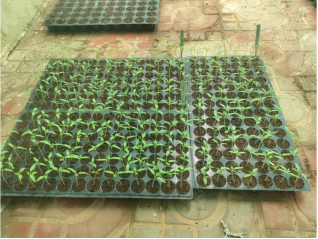
A high-yielding tomato (Solanum lycopersicum L.) cv. ‘Arka Rakshak’ was used for this study. Pot trials were conducted at the Indian Council of Agriculture Research-Indian Institute of Horticultural Research, Hessaraghatta, Bengaluru, India. An experimental study was carried out by using Completely randomized design (CRD) under three different stressed conditions (heat, drought, and salinity) with four replications during August 2022 to January 2023. The experiments were conducted on the plants raised (Figure 1) from seeds pre-treated with a dose of 3 mL/L of Carrabiitol® and subsequently given foliar treatments (3 mL/L) at vegetative and pre-flowering stages. Each plant was grown in 20 kg pot having clay sandy loam soil and fertilized with 30 g of urea, 80 g of SSP, and 24 g of MOP in three splits: 25% at two weeks after transplanting, 50% at the peak flowering stage, and 25% at the fruit development stage. During the study period, the maximum temperature observed was 29.0°C in the month of August and minimum temperature was 22.8°C in the month of December. The maximum precipitation 147 mm was observed during September. Relative humidity was observed in the range of 60-82%. Table 1 shows the treatment structure and Table 2 illustrates duration and schedule of treatment for the completely randomized design (CRD) for the trial on tomato plants.
Figure 1. Tomato plants (Solanum lycopersicum cv. Arka Rakshak) raised on protrays from seeds pre-treated with 3 mL/L Carrabiitol® solution.
Observations were recorded for plant height, number of fruits per plant, weight and size of fruits per plant, gross yield, marketable and non-marketable yield, and the fruit quality. The quality of fruit was determined by analysing total acidity, soluble sugars, carotenoid content, and lycopene content.
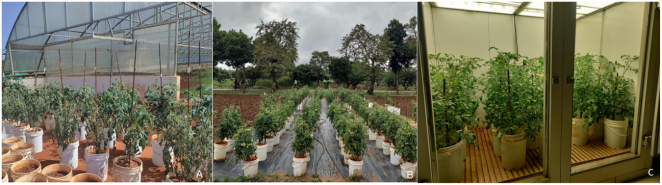
Plants were subjected to different stress conditions to assess the stress alleviation potential of the Carrabiitol® formulation on fruit yield and quality parameters (Figure 2). Plants were raised in seven different treatments. T1 treatment plants were raised from seeds without applying Carrabiitol® (T1), these were considered as absolute control. T2 treatment plants were raised from seeds treated with 3 ml/L of Carrabiitol® formulation and supplemented further with a single booster treatment of 3 ml/L of foliar Carrabiitol® application during their vegetative (2-3 leaf stage) growth. T3 treatment plants were raised from seeds treated with 3 ml/L of Carrabiitol® formulation and supplemented with 3 ml/L of foliar Carrabiitol® application at Vegetative (2-3 leaf stage) and pre-flowering (first emergence of flower bud) stage.
Table 1. Treatment structure and details.

Treatment

Details

T1

Plant raised from seeds without Carrabiitol

T2

Plants raised from seeds treated with 3 ml/L Carrabiitol + Foliar spray at 2-3 leaf stage

T3

Plants raised from seeds treated with 3 ml/L Carrabiitol + Foliar spray at 2-3 leaf stage+ Foliar spray at pre-flowering stage

T4

Plant raised from seeds without Carrabiitol + Stress at flowering stage

T5

Plants raised from seeds treated with 3 ml/L Carrabiitol + Foliar spray at 2-3 leaf stage + Stress at flowering stage

T6

Plants raised from seeds treated with 3 ml/L Carrabiitol + Foliar spray at 2-3 leaf stage+ Foliar spray at pre-flowering stage + Stress at flowering stage

T7

Plants raised from seeds + Foliar spray @ 5m/L commercial control (Mixture of seaweed & Protein hydrolysate) at 2-3 leaf stage+ Foliar spray at pre-flowering stage + Stress at flowering stage

Table 2. Experiment Treatment schedule for the tomato (S. lycopersicum cv. Arka Rakshak) plants subjected to Drought, High temperature and Salinity stress.

Treatment

Date

Soaking of seeds in 3ml/L solution

21.08.2022

Date of sowing in protrays

22.08.2022

Transplant of seedlings to pots

23.09.2022

Booster dose at vegetative stage

06.10.2022

Booster dose at pre-flowering stage

22.10.2022

Drought stress imposition

06.11.2022 to 11.11.2022

High temperature stress imposition (Trial 1)

02.11.2022 to 05.11.2022

High temperature stress imposition (Trial 2)

20.08.2024 to 23.08.2024

Salinity stress imposition

07.11.2022 to 15.11.2022

Date of final harvest

10.01.2023

Figure 2. Experimental Set up for Tomato plants (Solanum lycopersicum cv. Arka Rakshak) grown under (A) water deficit stress and salinity stress in rain-out shelter, (B) Plants exhibit the onset of fruit production after recovery from stress imposition and (C) heat stress in growth chamber.
Plants for the treatment T4 were raised similarly to T1 but subjected to different abiotic stresses following the treatment schedule outlined in Table 2. Plants for the treatment T5 were raised under conditions identical to T2 and subjected to different abiotic stress treatments as outlined in Table 2. T6 had plants that were raised identically to T3, but were subjected to different treatments for abiotic stress as described in Table 2. For treatment T7, plants were raised from untreated seeds subjected to the stress treatments described in Table 2, after foliar spray of a mixture of seaweed and protein hydrolysate that is used as a commercial control (5ml /L) at the vegetative and pre-flowering stages.
Plants were subjected to different stress conditions at flowering stage, a critical stage for fruit set and yield in tomato, to understand stress response. To induce a response stimulated by water deficit conditions, plants were grown without water for 5 days at the flowering stage in a rainout shelter (Figure 2). The soil moisture in control was 35% and 19% under stress conditions at the end of day 5, represent 45% moisture reduction commonly encountered under field conditions. Salinity was induced by irrigating plants with 50 mM Sodium Chloride (NaCl) for 8 days during the flowering stage (opening of the first flowers), to cause osmotic stress and ionic stress without causing irreversible damage to plants. Plants were exposed to high temperatures inside the growth chamber (Conviron PGW40, Canada), maintained at 40.0°C for three days during the flowering stage, while the control temperature was maintained at 26.8°C. This mimic the heat waves encountered in Asian climates that adversely affect pollination and fruit set in tomato. The same experiment was carried out for high temperature stress for second season during June 2024 to November 2024.
2.2. Qualitative Analysis of Tomato Fruits
2.2.1. Total Carotenoids and Lycopene
Total carotenoids and lycopene content were analyzed by the spectrophotometric method (Lichtenthaler, 1987). 5 g of sample and one spatula of CaCO3 were ground with acetone in a mortar. The residue was extracted with more solvent until the supernatant becomes colorless. All the extraction was carried out under low light or red light. Extract was taken in a separating funnel, added 15 ml hexane and 100 ml water. 2 spatulas of NaCl were added and shaken well, and allowed to stand for a few minutes. The two phases formed were separated, and the lower aqueous phase was re-extracted with additional hexane, until the aqueous phase was colorless. The upper layer was collected and repeated the same by taking 5 ml hexane. Dried with anhydrous Na2SO4 and the volume was made to 25 ml with hexane, and absorbance was recorded at 470 nm for total carotenoids and at 503 nm for lycopene. The total carotene content was calculated using standard β-carotene or lycopene and expressed as mg/100g fresh weight using a standard curve.
Calculation:
Total Carotenoids (mg/100g) =OD470nm × Std. value (μg/OD) × Total Vol. of extract × 100Wt. of the sample (g) × 1000
Lycopene (mg/100g) =OD503nm × Std. value (μg/OD) × Total Vol. of extract × 100Wt. of the sample (g) × 1000
2.2.2. Total Acidity
Acidity was determined by the titration method (AOAC, 942.15). Tomatoes were homogenized in a blender to a fine puree. 10 grams of tomato puree was mixed with distilled water, squeezed through a muslin cloth, and volume was made up to 50 ml. A known volume of the filtrate (10 ml) was titrated against 0.01N NaOH using phenolphthalein as an indicator. Acidity was calculated as a percentage of citric acid equivalents using a citric acid standard curve.
Acidity (%) =Titre value × Std. value (mg) × Total Vol. of extract × Correction factor × 100Assay volume × Wt. of the sample (g) × 1000
2.2.3. Total Soluble Sugars
Tomato juice was squeezed from the fresh tomatoes onto a digital refractometer (PR-100, Atago Co. Ltd., Tokyo, Japan) to measure total soluble solids (TSS) and the results were expressed in°Brix (AOAC, 932.12).
2.2.4. Statistical Analysis
Data were analyzed by one-way analysis of variance (ANOVA) followed by Tukey’s posthoc test using GraphPad Prism Version 10.0.0 for Windows, GraphPad Software, Boston, MA, USA. The least significant differences (LSD) were calculated at p ≤ 0.05. The means of four replicates were calculated for each treatment. The standard error of the mean (SEM) and LSD were reported for each ANOVA analysis.
3. Results
3.1. Effect of Carrabiitol® on the Height of Tomato Plants
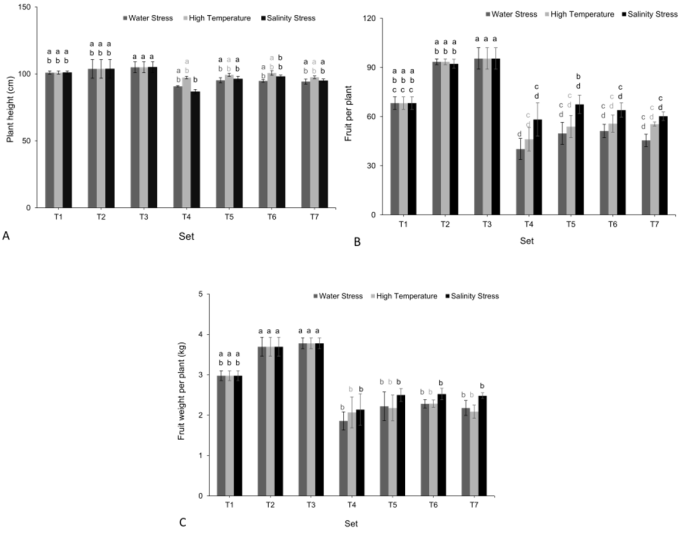
The stress conditions reduced the height of tomato plants with the maximum reduction observed in plants subjected to salinity stress. Compared to their untreated control (T1), the plants showed 14.11% reduction (T4) (Figure 3A). On applying Carrabiitol®, plants under salinity stress showed the highest recovery by an increase of up to 12.97% (T6) in height as compared to control plants that were exposed to similar stress (T4) (Figure 3A). In case of water deficit, stress recovery of 4.95% was recorded in T5. Recovery was almost comparable in treatment T5 and T6 for plants induced with water deficit as well as salinity stress. The reduction in plant height and recovery was negligible for those induced with high temperature stress conditions. However, recovery was not statistically significant in all the three stresses (p ≤ 0.05).
3.2. Effect of Carrabiitol® on the Fruits of Tomato Plants
Study evaluated number, weight, and dimensions of fruits per plant under each stress conditions. Carrabiitol® treatment T3 led to a significant increase in fruits per plant under unstressed conditions to about 39.93% (between T1 and T3, Figure 3B). Under induced water deficit and high temperature stress, the number of fruits increased by 27.33%, and 20.54% respectively, on applying a double application of Carrabiitol® (T6) as compared to the control plants under stress conditions (T4). Under salinity stress, it increased by 15.87% on applying a single application (T5).
Figure 3. Effect of Carrabiitol® treatments on tomato cultivar 'Arka Rakshak' (A) plant height (cm), (B) number of fruits per plant (no.), and (C) fruit weight per plant (kg) were observed under water deficit, high temperature, and salinity stress conditions. The means not sharing a common letter are significantly different by post hoc least significant difference (LSD) test at 5% level of significance. Data presented are means ± standard errors (p ≤ 0.05, n=4). T1-T7 represent different treatment as described in the M&M section.
A similar trend was observed in fruit weight per plant. Total weight of fruits per plant before inducing stress increased by about 26.8% on treating the plants with Carrabitol (Figure 3C). On inducing stress, fruit weight drastically reduced, with a maximum reduction of 37.58% under water deficit conditions . Treatment with single and double doses of Carrabitol helped the plants recover by about 22.6% (Figure 3C).
Fruit length and diameter were negatively affected under stress conditions. Application of Carrabiitol® (T3) at the pre-flowering stage improved fruit size slightly under normal conditions. Under induced stress, fruit sizes improved marginally with Carrabiitol® treatment. However, improvement was not statistically significant. (Supplementary Figure 1).
3.3. Effect of Carrabiitol® on the Yield
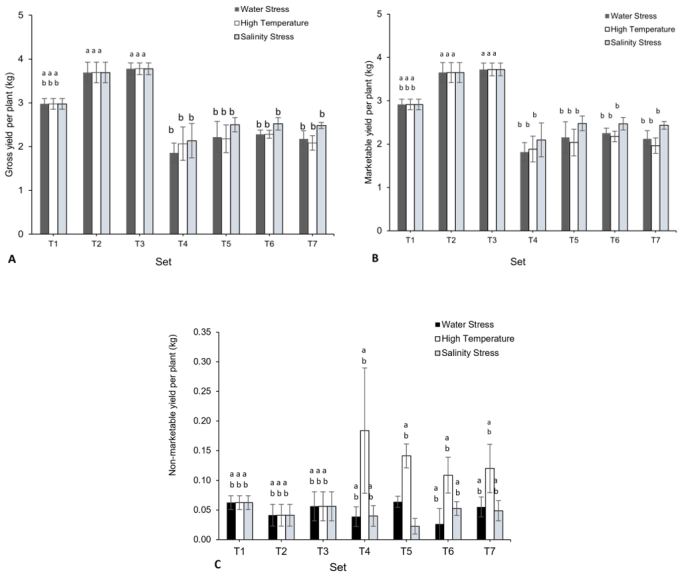
A Significant increase in gross and marketable yield was observed when plants were treated with Carrabiitol® Treatment T3 compared to untreated plants (T1) under stress-free conditions . On inducing stress, an absolute reduction of 37.62%, 30.52% and 28.21% was observed in the gross yield under water deficit, high temperature, and salinity stress conditions (T4 against T1, Figure 4A). The absolute reduction of marketable yield was at 37.61%, 35.34%, and 28.05% (Figure 4B) respectively. When the stressed plants were treated with Carrabiitol®, both the gross and marketable yields improved, with the best recovery percentage (23.6%) observed in T6 plants induced by moisture deficit stress (Figure 4B). Recovery from high temperature stress was about 15.5% (T6). This was noticeably better than the improvement observed in plants treated with the commercially available control (T7), which recovered 16.5% (water deficit) and 4.3% (high temperature), though the data did not reach statistical significance. The second trial at high temperature showed an absolute reduction in yield of 46.5% after stress imposition, which improved at T6 to 38.3%. The improvement was noticeably higher than that of 11.4% (T7) achieved by applying the commercial control (Supplementary Figure 3). The non-marketable yield did not show significant variation across treatments and across stress conditions.
Figure 4. Effect of Carrabiitol® treatments on tomato variety 'Arka Rakshak' (A) Gross yield per plant (kg), (B) Marketable yield per plant (kg), and (C) Non-marketable yield per plant (kg) under water deficit, high temperature, and salinity stress conditions. The means not sharing a common letter are significantly different by post hoc least significant difference (LSD) test at 5% level of significance. Data presented are means ± standard errors (p ≤ 0.05, n=4). T1-T7 represent different treatment as described in the M&M section.
3.4. Effect of Carrabiitol® on Fruit Quality- Acidity, Sugars, Lycopene, and Carotenoids
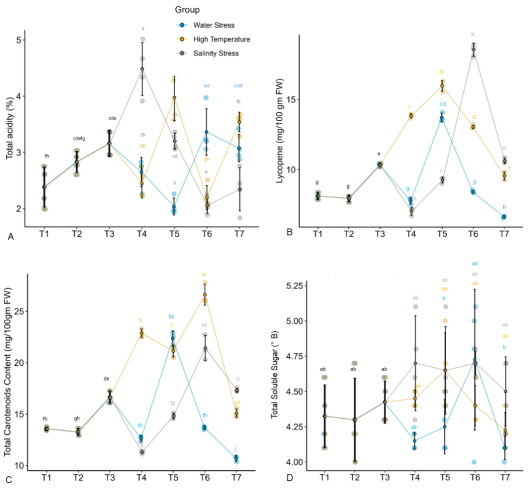
Study evaluated total acidity, total soluble sugars, lycopene, and total carotenoid content of the plants across different treatments (Figure 5). Lycopene is the red carotenoid found predominantly in tomatoes.
Figure 5. Effect of Carrabiitol® treatments on fruit quality parameters of tomato variety 'Arka Rakshak’. (A) Total acidity (%) (B) Lycopene content (mg/100g FW) (C) Total carotenoid content (mg/100g FW) (D) Total soluble sugar (TSS) content (mg/100g FW) under water deficit, high temperature, and salinity stress conditions. The means not sharing a common letter are significantly different by post hoc least significant difference (LSD) test at 5% level of significance. Data presented are means ± standard errors (p ≤ 0.05, n=4). T1-T7 represent different treatment as described in the M&M section.

Total soluble sugars did not show a significant difference across the treatments. Total acidity, however, fluctuated slightly among different conditions of plant growth but increased by 4.49% under salinity stress conditions (T4) compared to Treatment T1. However, plants treated with Carrabitol®, total acidity was reduced significantly under treatment T5 and T6. (Figure 5A).
Lycopene content was statistically comparable between untreated controls (T1) and those plants treated with a single dose of Carrabiitol (T2). On applying Carrabiitol® at the preflowering stage, the plants showed a significant increase in the lycopene content under normal conditions. After inducing stress, interestingly, the water deficit and salinity stress showed a reduction in lycopene content, whereas the red pigment increased significantly under high temperature treatment. When the stressed plants were treated with Carrabiitol® to help recover, lycopene showed a drastic increase in those that were treated after being subjected to water deficit and salinity stress. Under water deficit stress, lycopene content increased 76.58% when treated with a single dose of Carrabiitol® (T5) against untreated control (T4, Figure 5B). Whereas plants showed a 31.95% (T5) increase and 164.47% (T6) increase in lycopene when treated with a single and a double dose of Carrabiitol® respectively under salinity stress . Under high temperature stress, T5 showed a significant increase of 15.4% when compared to T4 .
Total carotenoids increased by 76.7% from 12.64mg/100g fw in T4 plants to 22.34mg/100g fw in T5 plants when plants were subjected to water deficit stress and then treated with Carrabiitol® during their vegetative stage to recover (Figure 5C). Plants subjected to salinity stress showed a significant increase of 89.8% in total carotenoids from 11.29mg/100g fw (T4) to 21.43mg/100g fw (T6) when they were treated with Carrabiitol® at their vegetative and preflowering stages. Under high temperature, plants showed an increase of 16.3% in their total carotenoid content at T6 when compared to T4 (Figure 5C).
4. Discussion
The study evaluated the efficacy of Carrabiitol® formulation in alleviating the adverse effects of abiotic stress in tomato. Plants were exposed to drought, high temperature, and salinity stress during the flowering stages to observe the influence on fruit yield and quality. High temperature stress was induced over two rounds of pot trials, while the others were studied for a single trial.
Abiotic stress restrict plant development, often resulting in stunted growth and even death. Salinity stress most severely affects plant height and often damages the leaves . Present Study observed the most severe height reduction in plants exposed to salinity stress, followed by water deficit, suggesting salinity fundamentally disrupts plant development more than the other stresses. Salinity creates an unfavorable osmotic pressure, which prevents the roots from absorbing water. Na+ destabilizes the membrane proteins, negatively affecting cell division and expansion, primary and secondary metabolism, and mineral nutrient homeostasis in plants . The height recovery in the salt-stressed plants with Carrabiitol® treatment nearly compensates for the entire stress-induced reduction. Carrabiitol has been shown to maintain leaf water potential under abiotic stress condition via maintaining homeostasis in plants . Oligosaccharides have been reported previously to show an increase in tomato shoot biomass by improving resistance to chilling , heat, and drought stresses . The underlying mechanism at the molecular level that helped the plants respond to Carrabiitol® was beyond the scope of this study, and can be investigated further.
While Carrabiitol® provided an non-significant improvement to the fruit size and weight, study revealed a statistically significant stress-specific response in the lycopene content. The carotenoids have often been linked with anticancer properties and are capable of deactivating reactive oxygen species (ROS). Lycopene in particular is an antioxidant, known to protect cells against oxidative damage . Water deficit and salinity stress reduced lycopene content, which was increased to 76.58% when plants treated with Carrabiitol at 2-3 leaf stage in water deficit conditions. Whereas, when plants treated with Carrabiitol at 2-3 leaf stage and pre-flowering stage (T6) a 164.47% increase found in salt-stressed plants. Total carotenoids also exhibited significant recoveries. Carrabiitol may be effective in enhancing tolerance to abiotic stress, through increased accumulation of osmotically active molecules such as glucose, sucrose, and proline, resulting in stabilization of membrane proteins . These results align with previous studies on oligosaccharides such as chitosan-derived oligosaccharides (COS), which improve lycopene content along with vitamin C, fructose, and glucose . However, COS has been suggested to act via the ethylene pathway . Studies on Alginate Oligosaccharides (AOS) reported a significant increase in lycopene and yield parameters .
Carrabiitol® functions effectively as a recovery agent after exposure to stress. Stressed plants treated with Carrabiitol® often exceeded the quality parameters of unstressed controls. The substantial increase in lycopene and carotenoid contents implies that Carrabiitol® has the potential for commercial use in enhancing the nutritional and market value of tomatoes. A 4.49% acidity increase under salinity stress can negatively impact taste and consumer acceptance. Carrabiitol® significantly reduces this elevated acidity with both single and double doses under all three stresses, demonstrating its osmotic potential to normalize fruit flavour profiles under stress.
This study also highlighted that Carrabiitol treatments at 2-3 leaf stage and pre-flowering stage (T6) often outperformed Carrabiitol treatment at 2-3 leaf stage only (T5) on several occasions. The performance in improvement in lycopene and total carotenoid content was significantly higher than that of the commercially available mixture of seaweed and protein hydrolysate bioactives. Study data also hinted towards an improvement in marketable yield. The dosage difference for different stress conditions suggests that application protocols should be tailored to specific stress conditions rather than using a universal approach. The pre-flowering stage application seems to be crucial for quality parameters. The results for heat stress from the second trial (Supplementary Figures 2-4) were comparable to the present study. Further spatiotemporal study elucidating the link between the timing of Carrabiitol® application and the active metabolic processes affecting fruit composition will throw light on the underlying mechanism. Our previous findings indicated that Carrabiitol® treatment could protect the photosystem apparatus under stressed conditions while improving the photosynthesis rate, transpiration rate, and stomatal conductance . Whether Carrabiitol® could be enhancing the plant's natural antioxidant defense mechanisms in order to tide over unfavourable environmental conditions needs to be explored further.
This study furthers our previous findings that Carrabiitol® formulation influences the physiology of tomato plants when exposed to stress conditions. The ability of Carrabiitol® to help plants recover from abiotic stress with improved lycopene and carotenoid contents has commercial, academic, and medicinal implications.
5. Conclusions
The Carrabiitol® formulation was found to influence the physiological parameters in the tomato plants grown under stress conditions. Seed priming, along with dosages at the 2–3 leaf stage and pre-flowering stages, was found to be most effective in improving some qualities of the tomato fruit under healthy conditions while alleviating other stress symptoms significantly. This formulation has a significant effect on the lycopene and total carotenoids of tomato fruits and showed an increased marketable yield compared to commercial control. However, more studies are required to tailor the application dosage and to understand the underlying molecular mechanisms that prompt the Carrabiitol® formulation to alleviate the stress symptoms of tomato plants. This offers a sustainable solution for farmers to recover from the impact of climate change. Future studies may be conducted to observe long-term plant architecture and harvest potential.
Abbreviations

SBM

Single Biostimulant Molecule

LSD

Least Significant Differences

ROS

Reactive Oxygen Species

Acknowledgments
The authors acknowledge the Indian Council of Agriculture Research—Indian Institute of Horticultural Research’s infrastructure and laboratory facility support for carrying out the study. The writing assistance provided by Dr. Shalini Mukherjee is kindly acknowledged. This research received no external funding.
Author Contributions
Femida Yunus Patel: Conceptualization, Data curation, Visualization, Writing – review & editing
Ramesh Karugahalli Veeraiah: Investigation, Methodology, Software
Ramanna Hunashikatti Laxman: Methodology, Investigation, Validation
Neil Jaykumar Shah: Conceptualization, Funding acquisition, Visualization
Data Availability Statement
The data supporting the outcome of this research work has been reported in this manuscript.
Conflicts of Interest
The authors declare no conflicts of interest.
References
[1] Alexandratos, N., Bruinsma, J., 2012. World agriculture towards 2030/2050: the 2012 revision. ESA Working Papers 12-03.
[2] UN, 2017. World population projected to reach 9.8 billion in 2050, and 11.2 billion in 2100 [WWW Document]. U. N. URL
[3] The State of Food Security and Nutrition in the World 2022, 2022. FAO.
[4] Kürklü, A., Pearson, S., Felek, T., 2025. Climate change impacts on tomato production in high-tech soilless greenhouses in Türki̇ye. BMC Plant Biol. 25, 339.
[5] Ashraf, M., Harris, P. J. C., 2004. Potential biochemical indicators of salinity tolerance in plants. Plant Sci. 166, 3–16.
[6] Atta, K., Mondal, Saptarshi, Gorai, S., Singh, A. P., Kumari, A., Ghosh, T., Roy, A., Hembram, S., Gaikwad, D. J., Mondal, Subhasis, Bhattacharya, S., Jha, U. C., Jespersen, D., 2023. Impacts of salinity stress on crop plants: improving salt tolerance through genetic and molecular dissection. Front. Plant Sci. 14, 1241736.
[7] Nishiyama, R., Watanabe, Y., Leyva-Gonzalez, M. A., Van Ha, C., Fujita, Y., Tanaka, M., Seki, M., Yamaguchi-Shinozaki, K., Shinozaki, K., Herrera-Estrella, L., Tran, L.-S. P., 2013. Arabidopsis AHP2, AHP3, and AHP5 histidine phosphotransfer proteins function as redundant negative regulators of drought stress response. Proc. Natl. Acad. Sci. 110, 4840–4845.
[8] Osakabe, Y., Osakabe, K., Shinozaki, K., Tran, L.-S. P., 2014. Response of plants to water stress. Front. Plant Sci. 5, 00086.
[9] Singh, P., Choudhary, K. K., Chaudhary, N., Gupta, S., Sahu, M., Tejaswini, B., Sarkar, S., 2022. Salt stress resilience in plants mediated through osmolyte accumulation and its crosstalk mechanism with phytohormones. Front. Plant Sci. 13, 1006617.
[10] du Jardin, P., 2015. Plant biostimulants: Definition, concept, main categories and regulation. Sci. Hortic., Biostimulants in Horticulture 196, 3–14.
[11] EL Boukhari, M. E. M., Barakate, M., Bouhia, Y., Lyamlouli, K., 2020. Trends in Seaweed Extract Based Biostimulants: Manufacturing Process and Beneficial Effect on Soil-Plant Systems. Plants 9, 359.
[12] Colla, G., Rouphael, Y., 2015. Biostimulants in horticulture. Sci. Hortic., Biostimulants in Horticulture 196, 1–2.
[13] Pichyangkura, R., Chadchawan, S., 2015. Biostimulant activity of chitosan in horticulture. Sci. Hortic., Biostimulants in Horticulture 196, 49–65.
[14] Canellas, L. P., Olivares, F. L., Aguiar, N. O., Jones, D. L., Nebbioso, A., Mazzei, P., Piccolo, A., 2015. Humic and fulvic acids as biostimulants in horticulture. Sci. Hortic., Biostimulants in Horticulture 196, 15–27.
[15] Colla, G., Nardi, S., Cardarelli, M., Ertani, A., Lucini, L., Canaguier, R., Rouphael, Y., 2015. Protein hydrolysates as biostimulants in horticulture. Sci. Hortic., Biostimulants in Horticulture 196, 28–38.
[16] Gomez-Casati, Iglesias, A., 2002. ADP-glucose pyrophosphorylase from wheat endosperm. Purification and characterization of an enzyme with novel regulatory properties. Planta 214, 428–434.
[17] Battacharyya, D., Babgohari, M. Z., Rathor, P., Prithiviraj, B., 2015. Seaweed extracts as biostimulants in horticulture. Sci. Hortic., Biostimulants in Horticulture 196, 39–48.
[18] Savvas, D., Ntatsi, G., 2015. Biostimulant activity of silicon in horticulture. Sci. Hortic., Biostimulants in Horticulture 196, 66–81.
[19] Rouphael, Y., Franken, P., Schneider, C., Schwarz, D., Giovannetti, M., Agnolucci, M., Pascale, S. D., Bonini, P., Colla, G., 2015. Arbuscular mycorrhizal fungi act as biostimulants in horticultural crops. Sci. Hortic., Biostimulants in Horticulture 196, 91–108.
[20] Ruzzi, M., Aroca, R., 2015. Plant growth-promoting rhizobacteria act as biostimulants in horticulture. Sci. Hortic., Biostimulants in Horticulture 196, 124–134.
[21] López-Bucio, J., Pelagio-Flores, R., Herrera-Estrella, A., 2015. Trichoderma as biostimulant: exploiting the multilevel properties of a plant beneficial fungus. Sci. Hortic., Biostimulants in Horticulture 196, 109–123.
[22] MM, E. S., Ismail, M. M. and Hamouda, M. M. (2016). Influence of some brown seaweed extracts on germination and cytological responses of Trigonella foenum-graecum L. BioTechnology: An Indian Journal. 12: 1-12.
[23] Li, J., Lardon, R., Mangelinckx, S., & Geelen, D. (2024). A practical guide to the discovery of biomolecules with biostimulant activity. Journal of Experimental Botany, 75(13), 3797–3817.
[24] Mashabela, M. D., Terefe, T., Kerchev, P., Sitole, L., & Mhlongo, M. I. (2025). Next-generation biostimulants: molecular insights, digital integration, and regulatory frameworks for sustainable agriculture. Frontiers in Plant Science, 16, 1710899.
[25] Patel, F. Y., Upreti, K. K., Laxman, R. H., Shah, N. J., 2024. Carrabiitol®, a Novel Oligosaccharide Polyol Composition, Mitigates the Impact of Flooding, Drought, Salinity, and High Temperature in Tomato. Biology 13, 356.
[26] Zahra, N., Raza, Z. A., Mahmood, S., 2020. Effect of Salinity Stress on Various Growth and Physiological Attributes of Two Contrasting Maize Genotypes. Braz. Arch. Biol. Technol. 63, e20200072.
[27] Roșca, M., Mihalache, G., Stoleru, V., 2023. Tomato responses to salinity stress: From morphological traits to genetic changes. Front. Plant Sci. 14, 1118383.
[28] Hasegawa, P. M., 2013. Sodium (Na+) homeostasis and salt tolerance of plants. Environ. Exp. Bot., Sustainable cultivation and exploitation of halophyte crops in a salinizing world 92, 19–31.
[29] Shrivastava, P., Kumar, R., 2015. Soil salinity: A serious environmental issue and plant growth promoting bacteria as one of the tools for its alleviation. Saudi J. Biol. Sci. 22, 123–131.
[30] He, J., Han, W., Wang, J., Qian, Y., Saito, M., Bai, W., Song, J., Lv, G., 2022. Functions of Oligosaccharides in Improving Tomato Seeding Growth and Chilling Resistance. J. Plant Growth Regul. 41, 535–545.
[31] Campestrini, L. H., Melo, P. S., Peres, L. E. P., Calhelha, R. C., Ferreira, I. C. F. R., Alencar, S. M., 2019. A new variety of purple tomato as a rich source of bioactive carotenoids and its potential health benefits. Heliyon 5, e02831.
[32] Li, N., Wu, X., Zhuang, W., Xia, L., Chen, Y., Wu, C., Rao, Z., Du, L., Zhao, R., Yi, M., Wan, Q., Zhou, Y., 2021. Tomato and lycopene and multiple health outcomes: Umbrella review. Food Chem. 343, 128396.
[33] Zheng, J., Chen, H., Wang, T., Mustafa, G., Liu, L., Wang, Q., Shao, Z., 2023. Quality Improvement of Tomato Fruits by Preharvest Application of Chitosan Oligosaccharide. Horticulturae 9, 300.
[34] Chi, Y., Wang, X., Li, F., Zhang, Z., 2025. The Effects of Alginate Oligosaccharides (AOS) with Degree of Polymerization (DP) 2, 3, 4, 5, 6, and 7 on Tomato Yields.
Cite This Article
  • APA Style

    Patel, F. Y., Veeraiah, R. K., Laxman, R. H., Shah, N. J. (2026). Carrabiitol Mediated Qualitative Enhancement of Tomato Fruit Under Abiotic Stress Conditions. Journal of Plant Sciences, 14(2), 104-114. https://doi.org/10.11648/j.jps.20261402.14

    Copy | Download

    ACS Style

    Patel, F. Y.; Veeraiah, R. K.; Laxman, R. H.; Shah, N. J. Carrabiitol Mediated Qualitative Enhancement of Tomato Fruit Under Abiotic Stress Conditions. J. Plant Sci. 2026, 14(2), 104-114. doi: 10.11648/j.jps.20261402.14

    Copy | Download

    AMA Style

    Patel FY, Veeraiah RK, Laxman RH, Shah NJ. Carrabiitol Mediated Qualitative Enhancement of Tomato Fruit Under Abiotic Stress Conditions. J Plant Sci. 2026;14(2):104-114. doi: 10.11648/j.jps.20261402.14

    Copy | Download

  • @article{10.11648/j.jps.20261402.14,
      author = {Femida Yunus Patel and Ramesh Karugahalli Veeraiah and Ramanna Hunashikatti Laxman and Neil Jaykumar Shah},
      title = {Carrabiitol Mediated Qualitative Enhancement of Tomato Fruit Under Abiotic Stress Conditions},
      journal = {Journal of Plant Sciences},
      volume = {14},
      number = {2},
      pages = {104-114},
      doi = {10.11648/j.jps.20261402.14},
      url = {https://doi.org/10.11648/j.jps.20261402.14},
      eprint = {https://article.sciencepublishinggroup.com/pdf/10.11648.j.jps.20261402.14},
      abstract = {The increasing commoditization of traditional biostimulants has driven the need for more precise and targeted solutions in climate change scenarios. Single Biostimulant Molecules (SBM) represent a novel approach that departs from conventional multi-compound formulations, which often contain undefined mixtures of bioactive components, triggering multiple responses. Instead, SBMs focus on a specific bioactive molecule with a defined mode of action, ensuring greater consistency and predictability in plant responses under field conditions. This study evaluated Carrabiitol®, an oligosaccharide polyol single biostimulant molecule, for alleviating stress response in tomato (Solanum lycopersicum cv. ‘Arka Rakshak’). Plants were subjected to water deficit, high temperature, and salinity stress during the flowering stages. Treatment involved seed priming and application of Carrabiitol® (3ml/L) on foliage during vegetative and pre-flowering stages. Plants were evaluated for their Plant height, Number of fruits per plant, Total Soluble sugars, Total Acidity, Lycopene content, Carotenoids content and fruit yield. Experiments were arranged in a complete block randomized design with four replications. Results showed recovery in plant height and marketable yield with significant improvement in the tomato lycopene content that increased by more than 76% under water deficit stress and 164% under salinity stress when treated with Carrabiitol® @ 3ml/L (T6) compared to untreated plants (p ≤ 0.05). Total carotenoids improved by up to 89% (p ≤ 0.05). Overall, study illustrated that application of Single Biostimulant Molecule (SBM), Carrabiitol® was effective in improving the qualitative trait of tomatoes by alleviating applied abiotic stresses.},
     year = {2026}
    }
    

    Copy | Download

  • TY  - JOUR
    T1  - Carrabiitol Mediated Qualitative Enhancement of Tomato Fruit Under Abiotic Stress Conditions
    AU  - Femida Yunus Patel
    AU  - Ramesh Karugahalli Veeraiah
    AU  - Ramanna Hunashikatti Laxman
    AU  - Neil Jaykumar Shah
    Y1  - 2026/04/30
    PY  - 2026
    N1  - https://doi.org/10.11648/j.jps.20261402.14
    DO  - 10.11648/j.jps.20261402.14
    T2  - Journal of Plant Sciences
    JF  - Journal of Plant Sciences
    JO  - Journal of Plant Sciences
    SP  - 104
    EP  - 114
    PB  - Science Publishing Group
    SN  - 2331-0731
    UR  - https://doi.org/10.11648/j.jps.20261402.14
    AB  - The increasing commoditization of traditional biostimulants has driven the need for more precise and targeted solutions in climate change scenarios. Single Biostimulant Molecules (SBM) represent a novel approach that departs from conventional multi-compound formulations, which often contain undefined mixtures of bioactive components, triggering multiple responses. Instead, SBMs focus on a specific bioactive molecule with a defined mode of action, ensuring greater consistency and predictability in plant responses under field conditions. This study evaluated Carrabiitol®, an oligosaccharide polyol single biostimulant molecule, for alleviating stress response in tomato (Solanum lycopersicum cv. ‘Arka Rakshak’). Plants were subjected to water deficit, high temperature, and salinity stress during the flowering stages. Treatment involved seed priming and application of Carrabiitol® (3ml/L) on foliage during vegetative and pre-flowering stages. Plants were evaluated for their Plant height, Number of fruits per plant, Total Soluble sugars, Total Acidity, Lycopene content, Carotenoids content and fruit yield. Experiments were arranged in a complete block randomized design with four replications. Results showed recovery in plant height and marketable yield with significant improvement in the tomato lycopene content that increased by more than 76% under water deficit stress and 164% under salinity stress when treated with Carrabiitol® @ 3ml/L (T6) compared to untreated plants (p ≤ 0.05). Total carotenoids improved by up to 89% (p ≤ 0.05). Overall, study illustrated that application of Single Biostimulant Molecule (SBM), Carrabiitol® was effective in improving the qualitative trait of tomatoes by alleviating applied abiotic stresses.
    VL  - 14
    IS  - 2
    ER  - 

    Copy | Download

Author Information