Research Article | | Peer-Reviewed

Perspectives and Experiences of People Living with HIV Regarding the Use of Health Education and Physical Activity to Promote Cardiovascular Health

Received: 2 February 2026     Accepted: 4 March 2026     Published: 16 March 2026
Views:       Downloads:
Abstract

Antiretroviral therapy (ART) has rendered HIV a chronic condition, extending the lifespan of people living with HIV (PLHIV) and heightening their risk of non-communicable diseases such as cardiovascular diseases (CVDs). This study explored the lived experiences, health behaviours, and informational needs of PLHIV with co-existing CVDs to inform the development of a physiotherapy-led health education and physical activity intervention. A qualitative descriptive phenomenological study was conducted at two health facilities in Lusaka, Zambia. In-depth interviews and focus group discussions (FGDs) were conducted with 27 PLHIV, eight of which are serving as community health volunteers. Purposeful and snowball sampling methods were employed. Data were collected using a semi-structured interview guide and was analysed thematically following Braun and Clarke’s framework. Atlas.ti and Dedoose facilitated independent analyses by two researchers. Four themes emerged from the analysis: (1) Experiences and challenges living with HIV and CVDs; (2) Experiences and perspectives with health behaviours and physical activity; (3) Knowledge and information sources; and (4) Program recommendations. Participants highlighted personal, social, and systemic barriers to cardiovascular health promotion, but expressed a commitment to preventative initiatives. The findings highlight the importance of patient-centered and culturally sensitive interventions. Insights from this study will inform the development of a physiotherapy-led program, tailored to resource-limited HIV care settings.

Published in Medicine and Health Sciences (Volume 2, Issue 2)
DOI 10.11648/j.mhs.20260202.12
Page(s) 74-85
Creative Commons

This is an Open Access article, distributed under the terms of the Creative Commons Attribution 4.0 International License (http://creativecommons.org/licenses/by/4.0/), which permits unrestricted use, distribution and reproduction in any medium or format, provided the original work is properly cited.

Copyright

Copyright © The Author(s), 2026. Published by Science Publishing Group

Keywords

HIV/AIDS, Cardiovascular Disease, Hypertension, Comorbidity, Exercise, Health Promotion, Healthy Behaviours, Perspectives

1. Introduction
The advent of ART has transformed HIV into a chronic condition, shifting the focus to managing the long-term consequences of non-communicable diseases (NCDs), particularly cardiovascular diseases (CVDs) . Cardiovascular diseases are now major contributors to non-HIV-related morbidity and mortality in PLHIV. The intersection of HIV and CVDs presents a complex problem, which further complicates patient care .
People living with HIV are more than twice likely to develop CVDs compared to non-HIV positive individuals . In a systematic review to investigate CVDs associated with HIV, it was reported that PLHIV had a 53% elevated risk for dyslipidemia (Hazard Ration (HR) 1.53), 37% increased likelihood for coronary artery disease (HR 1.37), and 47% more likely to develop myocardial infarction (HR 1.47) compared to HIV-negative people .
Notwithstanding the dual disease burden, efforts to manage HIV must also focus on the prevention and management of CVDs . Developed countries have responded to the dual burden by integrating CVD risk assessment into routine HIV treatment protocols. The American Heart Association advocates for comprehensive strategies encompassing lifestyle modification, risk assessment, and pharmacological management .
Primary preventive strategies, such as promoting physical activity, healthy diet, weight control, and smoking cessation, are effective in reducing CVD risk in PLHIV . Health education empowers individuals to adopt healthier lifestyles, thereby enhancing disease prevention and improving quality of life. The British Association for Cardiovascular Prevention and Rehabilitation (BACPR) highlights the importance of personalised education and behaviour change interventions. This should be supported by the best available resources, to help patients understand and manage their conditions effectively . On the other hand, physical activity and exercise interventions promote cardiovascular health, reduce CVD risk, and reduce morbidity and mortality in individuals with CVD . Exercises are safe for PLHIV and improves cholesterol levels, insulin sensitivity, and lowers BMI and blood pressure .
Although lifestyle modification is essential for CVD prevention and management, its implementation is challenging due to the complex nature of behavioural change . Furthermore, many PLHIV do not engage in regular physical activity despite the established benefits. This is mainly attributed to a number of barriers, including limited resources, lower educational levels, exposure to ART, and other social determinants of health. Overcoming these barriers requires understanding them to tailor health education and physical activity initiatives, which can address the unique needs of this population .
We therefore propose a Physiotherapy-led health education and physical activity intervention to address CVDs in PLHIV, because physician-led behavioural counselling is sometimes not feasible due to limited consultation time . We actively engaged stakeholders, such as healthcare providers, PLHIV, and community leaders, to guide the intervention design. This article presents qualitative findings that explored the experiences, health behaviours, and information needs of PLHIV and co-existing CVDs.
2. Materials and Methods
2.1. Study Design
This study employed a qualitative phenomenological approach to investigate the lived experiences of PLHIV with co-existing CVDs, in Lusaka, Zambia. The phenomenological approach facilitates an in-depth understanding of how they make sense of these experiences . This qualitative study was grounded in an interpretivist-constructivist philosophical paradigm, which assumes that knowledge is generated from participants' subjective interpretations of their lived experiences . The research focused on how PLHIV experience, perceive, and make sense of cardiovascular health and associated behaviours within their context.
2.2. Study Setting
The study was conducted at two healthcare facilities in Lusaka, the capital city of Zambia: The Adult Infectious Diseases Centre of Excellence (AIDC) at the University Teaching Hospital (UTH), and Mtendere Health Centre. UTH is a major referral and teaching hospital in Zambia, while the AIDC within UTH specialises in HIV care. Mtendere Health Centre, on the other hand, serves a catchment area of 91,152 people and provides HIV and ART services to the local community.
2.3. Population and Sampling
The study consisted of two participant groups: HIV-positive patients from UTH/AIDC (n = 10) and Mtendere ART Clinic (n = 9), and HIV-positive individuals serving as community health volunteers (n = 8) in Mtendere community. Community health volunteers living with HIV and CVDs were enrolled as participants and not as a comparison group. Prior community engagement by the first and last author on a project that provided community-based palliative care physiotherapy services revealed instances of subsequent strokes and deaths among community health volunteers. These incidences occurred during and after the project, demonstrating community health volunteers’ susceptibility. The current study, therefore, explored their experiences and needs as potential recipients of a proposed cardiovascular health intervention for PLHIV. Purposeful homogeneous sampling was employed to recruit HIV-positive patients, aged 18 to 65, with co-existing hypertension or other CVDs on ART during routine clinic visits. Community volunteers were identified by a physiotherapist and recruited through snowballing. The same participants were invited for the focus group discussions (FGDs): eight patients from UTH/AIDC; seven patients from Mtendere; and all eight volunteers participated. The sample size followed the recommendation of 5–25 participants for phenomenological studies , in addition to data saturation, which was achieved when no new information was obtained from interviews .
2.4. Procedure for Data Collection
Two research assistants were trained on the study's objectives and data collection procedures. Following ethical approval and permission from the study sites, the research team introduced the study to the facility personnel. Research assistants reviewed medical records, screened patients for eligibility, and approached potential participants during clinic visits. Eligible participants were informed about the purpose of the study, procedures, confidentiality measures, associated risks, potential benefits, and their rights to withdraw voluntarily before participation. Those who accepted to participate were provided with written informed consent.
Data were gathered from June to July 2024 using a semi-structured interview guide developed from the study objectives and previous research . The interview guide was tested with two community volunteers and subsequently refined through team discussions and expert feedback. In-depth interviews, lasting about 30–45 minutes, were conducted with participants in a private room. Focus group discussions supplemented interviews by offering collective insights on members' experiences . Interviews were conducted in Chinyanja, Ichibemba and English. All interviews were audiotaped, transcribed and translated into English by an expert local translator, and quality checks provided by a Physiotherapist who is fluent in all three languages.
2.5. Data Analysis
The data were analysed thematically using Braun and Clarke’s (2012) six-phase framework: (1) familiarisation with data, (2) generating initial codes, (3) generating themes, (4) reviewing themes, (5) defining/naming themes, and (6) producing the report. This method is consistent with the phenomenological objective of uncovering patterns of meaning in participants’ lived experiences . Two authors independently analysed the data using ATLAS.ti and Dedoose respectively. Coding frameworks were compared, and discrepancies resolved by consensus, thereby enhancing transparency, trustworthiness and credibility while minimising researcher bias and ensuring rigour in the analytical process .
2.6. Trustworthiness
Trustworthiness was established using Lincoln and Guba’s (1985) framework of credibility, dependability, transferability, and confirmability . Credibility was enhanced by prolonged engagement, member checking, peer debriefing, and data analysis by two independent researchers. Dependability was demonstrated by maintaining a detailed audit trail of research decisions, including methodology, procedures, and field notes. Transferability was enhanced by detailed description of the study process and context. Confirmability was achieved by minimising researcher bias through triangulation, reflexivity, peer debriefing, and transparent analysis, ensuring that the findings reflected the participants' perspectives .
2.7. Consent and Ethical Approval
The study obtained ethical approval from the Excellence in Research Ethics and Science (ERES) Converge Institution Review Board (REF: 2023-DEC-018). Written informed consent was obtained from study participants and permission to conduct the study was granted by the National Health Research Authority, Lusaka District Health Director and the University Teaching Hospitals-Adult Hospital. Participation was voluntary, and participants could withdraw at any time without any consequences on their healthcare. Confidentiality was maintained by ensuring identifiers were removed from transcripts, audio recordings and transcripts were securely maintained and accessed only by the research team.
3. Results
3.1. Participant Characteristics
Table 1 presents the characteristics of the 27 participants. The sample included 14 females and 13 males. The most reported CVD was hypertension, while two participants reported having both stroke and diabetes.
Table 1. Participant Characteristics.

Characteristics

Patients (n = 19)

Community Volunteers (n = 8)

Gender

Male

11

02

Female

08

06

Age range in Yrs

20-29

01

01

30-39

01

00

40-49

04

01

50-59

10

04

60-69

03

02

History of CVDs

Diabetes

01

01

Hypertension

16

06

Hypertension/Stroke

01

01

Hypertension/Diabetes/Stroke

01

00

3.2. Themes Generated from Interviews
Four major themes were identified from data. The themes reflect participants' experiences and perspectives, while aligning with the study's aims and objectives. Each theme is described in detail, highlighting relevant sub-themes, and illustrative quotations where necessary.
3.2.1. Theme 1: Experiences and Challenges Living with HIV and CVD
This was the most predominant theme which focused on the lived experiences and challenges of PLHIV and cardiovascular comorbidities. This theme has four (4) sub-themes as outlined in Table 2. The challenges and experiences were reflected across physical, psychological, social and healthcare domains.
Table 2. Experiences and Challenges Living with HIV and CVD.

Sub-themes and codes

Participant quotations

1. Physical health challenges and experiences [HIV and CVD related challenges]

“You know, I used to be heavily built. I used to have hips but now I am flat. I keep on losing weight” [P 17].

“When they found me with it (Hypertension), I used to have headaches and then I was mostly feeling weak” (P 3)

2. Psychological experiences and challenges [Related to disclosure, hopelessness, loss of function]

“So, during that particular time it was too gassy like to understand what was in, what was going on, how possible would it be to find myself in that position, yeah” (P 8).

“... but then came a Stroke, it has really done me bad and affected the way I used to fend for my family” (P 11).

3. Social experiences and challenges [Positive and negative]

“…. when they discovered that I was HIV positive, which I disclosed to them openly, two days later, they said they were not comfortable with me staying with them” (P 2).

But as for me, most of my family members are dead because of denial. So for me, my older sibling left me with a child” (P 1 FGD Mtendere)

4. Experiences and challenges with medication and healthcare services [Shortage of drugs, focus on HIV, negative and positive attitudes]

“So today they have just managed to give me one tablet. And for me to go and buy on my own, I need money and I do not have the same money” (P 13).

“... now that I am taking medication for the heart, I am taking medicine for Diabetes but you still find that I feel in some parts of the body like the veins and the muscles have collapsed” (P 1).

Physical health challenges and experiences
Participants' lived experiences represented a variety of physical health challenges related to HIV and CVDs. Significant physical health problems, including persistent illness and weight loss associated with HIV were reported as outlined in one of the quotations in Table 2. The presence of CVD worsened participant’s physical challenges, as they described a range of symptoms which in some cases interfered with their physical function and reduced participation in daily activities and social engagements. Physical symptoms such as fatigue, muscle weakness and pain which interfered with daily activities.
Psychological experiences and challenges
The combination of HIV and CVDs was associated with considerable psychological challenges (Table 2). There were diverse experiences related to receiving the HIV diagnosis, with reactions ranging from initial uncertainty and denial to eventual acceptance and adjustment. Disclosure of HIV status was characterised by fear of stigma, loss of privacy, and hope of gaining support. Concerns about confidentiality breaches were common, prompting many participants to conceal their status. Participants, especially stroke survivors, reported dependence in daily activities, leading to frustration and hopelessness. Both HIV and CVDs imposed heavy emotional burdens, with fears of declining health and lost roles.
Social experiences and challenges
Social experiences included both positive and negative, with positive experiences consisting of support from family and social networks. Participants highlighted the significance of family support and social networks as they navigate their lives with HIV and CVDs. One participant shared how he received emotional and physical assistance from a friend when he was rejected by his family following HIV diagnosis:
“But a friend of mine of many years heard about this and came over….. “If you need anybody to be on your part in terms of support, I am here.” So that was the person I stayed with for a long time” (P 2).
Negatively, lack of family support following HIV diagnosis, loss of family members from HIV, stigma and discrimination, financial and resource constraints, exacerbated social challenges. Loss of family members due to HIV reflected a double burden of the challenges, which often worsen financial constraints, emotional stress, and caregiving responsibilities.
Medication and healthcare services
Participants reported a variety of healthcare experiences, particularly on cardiovascular health advice, medication adherence, and difficulties accessing appropriate services. Positive experiences were described, such as encounters with kind healthcare providers and receiving helpful guidance on health and medication adherence. However, some reported negative experiences such as bad attitudes among some providers, shortage of medications at the facilities, a perceived focus on HIV, and lack of finances to purchase anti-hypertensive drugs, among others. The complexity of managing HIV and co-existing CVDs was highlighted by the experiences with medications. These included complaints of drug side effects and poly-pharmacy, as well as claims of improved health with adherence to ART and CVD medication.
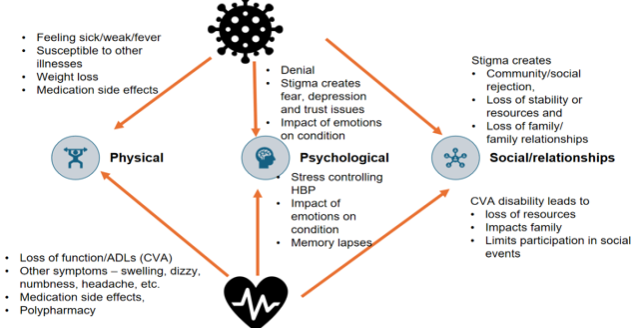
In summary, Figure 1 shows the graphical presentation of Theme 1 in relation to the physical, psychological and social impact of HIV with co-existing CVDs.
Figure 1. Physical, psychological, and social impact of HIV and CVD. (Abbreviations: CVA = Cardiovascular accident; ADLs = Activities of daily living; HBP = High blood pressure).
3.2.2. Theme 2: Experiences and Perspectives with Health Behaviours and Physical Activity
This theme addressed the second objective, highlighting the healthy behaviours and physical activity practices among PLHIV, alongside barriers and facilitators that influenced their engagement in these behaviours. Three sub-themes were generated as shown in Table 3.
Table 3. Experiences and Perspectives with Health Behaviours and Physical Activity.

Sub-themes and codes

Participant quotations

1. Common health-promoting behaviours among PLHIV [Adherence to medical advice, regular PA and check-ups, medication adherence]

“So, I make sure that I take health instructions seriously to avoid… or maybe just to sustain my health (P 18).

“When you see that red meat is not always good for health, you try some Kapenta [Small sardine-like local fish] for a change” (P 15).

2. Barriers and challenges to PA and HB [Individual and Community]

R“Because of neuropathy, which attacked my nerves, that’s actually the reason I cannot engage… in physical activities” (P 14).

“Even if I exercise, when I get hungry, what am I to eat?” (P 4).

Facilitators and motivations [Self-motivation, perceived health benefits, social support]

R“I, in person, would recommend to myself that I don’t sit idle all the time because,… you need to exercise, yeah” (P 6).

“Because people like us, when we are exercising and keeping our blood running, we get to be healthy. And this helps a lot” (P 4).

Common health promoting behaviours among PLHIV
Participants expressed a strong commitment to maintaining personal health behaviours, influenced by medical advice, spiritual beliefs, and self-awareness. They described various health-promoting practices, including adherence to medical advice, regular physical activity and medical check-ups, and consistent use of ART and CVD medications. Walking was the most common physical activity, ranging from casual strolls to long-distance walks, while others mentioned jogging, push-ups, cycling, and household chores.
Barriers and challenges to engaging in physical activity and healthy behaviours
Participants identified multiple barriers to engaging in healthy behaviours and physical activity at individual, community, and societal levels. Individual barriers included age, illness-related physical limitations such as neuropathy, weakness, fatigue, and prior adverse experiences from exercises. In addition, personal misconceptions about HIV diagnosis, social isolation, financial challenges, and time constraints linked to family or work responsibilities, restricted participation in physical activity.
“A lot of people think that once they are living with HIV, that is the end of their life” (P 10).
Resource constraints and financial barriers such lack of exercise equipment, transport costs, gym access, and limited access to healthy food prevented people from engaging in healthy behaviours.
At community and societal levels, participants identified stigma, discrimination, misconceptions, and a lack of awareness as significant barriers to healthy behaviours. Some individuals were discouraged from adhering to CVD medication regimens due to fears of side effects. Additionally, some spiritual views, particularly those promoted by some religious leaders, advocated for prayer as a remedy, though most participants dismissed this concept.
Facilitators and motivations
Participants highlighted many facilitators and motivators for engaging in health behaviours and physical activity. These included self-motivation, perceived health benefits, social support, spiritual well-being, and advice from healthcare professionals. Personal desire or motivation to improve physical health and manage symptoms was the most predominant facilitator. Participants mentioned physical benefits such as enhanced cardiovascular function, gastrointestinal health, immunity, and general well-being, in addition to mental and emotional benefits. For others, the motivation came from social support and participation in community activities such as the church, community, and workplace-based sports activities.
3.2.3. Theme 3: Knowledge and Information Sources
This theme focused on the third objective, which investigated the knowledge gaps and information needs related to cardiovascular health and physical activity among PLHIV. Three sub-themes under this theme were generated with supporting quotations as shown in Table 4.
Table 4. Knowledge and Information Sources.

Sub-themes and codes

Participant quotations

General awareness about physical activity and cardiovascular health [Awareness about CVD, PA and HIV]

“I am not very much familiar but the little that I know is that… we are usually encouraged to do some exercise” (P 19).

“And for me, when it comes to salt intake, like the one that has already been cooked with the relish is enough…” (P 2 FGD Mtendere).

Knowledge gaps [lack of awareness, less information on CVDs]

“Because I realized that there isn’t so much information flowing to us.” (P 2).

“... the information that it’s now in public domain concerning HIV, Malaria, COVID-19 is so much with us than issues of Cardiovascular problems” (P 2).

Sources of information [Self-seeking, self-driven, Healthcare providers]

“So, I have to go all the way finding answers by myself” (P 14).

“We are usually encouraged to do some exercise… they told me ‘It increases the heartbeat” (P 19).

General awareness about physical activity and cardiovascular health
Diverse levels of knowledge and awareness regarding cardiovascular health, physical activity, and HIV among participants were disclosed. Although some participants exhibited some basic understanding of CVDs and their prevention, many of them mostly associated prevention with physical activity, demonstrating a limited understanding of the associations between HIV and CVDs.
Interpretations of what constitutes physical activity varied widely, comprising walking, household chores, gardening, physiotherapy, sports, and sexual engagement. Participants described healthy diet as minimising red meat, salt, and sugar, while maximising the consumption of fruits, vegetables, and water. One well informed participant (a community volunteer) highlighted multiple causes of CVDs and the importance of seeking timely medical attention for hypertension and diabetes, reflecting varying degrees of awareness among people living with HIV.
Knowledge gaps
Participants exhibited insufficient knowledge of CVDs and their prevention, mostly attributable to minimal or lack of access to relevant information. The majority reported having insufficient knowledge on CVDs. One stroke survivor attributed his condition to lack of prior knowledge and misinformation from peers.
“If there was anyone back then to come and counsel me on BP [High blood pressure] … I would not have been in situations like these.” (P 11).
Participants noted that public health messaging prioritises HIV, malaria, and COVID-19 over CVDs, resulting in significant awareness gaps. This lack of access to information contributes to this knowledge gap, highlighting the need for targeted health education programs for PLHIV and the community at large.
Sources of information
While majority of participants reported a lack of access to information from healthcare providers, a few others acknowledged receiving advice for cardiovascular health, particularly regarding the health benefits of physical activity and exercise. Some participants actively searched for information on their health, particularly CVDs, through their own initiative, while for some, their understanding came from personal reasoning rather than formal education. Additional sources of information were the internet, non-governmental organisations, and radio.
In summary, while healthcare practitioners served as a significant resource of information for some individuals, others relied on social media and external sources, reflecting inconsistencies and disparities in access to health information.
3.2.4. Theme 4: Program Recommendations
This theme covered participants' recommendations for culturally appropriate, patient-centered health education and physical activity interventions for PLHIV, with three sub-themes (and supporting quotes) as highlighted in Table 5.
Table 5. Program Recommendations.

Sub-themes and Codes

Participant quotations

Recommendations for specific programs [Health education, physical activity, motivation/counselling]

“People will be able to understand. The strategy can be through health education.” (P 5).

“short distances and long distances and so on. You know, all these games would keep us busy and would keep us healthy” (P 2).

Recommendations for implementation strategies [Preferred team (who), intervention site (where) approach (How)]

“And you know volunteers are not all proficient in the health-related studies but you the health specialist, you are learned” (P 5 FDG Mtendere).

“You are living with that community and to impact certain pieces of knowledge to them is easy because they are always available” (P 6).

Recommendations and justifications to overcome barriers [Supportive culture, community engagement, patient centered]

“We shouldn’t have a special clinic like for HIV people… we should just mingle with other normal diseases” (P 20).

“You need such to get to the culture of that person and what they deem as important” (P 12). “So, we beg them to please avail us with the medicine… for CVDs the same way we find the medicine for HIV” (P 13).

Recommendations for specific programs
Participants advocated for the integration of health education, physical activity, motivation and counselling into intervention programs. Health education was regarded as essential for addressing risk factors such as blood pressure, diet, and self-care, as well as a means to enable individuals to take responsibility for their health.
On the other hand, physical activity was highlighted as a key preventative strategy, consisting of practical, low-cost options such as walking, group-based exercises, community sports activities, and culturally relevant activities like football. Motivation and counselling were considered essential for maintaining healthy behaviours, ensuring medication adherence, and promoting physical activity among PLHIV to reduce CVD risk.
Recommendations for implementation strategies
Participants' suggestions for implementation strategies focused on the preferred team (Who), setting (where), and methods of delivering the intervention (How). A multidisciplinary team, consisting of healthcare providers, counsellors, and community members, was suggested with emphasis on empathy as a key attribute. While some participants preferred healthcare providers for their clinical expertise, others preferred community volunteers for their understanding of local contexts and their capacity to connect communities with formal healthcare services. Peer engagement was strongly supported, with PLHIV encouraged to serve as educators and motivators based on shared experiences.
Suggested implementation settings consisted of healthcare facilities, schools, places of worship, and workplaces. Participants advocated for a multi-level implementation strategy encompassing individual, community, and population levels, supported by effective communication strategies. The suggested method of communication included radio, television, social media, interpersonal, and community gatherings. Perspectives on the use of printed materials for communication were mixed due to literacy concerns. Some participants suggested the use of drama and sports as effective means to engage younger audiences.
Recommendations and justifications to overcome barriers
Recommendations to overcome implementation barriers focused on creating supportive environments, strengthening community engagement, and adopting patient-centered approaches. Creating supportive environments involved reducing stigma and discrimination through community awareness and sensitisation campaigns to promote acceptance of PLHIV.
Community engagement was strongly emphasised as a strategy for reducing isolation and building trust. Participants advocated for the engagement of community volunteers, peer educators, support groups, and social clubs to create safe and supportive environments. There were mixed views regarding the composition of support groups, with some advocating for inclusive groups while others preferred HIV-specific groups. Peer engagement was considered essential for tailoring interventions to the needs of PLHIV.
A patient-centered approach was highly recommended, emphasising support tailored to individual needs and cultural values. Incentives, such as food or small monetary gifts, were suggested to encourage participation. Socioeconomic support, including help with transport and free CVD related healthcare, was considered essential for reducing implementation barriers.
4. Discussion
This study explored the experiences, health behaviours, and informational needs of individuals living with HIV and CVDs, as well as their perspectives and preferences for the proposed health education and physical activity program designed to address CVDs in this population.
Experiences and challenges living with HIV and CVDs
Findings revealed that PLHIV and CVDs encounter significant physical, psychological, and social challenges, often worsened by complications such as stroke. These CVD comorbidities negatively impacted quality of life, independence, socioeconomic status, and psychological well-being. Some participants reported reduced work capacity and difficulties in affording the cost of medications and food, aligning with experiences reported among HIV-positive stroke survivors in South Africa .
The challenges faced within the healthcare system, align with literature, highlighting inadequate CVDs care due to HIV-focused care, stigma, and discrimination . Strengthening primary healthcare and improving provider training in the management of multiple chronic conditions are essential to support timely diagnosis and care of high-risk populations.
Experiences and perspectives with health behaviours and physical activity
This study demonstrates the complex interaction between individual and community factors influencing health behaviours and physical activity in PLHIV and cardiovascular comorbidities. Key barriers such as HIV-related stigma, misconceptions, adverse exercise experiences, time constraints, physical limitations, and limited access to affordable facilities, align with findings from Tanzania and South Africa . The perception of HIV as a "death sentence" and concerns about hypertension treatment are consistent with other reports from Sub-Saharan African literature . Despite these barriers, participants acknowledged the physical and mental health benefits of exercise, findings consistent with earlier research .
Facilitators included perceived health benefits, professional advice, personal motivation, social support, and resource availability, reflecting previous research . Participation in walking and other healthy behaviours was correlated with awareness of health benefits, supporting the evidence that knowledge is related to compliance with physical activity recommendations . These findings underscore the importance of targeted education to address misconceptions, promote safe exercise, and clarify the ART– CVD drug compatibility and spiritual beliefs.
Knowledge and information sources
This study revealed a significant lack of awareness and understanding of CVDs among PLHIV. Despite some participants associating CVD prevention with physical activity, their understanding was limited, often focusing just on walking. While some recognised the significance of comorbidities like diabetes and hypertension, the majority reported minimal or no information from healthcare providers. This finding highlights a significant knowledge gap, consistent with studies from other resource-constrained settings . An account from a stroke survivor highlighted the serious consequences of inadequate information, emphasising the need for patient-centered interventions . The diverse interpretations of physical activity indicate the need for clearer guidance, as these perceptions are frequently influenced by many factors, including gender stereotypes .
In the absence of formal information sources, some participants relied on social media and non-governmental organisations, raising concerns about possible harm these sources may cause, such as non-adherence and delayed care . Addressing these gaps requires strengthening healthcare providers' capacity to deliver consistent evidence-based information tailored to the specific needs of PLHIV.
Program recommendations
Participants suggested several key components for the program, including specific components, implementation strategies (who, where, and how), and approaches to overcome barriers. Education and counselling were suggested at the individual, community, and population levels, focusing on CVD risk factors and lifestyle modifications. This is consistent with public health guidelines and recommendations on prevention of non-communicable diseases . Individualised motivation and counselling aligned with evidence supporting patient-centered approaches that consider social, cultural, and psychological factors .
To address diverse literacy and cultural differences, participants suggested using simple oral and visual communication strategies, reflecting calls for culturally sensitive interventions . The recommendation to include various physical activities is supported by evidence demonstrating improvements in cardiorespiratory fitness, strength, weight, and body composition in PLHIV .
Participants preferred intervention teams and settings align with reports on effective CVD risk reduction and care as well as strategies for home-based and community-based interventions .
To overcome implementation barriers, participants advocated for supportive environments, community involvement, patient-centered care, peer educators, incentives, accessible healthcare, and support groups. These recommendations align with integrated care frameworks and the focus on individualised approaches . In addition, these recommendations are consistent with global calls for community-driven and context-sensitive integrated HIV and NCD care in Sub-Saharan Africa .
The follow-up research will pilot and evaluate the feasibility, acceptability, and effectiveness of the physiotherapy-led health education and physical activity intervention for PLHIV. We recommend future research to focus on large multi-site, longitudinal studies to examine long-term behavioural and cardiovascular outcomes in adults living with HIV. Future research must also explore implementation strategies and cost effectiveness across diverse settings to inform scale-up within routine HIV care.
5. Strengths and Limitations
The strength of this study lies in its rigorous qualitative design, used at both a national referral hospital and a community-level facility. The use of both in-depth interviews and FGDs allowed for rich and significant insights, thereby enhancing the credibility of the findings. This study was not without limitations. Firstly, the findings of the study cannot be generalised beyond the study setting due to purposeful selection of participants. In addition, social desirability bias may have affected the participants' responses, particularly regarding sensitive topics such as disclosure, stigma, and health behaviours. Nevertheless, the study provides context-specific evidence to inform integrated, person-centred cardiovascular health interventions for PLHIV.
6. Conclusions
This study underscores the complex experiences of PLHIV and co-existing CVDs, including physical, psychological, social and health systems challenges. Participants identified several barriers and facilitators affecting healthy behaviours and physical activity, including significant knowledge gaps regarding cardiovascular risk. Despite the observed challenges, most participants remained motivated and expressed clear preferences for patient-centered and culturally relevant interventions, highlighting the potential to bridge knowledge gaps and strengthen integrated healthcare. This study contributes to evidence on how PLHIV understand and experience co-existing CVDs and their prevention. The findings demonstrate the need for integrating cardiovascular risk assessment, health education, and structured physical activity into routine HIV care services. HIV programs should integrate multidisciplinary, community-oriented strategies that involve healthcare providers, including physiotherapists, and community health workers. Integrating prevention into HIV care may strengthen patient-centered services and reduce the rising burden of CVDs in PLHIV, particularly in resource-constrained settings.
Abbreviations

AIDC

Adult Infectious Disease Center

ART

Antiretroviral Therapy

CVDs

Cardiovascular Diseases

FGDs

Focus Group Discussions

HB

Healthy Behaviours

PA

Physical Activity

PLHIV

People Living with HIV

Pts

Patients

UTH

University Teaching Hospital

Acknowledgments
The authors would like to acknowledge the contributions of the management at the two study sites, the patients, community volunteers, community leaders, and the healthcare providers who facilitated for the identification of study participants at the two sites.
Author Contributions
Micah Mutuna Simpamba: Conceptualization, Data curation, Formal Analysis, Funding acquisition, Investigation, Methodology, Project administration, Software, Writing – original draft, Writing – review & editing
Yvonne Colgrove: Data curation, Formal Analysis, Methodology, Software, Supervision, Validation, Writing – review & editing
Mwansa Ketty Lubeya: Data curation, Funding acquisition, Supervision, Validation, Writing – review & editing
Duncan Chanda: Funding acquisition, Project administration, Validation, Writing – review & editing
Esther Munalula-Nkandu: Data curation, Methodology, Supervision, Validation, Writing – review & editing
Funding
This study is part of the PhD program by MMS, supported by the Trials of Excellence in Southern Africa (TESA) Addressing Gender and Diversity Regional Gaps in Clinical Research Capacity (TAGENDI) Project, funded by the European and Developing Countries Clinical Trials Partnership (EDCTP) in partnership with the United Kingdom Department of Health (Grant no. PSIA2020AGDG-3319). The funders have no role in the design and preparation of this study.
Data Availability Statement
The data supporting the findings are not publicly available because doing so would compromise the confidentiality of the participants. The data may be available upon reasonable request from the corresponding author, subject to ethical approval and data protection requirements.
Conflicts of Interest
The authors declare no conflicts of interest.
Supplementary Material

Below is the link to the supplementary material:

Supplementary Material 1

References
[1] Okyere J, Ayebeng C, Owusu BA, Dickson KS. Prevalence and factors associated with hypertension among older people living with HIV in South Africa. BMC Public Health. 2022, 22(1): 1684
[2] Henning RJ, Greene JN. The epidemiology, mechanisms, diagnosis and treatment of cardiovascular disease in adult patients with HIV. American Journal of Cardiovascular Disease. 2023, 13(2): 101.
[3] Nazari I, Feinstein MJ. Evolving mechanisms and presentations of cardiovascular disease in people with HIV: implications for management. Clinical Microbiology Reviews. 2024, 37(1): e00098-22.
[4] Paternò Raddusa MS, Marino A, Celesia BM, Spampinato S, Giarratana C, Venanzi Rullo E, et al. Atherosclerosis and cardiovascular complications in people living with HIV: a focused review. Infectious Disease Reports. 2024, 16(5): 846–63.
[5] So-Armah K, Benjamin LA, Bloomfield GS, Feinstein MJ, Hsue P, Njuguna B, et al. HIV and cardiovascular disease. The lancet HIV. 2020, 7(4): e279–93.
[6] Zhu S, Wang W, He J, Duan W, Ma X, Guan H, et al. Higher cardiovascular disease risks in people living with HIV: A systematic review and meta-analysis. Journal of Global Health. 2024, 14: 04078.
[7] Jachymek M, Braksator M, Parczewski M, Peregud-Pogorzelska M, Kaźmierczak J. Cardiovascular disease and HIV infection. HIV & AIDS Review International Journal of HIV-Related Problems. 2021, 20(2): 85–9.
[8] Feinstein MJ, Hsue PY, Benjamin LA, Bloomfield GS, Currier JS, Freiberg MS, et al. Characteristics, Prevention, and Management of Cardiovascular Disease in People Living With HIV: A Scientific Statement From the American Heart Association.. Circulation. 2019, 140(20).
[9] Choi JY, Lui GCY, Liao C, Yang C. Managing cardiovascular risk in people living with HIV in Asia – where are we now? HIV Medicine. 2022, 23(2): 111–20.
[10] Cowie A, Buckley J, Doherty P, Furze G, Hayward J, Hinton S, Jones J, Speck L, Dalal H, Mills J. Standards and core components for cardiovascular disease prevention and rehabilitation. Heart. 2019, 105(7): 510-5.
[11] Opara CC, Davey CH, Kityo C, Brinza E, Nazzindah R, Bittencourt MS, et al. Objectively measured physical activity among people with and without HIV in Uganda: associations with cardiovascular risk and coronary artery disease. medRxiv. 2024.
[12] O’Brien KK, Davis AM, Chan Carusone S, Avery L, Tang A, Solomon P, et al. Examining the impact of a community-based exercise intervention on cardiorespiratory fitness, cardiovascular health, strength, flexibility and physical activity among adults living with HIV: a three-phased intervention study. PloS one. 2021, 16(9): e0257639.
[13] Asamoah KT, Dei-Asamoa R, Akumiah FK, Ekpata LA. Strategies and interventions for achieving cardiovascular disease risk factor control in low- and middle-income countries: a review of the literature. Discover Public Health. 2024, 21(1): 213.
[14] Safa F, McClellan N, Bonato S, Rueda S, O’Brien KK. The role of the social determinants of health on engagement in physical activity or exercise among adults living with HIV: a scoping review. International Journal of Environmental Research and Public Health. 2022, 19(20): 13528.
[15] Kitilya B, Sanga E, PrayGod G, Kavishe BB, Ditlevsen K, Peck R, et al. Perceptions, facilitators and barriers of physical activity among people living with HIV: a qualitative study. BMC Public Health. 2023, 23(1): 360.
[16] Bonten TN, Verkleij SM, van der Kleij RM, Busch K, van den Hout WB, Chavannes NH, et al. Selective prevention of cardiovascular disease using integrated lifestyle intervention in primary care: protocol of the healthy heart stepped-wedge trial. BMJ open. 2021, 11(7): e043829.
[17] Cresswell J. Qualitative inquiry & research design: Choosing among five approaches. 3rd ed. Thousand Orks: Sage publications; 2013.
[18] Health Professions Council of Zambia (HPCZ). The 2024 HPCZ listing of health facilities. (1st Ed). Lusaka: HPCZ; 2024.
[19] Nkandu, Esther Munalula, et al. "Physiotherapy Intervention in Palliative Care for HIV Comorbidities: Can it be a Best Practice for Public Policy for Palliative Care in Zambia?." Journal of Preventive and Rehabilitative Medicine 2.1 (2020): 92-104.
[20] Creswell JW, Poth CN. Qualitative inquiry and research design: Choosing among five approaches. 4th Ed. Thousand Oaks: Sage publications; 2018.
[21] Sarfo JO, Debrah T, Gbordzoe NI, Afful WT, Obeng P. Qualitative research designs, sample size and saturation: is enough always enough. Journal of Advocacy, Research and Education. 2021, 8(3): 60–5.
[22] Gooden TE, Mkhoi ML, Mdoe M, Mwalukunga LJ, Senkoro E, Kibusi SM, et al. Barriers and facilitators of people living with HIV receiving optimal care for hypertension and diabetes in Tanzania: a qualitative study with healthcare professionals and people living with HIV. BMC Public Health. 2023, 23(1): 2235.
[23] Ottaru TA, Wood CV, Butt Z, Hawkins C, Hirschhorn LR, Karoli P, et al. “I only seek treatment when I am ill”: experiences of hypertension and diabetes care among adults living with HIV in urban Tanzania. BMC Health Services Research. 2024, 24(1): 186.
[24] Gill P, Baillie J. Interviews and focus groups in qualitative research: an update for the digital age. British Dental Journal. 2018, 225(7): 668–72.
[25] Van Manen M. Researching lived experience: Human science for an action sensitive pedagogy. Routledge; 2016. Available from:
[26] O’Kane P, Smith A, Lerman MP. Building Transparency and Trustworthiness in Inductive Research Through Computer-Aided Qualitative Data Analysis Software. Organizational Research Methods. 2021, 24(1): 104–39.
[27] Alexander AP. Lincoln and Guba’s quality criteria for trustworthiness. IDC International Journal. 2019, 6(4): 1–6.
[28] Tajuddin A, Jauhar A. Defining Professional Communication Skills for Malaysian Graduates: Evidence analysis using ATLAS. ti. International Journal of Multidisciplinary Approach & Studies. 2015, 2(2).
[29] Augustyn H, De Witt P, Franzsen D. The effect of HIV status on post-stroke outcomes in personal activities of daily living. British Journal of Occupational Therapy. 2020, 83(11): 710–8.
[30] Liu A, Feinstein M. Addressing gaps in cardiovascular care for people with HIV: bridging scientific evidence and practice. Current Opinion in HIV and AIDS. 2022, 17(5): 279–85.
[31] Maganga JJ, Katende A, Luoga E, Nshatsi N, Siru J, Sigalla G, Mollay C, Weisser M, Mtenga S. “I Don’t Have Time to Exercise”: Determinants of Physical Activity and Diet Consumption Among Adolescents Living with HIV in Southern Tanzania–A Phenomenological Qualitative Study. HIV/AIDS-Research and Palliative Care. 2025, 63-76.
[32] Bonghaseh T, Bigland C, Van Hout MC. Knowledge, attitudes, perceptions and practices towards cardiovascular disease risk prevention and management in patients living with HIV in Sub-Saharan Africa: A scoping review of qualitative literature. Journal of Sustainable Development in Africa. 2022, 24(2).
[33] Chetty L, Cobbing S, Chetty V. The perceptions of older people living with hiv/aids towards physical activity and exercise. AIDS Research Therapy. 2022, 19(1): 67.
[34] Sahel-Gozin N, Loutfy M, O’Brien KK. Exploring experiences engaging in exercise from the perspectives of women living with HIV: A qualitative study. Plos one. 2023, 18(6): e0286542.
[35] Wafi AM, Wadani SN, Daghriri YY, Alamri AI, Zangoti AM, Khiswi AA, et al. Awareness and knowledge of the physical activity guidelines and their association with physical activity levels. Sports. 2024, 12(7): 174.
[36] Prattipati S, Mlangi JJ, Tarimo TG, Kweka GL, Thielman NM, Bettger JP, et al. Knowledge, attitudes, and preventive practices regarding ischemic heart disease among HIV‐positive individuals in northern Tanzania. Tropical Medicine & International Health. 2021, 26(12): 1652–8.
[37] Isah A, Ibiloye O, Omole T, Olaniyi O, Jwanle P, Onwuatelo I, et al. Prevalence and predictors of cardiovascular disease risk among people living with human immunodeficiency virus in Nigeria. AIDS Research Therapy. 2025, 22(1): 80.
[38] Lim WX, Lim HM, Lee YK, Chuah CJW, Abdullah A, Ng CJ, et al. Appropriate trust in online health information is associated with information platform, commercial status, and misinformation in patients with high cardiovascular risk. DIGITAL HEALTH. 2025, 11: 20552076251334438.
[39] Cerf ME. Healthy lifestyles and noncommunicable diseases: Nutrition, the life‐course, and health promotion. Lifestyle Medicine. 2021, 2(2): e31.
[40] Lavie, Carl J., Barry A. Franklin, and Keith C. Ferdinand. "Improving behavioral counseling for primary cardiovascular disease prevention." JAMA cardiology 7.9 (2022): 886-888.
[41] Batte C, Mukisa J, Rykiel N, Mukunya D, Checkley W, Knauf F, et al. Acceptability of patient-centered hypertension education delivered by community health workers among people living with HIV/AIDS in rural Uganda. BMC Public Health. 2021, 21(1): 1343.
[42] Bulto LN, Hendriks JM. The burden of cardiovascular disease in Africa: prevention challenges and opportunities for mitigation. European Journal of Cardiovascular Nursing. 2024, 23(6): e88–90.
[43] Dos Santos ECM, De Lima LRA, Yoong S, Guerra PH, Segurado AC. Home-based interventions to promote physical activity for people living with HIV – a systematic review. AIDS Care. 2023, 35(1): 25–34.
[44] Tu Q, Lin S, Hyun K, Hafiz N, Manandi D, Koh AS, et al. The effects of multidisciplinary collaborative care on cardiovascular risk factors among patients with diabetes in primary care settings: a systematic review and meta-analysis. Primary Care Diabetes. 2024, 18(4): 381–92.
[45] Noor F, Gulis G, Karlsson LE. Exploration of understanding of integrated care from a public health perspective: A scoping review. Journal of Public Health Research. 2023, 12(3): 22799036231181210.
[46] Dzinamarira T, Rwibasira G, Mwila L, Moyo E, Mangoya D, Moyo P. Advancing sustainable HIV services through integration in primary healthcare in sub-Saharan Africa: A perspective on practical recommendations. Healthcare. 2025, 13(2): 192. MDPI.
Cite This Article
  • APA Style

    Simpamba, M. M., Colgrove, Y., Lubeya, M. K., Chanda, D., Munalula-Nkandu, E. (2026). Perspectives and Experiences of People Living with HIV Regarding the Use of Health Education and Physical Activity to Promote Cardiovascular Health. Medicine and Health Sciences, 2(2), 74-85. https://doi.org/10.11648/j.mhs.20260202.12

    Copy | Download

    ACS Style

    Simpamba, M. M.; Colgrove, Y.; Lubeya, M. K.; Chanda, D.; Munalula-Nkandu, E. Perspectives and Experiences of People Living with HIV Regarding the Use of Health Education and Physical Activity to Promote Cardiovascular Health. Med. Health Sci. 2026, 2(2), 74-85. doi: 10.11648/j.mhs.20260202.12

    Copy | Download

    AMA Style

    Simpamba MM, Colgrove Y, Lubeya MK, Chanda D, Munalula-Nkandu E. Perspectives and Experiences of People Living with HIV Regarding the Use of Health Education and Physical Activity to Promote Cardiovascular Health. Med Health Sci. 2026;2(2):74-85. doi: 10.11648/j.mhs.20260202.12

    Copy | Download

  • @article{10.11648/j.mhs.20260202.12,
      author = {Micah Mutuna Simpamba and Yvonne Colgrove and Mwansa Ketty Lubeya and Duncan Chanda and Esther Munalula-Nkandu},
      title = {Perspectives and Experiences of People Living with HIV Regarding the Use of Health Education and Physical Activity to Promote Cardiovascular Health},
      journal = {Medicine and Health Sciences},
      volume = {2},
      number = {2},
      pages = {74-85},
      doi = {10.11648/j.mhs.20260202.12},
      url = {https://doi.org/10.11648/j.mhs.20260202.12},
      eprint = {https://article.sciencepublishinggroup.com/pdf/10.11648.j.mhs.20260202.12},
      abstract = {Antiretroviral therapy (ART) has rendered HIV a chronic condition, extending the lifespan of people living with HIV (PLHIV) and heightening their risk of non-communicable diseases such as cardiovascular diseases (CVDs). This study explored the lived experiences, health behaviours, and informational needs of PLHIV with co-existing CVDs to inform the development of a physiotherapy-led health education and physical activity intervention. A qualitative descriptive phenomenological study was conducted at two health facilities in Lusaka, Zambia. In-depth interviews and focus group discussions (FGDs) were conducted with 27 PLHIV, eight of which are serving as community health volunteers. Purposeful and snowball sampling methods were employed. Data were collected using a semi-structured interview guide and was analysed thematically following Braun and Clarke’s framework. Atlas.ti and Dedoose facilitated independent analyses by two researchers. Four themes emerged from the analysis: (1) Experiences and challenges living with HIV and CVDs; (2) Experiences and perspectives with health behaviours and physical activity; (3) Knowledge and information sources; and (4) Program recommendations. Participants highlighted personal, social, and systemic barriers to cardiovascular health promotion, but expressed a commitment to preventative initiatives. The findings highlight the importance of patient-centered and culturally sensitive interventions. Insights from this study will inform the development of a physiotherapy-led program, tailored to resource-limited HIV care settings.},
     year = {2026}
    }
    

    Copy | Download

  • TY  - JOUR
    T1  - Perspectives and Experiences of People Living with HIV Regarding the Use of Health Education and Physical Activity to Promote Cardiovascular Health
    AU  - Micah Mutuna Simpamba
    AU  - Yvonne Colgrove
    AU  - Mwansa Ketty Lubeya
    AU  - Duncan Chanda
    AU  - Esther Munalula-Nkandu
    Y1  - 2026/03/16
    PY  - 2026
    N1  - https://doi.org/10.11648/j.mhs.20260202.12
    DO  - 10.11648/j.mhs.20260202.12
    T2  - Medicine and Health Sciences
    JF  - Medicine and Health Sciences
    JO  - Medicine and Health Sciences
    SP  - 74
    EP  - 85
    PB  - Science Publishing Group
    SN  - 3070-6300
    UR  - https://doi.org/10.11648/j.mhs.20260202.12
    AB  - Antiretroviral therapy (ART) has rendered HIV a chronic condition, extending the lifespan of people living with HIV (PLHIV) and heightening their risk of non-communicable diseases such as cardiovascular diseases (CVDs). This study explored the lived experiences, health behaviours, and informational needs of PLHIV with co-existing CVDs to inform the development of a physiotherapy-led health education and physical activity intervention. A qualitative descriptive phenomenological study was conducted at two health facilities in Lusaka, Zambia. In-depth interviews and focus group discussions (FGDs) were conducted with 27 PLHIV, eight of which are serving as community health volunteers. Purposeful and snowball sampling methods were employed. Data were collected using a semi-structured interview guide and was analysed thematically following Braun and Clarke’s framework. Atlas.ti and Dedoose facilitated independent analyses by two researchers. Four themes emerged from the analysis: (1) Experiences and challenges living with HIV and CVDs; (2) Experiences and perspectives with health behaviours and physical activity; (3) Knowledge and information sources; and (4) Program recommendations. Participants highlighted personal, social, and systemic barriers to cardiovascular health promotion, but expressed a commitment to preventative initiatives. The findings highlight the importance of patient-centered and culturally sensitive interventions. Insights from this study will inform the development of a physiotherapy-led program, tailored to resource-limited HIV care settings.
    VL  - 2
    IS  - 2
    ER  - 

    Copy | Download

Author Information