Abstract
Jhum cultivation is an indigenous agricultural practice followed by some tribal communities in Arunachal Pradesh. It involves burning trees and vegetation to clear plots of land for growing crops. This form of cultivation is closely linked with the traditions, customs, and knowledge systems of the communities that practise it. The present study aims to examine the practice of Jhum cultivation in Arunachal Pradesh, drawing attention to the indigenous knowledge and traditional farming methods associated with it. The paper also addresses the conflict between preserving cultural ethos and confronting the growing ecological unsustainability of Jhum cultivation within current environmental and development policy frameworks. These issues are at the heart of the current socio-economic dynamics in the tribal polluted areas, hence they are important to be acknowledged and resolved for devising effective policies that support sustainable life forms and dignified livelihoods. While the focus area is Arunachal Pradesh, references from other Northeastern states where Jhum is practised have also been included. An attempt is made to understand how Jhum cultivators can be encouraged to shift towards other sustainable practices without compromising their livelihood rights. The paper stresses the need for a realistic and community-based approach in addressing the issue of Jhum cultivation. This paper contributes to proposing the alternative paradigm of leading development through the inclusive participation of the indigenous communities in India.
|
Published in
|
Science Discovery Agriculture (Volume 1, Issue 2)
|
|
DOI
|
10.11648/j.sda.20260102.17
|
|
Page(s)
|
117-128 |
|
Creative Commons
|

This is an Open Access article, distributed under the terms of the Creative Commons Attribution 4.0 International License (http://creativecommons.org/licenses/by/4.0/), which permits unrestricted use, distribution and reproduction in any medium or format, provided the original work is properly cited.
|
|
Copyright
|
Copyright © The Author(s), 2026. Published by Science Publishing Group
|
Keywords
Jhum Cultivation, Arunachal Pradesh, Livelihood, Bio-diversity Hotspots, Agriculture
1. Introduction
Agriculture began as one of the first civilisational activities initiated by human beings, and indeed a very important one too. It introduced the settled way of living, with embankments built around land parcels to protect crops from being harmed by natural elements. India is rich in agro-ecological diversity; hence, it has a variety of agricultural practices from North to South. The geographical and climatic conditions determine the situationality and seasonality of these practices. There are various indigenous agrarian methods, including mixed cropping patterns, agroforestry, crop rotations, and water management techniques.
Arunachal Pradesh, nestled in the foothills of the Himalayas, has an area of 83,743 sq. km (the third-largest in the country) and a population of 1,382,611. It is one of the 25 Biodiversity Hotspots in the world. With 98% of its area comprising land and only 2% water, four-fifths of the state is forest-covered. It shares an international border of 1,680 km and an internal border of 859 km. It is inhabited by 26 significant and 110 sub-tribes, with a total population estimated at 15,80,000. The state is predominantly mountainous and horseshoe-shaped. It lies near the Tropic of Cancer, between latitudes 26°30' N and 29°31' N and longitudes 91°30'E and 97°30'E, on the northeastern extremity of India (Mandal, 2009)
| [32] | Statistical Abstract of Arunachal Pradesh, 2012, Department of Statistics & Economics, Government of Arunachal Pradesh, Itanagar. |
[32]
. The state is endowed with scenic Himalayan ranges and is often described by locals as a paradise on earth. According to the Census 2011, its population comprises only 0.11 per cent of India's total. Joram Begi, while narrating the education scenario in the state, referred to it as
Terra Incognita, or a No Man’s Land, until the early twentieth century (Joram, 2008)
| [15] | Joram, Begi (2008): “Education Scenario in Arunachal Pradesh”, Arunachal Review, Directorate of Information and Public Relations, Government of Arunachal Pradesh, Vol. X, (2), June - August, 2008, Itanagar. |
[15]
.
Within this diversity, the traditional agricultural practices in Arunachal Pradesh stand out. Jhum cultivation is one such traditional agricultural practice and is a means of livelihood for some tribal communities in Arunachal Pradesh. The process involves selecting a site on a slope, clearing the forest, and then burning the vegetation to start cultivation. In the same area, multiple crops, sometimes around 8 to 30, are grown together. During the burning process, the soil is also burnt, which temporarily increases its nutrient content due to potash. However, after a few cultivation cycles, the soil loses fertility, resulting in barren land. At that stage, the cultivators shift to a new plot. Hence, Jhum is also known as 'shifting cultivation'. This method is in direct conflict with the principles of sustainable development (Borthakur, 1979)
| [3] | Borthakur, D. N. (1979): “Agro-Forestry Based Farming System as Alternative to Jhuming (Rept.), Seminar on Agro-Forestry, May 16 to 17, 1979, in Imphal, ICAR, New Delhi. |
[3]
.
The tribal communities in Arunachal Pradesh maintain an intrinsic symbiotic relationship with the forest from cradle to coffin. This attribute is anthropogenic (Deb, 2009)
| [10] | Deb, S. (2009): Problems and Prospects of Khadi & Village Industries: A Case Study in the District of Papumpare, Arunachal Pradesh, unpublished MARD Dissertation under IGNOU, New Delhi. |
[10]
. The farmers continue practising Jhum due to the scarcity of plain land in the hilly terrain. The weak industrial and infrastructural status of the state further contributes to the dependence on this unsustainable agricultural practice (Bhattacharya, 2008)
| [4] | Bhattacharya, R. P. (2008): “Poverty Level in Arunachal Pradesh- a Brief Study” presented in a seminar organised by the Department of Rural Development, Government of Arunachal Pradesh in Itanagar. |
[4]
, (Bhattacharjee, 2001)
| [5] | Bhattacharjee, R. P. (2001): Economic Development of Arunachal Pradesh, Himalayan Publishers, Itanagar. pp. 1-16. |
[5]
. This situation is not unique to Arunachal Pradesh but is a common characteristic of other hilly states in the Northeast (Elwin, 1957)
| [11] | Elwin, V. (1957): A Philosophy for NEFA, North East Frontier Agency, Shillong (5th Reprint Edition, 2006, Directorate of Research, Government of Arunachal Pradesh. |
[11]
, (Elwin, 1959
| [12] | Elwin, V. (1959): A Philosophy for NEFA, North East Frontier Agency, (2nd Revised Edition), Shillong, Meghalaya. |
[12]
and (Elwin, 1970)
| [13] | Elwin, V. (1970): A New Book of Tribal Fiction, Directorate of Research, Government of Arunachal Pradesh, Itanagar (reprinted 1991). |
[13]
. While the Jhum practice varies from tribe to tribe, its essential features remain the same. However, a critical perspective is that debarring Jhum cultivators from this practice amounts to a betrayal of their livelihood rights, as it is their life-sustaining activity. In addressing the issue, the Arunachal Pradesh Agricultural Policy emphasises improved land management and proposes that shifting cultivators be gradually weaned away from Jhum through the introduction of better cultivation options, which are a better alternative (Agricultural Policy, 2001)
| [28] | New Agricultural Policy, 2001, Department of Agriculture, Government of Arunachal Pradesh, Itanagar. |
[28]
. One notable success story comes from Nagaland, where agroforestry has been integrated into traditional Jhum through assisted planting of fast-growing, economically valuable timber. This model suggests that Jhum can be improved through targeted research, adaptive strategies, and community-based innovation.
2. Research Methodology
This study primarily adopts a qualitative research methodology of discourse analysis as the tool to examine and understand the socio-cultural, ecological, and economic dimensions of Jhum cultivation. The cultivation is accessed from different perspectives, like government recommendations, community stories, and economic growth discourse. The analysis focuses on unpacking the underlying meanings, assumptions, and power relations in practising and sustaining this agricultural practice.
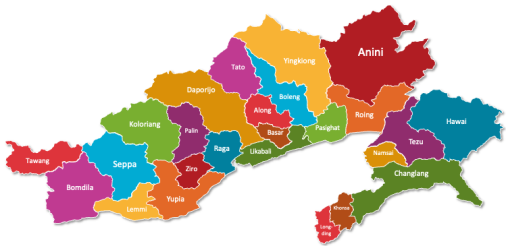
Figure 1. The district map of Arunachal Pradesh.
This study is based on a combination of primary and secondary data sources. The primary data were collected through field visits, structured questionnaires, interviews, and informal discussions with stakeholders directly or indirectly engaged with Jhum cultivation in Arunachal Pradesh. Three detailed interviews have been included in the study, along with relevant photographic documentation gathered during the fieldwork.
The secondary data were drawn from a range of published and unpublished sources, including academic books, peer-reviewed journals, government reports, newspapers, gazetteers, and statistical abstracts related to Arunachal Pradesh. The efforts were made to cross-verify secondary data with primary findings to ensure consistency and validity, wherever possible.
3. An Overview of Arunachal Pradesh
It is a fact that the territory that, through several changes, evolved into Arunachal Pradesh was severely isolated. To be brief, this border region acquired an identity of its own for the first time with a notification issued in 1914 by the Foreign and Political Departments of the Government of British India. The notification extended the Assam Frontier Tracts Regulation, 1880, to the hills. As a result, the North East Frontier Tract (NEFT) came into being. Later, in 1951, the NEFT was renamed the North East Frontier Agency (NEFA). NEFA was subsequently upgraded to a Union Territory and renamed Arunachal Pradesh. The first Assembly election was held in 1978, and full-fledged statehood was granted on 20th February 1987. Let’s know more about it.
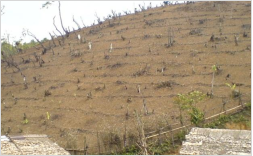
Figure 2. A Jhum field, photo Agriculture Department.
3.1. Climate and Rainfall
The biodiversity of the state has earned it global recognition. Four-fifths of the state is covered by forests, with evergreen and semi-evergreen forests constituting 69% of the geographic area and degraded forests another 13%. Its distinct topography and the unique influence of the monsoon support a diversity of ecosystems, forest types, and wetlands. The southwest monsoon makes Arunachal Pradesh one of the wettest regions in the country, with rainfall reaching as high as 4,500 mm per year in the foothills. The higher altitudes are relatively drier, receiving around 800 mm annually, resulting in an average annual rainfall of about 3,000 mm (Subudhi, 1996)
| [25] | Subudhi, B. (1996): “Education for Sustainable Development: A strategy with Special Reference to Arunachal Pradesh” in Shukla, S. P. and Sharma. N. (ed.), Sustainable Developmental Strategy (Indian Context), Mittal Publications, New Delhi-59. |
[25]
.
Rainfall occurs from the pre-monsoon showers in March through the heavy, incessant downpours of June and July, tapering off in September and October. The foothills become hot and humid, with summer temperatures reaching up to 38 degrees Celsius. The middle or Lesser Himalayan region has a temperate climate, although certain locations remain chilly in spring due to strong winds through deep gorges.
3.2. Economy
The economy of Arunachal Pradesh is mainly based on agriculture and forests. Due to the predominantly rural character of the state’s backward areas, traditional industries also play a significant role, around 3.5 lakh people in the state live below the poverty line. The economy heavily relies on government funds, a significant portion of which comes as grants from the Government of India.
The number of employees, including those in contingent jobs, is disproportionately high, putting pressure on government resources. This observation was noted in the State’s Statistical Report (Statistical Abstract of AP, 2012)
| [16] | Kri, Sokhep (2010): State Gazetteer of Arunachal Pradesh (Vol.-I), State Editor (Gazetteers), Gazetteers Department, Government of Arunachal Pradesh, Itanagar. |
| [31] | Statistical Abstract of Arunachal Pradesh, 2005, Department of Statistics & Economics, Government of Arunachal Pradesh, Itanagar. |
[16, 31]
. The government allocates significant funds to unproductive expenditures and large establishments. However, the state holds immense potential for hydroelectric power generation. With an estimated 58,000 MW of hydropower potential, Arunachal Pradesh possesses nearly 40% of the country’s total capacity.
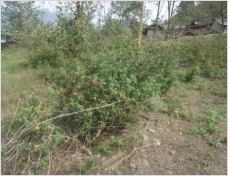
Figure 3. Jhum field under regeneration with Lantela Camera, nitrogen-fixing shrub, 3-year fallow period.
3.3. Livelihood
Natural resources are crucial for sustaining the livelihoods of indigenous communities in the state. Proper planning is essential for the sustainable utilisation of these resources, as regional development depends on resource availability, strategic planning, and community participation (Chaudhari, 2004)
| [8] | Chaudhuri, Sarit Kumar (2004): Constraints of Tribal Development, Mitral Publications, pp. 11-21(quoted - Rai, 1970; Malley, 1965 and Sinha, 1970). |
[8]
.
Unemployment has risen, and the dignity of labour has declined. The concepts of livelihood rights and sustainable development sometimes place society in a dilemma, making it challenging to decide which should take precedence, especially when promoting one could potentially undermine the other.
4. Jhum Cultivation in Arunachal Pradesh: Indigenous Origins and Emerging Alternatives
Arunachal Pradesh, often called the lungs of India, is home to immense biodiversity. It hosts over 20,000 identified species of medicinal plants, many of which remain undocumented. Of these, more than 500 have been officially recorded, with 250 used in Ayurvedic formulations. The broader Himalayan range, where Arunachal is situated, contains more than 80% of the world’s medicinal flora. The state also houses 5,000 flowering plant species, 550 orchid varieties, 91 species of bamboo, and 18 species of cane. The tribals are well aware of the use of these medicinal plants while relying on their indigenous knowledge bank.
The tribal way of life in Arunachal Pradesh is deeply rooted in nature. A. Borang observed that these communities believe in Forest Gods or devils, and out of reverence or fear, they refrain from destroying forests unnecessarily (Borang, 1995) (Borang, 1996)
| [2] | Borang, Asham (1996): “Jhum Fallow and their Rehabilitation Strategies for Arunachal Pradesh” in Shukla, S. P. and Sharma. N. (ed.), Sustainable Developmental Strategy (Indian Context), Mittal Publications, New Delhi - 59. |
| [6] | Borang, A. (1995): “Ecological Status of Capped Langur in Arunachal Pradesh”, Arunachal Forest News, Vol. 13(1 & 2), Itanagar. |
[2, 6]
. Mibang further highlighted how their rites, culture, and traditions are intricately interwoven with the forest, wildlife, and agricultural practices (Mibang, 1994)
| [19] | Mibang, Tamo (1994): Social Change in Arunachal Pradesh, pp. 7-8, Omsons Publications, New Delhi. |
[19]
, (Mibang, 1994)
| [26] | Arunachal Forests, 1993, Department of Environment and Forests, Government of Arunachal Pradesh, Itanagar. |
[26]
. As their lifestyle revolves around the forest, no other community understands or values it as intimately as the tribal population of the region.
Jhum cultivation is not just an economic activity; it is a cultural inheritance. It forms a core part of the ethos and tradition of these communities. Any move toward its abolition must therefore be approached with care and cultural sensitivity. A passionate, gradual reform process must originate from within the community itself. An example of such an internal transition is the establishment of the first commercial tea estate in the state, the Donyi Polo Tea Estate. It helped reduce Jhum practices, improved ecological conditions, and facilitated access to both domestic and international markets.
The Shukla Commission Report 1997, in its examination of development in the Northeast Region, noted that hill farming is predominantly under Jhum. However, the practice has become less productive due to the shrinking Jhum cycle, which has led to erosion and forest degradation in several areas. The report acknowledged that most Jhum resettlement schemes have not succeeded uniformly, and therefore, the practice cannot be ended abruptly. Rather, the issue needs to be addressed with sensitivity, ensuring that transitions are both sustainable and culturally grounded.
5. From Symbiosis to Stress: Ecological Implications of Jhum
Jhum cultivation has been practised in Arunachal Pradesh since time immemorial. It is rooted in a deep symbiotic relationship between tribal communities and the forest. According to estimates, over six lakh tribal families across the Northeast Region, Odisha, Andhra Pradesh, and Himachal Pradesh continue to practice this form of shifting cultivation (Shifting Cultivation, NIRDPR - NERC, 2016)
| [24] | Study Materials, MA Rural Development (2006), Indira Gandhi National Open University (IGNOU), New Delhi. |
| [30] | Shifting Cultivation: Towards Transformation Approach, A Report by NIRDPR -NERC, Guwahati (2016). |
[24, 30]
. However, the practice has long been controversial. The critics point out that Jhum (i) destroys forests and ecosystems, (ii) depletes soil fertility, (iii) causes soil erosion, and (iv) consumes excessive time and labour (Borang, 1996)
| [7] | Borang, A. (1996): “Studies on Certain Ethno-zoological Aspects of Adi Tribes of Siang”, Arunachal Forest News, Vol. 14(1), Itanagar. |
[7]
. The shrinking Jhum cycle has exacerbated these issues, allowing insufficient time for soil and forest regeneration.
Despite this, Borang noted that most tribes prefer to live in hilly regions, considering plains more prone to disease outbreaks. He clarified that Jhum in Arunachal Pradesh is not nomadic but site-bound. Traditionally, Jhum cycles ranged from 8 to 15 years, giving fallow land enough time for natural forest regeneration, thus preserving a sub-tropical ecological balance. Supporting this, Prof. P. S. Ramakrishnan found that a ten-year Jhum cycle is both ecologically and economically viable. Yet, the cumulative impact of Jhum and development activities has led to the disappearance of numerous species of flora and fauna. This loss is increasingly seen as irreversible and threatens ecological sustainability. The region now faces multiple pressures, such as population growth, increasing ethnic diversity, rapid deforestation, reduced viability of shifting cultivation, evolving rural lifestyles, and expanding townships. Arunachalam warned that with the extinction rate reaching two species per day, species conservation is becoming indispensable for human survival (Arunachalam, Khan, 2002)
| [1] | Arunachalam, A., Khan, M. L. and Arunachalam, K. (2002): “Balancing Traditional Jhum cultivation with modern agroforestry in eastern Himalaya - A Biodiversity Hot Spot” in Current Science, Vol 83, No. 2, 25 July 2002, pp. 117 - 118. |
[1]
.
The ecological concern is further amplified by the challenge of climate change. Deforestation is a global crisis, which is partly driven by forest burning for Jhum cultivation. The wildfires, often sparked during forest clearing for Jhum, can easily spiral out of control, engulfing surrounding bamboo groves and elephant grass, contributing to air pollution and global warming. Arunachal Pradesh is particularly vulnerable, with two of India’s 100 most climate-sensitive districts located in the state. In the long term, Jhum disrupts ecosystem equilibrium. It takes nearly 1,000 years to form just one inch of topsoil in nature. Recognising the gravity of this, the Indian Council of Agricultural Research (ICAR) proposed a three-tier hill farming system combining forestry, horticulture, and terrace cultivation, adjusted to altitudinal gradients. These strategies offer ecologically sound alternatives to Jhum.
6. From Subsistence to Sustainability: Economic Pathways Beyond Jhum Cultivation
Forests in Arunachal Pradesh are not merely ecological assets but also potential economic lifelines. They are rich in minor forest products such as herbs, medicinal plants, and edible items. Bamboo, found in abundance at high altitudes, holds considerable promise for developing bamboo-based industries that could support the economic upliftment of Jhum cultivators. Another sustainable avenue is scientific beekeeping or apiculture, which not only improves crop productivity through cross-pollination but also yields high-altitude honey. This honey, valued both domestically and internationally, commands a higher market price than standard varieties. Apiculture offers equal opportunities for both men and women and contributes directly to five of the seventeen Sustainable Development Goals (SDGs).
Despite such prospects, tribal populations continue to face entrenched poverty. Globally, tribal people constitute 15% of the world’s poor, with around 370 million living across 90 countries, making up 5% of the global population. In India, there are 645 recognised tribal communities with a population of 104 million, representing 8.6% of the nation’s population. These communities often operate outside the mainstream economy, depending on subsistence-based livelihoods and experiencing limited development. According to the Census 2011, their progress in terms of Human Development Index (HDI) indicators remains low (Census of India, 2011)
| [11] | Elwin, V. (1957): A Philosophy for NEFA, North East Frontier Agency, Shillong (5th Reprint Edition, 2006, Directorate of Research, Government of Arunachal Pradesh. |
[11]
,
(Census of India, 2011)
| [21] | Office of the Registrar General & Census Commissioner, India (2011): Census of India 2011: Primary Census Abstract, pp. [Insert Page Numbers], Ministry of Home Affairs, New Delhi. |
[21]
.
As history has shown, all societies undergo transitions. New socio-economic realities inevitably emerge. Yet, such transitions mustn't trample upon the ethos, traditions, and cultural identities of indigenous communities. This sensitivity is especially critical for tribal groups. In the context of Jhum cultivation, this means that policy shifts must be careful and calibrated. A hasty dismantling of Jhum could damage the intricate social systems and cultural values that have long been intertwined with this practice. Instead, a gradual introduction of viable alternatives, rooted in local contexts and ecological realities, offers a more just path forward. There is also an urgent need to rehabilitate lands already degraded by shifting cultivation. Encouragingly, the prevalence of Jhum cultivation has already started to decline organically over recent decades.
7. Legal Frameworks and Land Challenges in Jhum Regions
The land conditions in Arunachal Pradesh present serious agricultural challenges. It is geologically young, highly leached, and susceptible to frequent landslides, erosion in the hills, and floods in the foothills. Despite regulatory attempts like the Shifting Cultivation Regulation Act, 1947, and the ban on timber logging, these measures have not yielded tangible improvements in either curbing deforestation or rehabilitating degraded Jhum lands.
Historically, large-scale timber extraction took place until 1995–96, after which the Supreme Court of India halted such activities in its judgment on 12 December 1996 in response to a writ petition (Civil No. 202) filed by T. N. G. Thirumulkpad (Mandal, 2006)
| [18] | Mandal, R. K. (2006): “Constraint of Economic Development in Arunachal Pradesh with Special Reference to Globalisation and Inner Line System”, the Indian Economic Journal, Vol. 54, No. 3. |
[18]
. In recognition of its ecological value, the central government granted Arunachal Pradesh a Green Bonus, considering the Himalayan region as the planet’s lungs.
India’s legal response to environmental degradation has included the Wildlife (Protection) Act of 1972, the Environment (Protection) Act of 1986, and the National Forest Policy of 1988, with earlier efforts incorporated into the Fifth Five-Year Plan (1974–78). At the state level, Arunachal Pradesh’s New Agricultural Policy acknowledged the adverse effects of Jhum cultivation and proposed measures to encourage improved land management and the introduction of agroforestry-based slope cultivation (Agricultural Policy, 2025)
| [27] | Industrial Policy of Arunachal Pradesh, 2008, Department of Industries, Government of Arunachal Pradesh, Itanagar. |
[27]
. The policy outlines a strategy for gradually guiding Jhum farmers towards more sustainable practices while preserving livelihood concerns.
In addressing the issue of land tenure, Mandal offered several policy recommendations to streamline tribal land rights (Mandal, 2009)
| [17] | Mandal, R K (2009): Socio-Economic Transformation of Arunachal Economy, Omsons Publications, New Delhi. |
[17]
:
1) Documentation of customary land laws across tribal communities, followed by the formulation of a uniform land policy;
2) Imposition of ceilings on cultivable land due to scarcity of plains;
3) Redistribution of land to the landless poor;
4) Regulation and monitoring of land sales;
5) Discouragement of sharecropping;
6) Mandatory registration of all land transactions;
7) Restrictions on the sale of agricultural land to non-cultivators;
8) Introduction of a progressive land tax.
These recommendations aim to address both the legal ambiguity and socio-economic precarity associated with land in tribal areas, ensuring that any transition away from Jhum is supported by a stable legal and economic framework.
8. Gender, Labour, and Social Dimensions in Jhum Cultivation
An underlying concern in the practice of Jhum cultivation pertains to the entrenched gender roles and labour hierarchies. Women are valued largely for their roles in both production and reproduction, forming the backbone of this labour-intensive agricultural system. However, this instrumental valuation also reflects the socio-cultural limitations of the Jhum economy. In several tribal communities, such as the Aka, Miji, Nyishi, Adi, and Singpho, historical reliance on bonded labour and multiple wives to sustain Jhum cultivation has been observed. This structure, in effect, tacitly endorses polygamy (Mibang, 1994)
| [9] | Das, Gurudas (1995): Tribes of Arunachal Pradesh in Transition, Vikas Publishing House Pvt. Ltd., New Delhi, pp. 61-73. |
[9]
. On the other hand, among the Galo tribe, labour is sourced from paid local workers rather than from extended familial structures.
It is equally important to note that not all tribes in Arunachal Pradesh follow Jhum cultivation. Communities such as the Monpa, Sherdukpen, Apatani, and Khampti have adopted alternate and more sustainable forms of agriculture (Nanda, 1982)
| [20] | Nanda, N. (1982): Tawang - The Land of Mon, Vikas Publishing House Pvt. Ltd., New Delhi. |
[20]
. These tribes generally practice monogamy and are not tied to the gendered labour dynamics associated with Jhum. The Monpa tribe, for instance, gathers oak (Parmong) leaves, which aid in water retention and compost formation (Gupta, 2005)
| [14] | Gupta, Vishal (2005): Jhum Cultivation Practices of the Nyishis of Arunachal Traditional Knowledge, Vol. 4(1), January 2005, pp. 47-56. |
[14]
. The Apatani tribe’s mountain-based paddy–fish integrated farming system is a prime example of sustainable cultivation, similar to practices found in China, Japan, Indonesia, the Philippines, Vietnam, Malaysia, Thailand, and Myanmar. These alternatives offer promising models of ecological sustainability within the broader tribal context of the state.
The status and empowerment of women play a critical role in the overall well-being of any community. The persistence of polygamy, reinforced through traditional agricultural systems like Jhum, along with prevailing taboos and myths, poses barriers to gender equity. The women continue to be denied equal access to political participation and property rights. Though often overlooked, there is a significant correlation between the structural framework of Jhum cultivation and the ongoing challenges to women’s empowerment in these regions.
9. Data Analysis
According to the Department of Agriculture, Government of Arunachal Pradesh data, 31.6% of GSDP is contributed by agriculture and allied sectors, which is disproportionately low compared to the fact that about 70% of the population is directly or indirectly dependent on the farm sector. The total cultivable area is 2.00 Lakh hectares, under Jhum 1.10 Lakh hectares and 0.90 Lakh hectares under permanent cultivation. The Department claims the right interventions enabled the reduction of the total area under Jhum cultivation from 1,10,000 to 84,000 hectares in the last ten years. The table below gives an idea of the status of Jhum cultivation. (Status of Agriculture in AP, Base Year 1999 - 2000)
| [33] | Status of Agriculture in Arunachal Pradesh (Base Year 1999 - 2000), Department of Agriculture, Government of Arunachal Pradesh, Itanagar. |
[33]
.
Table 1. District-wise, the area under Jhum Cultivation and Treatment Under Watershed Development Project in Shifting Cultivation Areas (WDPSCA).
Sl. No. | District | Jhum area, based on Remote Sensing | Treatment under WDPSCA | % of the area treated |
IXth | Xth | Total |
1 | Tirap | 84804 | 492 | 5500 | 5992 | 7.06 |
2 | Changlang | 25232 | Nil | 1000 | 1000 | 3.96 |
3 | Lohit | 3428 | 1520 | 120 | 1640 | 47.84 |
4 | Dibang Valley | 12130 | Nil | 120 | 120 | 0.99 |
5 | East Siang | 1923 | - | 120 | 120 | 6.24 |
6 | West Siang | 19928 | - | 240 | 240 | 1.20 |
7 | Upper Siang | 7077 | - | 240 | 240 | 3.39 |
8 | Upper Subansiri | 2634 | 1220 | 360 | 1580 | 59.98 |
9 | Lower Subansiri | 35870 | 5345 | 360 | 5705 | 15.90 |
10 | Papum Pare | 27963 | 7166 | 247 | 406 | 24.48 |
11 | East Kameng | 28396 | 669 | 240 | 909 | 3.20 |
12 | West Kameng | 52348 | 2193 | 480 | 2673 | 5.10 |
13 | Tawang | 7075 | 494 | - | 494 | 6.98 |
| Total | 308808 | 19099 | 9020 | 28119 | - |
The up-to-date area under WDPSCA=28,119 Ha, i.e., 9.1% of the total area under shifting cultivation; 13 projects covering 6500 Ha in Tirap and Changlang districts were started during 2006 - 07; Twenty-one projects covering 10,500 Ha spread over all the districts except Tirap and Changlang; Implementation started from 2006-07.
Source: Unpublished Report by the Department of Agriculture, Government of Arunachal Pradesh, 2007.
Table 2 below shows that some progress has been made in shrinking the Jhum cultivation.
Table 2. Shrinking Jhum Cultivation.
Total Area under Jhum (current Jhum & Fallow 2001-02) | 3,08,808 Hectare |
Total Area under Jhum (Net) | 84,002 Hectare |
The percentage area in the Jhum operation currently | 27.2 |
Percentage area left fallow for vegetative regeneration | 72.8 |
Source: Unpublished Report by the Department of Agriculture, Government of Arunachal Pradesh, 2007.
The table below shows the district-wise data.
Table 3. District-wise area (Target) Treated under WDPSCA during XIth Plan.
District | Area treated (Ha) |
Tawang | 500 |
West Kameng | 2,340 |
East Kameng | 1,420 |
Papum Pare | 1,420 |
Lower Subansiri | 960 |
Kurung Kumey | 1,420 |
Upper Subansiri | 1,880 |
West Siang | 1,420 |
Upper Siang | 1,420 |
East Siang | 960 |
Dibang Valley | 500 |
Lower Dibang Valley | 560 |
Lohit | 500 |
Anjaw | 960 |
Changlang | 500 |
Tirap | 500 |
Total | 17,650 |
Source: Unpublished Report by the Department of Agriculture, Government of Arunachal Pradesh, 2007.
Table 4. Rice scenario in Arunachal Pradesh – 2013.
Total area under Rice cultivation | 126500 ha |
Production | 27 MT |
Average Productivity | 21.74 Qtls /ha (23.00 NA) |
Shifting/ Jhum Cultivation | |
Rice under Shifting cultivation | 50000 ha |
Production under Shifting cultivation | 56000 MT |
Productivity under Shifting cultivation | 11.20 QTLs/ha |
Settled Cultivation | |
Rice under Settled cultivation | 76500 Ha |
Production under Settled cultivation | 219000 MT |
Productivity under Settled cultivation | 28.6 Qtls/Ha |
Source: Unpublished Report by the Department of Agriculture, Government of Arunachal Pradesh, 2007.
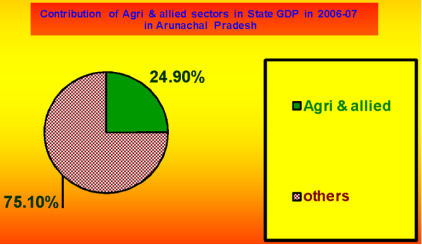
Figure 4. Contribution of Agri & Allied sectors in state GDP in 2006-07 in Arunachal Pradesh.
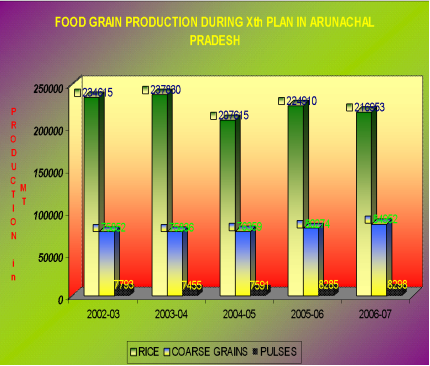
Figure 5. Food Grain production during Xth Plan in Arunachal Pradesh.
Table 5. Salient features of Achievement under WDPSCA during the IXth & Xth Plans.
Total Jhumia families (as in 2001- 02) | 64260 |
Total Jhumia families converted to P/cultivation | 5213 |
Percentage Conversion during the IXth & Xth Plans | 8.1% |
Total Jhum area in operation (2001 - 02) | 84002 Ha. |
Area Treated under WDPSCA (up to Xth Plan) | 28119 Ha |
% Area treated under WDPSCA 33.5% | |
Source: Unpublished Report by the Department of Agriculture, Government of Arunachal Pradesh, 2007.
Table 6. Contribution of Jhum Cultivation towards Total Area & Production in Arunachal Pradesh (Xth Plan).
The area under crops (Total) | 2,60,000 Ha |
The area under Jhum | 84,002 Ha |
Share of current Jhum Land to total crop area | 32.3% |
Total crop production | 4,42,400 MT |
Crop productions under Jhum | 61,000 MT |
Contribution of JHUM to total crop production | 13.8% |
32.3% of the area contributes 13.8% of the state's total crop production. | |
Source: Unpublished Report by the Department of Agriculture, Government of Arunachal Pradesh, 2007.
Table 7. The trend in vegetative regeneration in the Jhum area.
Total Area under Jhum (current Jhum & Fallow 2001- 02) | 3,08,808 Hectare |
Total Area under Jhum (Net) | 84,002 Hectare |
Percentage of area in Jhum operation currently | 27.2% |
Percentage of area left fallow for vegetative Regeneration | 72.8% |
Source: Unpublished Report by the Department of Agriculture, Government of Arunachal Pradesh, 2007.
Table 8. Relevant Details on Agriculture in Arunachal Pradesh in 2007.
No. of Projects | 13 (saturated) |
The target area for treatment | 6500 Ha |
Estimated cost | 650 Lakh |
The area treated up to 2006-07 | 641 Ha. |
Allocation of GOI up to 06-07 | 650 Lakh |
No of Districts covered | 14 |
SHG formed (Women) | 22 Nos. |
SHG formed (Male) | 8 Nos. |
User Group | 24 Nos. |
Composite Nursery established | 13 Nos. |
Soil conservation, terracing, etc. | 1,744 Hectares |
Dry-land horticulture | 645 Hectares |
Agro-forestry | 656 Hectares |
Demonstration on Agri, Horticulture, and Fisheries | 1,027 Nos. |
Source: Unpublished Report by the Department of Agriculture, Government of Arunachal Pradesh, 2007.
Table 9. Relevant Details on Agriculture in Arunachal Pradesh in 2007.
Mushroom cultivation, Horticulture plantation | 207 Nos. |
Household Production System | 800 Nos. |
Rural Household Industry | 234 Nos. |
Goatery & Poultry units | 24 Nos. |
Source: Unpublished Report by the Department of Agriculture, Government of Arunachal Pradesh, 2007.
Table 10. Relevant Details on Agriculture in Arunachal Pradesh in 2007.
Target in terms of No. of Projects | 37 Nos. (includes 21 projects of 2006-07) |
The target area for treatment | 17650 Hectare |
Estimated cost | 1765 Lakh |
Area treated during 2006-07 | 850 Hectare |
Allocation of GOI during 06-07 | 85 Lakh |
Financial requirement during XIth Plan | 1,765 Lakh |
No of Districts covered | 16 |
Source: Unpublished Report by the Department of Agriculture, Government of Arunachal Pradesh, 2007.
10. Ground Realities and Future Pathways: Insights from the Field
Three interview excerpts collected during fieldwork reflect a spectrum of opinion on the issue of Jhum cultivation, ranging from support for its gradual elimination to regulation to continued practice with sustainable alternatives.
Mr A. K. Purkayastha, former Director of Agricultural Marketing, who has been associated with Jhum cultivation for the last four decades, supports the gradual abolition of Jhum. He advocates replacing Jhum with horticultural crops. He noted that rare species of cereals, pulses, oilseeds, and local vegetables of medicinal value are still grown in Jhum areas. According to him, these products have market potential, and there is a need to develop market mechanisms to support this transition. While highlighting the disadvantages of Jhum, he also admitted that its complete elimination may not be practical (Purkayastha, 2008)
| [22] | Purkayastha, A. K. (2008): Arunachal Agriculture over the Years, P. R. Publishers and Printers, Guwahati. |
[22]
.
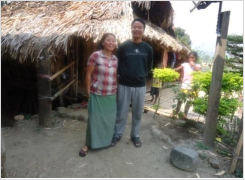
Mr Techi Taura, an agricultural development official in the state government and member of a family of Jhum cultivators, favours the continuation of Jhum but under strict regulation. He pointed out that Jhum cultivation ensures food security for tribal families, who rely on it to grow food for their daily requirements. He strongly believes that a total ban on Jhum cultivation is not feasible. Instead, he recommends a scientific method to restrict its practice, including the repeal of the Jhum Cultivation Regulation Act of 1947 and amendments to the State Land Act. He proposed that only individuals, clans, or communities that can demonstrate hereditary land rights should be allowed to practice Jhum. Others should be restricted from clearing new lands for Jhum. He also stressed empowering Village Heads and local governance bodies to manage and regulate Jhum. Mr Taura highlighted that Jhum farming involves multiple cropping and yields organic produce, although not officially certified. He added that people in the community prefer consuming rice grown on Jhum plots over the government-distributed rice under the public distribution system.
Figure 6. Mr. Techi Taura and his wife in a traditional House.
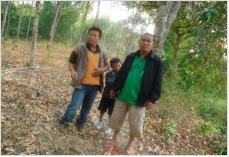
Mr Tadar Jaju, a resident of Arunachal Pradesh working in the Gauhati High Court, also comes from a family of Jhum cultivators. He continues the practice himself. He took the research team to a plot of previously cultivated Jhum land that had been lying fallow for five years and is now used for bamboo cultivation. Mr Jaju defended the relevance of Jhum by linking it to the survival of Mithun (Bos Frontalis), a culturally and economically significant animal for the local people. He owns twelve Mithun valued at around ₹12 lakh and asserted that without Jhum, Mithun would not survive.
Figure 7. Photo taken on 21 March 2015 with Mr Tadar Jaju, an educated Jhum cultivator, along with family members.
The excerpts suggest that while the future of Jhum cultivation is debated, there is an urgent need for strategies that account for the region’s ecological, economic, and cultural complexity. Any intervention must also take into account the climatic vulnerability of the region. The link between poverty and environmental degradation is evident, and efforts to address Jhum cultivation must also consider food security, livelihood provision, and the quality of life of the local communities.
The way forward may involve a combination of strategies to transition towards more sustainable and dignified practices. These include:
1) Motivating and building awareness among Jhum cultivators.
2) Capacity building of farmers and Panchayat leaders.
3) Coordinated action by land-based development agencies.
4) Application of Indigenous Traditional Knowledge in land-use practices.
5) Technological research and dedicated R&D projects for localised agro-ecological solutions.
6) Plantation of fast-growing vegetation/tree species on Jhum fallow lands (e.g., Lantana camera, China weeds).
7) Mass cultivation of fruit-bearing plants, oilseeds, and timber species.
8) Increasing the Jhum cycle through scientific means.
9) Promoting rainwater harvesting for irrigation purposes.
10) Facilitating niche markets for organic Jhum produce.
11) Developing marketing strategies, including proper packaging for Jhum products.
12) Soil and water conservation and integrated nutrient management.
13) Vegetative conservation to reduce soil run-off.
14) Growing protective and productive crops in Jhum areas.
These insights underline the importance of addressing Jhum cultivation through a participatory and inclusive approach that is rooted in local realities (Purkayastha, 2008)
| [22] | Purkayastha, A. K. (2008): Arunachal Agriculture over the Years, P. R. Publishers and Printers, Guwahati. |
[22]
, (Purkayastha, 2012)
| [23] | Purkayastha, A. K. (2012): Unpretentious Endeavour, P. R. Publishers and Printers, Guwahati. |
[23]
.
11. Conclusion
The question of replacing or reforming Jhum cultivation in Arunachal Pradesh cannot be addressed in isolation. It requires a careful, participatory, and phased approach that respects the cultural ethos and livelihood rights of the tribal communities. The banning of Jhum cultivation outrightly, without proper alternatives or community involvement, risks alienating those whose lives are deeply rooted in this practice. Therefore, the state must take a realistic initiative to offer viable options that emerge from within the community and are acceptable to the cultivators themselves.
The Government of Arunachal Pradesh has outlined its broader vision through the New Agriculture Policy. This policy includes key initiatives such as the Kiwi Mission, the Spice Mission, and the Medicinal and Aromatic Plants Mission. The horticulture sector is positioned as a major alternative to shifting cultivation, with efforts focused on increasing productivity, promoting climate-resilient practices, discouraging excessive chemical use, and improving irrigation and water conservation. These efforts also include the conversion of Jhum areas into permanent terraced farming and the promotion of organic cultivation of high-value crops like turmeric, ginger, cardamom, black pepper, and medicinal herbs (New Agricultural Policy, 2025)
.
Crop diversification and mechanised farming are being encouraged alongside goals of rural development and eco-tourism. However, awareness campaigns need to be strengthened, particularly in the local dialects, to disseminate scientific knowledge about the ecological consequences of Jhum cultivation. Additionally, large-scale regeneration of degraded Jhum land must be undertaken to improve soil health and biodiversity.
Field interactions reflect a mixed response to the transition away from Jhum. Farmers like Ms Nargis Kipa of Kra Daadi district have shifted to large cardamom cultivation, which offers a profitable alternative. However, she points out the unintended consequence of deforestation caused by the expansion of cardamom farming. On the other hand, successful examples such as kiwi fruit farming by Ms Rita Tage of the Apatani tribe and the Monpa farmers in Dirang offer sustainable models that do not rely on Jhum and maintain ecological balance.
These stories highlight that sustainable farming is possible when indigenous knowledge is combined with new opportunities. The state can upscale its economy through organic agriculture without compromising ecological integrity. At the same time, the unique topography and biodiversity of Arunachal Pradesh must be preserved with great care.
In this context, honouring Indigenous Knowledge Systems and Practices (IKSP) becomes critical. Rather than viewing Jhum only as a problem to be solved, it should also be examined as a knowledge system that may hold the key to more sustainable land-use practices. The scientific research should focus on innovating Jhum itself, perhaps evolving it into a more regenerative or modified agroforestry model. Simultaneously, there is an urgent need to document indigenous knowledge before it fades, ensuring that any intervention builds on, rather than erases, the community’s wisdom and heritage.
Abbreviations
GOI | Government of India |
HDI | Human Development Index |
ICAR | Indian Council of Agricultural Research |
NEFA | North East Frontier Agency |
NEFT | North East Frontier Tract |
MW | Mega Watt |
SDG | Sustainable Development Goals |
Conflicts of Interest
The authors declare that there is no conflicts on interest.
References
| [1] |
Arunachalam, A., Khan, M. L. and Arunachalam, K. (2002): “Balancing Traditional Jhum cultivation with modern agroforestry in eastern Himalaya - A Biodiversity Hot Spot” in Current Science, Vol 83, No. 2, 25 July 2002, pp. 117 - 118.
|
| [2] |
Borang, Asham (1996): “Jhum Fallow and their Rehabilitation Strategies for Arunachal Pradesh” in Shukla, S. P. and Sharma. N. (ed.), Sustainable Developmental Strategy (Indian Context), Mittal Publications, New Delhi - 59.
|
| [3] |
Borthakur, D. N. (1979): “Agro-Forestry Based Farming System as Alternative to Jhuming (Rept.), Seminar on Agro-Forestry, May 16 to 17, 1979, in Imphal, ICAR, New Delhi.
|
| [4] |
Bhattacharya, R. P. (2008): “Poverty Level in Arunachal Pradesh- a Brief Study” presented in a seminar organised by the Department of Rural Development, Government of Arunachal Pradesh in Itanagar.
|
| [5] |
Bhattacharjee, R. P. (2001): Economic Development of Arunachal Pradesh, Himalayan Publishers, Itanagar. pp. 1-16.
|
| [6] |
Borang, A. (1995): “Ecological Status of Capped Langur in Arunachal Pradesh”, Arunachal Forest News, Vol. 13(1 & 2), Itanagar.
|
| [7] |
Borang, A. (1996): “Studies on Certain Ethno-zoological Aspects of Adi Tribes of Siang”, Arunachal Forest News, Vol. 14(1), Itanagar.
|
| [8] |
Chaudhuri, Sarit Kumar (2004): Constraints of Tribal Development, Mitral Publications, pp. 11-21(quoted - Rai, 1970; Malley, 1965 and Sinha, 1970).
|
| [9] |
Das, Gurudas (1995): Tribes of Arunachal Pradesh in Transition, Vikas Publishing House Pvt. Ltd., New Delhi, pp. 61-73.
|
| [10] |
Deb, S. (2009): Problems and Prospects of Khadi & Village Industries: A Case Study in the District of Papumpare, Arunachal Pradesh, unpublished MARD Dissertation under IGNOU, New Delhi.
|
| [11] |
Elwin, V. (1957): A Philosophy for NEFA, North East Frontier Agency, Shillong (5th Reprint Edition, 2006, Directorate of Research, Government of Arunachal Pradesh.
|
| [12] |
Elwin, V. (1959): A Philosophy for NEFA, North East Frontier Agency, (2nd Revised Edition), Shillong, Meghalaya.
|
| [13] |
Elwin, V. (1970): A New Book of Tribal Fiction, Directorate of Research, Government of Arunachal Pradesh, Itanagar (reprinted 1991).
|
| [14] |
Gupta, Vishal (2005): Jhum Cultivation Practices of the Nyishis of Arunachal Traditional Knowledge, Vol. 4(1), January 2005, pp. 47-56.
|
| [15] |
Joram, Begi (2008): “Education Scenario in Arunachal Pradesh”, Arunachal Review, Directorate of Information and Public Relations, Government of Arunachal Pradesh, Vol. X, (2), June - August, 2008, Itanagar.
|
| [16] |
Kri, Sokhep (2010): State Gazetteer of Arunachal Pradesh (Vol.-I), State Editor (Gazetteers), Gazetteers Department, Government of Arunachal Pradesh, Itanagar.
|
| [17] |
Mandal, R K (2009): Socio-Economic Transformation of Arunachal Economy, Omsons Publications, New Delhi.
|
| [18] |
Mandal, R. K. (2006): “Constraint of Economic Development in Arunachal Pradesh with Special Reference to Globalisation and Inner Line System”, the Indian Economic Journal, Vol. 54, No. 3.
|
| [19] |
Mibang, Tamo (1994): Social Change in Arunachal Pradesh, pp. 7-8, Omsons Publications, New Delhi.
|
| [20] |
Nanda, N. (1982): Tawang - The Land of Mon, Vikas Publishing House Pvt. Ltd., New Delhi.
|
| [21] |
Office of the Registrar General & Census Commissioner, India (2011): Census of India 2011: Primary Census Abstract, pp. [Insert Page Numbers], Ministry of Home Affairs, New Delhi.
|
| [22] |
Purkayastha, A. K. (2008): Arunachal Agriculture over the Years, P. R. Publishers and Printers, Guwahati.
|
| [23] |
Purkayastha, A. K. (2012): Unpretentious Endeavour, P. R. Publishers and Printers, Guwahati.
|
| [24] |
Study Materials, MA Rural Development (2006), Indira Gandhi National Open University (IGNOU), New Delhi.
|
| [25] |
Subudhi, B. (1996): “Education for Sustainable Development: A strategy with Special Reference to Arunachal Pradesh” in Shukla, S. P. and Sharma. N. (ed.), Sustainable Developmental Strategy (Indian Context), Mittal Publications, New Delhi-59.
|
| [26] |
Arunachal Forests, 1993, Department of Environment and Forests, Government of Arunachal Pradesh, Itanagar.
|
| [27] |
Industrial Policy of Arunachal Pradesh, 2008, Department of Industries, Government of Arunachal Pradesh, Itanagar.
|
| [28] |
New Agricultural Policy, 2001, Department of Agriculture, Government of Arunachal Pradesh, Itanagar.
|
| [29] |
New Agricultural Policy, 2025, Department of Agriculture, Government of Arunachal Pradesh, Itanagar.
https://arunachalipr.gov.in/index.php/new-agriculture-policy-2025-30/
|
| [30] |
Shifting Cultivation: Towards Transformation Approach, A Report by NIRDPR -NERC, Guwahati (2016).
|
| [31] |
Statistical Abstract of Arunachal Pradesh, 2005, Department of Statistics & Economics, Government of Arunachal Pradesh, Itanagar.
|
| [32] |
Statistical Abstract of Arunachal Pradesh, 2012, Department of Statistics & Economics, Government of Arunachal Pradesh, Itanagar.
|
| [33] |
Status of Agriculture in Arunachal Pradesh (Base Year 1999 - 2000), Department of Agriculture, Government of Arunachal Pradesh, Itanagar.
|
Cite This Article
-
APA Style
Deb, S., Kumar, P. (2026). The Paradox of Jhum Cultivation in Arunachal Pradesh:
A Contestation Between Livelihood Rights and Sustainable Development. Science Discovery Agriculture, 1(2), 117-128. https://doi.org/10.11648/j.sda.20260102.17
 Copy
|
Copy
|
 Download
ACS Style
Deb, S.; Kumar, P. The Paradox of Jhum Cultivation in Arunachal Pradesh:
A Contestation Between Livelihood Rights and Sustainable Development. Sci. Discov. Agric. 2026, 1(2), 117-128. doi: 10.11648/j.sda.20260102.17
Copy
|
Download
AMA Style
Deb S, Kumar P. The Paradox of Jhum Cultivation in Arunachal Pradesh:
A Contestation Between Livelihood Rights and Sustainable Development. Sci Discov Agric. 2026;1(2):117-128. doi: 10.11648/j.sda.20260102.17
Copy
|
Download
-
@article{10.11648/j.sda.20260102.17,
  author = {Sukamal Deb and Puneet Kumar},
  title = {The Paradox of Jhum Cultivation in Arunachal Pradesh:
A Contestation Between Livelihood Rights and Sustainable Development},
  journal = {Science Discovery Agriculture},
  volume = {1},
  number = {2},
  pages = {117-128},
  doi = {10.11648/j.sda.20260102.17},
  url = {https://doi.org/10.11648/j.sda.20260102.17},
  eprint = {https://article.sciencepublishinggroup.com/pdf/10.11648.j.sda.20260102.17},
  abstract = {Jhum cultivation is an indigenous agricultural practice followed by some tribal communities in Arunachal Pradesh. It involves burning trees and vegetation to clear plots of land for growing crops. This form of cultivation is closely linked with the traditions, customs, and knowledge systems of the communities that practise it. The present study aims to examine the practice of Jhum cultivation in Arunachal Pradesh, drawing attention to the indigenous knowledge and traditional farming methods associated with it. The paper also addresses the conflict between preserving cultural ethos and confronting the growing ecological unsustainability of Jhum cultivation within current environmental and development policy frameworks. These issues are at the heart of the current socio-economic dynamics in the tribal polluted areas, hence they are important to be acknowledged and resolved for devising effective policies that support sustainable life forms and dignified livelihoods. While the focus area is Arunachal Pradesh, references from other Northeastern states where Jhum is practised have also been included. An attempt is made to understand how Jhum cultivators can be encouraged to shift towards other sustainable practices without compromising their livelihood rights. The paper stresses the need for a realistic and community-based approach in addressing the issue of Jhum cultivation. This paper contributes to proposing the alternative paradigm of leading development through the inclusive participation of the indigenous communities in India.},
 year = {2026}
}
Copy
|
Download
-
TY  - JOUR
T1  - The Paradox of Jhum Cultivation in Arunachal Pradesh:
A Contestation Between Livelihood Rights and Sustainable Development
AU  - Sukamal Deb
AU  - Puneet Kumar
Y1  - 2026/04/29
PY  - 2026
N1  - https://doi.org/10.11648/j.sda.20260102.17
DO  - 10.11648/j.sda.20260102.17
T2  - Science Discovery Agriculture
JF  - Science Discovery Agriculture
JO  - Science Discovery Agriculture
SP  - 117
EP  - 128
PB  - Science Publishing Group
UR  - https://doi.org/10.11648/j.sda.20260102.17
AB  - Jhum cultivation is an indigenous agricultural practice followed by some tribal communities in Arunachal Pradesh. It involves burning trees and vegetation to clear plots of land for growing crops. This form of cultivation is closely linked with the traditions, customs, and knowledge systems of the communities that practise it. The present study aims to examine the practice of Jhum cultivation in Arunachal Pradesh, drawing attention to the indigenous knowledge and traditional farming methods associated with it. The paper also addresses the conflict between preserving cultural ethos and confronting the growing ecological unsustainability of Jhum cultivation within current environmental and development policy frameworks. These issues are at the heart of the current socio-economic dynamics in the tribal polluted areas, hence they are important to be acknowledged and resolved for devising effective policies that support sustainable life forms and dignified livelihoods. While the focus area is Arunachal Pradesh, references from other Northeastern states where Jhum is practised have also been included. An attempt is made to understand how Jhum cultivators can be encouraged to shift towards other sustainable practices without compromising their livelihood rights. The paper stresses the need for a realistic and community-based approach in addressing the issue of Jhum cultivation. This paper contributes to proposing the alternative paradigm of leading development through the inclusive participation of the indigenous communities in India.
VL  - 1
IS  - 2
ER  -
Copy
|
Download





 Share This Article
 Twitter
 Linked In
 Facebook