Abstract
The Kenticha pegmatite field, located within the Neoproterozoic Adola Belt of Southern Ethiopia, represents one of the most significant rare-element mineral provinces in the East African Orogeny. Tantalum was exploited from weathered regolith before and also produced the huge reserves of feldspar, quartz and lithium from underlying hard-rock bodies. This study presents the geology properties and evaluating economic potential of five major veins (No. 1-5) through a multi-disciplinary approach including field geological mapping, core logging, and geochemical characterization. Major and trace element concentrations were determined using X-ray Fluorescence (XRF) and Inductively Coupled Plasma Mass Spectrometry (ICP-MS), while mineralization phases were defined by X-ray Diffraction (XRD). Geochemical analysis demonstrates that the pegmatites are classified as the Lithium-Cesium-Tantalum (LCT) family and the spodumene subtype, and characterized by extreme magmatic fractionation. Fractionation indices, notably the K/Rb ratio, exhibit a systematic decline from approximately 36 in the granitic wall zones to 19–20 in the highly evolved spodumene-rich upper intermediate zones. Quantitative assessments of industrial mineral quality reveal SiO2 averages of 67.3% and Al2O3 contents of 17.2%, with subsurface Fe2O3 levels consistently below 0.1%. These values comply with ISO 13006 Group BIa standards for the international glass and porcelain industries. Economic reserve estimations, calculated based on the 1:5000 geological map and strike tracing, assumption 2.7 million tons of high-grade feldspar and 7.2 million tons of quartz. Additionally, the discovery of 87.7 million tonnes of lithium ore at 0.78% Li2O underscores the deposit's strategic importance. The report concludes with recommendations for an integrated multi-mineral extraction strategy to drive Ethiopia’s industrialization and green energy supply chain.
|
Published in
|
Science Discovery Environment (Volume 1, Issue 2)
|
|
DOI
|
10.11648/j.sdenv.20260102.12
|
|
Page(s)
|
132-141 |
|
Creative Commons
|

This is an Open Access article, distributed under the terms of the Creative Commons Attribution 4.0 International License (http://creativecommons.org/licenses/by/4.0/), which permits unrestricted use, distribution and reproduction in any medium or format, provided the original work is properly cited.
|
|
Copyright
|
Copyright © The Author(s), 2026. Published by Science Publishing Group
|
Keywords
Kenticha Serpentinite, Pegmatite, Industrial Minerals, Geochemical Fractionation, Feldspar, Quartz
1. Introduction
The Precambrian basement of Ethiopia constitutes a pivotal geological segment of the East African Orogen (EAO), a vast tectonic network recording the complex assembly of the Gondwana supercontinent during the Neoproterozoic era. Within this structural framework, the Adola Belt of southern Ethiopia serves as a critical lithostructural domain, characterized by the juxtaposition of high-grade gneissic terranes and lower-grade volcano-sedimentary ophiolitic sequences
| [1] | Mohammedyasin, M. S. (2017). Geology, Geochemistry and Geochronology of the Kenticha Rare Metal Granite Pegmatite, Adola Belt, Southern Ethiopia: A Review. International Journal of Geosciences, 8(1), 12-33.
https://doi.org/10.4236/ijg.2017.81004 |
[1]
. The tectonic architecture of the belt is the result of multiple magmatic and tectonic episodes spanning from approximately 890 Ma to 500 Ma, reflecting the closure of the Mozambique Ocean and the subsequent collision between East and West Gondwana
| [2] | Tadesse, S. (2018). Physicochemical characterization and green extraction of niobium and tantalum for Ethiopian Kenticha ores. Material Science & Engineering International Journal, 2(2), 34–40. |
[2]
.
The Kenticha serpentinite massif, a large ultramafic body striking northeast-southwest, represents a distinctive feature within the Kenticha ophiolitic fold and thrust belt. This massif is the primary host for the Kenticha pegmatite field, a world-class repository of rare-element mineralization
| [3] | Carvalho, F. P., Tufa, M. B., et al. (2021). Radionuclides and Radiation Exposure in Tantalite Mining, Ethiopia. Archives of Environmental Contamination and Toxicology, 81(4), 648–659.
https://doi.org/10.1007/s00244-021-00858-8 |
[3]
. The evolution of these pegmatite bodies is intrinsically linked to the terminal stages of the Pan-African orogenic cycle, specifically the transition from compressional, subduction-related tectonics to post-collisional magmatic relaxation
| [2] | Tadesse, S. (2018). Physicochemical characterization and green extraction of niobium and tantalum for Ethiopian Kenticha ores. Material Science & Engineering International Journal, 2(2), 34–40. |
[2]
. Pegmatites, particularly those of the Lithium-Cesium-Tantalum (LCT) family, form through extreme fractional crystallization of peraluminous granitic melts, often in post-collisional tectonic settings. They are globally significant sources of rare metals (Li, Ta, Nb, Cs) and industrial minerals (feldspar, quartz, mica). In Africa, notable LCT pegmatite provinces include the Karagwe-Ankole Belt (Central Africa) and the Damara Belt (Namibia). The Kenticha pegmatites share genetic affinities with these systems, characterized by high degrees of geochemical specialization, internal zonation, and enrichment in incompatible elements. Recent studies highlight the growing importance of pegmatite-hosted lithium for green energy technologies, underscoring the relevance of this research to critical mineral supply chains Precise geochronological data, obtained through U-Pb dating of tantalite and columbite crystals, places the emplacement of the Kenticha pegmatite at 530.2 ± 1.3 Ma, making it coeval with other regional post-orogenic granitic magmatism
| [3] | Carvalho, F. P., Tufa, M. B., et al. (2021). Radionuclides and Radiation Exposure in Tantalite Mining, Ethiopia. Archives of Environmental Contamination and Toxicology, 81(4), 648–659.
https://doi.org/10.1007/s00244-021-00858-8 |
| [4] | Geological Survey of Ethiopia. (2014). Hawassa subsheet 0738_C4. Accessed January 8, 2026. |
[3, 4]
.
Historically, the economic focus at Kenticha was confined to the tantalum potential found in the deeply weathered regolith. From 1990 to 2017, the Kenticha mine produced between 90 and 120 tons of tantalum concentrate annually, which at its peak represented approximately 14% of the global supply
| [1] | Mohammedyasin, M. S. (2017). Geology, Geochemistry and Geochronology of the Kenticha Rare Metal Granite Pegmatite, Adola Belt, Southern Ethiopia: A Review. International Journal of Geosciences, 8(1), 12-33.
https://doi.org/10.4236/ijg.2017.81004 |
[1]
. However, the global shift toward green technology and high-precision manufacturing has necessitated a re-evaluation of the hard-rock potential of the massif. The pegmatites contain not only strategic lithium in the form of spodumene but also massive quantities of industrial-grade feldspar and quartz
| [2] | Tadesse, S. (2018). Physicochemical characterization and green extraction of niobium and tantalum for Ethiopian Kenticha ores. Material Science & Engineering International Journal, 2(2), 34–40. |
[2]
.
The industrial value of these minerals is defined by their chemical purity. High-quality feldspar and quartz are essential for the production of clear glass, porcelain tiles, and specialized ceramics. For instance, the ceramic industry requires feldspar as a fluxing agent to lower the melting point of silica, while the glass industry demands exceptionally low iron content (Fe
2O
3 < 0.1%) to ensure optical clarity. Preliminary data suggests that the Kenticha deposits meet these stringent international standards, yet they remain largely untapped for domestic industrial use
| [1] | Mohammedyasin, M. S. (2017). Geology, Geochemistry and Geochronology of the Kenticha Rare Metal Granite Pegmatite, Adola Belt, Southern Ethiopia: A Review. International Journal of Geosciences, 8(1), 12-33.
https://doi.org/10.4236/ijg.2017.81004 |
| [2] | Tadesse, S. (2018). Physicochemical characterization and green extraction of niobium and tantalum for Ethiopian Kenticha ores. Material Science & Engineering International Journal, 2(2), 34–40. |
[1, 2]
.
This report provides an exhaustive multidisciplinary evaluation of the Kenticha pegmatites. It synthesizes lithostructural mapping, whole-rock geochemistry, and mineral processing data to define the petrogenesis and economic potential of the field. By moving beyond the traditional focus on tantalum, this analysis highlights a strategic path for Ethiopia to leverage its mineral wealth for regional industrialization and participation in the global critical minerals market
| [1] | Mohammedyasin, M. S. (2017). Geology, Geochemistry and Geochronology of the Kenticha Rare Metal Granite Pegmatite, Adola Belt, Southern Ethiopia: A Review. International Journal of Geosciences, 8(1), 12-33.
https://doi.org/10.4236/ijg.2017.81004 |
| [2] | Tadesse, S. (2018). Physicochemical characterization and green extraction of niobium and tantalum for Ethiopian Kenticha ores. Material Science & Engineering International Journal, 2(2), 34–40. |
| [3] | Carvalho, F. P., Tufa, M. B., et al. (2021). Radionuclides and Radiation Exposure in Tantalite Mining, Ethiopia. Archives of Environmental Contamination and Toxicology, 81(4), 648–659.
https://doi.org/10.1007/s00244-021-00858-8 |
[1-3]
.
2. Geological Framework
Regional Tectonic and Lithostructural Setting
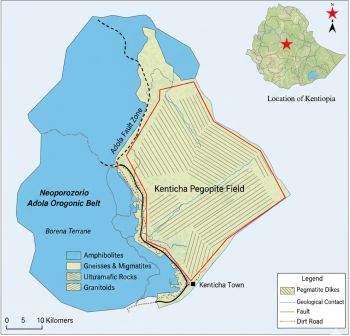
Figure 1. Location map of Kenticha pegmatite field.
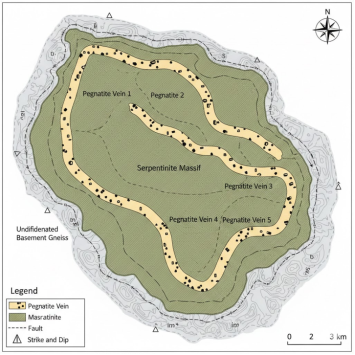
Figure 2. Geological map of the Kenticha pegmatite field showing the five major veins and host serpentinite massif.
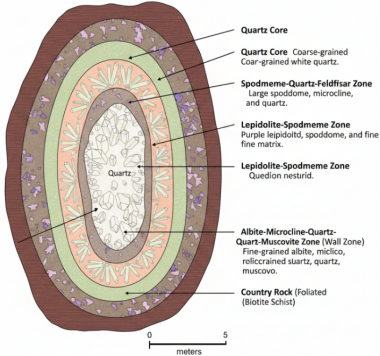
Figure 3. Schematic cross-section illustrating the internal zonation of a typical Kenticha pegmatite vein.
The Kenticha pegmatite field is situated within the Adola Belt of the Southern Ethiopian Shield, a region that records the Neoproterozoic closure of the Mozambique Ocean through a complete Wilson Cycle. The belt's architecture consists of north-south trending lithotectonic units divided into two primary terranes: the high-grade Granite-Gneiss Complexes (GGC), representing deep-seated basement rocks, and the lower-grade Ophiolitic Fold and Thrust Belts (OFTB), which host the rare-metal deposits. The Kenticha serpentinite massif acts as a transitional feature between these terranes, forming a 7 km long and 1 km wide ridge enclosed by a metasomatic zone of tremolite and talc schists. The Kenticha pegmatite field is characterized by five major pegmatite veins hosted within a serpentinite massif. These veins show a distinct spatial distribution and structural control related to the host ultramafic lithology. The geological setting reflects the strong influence of serpentinite emplacement on pegmatite localization
| [5] | Mekonen, G., Sisay, M., et al. (2025). Mineralogical Analysis and Beneficiation Assessment to Unlock the Lithium Potential in Kenticha Pegmatite Ore. Journal of Sustainable Mining, 24(1). https://doi.org/10.46873/2300-3960.1440 |
[5]
.
The figure illustrates the internal zonation of a pegmatite, a coarse-grained igneous body characterized by distinct mineral layers that formed as the magma cooled from the outside in. Surrounding the pegmatite is the Country Rock, specifically a foliated biotite schist, which acts as the host environment. Moving inward, the first layer is the Wall Zone, a fine-grained mixture of albite, microcline, and muscovite. Following this are intermediate zones rich in lithium-bearing minerals, such as the Spodumene-Quartz-Feldspar Zone and the Lepidolite-Spodumene Zone, where large crystals often grow perpendicular to the walls. Finally, the center of the structure is occupied by the Quartz Core, representing the final stage of crystallization where the remaining silica-rich fluids solidified into massive, coarse-grained white quartz.
3. Materials and Methods
3.1. Regional Mapping and Sample Procurement
The characterization of the Kenticha pegmatite field was predicated on high-resolution geological mapping and systematic sampling protocols. Regional mapping at a scale of 1:5000 was conducted to define the strike, dip, and morphology of five major pegmatite veins (Veins No. 1-5) located within the Kenticha serpentinite massif
| [1] | Mohammedyasin, M. S. (2017). Geology, Geochemistry and Geochronology of the Kenticha Rare Metal Granite Pegmatite, Adola Belt, Southern Ethiopia: A Review. International Journal of Geosciences, 8(1), 12-33.
https://doi.org/10.4236/ijg.2017.81004 |
[1]
. Field observations were supplemented by digital elevation models (DEM) and satellite imagery to delineate tectonic linear structures and lithological contacts
| [4] | Geological Survey of Ethiopia. (2014). Hawassa subsheet 0738_C4. Accessed January 8, 2026. |
[4]
.
Sampling was conducted using a systematic grid to ensure representative coverage of the internally zoned pegmatite bodies. At each sampling node, 1 kg grab samples were collected using specialized stainless steel tools to minimize contamination
| [5] | Mekonen, G., Sisay, M., et al. (2025). Mineralogical Analysis and Beneficiation Assessment to Unlock the Lithium Potential in Kenticha Pegmatite Ore. Journal of Sustainable Mining, 24(1). https://doi.org/10.46873/2300-3960.1440 |
[5]
. A primary challenge in evaluating industrial minerals is the influence of surface weathering on iron content. To address this, a series of trenches were excavated to a depth of 2 meters, allowing for the collection of pristine subsurface samples
| [2] | Tadesse, S. (2018). Physicochemical characterization and green extraction of niobium and tantalum for Ethiopian Kenticha ores. Material Science & Engineering International Journal, 2(2), 34–40. |
[2]
. For the whole-rock geochemical evaluation, twelve specific samples were selected from the feldspathic and spodumene-rich zones of Veins No. 3 and No. 5.
3.2. Petrographic and Mineralogical Characterization
The mineralogical composition and textures of the serpentinite host rocks and the intrusive pegmatites were determined through petrographic examination. Thin and polished sections were analyzed using transmitted and reflected light microscopy (LEICA DM2700P) to identify mineral assemblages, grain size distributions, and paragenetic sequences
| [1] | Mohammedyasin, M. S. (2017). Geology, Geochemistry and Geochronology of the Kenticha Rare Metal Granite Pegmatite, Adola Belt, Southern Ethiopia: A Review. International Journal of Geosciences, 8(1), 12-33.
https://doi.org/10.4236/ijg.2017.81004 |
[1]
. Crystalline phase identification for complex rare-metal units was performed via X-ray diffraction (XRD) using a Cu Kα radiation source operated at 40 kV and 30 mA
| [5] | Mekonen, G., Sisay, M., et al. (2025). Mineralogical Analysis and Beneficiation Assessment to Unlock the Lithium Potential in Kenticha Pegmatite Ore. Journal of Sustainable Mining, 24(1). https://doi.org/10.46873/2300-3960.1440 |
[5]
.
3.3. Geochemical Analysis and Fractionation Indices
Whole-rock geochemical analysis focused on major oxide and trace element quantification. Major oxides (SiO
2, Al
2O
3, K
2O, Na
2O, Fe
2O
3, MgO, CaO, TiO
2, P
2O
5) were determined using Atomic Absorption Spectroscopy (AAS) and X-ray Fluorescence (XRF)
| [5] | Mekonen, G., Sisay, M., et al. (2025). Mineralogical Analysis and Beneficiation Assessment to Unlock the Lithium Potential in Kenticha Pegmatite Ore. Journal of Sustainable Mining, 24(1). https://doi.org/10.46873/2300-3960.1440 |
[5]
. To ensure precision, fused glass disks were used for XRF, with analytical uncertainties maintained within ±2% for oxides > 0.5 wt.%
| [6] | U.S. Securities and Exchange Commission. (2018). Exhibit 99.1. Retrieved January 10, 2026, |
[6]
. Trace element and rare-earth element (REE) concentrations were analyzed using Inductively Coupled Plasma Mass Spectrometry (ICP-MS) following acid digestion (HF + HNO
3)
| [7] | Pathak, D., et al. (2022). Geological, Mineralogical and Geochemical Study of the Aquamarine-Bearing Yamrang Pegmatite, Eastern Nepal with Implications for Exploration Targeting. Minerals, 12(5), 564. https://doi.org/10.3390/min12050564 |
[7]
.
Magmatic fractionation trends were evaluated using established elemental indices, specifically K/Rb, K/Cs, Al/Ga, and Zr/Hf. These ratios provide a quantitative measure of the degree of magmatic specialization and are essential for classifying LCT pegmatite systems. Statistical validation of the geochemical data included the calculation of relative standard deviation (RSD), which indicated higher variability in Na
2O (38.7%) compared to other major oxides, reflecting the heterogeneity of the albitized zones
| [8] | Meseret, Getahun; Kebede, Bisrat; and Digafe, Belayneh (2025) "Determination of the liberation size of Mekaneselam Iron Ore in the Southern Wollo Zone, Northern Ethiopia: implications for beneficiation," Journal of Sustainable Mining: Vol. 24: Iss. 1, Article 4. https://doi.org/10.46873/2300-3960.1438 |
[8]
.
3.4. Commination and Beneficiation Testing
The processability of the hard-rock pegmatite was assessed through a series of commination tests conducted at the laboratory of Addis Ababa Institute of Technology. The Bond Work Index (BWI) was determined using a laboratory ball mill with granite as a reference material
| [8] | Meseret, Getahun; Kebede, Bisrat; and Digafe, Belayneh (2025) "Determination of the liberation size of Mekaneselam Iron Ore in the Southern Wollo Zone, Northern Ethiopia: implications for beneficiation," Journal of Sustainable Mining: Vol. 24: Iss. 1, Article 4. https://doi.org/10.46873/2300-3960.1438 |
[8]
. Feed and discharge sizes were optimized using the Gaudian-Schumann formula to target an 80% passing rate
| [9] | MedCrave. (2018). Green extraction of niobium and tantalum for Ethiopian Kenticha ores by hydrometallurgy process: A review. Material Science & Engineering International Journal. |
[9]
.
The liberation size of iron-bearing minerals and spodumene was identified through sieve analysis and size-wise chemical compositional analysis using AAS
| [10] | Contreiras, M., et al. (2019). Sintering Behavior and Technological Properties of Low-Temperature Porcelain Tiles Prepared Using a Lithium Ore and Silica Crucible Waste. Minerals, 9(12), 731. https://doi.org/10.3390/min9120731 |
[10]
. Grain size distribution parameters, including D
50, D
75, and D
100, were calculated to define the optimal grinding circuit for mineral recovery
| [5] | Mekonen, G., Sisay, M., et al. (2025). Mineralogical Analysis and Beneficiation Assessment to Unlock the Lithium Potential in Kenticha Pegmatite Ore. Journal of Sustainable Mining, 24(1). https://doi.org/10.46873/2300-3960.1440 |
[5]
.
3.5. Reserve Calculation Methodology
Economic reserve estimates for industrial minerals were calculated based on the 1:5000 geological map and strike tracing of the identified veins. Reserve depth was assumed to be 1/4 of the surface strike length, a conservative standard for early-stage exploration. Volume calculations were converted to tonnage using a bulk density of 2.6 g/cm
3 | [1] | Mohammedyasin, M. S. (2017). Geology, Geochemistry and Geochronology of the Kenticha Rare Metal Granite Pegmatite, Adola Belt, Southern Ethiopia: A Review. International Journal of Geosciences, 8(1), 12-33.
https://doi.org/10.4236/ijg.2017.81004 |
[1]
. The net mineral content (e.g., net feldspar or quartz) was determined by multiplying the total ore volume by the modal mineral abundance percentage observed in field exposures and drill cores. The total tonnage and net mineral content were calculated using the following formula: Tm=(L×W×D)×ρ×Am
| [11] | Qualicer. (2026). Feasibility of Using Rice Straw Ash in Porcelain Tile Compositions. Accessed on October 12, 2026. |
[11]
.
4. Results
4.1. Lithology and Mineralogy of the Host Massif
The core of the Kenticha massif is dominated by pale to dark green serpentinite, primarily composed of chrysotile, antigorite, and lysardite. Petrographic analysis identifies bastite pseudomorphs reaching 4 mm in size, confirming that the serpentinite was derived from a peridotite-harzburgite protolith.
| [1] | Mohammedyasin, M. S. (2017). Geology, Geochemistry and Geochronology of the Kenticha Rare Metal Granite Pegmatite, Adola Belt, Southern Ethiopia: A Review. International Journal of Geosciences, 8(1), 12-33.
https://doi.org/10.4236/ijg.2017.81004 |
| [12] | PorterGeo Database. (2026). Kenticha - Ore Deposit Description. Retrieved January 30, 2026. |
[1, 12]
.
Chromite is a key accessory mineral, constituting up to 12% of the massif.
| [3] | Carvalho, F. P., Tufa, M. B., et al. (2021). Radionuclides and Radiation Exposure in Tantalite Mining, Ethiopia. Archives of Environmental Contamination and Toxicology, 81(4), 648–659.
https://doi.org/10.1007/s00244-021-00858-8 |
[3]
A notable mineralogical feature is the presence of chochubeit (a Cr-rich clinochloré) with Cr
2O
3 contents of up to 11%, imparting a distinct lilac color to certain mineralized zones. The contact zones between the serpentinite and the intrusive pegmatites are marked by chlorite lenses up to 30 cm thick, indicating significant hydrothermal exchange during pegmatite emplacement
| [2] | Tadesse, S. (2018). Physicochemical characterization and green extraction of niobium and tantalum for Ethiopian Kenticha ores. Material Science & Engineering International Journal, 2(2), 34–40. |
[2]
.
Table 1. Modal Mineralogy of the Tremolite-Talc Transition Zone.
Mineral Phase | Chemical Formula | Abundance (%) |
Tremolite | Ca2Mg5(Si4O11)(OH2) | 40% |
Talc | Mg3(Si4O10)(OH)2 | 59% |
Magnetite | Fe2O (Fe, Cr})2O3 | 1% |
4.2. Morphology and Zonation of the Pegmatite Veins
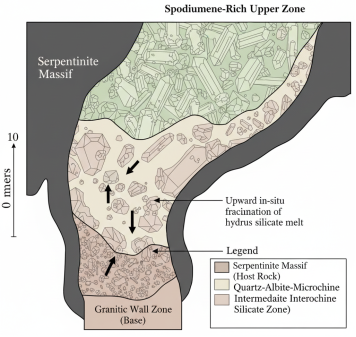
As explained in
Figure 3, the Kenticha pegmatites exhibit a complex, asymmetric internal zonation, progressing from a granitic wall zone at the base to an intermediate zone of quartz-albite-microcline, and finally to a spodumene-rich upper zone. This zoning reflects the upward in-situ fractionation of a hydrous silicate melt.
Figure 4. Schematic zonation.
4.3. Vein Descriptions
4.3.1. Vein No. 1: Industrial Quartz Reservoir
Vein No. 1 is the largest identified body, tracing 790 meters along strike with a thickness reaching 52 meters in its southern section. The vein is composed almost entirely of milky-white, translucent quartz, with selvages of muscovite and feldspar at the contacts.
4.3.2. Vein No. 2: Beryl-Bearing Feldspathic Body
Located north of Vein No. 1, this vein traces for 700 meters and averages 20 meters in width.
| [1] | Mohammedyasin, M. S. (2017). Geology, Geochemistry and Geochronology of the Kenticha Rare Metal Granite Pegmatite, Adola Belt, Southern Ethiopia: A Review. International Journal of Geosciences, 8(1), 12-33.
https://doi.org/10.4236/ijg.2017.81004 |
[1]
It is primarily composed of blocky feldspar (microcline), with crystals reaching dimensions of 0.9 m by 0.9 m.
| [1] | Mohammedyasin, M. S. (2017). Geology, Geochemistry and Geochronology of the Kenticha Rare Metal Granite Pegmatite, Adola Belt, Southern Ethiopia: A Review. International Journal of Geosciences, 8(1), 12-33.
https://doi.org/10.4236/ijg.2017.81004 |
[1]
Pale green beryl crystals (2 mm to 2 cm) are concentrated within this vein.
4.3.3. Vein No. 3: High-Grade Spodumene Zone
This vein outcrops over 150 meters with a thickness of 20 meters. It contains the highest concentration of spodumene, which reaches 65% to 70% of the rock volume in the central section. The spodumene appears as prismatic, greyish-white crystals.
4.3.4. Vein No. 5: Premium Industrial Feldspar
Tracing over 440 meters with a thickness of 10-14 meters, Vein No. 5 consists of 80% blocky white microcline and 15-20% quartz. The feldspar in this vein is exceptionally clean, with iron oxide primarily restricted to thin surface fracture coatings.
4.4. Geochemical Specialization and Differentiation Trends
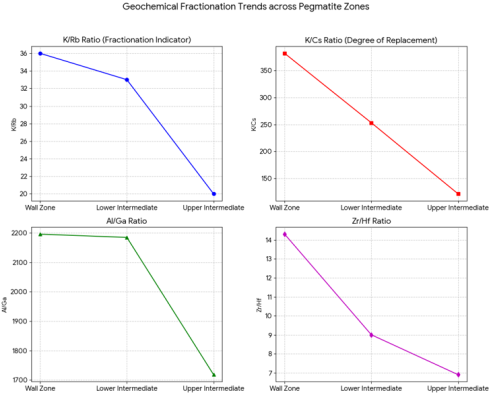
The Kenticha pegmatites are classified as LCT-family, spodumene-subtype bodies. They are characterized by extreme enrichment in rare elements (Li, Rb, Cs, Be, Nb, Ta, Ga, Sn) and significant depletion in Fe, Mg, Ca, Ti, Zr, and Sr.1 Geochemical specialization increases progressively from the granitic wall zone toward the spodumene-rich upper zones.
Table 2. Geochemical Fractionation Indices by Internal Zone.
Pegmatite Zone | K/Rb Ratio | K/Cs Ratio | Al/Ga Ratio | Zr/Hf Ratio |
Wall Zone (Granitic) | ~36 | 382 | 2196 | 14.3 |
Lower Intermediate Zone | ~33 | 253 | 2185 | 9.0 |
Upper Intermediate (Spodumene) | ~20 | 121 | 1718 | 6.9 |
The K/Rb ratio drops from 36 to 20, providing quantitative evidence of advanced magmatic differentiation. This trend is accompanied by an increase in MgO (up to 5.05%) in the uppermost sections, interpreted as a signature of hydrothermal interaction with the host serpentinite as explained in
Table 2 | [2] | Tadesse, S. (2018). Physicochemical characterization and green extraction of niobium and tantalum for Ethiopian Kenticha ores. Material Science & Engineering International Journal, 2(2), 34–40. |
[2]
.
Figure 5. Geochemical plots of magmatic fractionation.
4.5. Industrial Mineral Evaluation and Reserves
Analysis of twelve whole-rock samples from Veins No. 3 and No. 5 confirms that the industrial minerals at Kenticha meet high-end global standards.
Table 3. Geochemistry of Kenticha Feldspar-Quartz vs. Industrial Standards [based on ISO 13006 and ASTM C146].
Component | Kenticha Average (%) | Standard (Min) | Standard (Max) |
SiO2 | 67.3 | - | 75.0% |
Al2O3 | 17.2 | 13.0% | - |
K2O + Na2O | 13.5 | 7.0% | - |
Fe2O3 (Surface) | 0.3 | - | 0.4% |
Fe2O3 (2m Depth) | <0.1 | - | 0.4% |
As shown in
Table 3 from the Geochemistry of Kenticha Feldspar-Quartz, The low iron content is particularly significant for clear glass and porcelain manufacturing. Economic reserve calculations indicate substantial resources capable of supporting industrial hubs in the Adola region as presented in
Table 4 | [2] | Tadesse, S. (2018). Physicochemical characterization and green extraction of niobium and tantalum for Ethiopian Kenticha ores. Material Science & Engineering International Journal, 2(2), 34–40. |
[2]
.
Table 4. Mineral Reserve Estimates for Primary Veins.
Resource Type | Vein ID | Total Ore (Tons) | Net Mineral (Tons) |
Feldspar | Vein No. 5 | 1,300,000 | 1,040,000 |
Feldspar | Vein No. 2 | 2,550,000 | 1,700,000 |
Quartz | Vein No. 1 | 7,200,000 | 7,200,000 |
4.6. Mineral Processing and Liberation Data
Commination studies indicate that Kenticha spodumene is characterized by a Modified Bond Work Index of 11.391 kWh/ton
| [9] | MedCrave. (2018). Green extraction of niobium and tantalum for Ethiopian Kenticha ores by hydrometallurgy process: A review. Material Science & Engineering International Journal. |
[9]
. This value places it within the range of standard hard-rock lithium deposits globally (10.4-11.5 kWh/ton).
| [2] | Tadesse, S. (2018). Physicochemical characterization and green extraction of niobium and tantalum for Ethiopian Kenticha ores. Material Science & Engineering International Journal, 2(2), 34–40. |
[2]
Sieve analysis demonstrates that the appropriate liberation size for the target minerals falls between 180 µm and 250 µm
| [10] | Contreiras, M., et al. (2019). Sintering Behavior and Technological Properties of Low-Temperature Porcelain Tiles Prepared Using a Lithium Ore and Silica Crucible Waste. Minerals, 9(12), 731. https://doi.org/10.3390/min9120731 |
[10]
.
Grain size distribution analysis for spodumene shows D50: 210 µm, D75: 97 µm and P70: 80 µm. These findings confirm that the ore can be efficiently processed using standard flotation and magnetic separation techniques
| [5] | Mekonen, G., Sisay, M., et al. (2025). Mineralogical Analysis and Beneficiation Assessment to Unlock the Lithium Potential in Kenticha Pegmatite Ore. Journal of Sustainable Mining, 24(1). https://doi.org/10.46873/2300-3960.1440 |
[5]
.
4.7. Critical Rare-element Potential
While industrial minerals represent immediate economic value, the strategic future of Kenticha lies in its lithium and tantalum reserves. Recent assessments estimate that the massif contains 87.7 million tonnes of lithium ore at an average grade of 0.78% Li
2O. Tantalum concentrates produced at Kenticha remain high-grade, with Ta
2O
5 content typically ranging from 50% to 60%
| [7] | Pathak, D., et al. (2022). Geological, Mineralogical and Geochemical Study of the Aquamarine-Bearing Yamrang Pegmatite, Eastern Nepal with Implications for Exploration Targeting. Minerals, 12(5), 564. https://doi.org/10.3390/min12050564 |
| [1] | Mohammedyasin, M. S. (2017). Geology, Geochemistry and Geochronology of the Kenticha Rare Metal Granite Pegmatite, Adola Belt, Southern Ethiopia: A Review. International Journal of Geosciences, 8(1), 12-33.
https://doi.org/10.4236/ijg.2017.81004 |
[7, 1]
.
5. Discussion
5.1. Petrogenesis and Geodynamic Context
The Kenticha pegmatite field represents a world-class example of extreme magmatic fractionation during the post-collisional phase of the East African Orogeny. At approximately 530 Ma, these late-stage magmatic products exploited tectonic dilation zones during the orogenic belt's gravitational collapse. The origin of these bodies involves a dual-model system: the extreme fractional crystallization of a parent leucogranite melt related to the Kilta Shanbeli pluton supported by increasing fractionation with distance complemented by the partial melting (anatexis) of metasedimentary rocks in the lower crust. This hybrid origin, enriched by high levels of Li, Cs, Ta, and Be, ensured a highly specialized melt capable of forming the giant, sheet-like bodies observed at Kenticha
| [1] | Mohammedyasin, M. S. (2017). Geology, Geochemistry and Geochronology of the Kenticha Rare Metal Granite Pegmatite, Adola Belt, Southern Ethiopia: A Review. International Journal of Geosciences, 8(1), 12-33.
https://doi.org/10.4236/ijg.2017.81004 |
| [13] | Institute of Geochemistry Chinese Academy of Sciences. (2022). Fluid inclusion studies of the Kenticha rare-element granite-pegmatite, Southern Ethiopia. Chinese Journal of Geochemistry. https://doi.org/10.1007/s11631-022-00552-3 |
[1, 13]
.
The presence of low-salinity aqueous-carbonic fluids, which homogenized between 241°C and 397°C, played a vital role in the transport of rare elements. These fluids likely scoured incompatible elements from the deeper reservoir and concentrated them in the upper intermediate zones, leading to the observed asymmetric zonation and the concentration of tantalum and lithium in the upper parts of the sheet
| [3] | Carvalho, F. P., Tufa, M. B., et al. (2021). Radionuclides and Radiation Exposure in Tantalite Mining, Ethiopia. Archives of Environmental Contamination and Toxicology, 81(4), 648–659.
https://doi.org/10.1007/s00244-021-00858-8 |
[3]
.
5.2. Comparative Geochemical Evolution
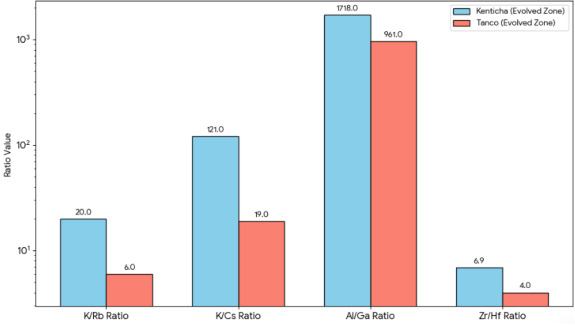
Table 5 Indices Comparison of Kenticha deposit with Tanco. The Kenticha deposit stands as a globally significant source of rare metals, comparable in thickness and areal extent to the giant Tanco pegmatite in Canada. However, comparative geochemical analysis reveals that Kenticha is slightly less evolved than Tanco or the Greenbushes deposit in Australia
.
Table 5. Fractionation Indices Comparison: Kenticha vs. Tanco (Canada).
Parameter | Kenticha (Evolved Zone) | Tanco (Evolved Zone) |
K/Rb Ratio | ~20 | ~6 |
K/Cs Ratio | ~121 | ~19 |
Al/Ga Ratio | ~1718 | ~961 |
Zr/Hf Ratio | ~6.9 | ~4.0 |
Figure 6. Geochemical Ratio comparison of Kenticha vs Tanco (Evolved Zone).
Despite the lower absolute degree of fractionation compared to Tanco, Kenticha's 87.7 million tonne lithium ore resource and its proximity to the surface make it one of the most commercially attractive lithium deposits currently under development. Furthermore, unlike many global deposits, Kenticha lacks known pollucite or significant cassiterite, simplifying the beneficiation circuit for tantalum and lithium
| [7] | Pathak, D., et al. (2022). Geological, Mineralogical and Geochemical Study of the Aquamarine-Bearing Yamrang Pegmatite, Eastern Nepal with Implications for Exploration Targeting. Minerals, 12(5), 564. https://doi.org/10.3390/min12050564 |
[7]
.
5.3. Industrial Standardization and Manufacturing Potential
The results of the geochemical evaluation of Kenticha feldspar and quartz demonstrate exceptional compliance with international industrial standards. In the ceramic industry, the primary standard is ISO 13006, which classifies tiles based on water absorption and manufacturing method.
| [2] | Tadesse, S. (2018). Physicochemical characterization and green extraction of niobium and tantalum for Ethiopian Kenticha ores. Material Science & Engineering International Journal, 2(2), 34–40. |
| [15] | CNR-IRIS. (2020). Waste recycling in ceramic tiles: a technological outlook. Accessed on October 11, 2026. |
[2, 15]
Kenticha material is ideally suited for Group BIa porcelain tiles, which require a water absorption coefficient ≤0.5%
| [16] | Emilceramica Srl. (2026). Ceramic Tiles Group BIa - ISO 13006 Annex G. Accessed on October 7, 2026. |
[16]
.
Table 6. Industrial Application Compliance Matrix.
Sector | Metric | Kenticha Value | Compliance Status |
Ceramics (Porcelain) | Al2O3 > 13% | 17.2% | Exceeds Standard |
Ceramics (Porcelain) | Total Alkalis > 7% | 13.5% | Exceeds Standard |
Glass (Clear) | Fe2O3 < 0.4% | 0.1% | Compliant (Premium) |
Glass (Clear) | SiO2 > 65% | 67.3% | Compliant |
Feldspar acts as a critical fluxing agent, reacting with silica and alumina to form a vitreous liquid phase during firing at 1200-1250°C.
| [16] | Emilceramica Srl. (2026). Ceramic Tiles Group BIa - ISO 13006 Annex G. Accessed on October 7, 2026. |
[16]
. The high total alkali content (13.5%) of the Kenticha feldspar ensures superior densification and mechanical strength, with the resulting tiles achieving flexural strengths exceeding the required 35 MPa
| [1] | Mohammedyasin, M. S. (2017). Geology, Geochemistry and Geochronology of the Kenticha Rare Metal Granite Pegmatite, Adola Belt, Southern Ethiopia: A Review. International Journal of Geosciences, 8(1), 12-33.
https://doi.org/10.4236/ijg.2017.81004 |
| [2] | Tadesse, S. (2018). Physicochemical characterization and green extraction of niobium and tantalum for Ethiopian Kenticha ores. Material Science & Engineering International Journal, 2(2), 34–40. |
[1, 2]
. For the glass industry, the purity of the quartz and the low iron content of the feldspar are paramount. Standard clear glass-grade sand requires a minimum of 99.5% SiO
2 and iron levels below 0.015% for crystal glass
| [11] | Qualicer. (2026). Feasibility of Using Rice Straw Ash in Porcelain Tile Compositions. Accessed on October 12, 2026. |
[11]
. While surface material at Kenticha is suitable for container glass (Fe
2O
3 < 0.3%), the subsurface quartz and feldspar (at 2m depth) meet the requirements for high-purity optical glass
| [2] | Tadesse, S. (2018). Physicochemical characterization and green extraction of niobium and tantalum for Ethiopian Kenticha ores. Material Science & Engineering International Journal, 2(2), 34–40. |
| [5] | Mekonen, G., Sisay, M., et al. (2025). Mineralogical Analysis and Beneficiation Assessment to Unlock the Lithium Potential in Kenticha Pegmatite Ore. Journal of Sustainable Mining, 24(1). https://doi.org/10.46873/2300-3960.1440 |
[2, 5]
.
5.4. Strategic Industrialization Roadmap for Ethiopia
The integration of Kenticha’s mineral resources into a value added industrial strategy is essential for Ethiopia’s economic development. The substantial reserves of high-purity feldspar (2.7 Mt) and quartz (7.2 Mt) provide a long-term feedstock for domestic ceramic and glass industries, potentially reducing dependency on imports and generating local employment. Establishing processing facilities near the deposit such as in Kebremengist or Shakisso would minimize transport costs and facilitate regional industrial growth
| [1] | Mohammedyasin, M. S. (2017). Geology, Geochemistry and Geochronology of the Kenticha Rare Metal Granite Pegmatite, Adola Belt, Southern Ethiopia: A Review. International Journal of Geosciences, 8(1), 12-33.
https://doi.org/10.4236/ijg.2017.81004 |
| [18] | Brown, T. J., & Mitchell, C. J. (2006). Industrial minerals and artisanal mining study (Ethiopia World Bank Energy Access Project): Summary of activities, findings and recommendations of industrial minerals sub-project (British Geological Survey Commissioned Report, CR/06/181). British Geological Survey. https://nora.nerc.ac.uk/id/eprint/19660/ |
[1, 18]
. Concurrently, the extraction of lithium (87.7 Mt at 0.78% Li₂O), alongside tantalum and beryl as by-products, aligns with global demand for critical minerals and green-energy technologies. The favorable comminution characteristics (Bond Work Index ≈ 11.4 kWh/ton) indicate that conventional processing circuits can be employed, lowering capital and operational barriers
| [9] | MedCrave. (2018). Green extraction of niobium and tantalum for Ethiopian Kenticha ores by hydrometallurgy process: A review. Material Science & Engineering International Journal. |
[9]
. To ensure sustainability and market acceptance, modern beneficiation methods including alkaline washing to reduce radioactive elements in concentrates must be incorporated from the outset. An integrated, multi-mineral exploitation approach thus offers a viable pathway to transform Kenticha into a strategic industrial hub, supporting Ethiopia’s transition toward a resource-based manufacturing economy
| [17] | Tadesse, S., Milesi, J. P., & Deschamps, Y. (2003). Geology and mineral potential of Ethiopia: a note on geology and mineral map of Ethiopia. Journal of African Earth Sciences, 36(4), 273-313. https://doi.org/10.1016/S0899-5362(03)000484 |
[17]
.
6. Conclusion
The Kenticha pegmatite field represents a world-class mineral resource that transcends its historical reputation as a tantalum producer. Geochemical and geochronological data indicate a highly evolved Lithium-Cesium-Tantalum (LCT) system with enormous potential for industrial and critical minerals. Massive reserves of high-purity feldspar and quartz identify Kenticha as a strategic cornerstone for a domestic ceramic and glass manufacturing industry, while the 87.7 million tonne lithium resource positions Ethiopia as a significant future supplier in the global EV battery market. By adopting an integrated industrialization strategy that focuses on value-added local processing and sustainable multi-mineral extraction, Ethiopia can secure its economic growth and establish itself as a leader in the international mineral economy.
Study Limitations and Future Research Directions
Despite these promising findings, the study is limited by its reliance on early-stage exploration standards, such as assuming a vertical reserve depth of only 1/4 of the surface strike length. Future research should utilize advanced deep-drilling programs and 3D geophysical modeling to more accurately define the subsurface geometry and continuity of the pegmatite veins. Additionally, while preliminary geochemical data is favorable, future studies must address the environmental challenges of large-scale extraction, specifically through the development of specialized beneficiation techniques to mitigate radioactive thorium and uranium levels in tailings. Establishing pilot-scale processing plants in closer proximity to the deposits, such as in Shakisso, is recommended to evaluate the true logistical and economic feasibility of long-term industrialization.
Abbreviations
LCT | Lithium-Cesium-Tantalum |
XRF | X-ray Fluorescence |
XRD | X-ray Diffraction |
ICP-MS | Inductively Coupled Plasma Mass Spectrometry |
Tm | Total Net Mineral Tonnage |
L | Strike Length of the Surface Exposure (m) |
W | Average True Width of the Vein (m) |
D | Assumed Vertical Depth (m) |
ρ | Bulk Density |
Am | Modal Mineral Abundance (%) |
Acknowledgments
The author would like to express sincere gratitude to the Mineral Industry Development Institute (MIDI) for providing the research opportunity and institutional support. Special thanks are also extended to the Geological Institute of Ethiopia (GIE) for their invaluable cooperation in providing the geological data and technical information necessary for this study.
Author Contributions
Mitiku Tamene: Conceptualization, Data curation, Formal Analysis, Investigation, Methodology, Resources, Software, Supervision, Validation, Visualization, Writing – original draft, Writing – review & editing
Data Availability Statement
The raw data supporting the findings of this research are maintained by the author and can be provided for academic purposes upon reasonable request.
Conflicts of Interest
The author declares that they have no known competing financial interests or personal relationships that could have appeared to influence the work reported in this paper.
References
| [1] |
Mohammedyasin, M. S. (2017). Geology, Geochemistry and Geochronology of the Kenticha Rare Metal Granite Pegmatite, Adola Belt, Southern Ethiopia: A Review. International Journal of Geosciences, 8(1), 12-33.
https://doi.org/10.4236/ijg.2017.81004
|
| [2] |
Tadesse, S. (2018). Physicochemical characterization and green extraction of niobium and tantalum for Ethiopian Kenticha ores. Material Science & Engineering International Journal, 2(2), 34–40.
|
| [3] |
Carvalho, F. P., Tufa, M. B., et al. (2021). Radionuclides and Radiation Exposure in Tantalite Mining, Ethiopia. Archives of Environmental Contamination and Toxicology, 81(4), 648–659.
https://doi.org/10.1007/s00244-021-00858-8
|
| [4] |
Geological Survey of Ethiopia. (2014). Hawassa subsheet 0738_C4. Accessed January 8, 2026.
|
| [5] |
Mekonen, G., Sisay, M., et al. (2025). Mineralogical Analysis and Beneficiation Assessment to Unlock the Lithium Potential in Kenticha Pegmatite Ore. Journal of Sustainable Mining, 24(1).
https://doi.org/10.46873/2300-3960.1440
|
| [6] |
U.S. Securities and Exchange Commission. (2018). Exhibit 99.1. Retrieved January 10, 2026,
|
| [7] |
Pathak, D., et al. (2022). Geological, Mineralogical and Geochemical Study of the Aquamarine-Bearing Yamrang Pegmatite, Eastern Nepal with Implications for Exploration Targeting. Minerals, 12(5), 564.
https://doi.org/10.3390/min12050564
|
| [8] |
Meseret, Getahun; Kebede, Bisrat; and Digafe, Belayneh (2025) "Determination of the liberation size of Mekaneselam Iron Ore in the Southern Wollo Zone, Northern Ethiopia: implications for beneficiation," Journal of Sustainable Mining: Vol. 24: Iss. 1, Article 4.
https://doi.org/10.46873/2300-3960.1438
|
| [9] |
MedCrave. (2018). Green extraction of niobium and tantalum for Ethiopian Kenticha ores by hydrometallurgy process: A review. Material Science & Engineering International Journal.
|
| [10] |
Contreiras, M., et al. (2019). Sintering Behavior and Technological Properties of Low-Temperature Porcelain Tiles Prepared Using a Lithium Ore and Silica Crucible Waste. Minerals, 9(12), 731.
https://doi.org/10.3390/min9120731
|
| [11] |
Qualicer. (2026). Feasibility of Using Rice Straw Ash in Porcelain Tile Compositions. Accessed on October 12, 2026.
|
| [12] |
PorterGeo Database. (2026). Kenticha - Ore Deposit Description. Retrieved January 30, 2026.
|
| [13] |
Institute of Geochemistry Chinese Academy of Sciences. (2022). Fluid inclusion studies of the Kenticha rare-element granite-pegmatite, Southern Ethiopia. Chinese Journal of Geochemistry.
https://doi.org/10.1007/s11631-022-00552-3
|
| [14] |
Meseret, G. (2025). Determination Of Work Index of Spodumene from Kenticha Ore, Southern Ethiopia. Mining Science.
https://doi.org/10.37190/msc253101
|
| [15] |
CNR-IRIS. (2020). Waste recycling in ceramic tiles: a technological outlook. Accessed on October 11, 2026.
|
| [16] |
Emilceramica Srl. (2026). Ceramic Tiles Group BIa - ISO 13006 Annex G. Accessed on October 7, 2026.
|
| [17] |
Tadesse, S., Milesi, J. P., & Deschamps, Y. (2003). Geology and mineral potential of Ethiopia: a note on geology and mineral map of Ethiopia. Journal of African Earth Sciences, 36(4), 273-313.
https://doi.org/10.1016/S0899-5362(03)000484
|
| [18] |
Brown, T. J., & Mitchell, C. J. (2006). Industrial minerals and artisanal mining study (Ethiopia World Bank Energy Access Project): Summary of activities, findings and recommendations of industrial minerals sub-project (British Geological Survey Commissioned Report, CR/06/181). British Geological Survey.
https://nora.nerc.ac.uk/id/eprint/19660/
|
Cite This Article
-
APA Style
Tamene, M. (2026). Geological and Geochemical Characteristics of
Quartz-Feldspar Pegmatites in Southern Ethiopia. Science Discovery Environment, 1(2), 132-141. https://doi.org/10.11648/j.sdenv.20260102.12
 Copy
|
Copy
|
 Download
ACS Style
Tamene, M. Geological and Geochemical Characteristics of
Quartz-Feldspar Pegmatites in Southern Ethiopia. Sci. Discov. Environ. 2026, 1(2), 132-141. doi: 10.11648/j.sdenv.20260102.12
Copy
|
Download
AMA Style
Tamene M. Geological and Geochemical Characteristics of
Quartz-Feldspar Pegmatites in Southern Ethiopia. Sci Discov Environ. 2026;1(2):132-141. doi: 10.11648/j.sdenv.20260102.12
Copy
|
Download
-
@article{10.11648/j.sdenv.20260102.12,
  author = {Mitiku Tamene},
  title = {Geological and Geochemical Characteristics of
Quartz-Feldspar Pegmatites in Southern Ethiopia},
  journal = {Science Discovery Environment},
  volume = {1},
  number = {2},
  pages = {132-141},
  doi = {10.11648/j.sdenv.20260102.12},
  url = {https://doi.org/10.11648/j.sdenv.20260102.12},
  eprint = {https://article.sciencepublishinggroup.com/pdf/10.11648.j.sdenv.20260102.12},
  abstract = {The Kenticha pegmatite field, located within the Neoproterozoic Adola Belt of Southern Ethiopia, represents one of the most significant rare-element mineral provinces in the East African Orogeny. Tantalum was exploited from weathered regolith before and also produced the huge reserves of feldspar, quartz and lithium from underlying hard-rock bodies. This study presents the geology properties and evaluating economic potential of five major veins (No. 1-5) through a multi-disciplinary approach including field geological mapping, core logging, and geochemical characterization. Major and trace element concentrations were determined using X-ray Fluorescence (XRF) and Inductively Coupled Plasma Mass Spectrometry (ICP-MS), while mineralization phases were defined by X-ray Diffraction (XRD). Geochemical analysis demonstrates that the pegmatites are classified as the Lithium-Cesium-Tantalum (LCT) family and the spodumene subtype, and characterized by extreme magmatic fractionation. Fractionation indices, notably the K/Rb ratio, exhibit a systematic decline from approximately 36 in the granitic wall zones to 19–20 in the highly evolved spodumene-rich upper intermediate zones. Quantitative assessments of industrial mineral quality reveal SiO2 averages of 67.3% and Al2O3 contents of 17.2%, with subsurface Fe2O3 levels consistently below 0.1%. These values comply with ISO 13006 Group BIa standards for the international glass and porcelain industries. Economic reserve estimations, calculated based on the 1:5000 geological map and strike tracing, assumption 2.7 million tons of high-grade feldspar and 7.2 million tons of quartz. Additionally, the discovery of 87.7 million tonnes of lithium ore at 0.78% Li2O underscores the deposit's strategic importance. The report concludes with recommendations for an integrated multi-mineral extraction strategy to drive Ethiopia’s industrialization and green energy supply chain.},
 year = {2026}
}
Copy
|
Download
-
TY  - JOUR
T1  - Geological and Geochemical Characteristics of
Quartz-Feldspar Pegmatites in Southern Ethiopia
AU  - Mitiku Tamene
Y1  - 2026/03/14
PY  - 2026
N1  - https://doi.org/10.11648/j.sdenv.20260102.12
DO  - 10.11648/j.sdenv.20260102.12
T2  - Science Discovery Environment
JF  - Science Discovery Environment
JO  - Science Discovery Environment
SP  - 132
EP  - 141
PB  - Science Publishing Group
UR  - https://doi.org/10.11648/j.sdenv.20260102.12
AB  - The Kenticha pegmatite field, located within the Neoproterozoic Adola Belt of Southern Ethiopia, represents one of the most significant rare-element mineral provinces in the East African Orogeny. Tantalum was exploited from weathered regolith before and also produced the huge reserves of feldspar, quartz and lithium from underlying hard-rock bodies. This study presents the geology properties and evaluating economic potential of five major veins (No. 1-5) through a multi-disciplinary approach including field geological mapping, core logging, and geochemical characterization. Major and trace element concentrations were determined using X-ray Fluorescence (XRF) and Inductively Coupled Plasma Mass Spectrometry (ICP-MS), while mineralization phases were defined by X-ray Diffraction (XRD). Geochemical analysis demonstrates that the pegmatites are classified as the Lithium-Cesium-Tantalum (LCT) family and the spodumene subtype, and characterized by extreme magmatic fractionation. Fractionation indices, notably the K/Rb ratio, exhibit a systematic decline from approximately 36 in the granitic wall zones to 19–20 in the highly evolved spodumene-rich upper intermediate zones. Quantitative assessments of industrial mineral quality reveal SiO2 averages of 67.3% and Al2O3 contents of 17.2%, with subsurface Fe2O3 levels consistently below 0.1%. These values comply with ISO 13006 Group BIa standards for the international glass and porcelain industries. Economic reserve estimations, calculated based on the 1:5000 geological map and strike tracing, assumption 2.7 million tons of high-grade feldspar and 7.2 million tons of quartz. Additionally, the discovery of 87.7 million tonnes of lithium ore at 0.78% Li2O underscores the deposit's strategic importance. The report concludes with recommendations for an integrated multi-mineral extraction strategy to drive Ethiopia’s industrialization and green energy supply chain.
VL  - 1
IS  - 2
ER  -
Copy
|
Download





 Share This Article
 Twitter
 Linked In
 Facebook