Research Article | | Peer-Reviewed

Effects of Climate Variability on Malaria Outbreak in Delomenna District, Bale Zone, Ethiopia

Received: 18 January 2026     Accepted: 21 February 2026     Published: 9 March 2026
Views:       Downloads:
Abstract

Malaria is the major public health problem in sub-Saharan Africa, including Ethiopia. Almost half of the Bale Zone's surface area is at risk for malaria. The objective of this study was to analyze the impact of climate variability on the malaria outbreak in Delomena District and recommend control and preventive measures. Meteorological variables (monthly total rainfall, average relative humidity, and mean maximum and minimum temperature) and malaria case data from 2013 to 2022 were used to analyze correlation and regression using SPSS 20v software. The results indicated that the monthly peak of malaria incidence in the Delomena district occurred in June (11 cases), 2021, a year after the main rainy season, while the lowest malaria incidence occurred in January (0 cases), following a short rainy season. Furthermore, the Spearman correlation analysis showed that monthly mean rainfall, relative humidity, and mean minimum temperature had a positive correlation with malaria occurrence but a negative correlation with mean maximum temperature. Also, the negative binomial regression model indicates that, by 1 mm and% increase, both monthly total rainfalls (0.9%) and average relative humidity (3%) at three- and two-month lagged effects were the most significant for malaria occurrence in the study area, respectively, but mean maximum temperature at zero-month lagged effect was negative. However, the mean minimum temperature has an insignificant effect on malaria incidence for all lags. The study concludes that malaria incidences in the last ten years seem to have a significant association and effect with meteorological variables. To reduce malaria outbreaks in the study area, local government and district health experts should promote early warning systems and climate-informed malaria control strategies.

Published in Science Discovery Health (Volume 1, Issue 1)
DOI 10.11648/j.sdh.20260101.14
Page(s) 25-37
Creative Commons

This is an Open Access article, distributed under the terms of the Creative Commons Attribution 4.0 International License (http://creativecommons.org/licenses/by/4.0/), which permits unrestricted use, distribution and reproduction in any medium or format, provided the original work is properly cited.

Copyright

Copyright © The Author(s), 2026. Published by Science Publishing Group

Keywords

Climate Variability, Delomena, Malaria

1. Introduction
Malaria is one of the world’s most important and complicated public health issues, especially in tropical and subtropical nations, according to . It is a chronic infectious disease caused by intracellular protozoan parasites from the Plasmodium genus. An estimated 608,000 people died from malaria worldwide in 2022, with a mortality rate of 14.3 per 100,000 people at risk . In 2023 the WHO (World Health Organization) reported 263 million cases and 597,000 deaths worldwide, with Africa bearing 94% of cases and 95% of deaths . The key contributors to the occurrence of malaria include environmental factors like rainfall, temperature, and relative humidity . Further, immature stages of the mosquito in water take about 10 days at optimum temperature to become adults; thus, time duration is critical for predicting incidence of malaria. noted that the temperature of two habitats affects mosquito development, that is, water bodies for the development of immature stages and dwellings and resting places used by the adult mosquitoes after taking a blood meal.
A malaria indicator survey of Ethiopia conducted in 2015 reported that the national proportion of Plasmodium falciparum was 81.6% and the proportion of Plasmodium vivax was 8.0%, while in the Oromia region, the proportions of Plasmodium falciparum and Plasmodium vivax were 87.5% and 12.5%, respectively. Earlier studies have shown that the prevalence and transmission of malaria are significantly influenced by climatic factors; however, the effects of different climatic factors differed by region. In Shuchon, China, monthly minimum temperature and precipitation were related to the incidence of malaria, but in Anhui, precipitation had the strongest relation with incidence . Other studies have shown similar associations; a study conducted in hilly regions of India showed a higher positive correlation between monthly incidence of malaria and monthly minimum temperature, mean temperature, and rainfall with a one-month lag effect . This short-term effect contrasts with the well-established positive lagged effects of these climate variables on malaria transmission risk .
According to the study conducted in Vihiga County by several researchers, falling rainfall levels, altering rainfall patterns, and increasing temperature . Inter-annual and inter-decadal climate variability influences the epidemiology of vector-borne diseases directly, while temperature and rainfall have long been known to influence seasonal and inter-annual variability of malaria . The correlation coefficient for the association between monthly rainfall and monthly incidence of malaria was found to be greater than for the association between temperature and malaria incidence . Relative humidity, which is indirectly affected by rainfall at a given temperature, is critical for the life cycle of mosquitoes. For successful transmission of malaria, the infected vector species should survive for at least one week . If relative humidity is low, the infected vector species will die before the completion of sporogony (development of the malaria parasite in the mosquito). Environmental factors, including land cover , land use such as farming and deforestation , and altitude , have also been previously associated with malaria incidence.
The Bale zone has great geographical diversity; its topographic features range from the highest peak at Bale Mountain, 4,288 meters above sea level, down to the lowland area, at 331 meters. The topography of the majority of the districts (80%) in the Bale zone is located at an altitude below 2,000 meters above sea level, with 64% of the zonal landmass being lowlands, 22% midlands, and only 14% highlands . Almost half of Bale zone's surface area is malaria endemic (altitude below 2,000 meters above sea level), which means 46% of the population are at risk for malaria . Malaria transmission in Delomena District, Bale Zone, Ethiopia, is highly sensitive to climate variability. Although district-specific studies are limited, evidence from the Bale Zone demonstrates that rainfall fluctuations, seasonal temperature changes, and inter-annual climate variability strongly influence malaria outbreaks . Peak malaria incidence generally occurs following the main rainy season, when increased rainfall creates breeding sites for Anopheles mosquitoes, and favorable temperatures accelerate parasite development .
Studies on the Bale Zone and the broader Oromia Region confirm that irregular rainfall patterns, rather than total annual rainfall, and minimum temperature anomalies are critical predictors of malaria outbreaks . Delomena District shares similar ecological and climatic characteristics with other Bale Zone districts, making these findings highly relevant. Understanding the impact of climate variability on malaria in Delomena is essential for developing early warning systems and climate-informed malaria control strategies tailored to the district’s specific conditions.
2. Materials and Methods
2.1. Study Site
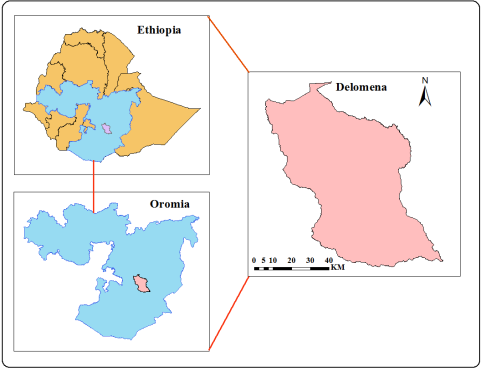
The study was carried out in the Delomena district of the Bale zone of the Oromia regional state, in southeast Ethiopia. Delomena is in the Bale zone of the Oromia state, 555 kilometers south of Addis Abeba, the capital of Ethiopia, and 125 kilometers from Robe town. It is located between 5°53' N and 6°27' N latitudes and 39°15' E and 40°38' E longitudes and has an elevation range of 800 to 2000 m above sea level (Figure 1).
A total of 112,234 people live in the Delomena district, with 53,615 men and 58,619 women (CSA, 2007). According to , the district is located in Ethiopia's south-eastern bimodal rain fall zones, with the main wet season lasting from early March to June and the brief wet season lasting from late September to November. January, February, July, August, and December are the region's five dry months. The mean annual rainfall is 966.8 mm, and the mean annual temperature is 22.56°C. There are very few places of rocky, hilly terrain in the research area, which is mostly characterized by plain topography . The study plots are primarily located on level ground. In the upper altitudes, it is reddish brown clay, and in the lower altitudes, it tends to be red-orange sandy soil. Along streams and uneven hills, there are many rock outcrops. The majority of the local residents are Oromos. The primary sources of income for the rural community are livestock and subsistence farming, making mixed farming the dominant agricultural system in the Delomena district . The three primary perennial cash crops are coffee, bananas, and papaya and the three main annual crops that farmers plant are teff, sorghum, and maize.
Figure 1. Location map of the study area.
2.2. Research Design
In this study, Explanatory research methods were employed. Quantitative research approaches were used to achieve the study's objectives . In this case, secondary meteorological variables (monthly total rainfall, average relative humidity, and mean maximum and minimum temperature) data from the Ethiopia Meteorology Institute (EMI) and malaria case data from the public health emergency management surveillance database of the Bale Zonal Health Office provided for the ten-year period (2013–2022) were used to analyze the relationship between meteorological variables (monthly total rainfall, average relative humidity, and mean maximum and minimum temperature) and malaria cases.
2.3. Data Analysis
To analyze the data, inferential statistics are used to analyze the correlation between meteorological variables and malaria cases. The monthly malaria cases are taken as the dependent variables, while meteorological variables such as monthly total rainfall, average relative humidity, and mean maximum and minimum temperature are independent variables. Before analyzing the data, they were checked for completeness and consistency and then processed in the Microsoft Excel and SPSS V20 applications to generate relevant information. In order to determine the potential impact of lagged weather variables on malaria occurrence, cross-correlation analysis was performed by Minitab 15 .
The generalized linear model (GLM) and negative binomial regression were used to analyze to what extent the independent variables (monthly total rainfall, average relative humidity, and mean maximum and minimum temperature) affected the malaria outbreak in the study area. Adjusted odds ratios with a 95% confidence interval were computed and those with a p-value less than 0.05 were reported as significant factors.
Data normality for linearity assumptions of the response variable was not fulfilled (Shapiro–Wilk test of normality, p ≤ 0.0001). Logarithmic, inverse/reciprocal, Box-Cox, square root, and exponential techniques failed to meet the required assumptions; hence, a non-parametric correlation estimate (Spearman’s correlation coefficient) was applied. The Spearman’s correlation coefficient was used to estimate the relationship between rainfalls (mm), relative humidity, mean maximum and minimum temperature (°C) with monthly malaria cases, and a bivariate, two-tailed analysis with 95% confidence intervals was applied . Since the number of malaria cases was a count variable, it was assumed that it followed a Poisson distribution.
However, the count data on the monthly malaria cases was over-dispersed, and the mean value was smaller than their variance. Thus, instead of Poisson regression, a negative binomial regression model was employed to quantify the effects of climate parameters (monthly total rainfall, relative humidity, and mean maximum and minimum temperature) on malaria incidence. Before fitting the model, all covariates were checked for multicollinearity using a Pearson correlation coefficient, and those variables showing multicollinearity were excluded from the final model. Finally, the results were summarized and presented using tables, graphs, etc.
3. Results
This section presents a detailed description of the relationship between climate variables and malaria cases and the effect of climate variability on malaria outbreaks towards the climate variability in the study area.
3.1. Monthly and Seasonal Variation of Malaria Cases
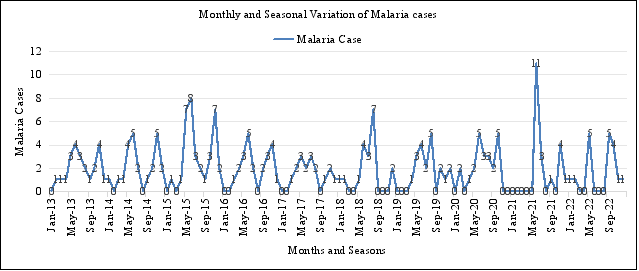
In the Bale zone, Delomenna district, malaria is one of the public health issues. The monthly peak of malaria incidence (11) in Delomena occurred in Jun, 2021, years after the main rainy season from March to Jun, because in this month there was a small increase of relative humidity (64.8%) after the main rainy season (Figure 2). Some other non-climatic factors, such as rivers and some other activities in those kebeles that increased the number of breeding sites of mosquitoes, might have contributed to the peak of malaria occurrence (Personal Observation). Meanwhile, January saw the lowest incidence of malaria (zero), following a brief rainy season that lasted from September to November. An increase in temperature would make it more difficult for parasites and vectors to survive during this dry month (January). This hypothesis indicates that, for a given amount of moisture in air, an increase in temperature causes a decrease in relative humidity, which can limit Anopheles survival (Figure 2). During the past ten years there has been a malaria distribution shifting tendency across the three seasons. Following the main rainy season from Mid-February to May, summer (Jun-September) saw the highest season of malaria cases; 95 (43%) were recorded. Bega (October to January), following a brief wet season, was the lowest season for malaria cases, with 59 cases, or 27% (Figure 2).
Figure 2. Monthly and seasonal variation of malaria cases in Delomena District (2013-2022).
3.2. Correlation Between Climate Variables and Malaria Cases
3.2.1. Correlation Between Climate Variables and Malaria Cases for Lag0
Table 1. Spear man's rank correlation coefficient for Lag0 in Delomena District.

Malaria Case

Total RF (mm)

Ave.RH (%)

Tmax (°C)

Tmin (°C)

Malaria Case

1.000

Totat RF (mm)

0.140

1.000

Ave.RH (%)

.480**

.403**

1.000

Tmax (°C)

-.464**

-.323**

-.577**

1.000

Tmin (°C)

.228*

.550**

.350**

-.351**

1.000

** Correlation is significant at the 0.01 level (2-tailed) and * Correlation is significant at the 0.05 level (2-tailed).
The Spearman's correlation analysis (Table 1) demonstrated a moderate and weakly positive significant association between monthly malaria cases with relative humidity (rs = 0.480) and mean minimum temperature (rs = 0.228) for the lag 0 period. In contrast, there was a negative correlation between malaria incidence and mean maximum temperature (rs = -0.464) (Table 1). Adult mosquitoes do not flourish at very low and high temperatures, which is the case in this region during the dry seasons. The correlation analysis revealed a non-significant direct association between rainfall (rs = 0.140, p > 0.01) and malaria cases for lag 0 (month of detection).
3.2.2. Correlation Analysis Between Climate Variables and Malaria Cases for Lag1
Table 2. Spear man's rank correlation coefficient for Lag1 in Delomena District.

Malaria Case

Total RF (mm)

Ave.RH (%)

Tmax (°C)

Tmin (°C)

Malaria Case

1.000

Totat RF (mm)

.501**

1.000

Ave.RH (%)

.469**

.392**

1.000

Tmax (°C)

-.323**

-.318**

-.575**

1.000

Tmin (°C)

.248**

.541**

.339**

-.351**

1.000

**. Correlation is significant at the 0.01 level (2-tailed).
From Table 2, the correlations between rainfall (rs = 0.51), relative humidity (rs = 0.469), and minimum temperature (rs = 0.248) with malaria cases were positive, moderate, and weak at a 5% level of significance, respectively. Correlation analysis revealed a weak, significant negative association between the maximum temperature (rs = -0.323, p < 0.01) and monthly malaria cases during the lag1 period (Table 2).
3.2.3. Correlation Analysis Between Climate Variables and Malaria Cases for Lag2
Table 3. Spear man’s rank correlation coefficient for Lag2 in Delomena District.

Malaria Case

Totat RF (mm)

Ave.RH (%)

Tmax (°C)

Tmin (°C)

Malaria case

1.000

Totat RF (mm)

.598**

1.000

Ave.RH (%)

.379**

.350**

1.000

Tmax (°C)

-.206*

-.257**

-.601**

1.000

Tmin (°C)

.304**

.552**

.364**

-.429**

1.000

**. Correlation is significant at the 0.01 level (2-tailed).
* Correlation is significant at the 0.05 level (2-tailed).
As shown in Table 3, the correlation of monthly total rainfall (r = 0.598), average relative humidity (r = 0.379), and mean minimum temperature (r = 0.304) with monthly malaria cases showed a positive moderate and weak correlation for most of the lag2 periods at a 5% significance level, respectively, in the study area. Conversely, mean maximum temperature (r = -0.206) showed a weak negative significant correlation with monthly malaria cases for the lag 2 periods at a 5% significance level (Table 3).
3.2.4. Correlation Analysis Between Climate Variables and Malaria Cases for Lag3
Table 4 displays the correlation coefficients calculated for the lag3 periods at a 5% significance level; the monthly total rainfall (r = 0.563), average relative humidity (r = 0.257), and mean minimum temperature (r = 0.302), with monthly malaria cases, all showed a positive, moderate, and weak correlation in the study area. In contrast, the correlation analysis (Table 4) revealed a weak negative statistically significant association between monthly malaria cases and mean maximum temperature (r = -0.222) during the lag3 period at a 5% significance level.
Table 4. Spear man's rank correlation coefficient for Lag3 in Delomena District.

Malaria Case

TotatRF (mm)

Ave.RH (%)

Tmax (°C)

Tmin (°C)

Malaria case

1.000

Totat RF (mm)

.563**

1.000

Ave.RH (%)

.257**

.318**

1.000

Tmax (°C)

-.222*

-.350**

-.683**

1.000

Tmin (°C)

.302**

.473**

.288**

-.446**

1.000

** Correlation is significant at the 0.01 level (2-tailed). * Correlation is significant at the 0.05 level (2-tailed).
3.2.5. Correlation Analysis Between Climate Variables and Malaria Cases for Lag4
According to the correlation analysis, there was a moderate and weak positive significant association between monthly malaria cases with total monthly rainfall (rs = 0.437, p < 0.01) and mean minimum temperature (rs = 0.184, p < 0.05) during the lag 4 period (Table 5). The correlation analysis (Table 5) revealed that relative humidity and mean maximum temperature had a non-significant relationship with the occurrence of malaria cases for lag 4 (month of detection).
Table 5. Spear man's rank correlation coefficient for Lag4 in Delomena District.

Malaria Case

Totat RF (mm)

Ave.

Tmax (°C)

Tmin (°C)

RH (%)

Malaria case

1.000

Totat RF (mm)

.437**

1.000

Ave.RH (%)

0.157

.288**

1.000

Tmax (°C)

0.018

-.217*

-.661**

1.000

Tmin (°C)

.184*

.480**

.311**

-.439**

1.000

** Correlation is significant at the 0.01 level (2-tailed). * Correlation is significant at the 0.05 level (2-tailed).
3.3. Effects of Climate Variables on Monthly Malaria Cases
3.3.1. Effects of Climate Variables on Monthly Malaria Cases for Lag0
Table 6. Effects of climate factors on malaria case for Lag0 in Delomena District.

Parameter

B

Std. Error

Hypothesis Test

Exp (B)

Wald Chi-Square

Df

Sig.

(Intercept)

5.028

3.2044

2.462

1

.117

152.573

TotatRF mm

-.001

.0014

.739

1

.390

.999

Ave.RH

.022

.0114

3.785

1

.052

1.022

Tmax°C

-.209

.0804

6.760

1

.009

.811

Tmin°C

.035

.0863

.160

1

.689

1.035

Dependent Variable: Malaria Case
Table 6 displays the findings of a log-link negative binomial regression model that reveals that mean maximum temperature had a significant impact on malaria incidence for the lag0 month (p < 0.05), while rainfall, relative humidity, and mean minimum temperature did not significantly affect malaria incidence (p > 0.05) in months previous to detection.
3.3.2. Effects of Climate Variables on Monthly Malaria Cases for Lag1
Table 7. Effects of climate factors on malaria case for Lag1 in Delomena District.

Parameter

B

Std. Error

Hypothesis Test

Exp (B)

Wald Chi-Square

Df

Sig.

(Intercept)

2.704

3.3350

.657

1

.417

14.942

Totat R.Fmm

.004

.0013

7.768

1

.005

1.004

Ave. RH

.026

.0124

4.242

1

.039

1.026

Tmax°C

-.107

.0829

1.672

1

.196

.898

Tmin°C

-.050

.0880

.324

1

.569

.951

Dependent Variable: Malaria Case
As shown in Table 7, both average mean maximum and minimum temperatures had no significant impact on malaria incidence for the lag1 months (p > 0.05), while monthly total rainfall and relative humidity had a positive effect on increasing malaria cases for lag1 months prior to the detection (p < 0.05). For the lag of 1 month to the detection periods, 1 mm of rainfall and 1% of relative humidity were related to 0.4% and 2.6% increases in malaria cases, respectively (Table 7).
3.3.3. Effects of Climate Variables on Monthly Malaria Cases for Lag2
Table 8. Effects of climate factors on malaria case for Lag2 in Delomena District.

Parameter

B

Std. Error

Hypothesis Test

Exp (B)

Wald Chi-Square

Df

Sig.

(Intercept)

-1.136

3.9997

.081

1

.776

.321

Totat RF mm

.007

.0018

14.308

1

.000

1.007

Ave. RH

.029

.0147

3.933

1

.047

1.030

Tmax°C

.005

.0943

.002

1

.961

1.005

Tmin°C

-.047

.1085

.188

1

.664

.954

Dependent Variable: Malaria Case
According to Table 8, the effects of both monthly total precipitation and average relative humidity are the main contributors to malaria incidence in the study area, but mean maximum and minimum temperatures did not significantly influence the prevalence of malaria for the second month (p > 0.05). According to the findings, 0.7% and 3% more malaria cases were seen for the 2 months prior to the detection period when monthly rainfall increased by 1 mm and relative humidity increased by 1%, respectively.
3.3.4. Effects of Climate Variables on Monthly Malaria Cases for Lag3
According to Table 9, a negative binomial regression model's findings show that the association between monthly malaria cases and only rainfall had a favorable impact on rising malaria incidence for a lag of 3 months before cases were detected (p < 0.05). A 1 mm increase in rainfall was linked to 0.9% more malaria cases for a lag period of three months before the detection.
Table 9. Effects of climate factors on malaria cases for Lag3 in Delomena District.

Parameter

B

Std. Error

Hypothesis Test

Exp (B)

Wald Chi-Square

Df

Sig.

(Intercept)

-3.277

4.4926

.532

1

.466

.038

TotatRFmm

.009

.0024

13.009

1

.000

1.009

Ave.RH

.023

.0157

2.147

1

.143

1.023

Tmax°C

.081

.1033

.616

1

.433

1.084

Tmin°C

-.042

.1229

.115

1

.735

.959

Dependent Variable: Malaria Case
3.3.5. Effects of Climate Variables on Monthly Malaria Cases for Lag 4
According to Table 10, only rainfall had a positive effect on malaria cases for the 4 months prior to the detection (p < 0.05), and other climate variables did not significantly affect the incidence of malaria during lag4 (p > 0.05). A 1 mm increase in rainfall was associated with a 0.9% increase in malaria cases for a lag of 4 months prior to the detection.
Table 10. Effects of climate factors on malaria case for Lag4 in Delomena District.

Parameter

B

Std. Error

Hypothesis Test

Exp (B)

Wald Chi-Square

Df

Sig.

(Intercept)

-5.743

4.9414

1.351

1

.245

.003

Totat RF mm

.009

.0031

9.318

1

.002

1.009

Ave. RH

.026

.0165

2.519

1

.112

1.026

Tmax°C

.176

.1138

2.380

1

.123

1.192

Tmin°C

-.076

.1332

.324

1

.569

.927

Dependent Variable: Malaria Case
3.4. Trends of Monthly Total Malaria Cases with Meteorological Variables
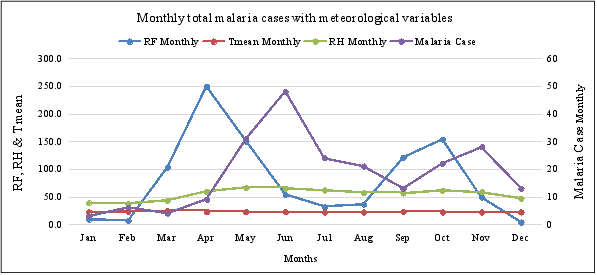
In Figure 3, the magnitude of rainfall was significantly correlated with the risk of the month’s malaria cases for all lag months, with the exception of lag zero (month of detection). In contrast, the magnitude of relative humidity was significantly correlated with the risk of the month’s malaria cases for all lag periods, with the exception of lags 3 and 4 (months of detection). This shows that the incidence of the malaria epidemic in the study area was significantly influenced by rainfall and relative humidity. The month of April had the highest mean rainfall (249 mm), while January had the lowest rainfall amount (8.8 mm). The region receives rainfall throughout the year with double (bimodal) high rains from March to mid-June with short rains from September to November. December, January, February, July, and August are the region's five dry months (Figure 3). There is a low malaria outbreak from December to February. Because, during these periods, the region receives very low rainfall, with those months being dry. This leads to the drying up of the breeding sites of the mosquitoes, leading to the massive death of the parasite .
Figure 3. Trends of monthly total malaria cases with meteorological variables (2013-2022).
4. Discussion
This study analyzes the relationship between climate variables and malaria cases and the effect of climate variability on malaria outbreaks towards the climate variability. So, climate variability that impacts the incubation rate of Plasmodium and breeding activities of Anopheles is considered one of the important environmental contributors to malaria transmission dynamics . For example, temperature rise is expected to increase transmission and prevalence of malaria by reducing the interval between mosquito blood meals, thus decreasing the time to produce new generations, and by shortening the incubation period of the parasite in the mosquitoes . Saprogenic cycles take about 9 to 10 days at a temperature of 28°C, but temperatures higher than 30°C and below 16°C have a negative impact on parasite development, and also at temperatures between 16°C and 36°C, the daily survival rate is about 90% . At high temperatures (>31°C), vector survival decreases, and temperatures of 40°C will result in zero vector survival .
Different studies have associated malaria abundance with high rainfall . However, there is insufficient data that links the relationship between the abundance of mosquitoes and high rain directly. This is because some mosquito strains, like Anopheles gambiae, can breed prolifically in temporary and turbid water bodies such as animal hoof prints and rain puddles, which do not require high rainfall . Conversely, some species prefer permanent water bodies. But the most important factor to note is that both breeds of mosquito require an adequate rainfall amount to be able to breed. Therefore, rainfall sufficiency and saturation deficiency affect mosquito survival . Because of this, there is a good reason for using rainfall to evaluate the probable presence of vectors and the survival of malaria occurrence. Rainfall in tropical areas creates an opportunity for Anopheles mosquitoes to lay eggs, which can reach adulthood. Other environmental factors, such as land use change, have also been shown to be driving malaria patterns across different spatio-temporal scales .
The result of this study revealed that the monthly peak of malaria incidence in the Delomena district occurred in June (11 cases), 2021, a year after the main rainy season, while the lowest malaria incidence occurred in January (0 cases), following a short rainy season. Furthermore, the Spearman correlation analysis showed that monthly mean rainfall, relative humidity, and mean minimum temperature had a positive correlation with malaria occurrence but a negative correlation with mean maximum temperature. The finding contradicts the findings in Shuchen Country, China, and the Highlands of Madagascar, which showed that all meteorological variables are positively correlated with malaria .
Correlation between malaria and climate varies with altitudes. The correlation coefficient for the association between monthly malaria cases and some meteorological factors was greater than other meteorological factors. This indicates that one meteorological factor plays a greater role in malaria cases' occurrence or transmission than others, which coincides with the finding from Dehradun, Uttaranchal, India, a shush country . The monthly total rainfall was the most significant factor that determines malaria occurrence in the study area after relative humidity. In line with this, the research done by , a study in Anhui Province, China, showed rainfall (rs = 0.48) had the highest relation with malaria incidence. However, the effect of rainfall on the transmission of malaria is very complicated, varying with the circumstances of particular geographical regions and depending on the local habits of mosquitoes . Rainfall may prove beneficial to mosquito breeding if moderate, but it may destroy breeding sites and flush out the mosquito larvae when it is excessive .
This study indicates that total monthly rainfall was associated with the occurrence of malaria with a one-month lag effect. On the other hand, the correlation coefficients for the linear regression between the monthly maximum temperature and malaria cases were negative. This is important in the hot months, in which an increase in temperature would limit vector and parasite survival and therefore cause a decrease in malaria transmission rates . This finding contradicts the findings in Shuchen Country, China, which concluded that an increase in monthly maximum temperature should cause an increase rather than a decrease in malaria rates . This variation could be due to differences in local climatic conditions in China and the Delomena District. That is the large number of months in the Delomena District that are hotter than months in China; this makes sense in the hot months, in which an increase in temperature would limit vector and parasite survival and therefore may cause a decrease in malaria transmission rate.
The most likely explanation for the finding that increases in temperatures is correlated with a decrease in malaria cases is the significant autocorrelation between monthly temperatures . This indicates that, for a given amount of moisture in air, an increase in temperature causes a decrease in relative humidity, which can limit Anopheles survival . The correlation between maximum temperatures and rainfall may also lead to an explanation of the negative correlation coefficient between maximum temperature and malaria case occurrence . The negative correlation between maximum temperature and rainfall in hotter months may decrease Anopheles breeding or increase dryness, which may be a limiting factor for malaria transmission. Also, the negative binomial regression model indicates that, by 1 mm and% increase, both monthly total rainfalls (0.9%) and average relative humidity (3%) at three- and two-month lagged effects were the most significant for malaria occurrence in the study area, respectively, but mean maximum temperature at zero-month lagged effect was negative. Similar results were also found in Western Ethiopia; a negative correlation between maximum temperature and malaria incidence has also been noted . However, the mean minimum temperature has an insignificant effect on malaria incidence for all lags.
In general, this research concludes by pointing up methodological difficulties and data availability gaps in proving a link between malaria trends and climatic variability. Predictive and connection models' accuracy is constrained by the quality and resolution of epidemiological and climate datasets. Interdisciplinary approaches are also required to better understand and address malaria dynamics because confounding factors, including urbanization, behavioral patterns, socioeconomic position, and agricultural practices, complicate the association between climate variables and malaria incidence.
This study did not take into consideration confounding variables that could affect the incidence of malaria, such as urbanization, behavioral patterns, and socioeconomic status. Future studies should consider more granular data, such as daily records, to capture the immediate effects of climate variability on malaria outbreaks. The secondary data used for the analysis was gathered retrospectively. Thus, additional variables that could act as confounders were not included in the data sources. Efforts can be made in the future to control relevant confounders during the design or analysis stages by employing prospective studies.
5. Conclusion
This study was undertaken to analyze the relationship between climate variables with malaria cases and the effect of climate variability on malaria outbreaks towards the climate variability in the Delomena district. The result of the study revealed that during the last ten years (2013 to 2022), from all months, the highest monthly malaria case occurrence was observed during June in 2021. According to correlation findings, monthly mean rainfall, relative humidity, and mean minimum temperature had a positive correlation with malaria cases but a negative correlation with mean maximum temperature. In this study, the correlation coefficient for the association between monthly total rainfall and relative humidity with monthly malaria cases was greater than other measured meteorological variables. Also, negative binomial regression model analysis showed that with increased cumulative effects of rainfall and relative humidity, the number of malaria cases significantly increased over the study area when considering other factors constant. These findings emphasized climate-informed early warning systems and malaria control strategies. However, there is a need for further studies to develop an early malaria warning system based on the above climatic variables and other non-climatic factors that affect malaria outbreaks.
Abbreviations

EMI

Ethiopia Meteorology Institute

GLM

General Linear Model

SPSS

Statistical Package for Social Science

WHO

World Health Organization

Acknowledgments
I would like to express my deepest gratitude to Mr. Aliyi Mama (Asst. Prof.) and Fitsum Bekele for their boundless assistance and useful comments. Secondly, I would like to thank the Ethiopia Meteorology Institute and the Bale Zone health office for their support during the data collection. Finally, special thanks go to my family and friends who helped me gratefully to concentrate on my studies.
Author Contributions
Million Ejara Zegeye: Conceptualization, Data curation, Formal Analysis, Investigation, Methodology, Project administration, Resources, Software, Supervision, Validation, Visualization, Writing – original draft, Writing – review & editing
Funding
This study did not receive any funding for this manuscript.
Conflicts of Interest
The author declares no conflicts of interest.
References
[1] A. Kolahi, F. Azizi, M. Janghorbani, and H. Hatami, “Epidemiology and Control of Common Diseases in Iran,” 2011.
[2] P. Venkatesan, “The 2023 WHO World malaria report,” The Lancet Microbe, vol. 5, no. 3, p. e214, 2024.
[3] G. Bushi et al., “Determinants of Malaria Vaccine Acceptance: A Systematic Review and Meta-Analysis of Awareness, Acceptance, Hesitancy, and Willingness to Pay,” Immunity, Inflammation and Disease, vol. 13, no. 5, p. e70205, 2025.
[4] M. Mohammadkhani, N. Khanjani, B. Bakhtiari, and K. Sheikhzadeh, “The relation between climatic factors and malaria incidence in Kerman, South East of Iran,” Parasite epidemiology and control, vol. 1, no. 3, pp. 205–210, 2016.
[5] K. Paaijmans, Weather, water and malaria mosquito larvae: the impact of meteorological factors on water temperature and larvae of the Afro-tropical malaria vector Anopheles gambiae Giles. Wageningen University and Research, 2008.
[6] Z. Liu et al., “Effect of temperature and its interactions with relative humidity and rainfall on malaria in a temperate city Suzhou, China,” Environmental Science and Pollution Research, vol. 28, no. 13, pp. 16830–16842, 2021.
[7] N. P. Devi and R. Jauhari, “Climatic variables and malaria incidence in Dehradun, Uttaranchal, India,” Journal of vector borne diseases, vol. 43, no. 1, p. 21, 2006.
[8] Y. Kim et al., “Malaria predictions based on seasonal climate forecasts in South Africa: A time series distributed lag nonlinear model,” Scientific reports, vol. 9, no. 1, p. 17882, 2019.
[9] H. W. MUSINZI, “Impact of Climate Change on The Spread of Malaria Among Children Under Five Years in Vihiga County, Kenya,” 2018.
[10] G. N. Bekele, “IMPACTS OF CLIMATE VARIABILITY ON THE INCIDENCE OF MALARIA AND ITS ADAPTATION STRATEGIES IN HARARI TOWN, HARARI REGIONAL STATE, EASTERN ETHIOPIA,” 2023.
[11] M. C. Thomson, S. J. Connor, N. Ward, and D. Molyneux, “Impact of climate variability on infectious disease in West Africa,” EcoHealth, vol. 1, no. 2, pp. 138–150, 2004.
[12] F. Huang, S. Zhou, S. Zhang, H. Wang, and L. Tang, “Temporal correlation analysis between malaria and meteorological factors in Motuo County, Tibet,” Malaria Journal, vol. 10, no. 1, p. 54, 2011.
[13] T. L. Russell, N. W. Beebe, R. D. Cooper, N. F. Lobo, and T. R. Burkot, “Successful malaria elimination strategies require interventions that target changing vector behaviours,” Malaria journal, vol. 12, no. 1, p. 56, 2013.
[14] E. J. Kweka, E. E. Kimaro, and S. Munga, “Effect of deforestation and land use changes on mosquito productivity and development in Western Kenya Highlands: implication for malaria risk,” Frontiers in public health, vol. 4, p. 238, 2016.
[15] O. A. Babamale et al., “Association between farming activities and Plasmodium falciparum transmission in rural communities in Nigeria,” The Malaysian Journal of Medical Sciences: MJMS, vol. 27, no. 3, p. 105, 2020.
[16] A. Y. Baidjoe et al., “Factors associated with high heterogeneity of malaria at fine spatial scale in the Western Kenyan highlands,” Malaria journal, vol. 15, no. 1, p. 307, 2016.
[17] F. Sani Kalil, M. Hasen Bedaso, and S. Kabeta Wario, “Trends of malaria morbidity and mortality from 2010 to 2017 in Bale Zone, Ethiopia: analysis of surveillance data,” Infection and Drug Resistance, pp. 4379–4387, 2020.
[18] A. Shibeshi, A. Sebsibe, A. Teka, and E. Aklilu, “Ethnobotanical study of mosquito repellent plants used in Seweyna district, Bale Zone, Southeast, Ethiopia,” Evidence-Based Complementary and Alternative Medicine, vol. 2024, no. 1, p. 6610579, 2024.
[19] W. Haileselassie et al., “International border malaria transmission in the Ethiopian district of Lare, Gambella region: implications for malaria spread into South Sudan,” Malaria Journal, vol. 22, no. 1, p. 64, 2023.
[20] G. J. Abiodun, R. Maharaj, P. Witbooi, and K. O. Okosun, “Modelling the influence of temperature and rainfall on the population dynamics of Anopheles arabiensis,” Malaria journal, vol. 15, no. 1, p. 364, 2016.
[21] A. Minwuyelet, D. Yewhalaw, and G. Atenafu, “Retrospective analysis of malaria prevalence over ten years (2015–2024) at Bichena Primary Hospital, Amhara Region, Ethiopia,” PLoS One, vol. 20, no. 4, p. e0322570, 2025.
[22] D. Nega et al., “Baseline malaria prevalence at the targeted pre-elimination districts in Ethiopia,” BMC Public Health, vol. 21, no. 1, p. 1996, 2021.
[23] M. Didita, S. Nemomissa, and T. W. Gole, “Floristic and structural analysis of the woodland vegetation around Dello Menna, Southeast Ethiopia,” Journal of Forestry research, vol. 21, no. 4, pp. 395–408, 2010.
[24] W. Chibssa and F. E. Flintan, “Land use change in the bale mountains eco-region of Ethiopia: Drivers, impacts and future scenarios,” 2017.
[25] P. Camberlin, “Climate of eastern Africa,” Oxford research encyclopedia of climate science, 2018.
[26] D. Asingizwe, M. Tuyizere, M. Mukeshimana, T. Nyandwi, C. A. Kanakuze, and E. Hakizimana, “Why becoming a positive deviant for malaria prevention and control: a sequential explanatory mixed methods study in Bugesera district, Rwanda,” Malaria Journal, vol. 23, no. 1, p. 284, 2024.
[27] M. Amadi and K. H. Erandi, “Assessing the relationship between malaria incidence levels and meteorological factors using cluster-integrated regression,” BMC Infectious Diseases, vol. 24, no. 1, p. 664, 2024.
[28] A. K. Githeko, S. W. Lindsay, U. E. Confalonieri, and J. A. Patz, “Climate change and vector-borne diseases: a regional analysis,” Bulletin of the world health organization, vol. 78, no. 9, pp. 1136–1147, 2000.
[29] Z. S. Zhou ShuiSen et al., “Spatial correlation between malaria cases and water-bodies in Anopheles sinensis dominated areas of Huang-Huai plain, China.,” 2012.
[30] T. Z. Nigussie, T. T. Zewotir, and E. K. Muluneh, “Seasonal and spatial variations of malaria transmissions in northwest Ethiopia: Evaluating climate and environmental effects using generalized additive model,” Heliyon, vol. 9, no. 4, 2023.
[31] C. T. Deressa et al., “Parametrization and Analysis of Effects of Temperature and Humidity on the Development and Survival of Anopheles arabiensis strain, a major Malaria Vector in Ethiopia,” Ethiopian Journal of Education and Sciences, vol. 20, no. 2, pp. 117–136, 2025.
[32] D. M. Megersa and X.-S. Luo, “Effects of Climate Change on Malaria Risk to Human Health: A Review,” Atmosphere, vol. 16, no. 1, p. 71, 2025.
[33] K. Okuneye, S. E. Eikenberry, and A. B. Gumel, “Weather-driven malaria transmission model with gonotrophic and sporogonic cycles,” Journal of biological dynamics, vol. 13, no. sup 1, pp. 288–324, 2019.
[34] N. THEOGENE, “Impacts of climate variability on malaria trends in Rwanda,” 2018.
[35] Y. Yé, V. R. Louis, S. Simboro, and R. Sauerborn, “Effect of meteorological factors on clinical malaria risk among children: an assessment using village-based meteorological stations and community-based parasitological survey,” BMC public health, vol. 7, no. 1, p. 101, 2007
[36] K. Komen, “Could malaria control programmes be timed to coincide with onset of rainfall?,” EcoHealth, vol. 14, no. 2, pp. 259–271, 2017.
[37] E. K. Kipruto et al., “Effect of climatic variability on malaria trends in Baringo County, Kenya,” Malaria journal, vol. 16, no. 1, p. 220, 2017.
[38] L. F. Chaves and C. J. Koenraadt, “Climate change and highland malaria: fresh air for a hot debate,” The Quarterly review of biology, vol. 85, no. 1, pp. 27–55, 2010.
[39] D. E. Ekpa, E. A. Salubi, J. A. Olusola, and D. Akintade, “Spatio-temporal analysis of environmental and climatic factors impacts on malaria morbidity in Ondo State, Nigeria,” Heliyon, vol. 9, no. 3, 2023.
[40] G. An, “Influence of climate on malaria in China,” 2011.
[41] H.-W. Gao et al., “Change in rainfall drives malaria re-emergence in Anhui Province, China,” 2012.
[42] A. Alemu, G. Abebe, W. Tsegaye, and L. Golassa, “Climatic variables and malaria transmission dynamics in Jimma town, South West Ethiopia,” Parasites & vectors, vol. 4, no. 1, p. 30, 2011.
[43] O. J. Briët, P. Vounatsou, D. M. Gunawardena, G. N. Galappaththy, and P. H. Amerasinghe, “Temporal correlation between malaria and rainfall in Sri Lanka,” Malaria journal, vol. 7, no. 1, p. 77, 2008.
[44] P. Bi, S. Tong, K. Donald, K. A. Parton, and J. Ni, “Climatic variables and transmission of malaria: a 12-year data analysis in Shuchen County, China,” Public health reports, vol. 118, no. 1, p. 65, 2003.
[45] T. P. Agyekum et al., “A systematic review of the effects of temperature on Anopheles mosquito development and survival: implications for malaria control in a future warmer climate,” International journal of environmental research and public health, vol. 18, no. 14, p. 7255, 2021.
[46] D. Dabaro, Z. Birhanu, A. Negash, D. Hawaria, and D. Yewhalaw, “Effects of rainfall, temperature and topography on malaria incidence in elimination targeted district of Ethiopia,” Malaria journal, vol. 20, no. 1, p. 104, 2021.
[47] G. M. Assefa, M. D. Muluneh, and Z. A. Alemu, “The Relationship of Climate Change and Malaria Incidence in the Gambella Region, Ethiopia,” Climate, vol. 13, no. 5, p. 104, 2025.
[48] L. Sena, W. Deressa, and A. Ali, “Correlation of climate variability and malaria: a retrospective comparative study, Southwest Ethiopia,” Ethiopian journal of health sciences, vol. 25, no. 2, pp. 129–138, 2015.
Cite This Article
  • APA Style

    Zegeye, M. E. (2026). Effects of Climate Variability on Malaria Outbreak in Delomenna District, Bale Zone, Ethiopia. Science Discovery Health, 1(1), 25-37. https://doi.org/10.11648/j.sdh.20260101.14

    Copy | Download

    ACS Style

    Zegeye, M. E. Effects of Climate Variability on Malaria Outbreak in Delomenna District, Bale Zone, Ethiopia. Sci. Discov. Health 2026, 1(1), 25-37. doi: 10.11648/j.sdh.20260101.14

    Copy | Download

    AMA Style

    Zegeye ME. Effects of Climate Variability on Malaria Outbreak in Delomenna District, Bale Zone, Ethiopia. Sci Discov Health. 2026;1(1):25-37. doi: 10.11648/j.sdh.20260101.14

    Copy | Download

  • @article{10.11648/j.sdh.20260101.14,
      author = {Million Ejara Zegeye},
      title = {Effects of Climate Variability on Malaria Outbreak in Delomenna District, Bale Zone, Ethiopia},
      journal = {Science Discovery Health},
      volume = {1},
      number = {1},
      pages = {25-37},
      doi = {10.11648/j.sdh.20260101.14},
      url = {https://doi.org/10.11648/j.sdh.20260101.14},
      eprint = {https://article.sciencepublishinggroup.com/pdf/10.11648.j.sdh.20260101.14},
      abstract = {Malaria is the major public health problem in sub-Saharan Africa, including Ethiopia. Almost half of the Bale Zone's surface area is at risk for malaria. The objective of this study was to analyze the impact of climate variability on the malaria outbreak in Delomena District and recommend control and preventive measures. Meteorological variables (monthly total rainfall, average relative humidity, and mean maximum and minimum temperature) and malaria case data from 2013 to 2022 were used to analyze correlation and regression using SPSS 20v software. The results indicated that the monthly peak of malaria incidence in the Delomena district occurred in June (11 cases), 2021, a year after the main rainy season, while the lowest malaria incidence occurred in January (0 cases), following a short rainy season. Furthermore, the Spearman correlation analysis showed that monthly mean rainfall, relative humidity, and mean minimum temperature had a positive correlation with malaria occurrence but a negative correlation with mean maximum temperature. Also, the negative binomial regression model indicates that, by 1 mm and% increase, both monthly total rainfalls (0.9%) and average relative humidity (3%) at three- and two-month lagged effects were the most significant for malaria occurrence in the study area, respectively, but mean maximum temperature at zero-month lagged effect was negative. However, the mean minimum temperature has an insignificant effect on malaria incidence for all lags. The study concludes that malaria incidences in the last ten years seem to have a significant association and effect with meteorological variables. To reduce malaria outbreaks in the study area, local government and district health experts should promote early warning systems and climate-informed malaria control strategies.},
     year = {2026}
    }
    

    Copy | Download

  • TY  - JOUR
    T1  - Effects of Climate Variability on Malaria Outbreak in Delomenna District, Bale Zone, Ethiopia
    AU  - Million Ejara Zegeye
    Y1  - 2026/03/09
    PY  - 2026
    N1  - https://doi.org/10.11648/j.sdh.20260101.14
    DO  - 10.11648/j.sdh.20260101.14
    T2  - Science Discovery Health
    JF  - Science Discovery Health
    JO  - Science Discovery Health
    SP  - 25
    EP  - 37
    PB  - Science Publishing Group
    UR  - https://doi.org/10.11648/j.sdh.20260101.14
    AB  - Malaria is the major public health problem in sub-Saharan Africa, including Ethiopia. Almost half of the Bale Zone's surface area is at risk for malaria. The objective of this study was to analyze the impact of climate variability on the malaria outbreak in Delomena District and recommend control and preventive measures. Meteorological variables (monthly total rainfall, average relative humidity, and mean maximum and minimum temperature) and malaria case data from 2013 to 2022 were used to analyze correlation and regression using SPSS 20v software. The results indicated that the monthly peak of malaria incidence in the Delomena district occurred in June (11 cases), 2021, a year after the main rainy season, while the lowest malaria incidence occurred in January (0 cases), following a short rainy season. Furthermore, the Spearman correlation analysis showed that monthly mean rainfall, relative humidity, and mean minimum temperature had a positive correlation with malaria occurrence but a negative correlation with mean maximum temperature. Also, the negative binomial regression model indicates that, by 1 mm and% increase, both monthly total rainfalls (0.9%) and average relative humidity (3%) at three- and two-month lagged effects were the most significant for malaria occurrence in the study area, respectively, but mean maximum temperature at zero-month lagged effect was negative. However, the mean minimum temperature has an insignificant effect on malaria incidence for all lags. The study concludes that malaria incidences in the last ten years seem to have a significant association and effect with meteorological variables. To reduce malaria outbreaks in the study area, local government and district health experts should promote early warning systems and climate-informed malaria control strategies.
    VL  - 1
    IS  - 1
    ER  - 

    Copy | Download

Author Information
  • Abstract
  • Keywords
  • Document Sections

    1. 1. Introduction
    2. 2. Materials and Methods
    3. 3. Results
    4. 4. Discussion
    5. 5. Conclusion
    Show Full Outline
  • Abbreviations
  • Acknowledgments
  • Author Contributions
  • Funding
  • Conflicts of Interest
  • References
  • Cite This Article
  • Author Information