
The increasing sophistication of explosive threats has intensified the demand for advanced, sustainable, and environmentally responsible technologies for explosive detection and neutralization. This review critically examines the emerging role of sustainable nanocomposites in addressing these challenges, with particular emphasis on green nanotechnology, environmental sustainability, and their strategic relevance to national security. Unlike conventional detection systems, which often suffer from limited sensitivity, slow response times, poor selectivity, and reduced performance under harsh tropical conditions, nanocomposite materials—including graphene-based sensors, metal–organic framework (MOF) hybrids, plasmonic nanoparticles, carbon nanomaterials, and TiO2-based photocatalysts—offer superior trace-level detection, rapid electron-transfer capabilities, high selectivity, and environmentally benign degradation of explosive residues. The review explores the fundamental sensing mechanisms, photocatalytic and catalytic neutralization pathways, material synthesis approaches, and sustainability considerations associated with these advanced nanomaterials. It further evaluates practical deployment challenges, including false-positive responses, cross-sensitivity to environmental interferents, long-term material stability, scalability, production costs, and potential environmental and health implications. Existing research gaps are identified, highlighting the need for improved material durability, field validation, and the integration of artificial intelligence and smart sensing technologies to enhance detection accuracy and operational efficiency. In addition, the paper proposes a Nigeria-focused National Nanotechnology Defence Framework aimed at promoting indigenous research, technological innovation, institutional collaboration, and policy development for defence and homeland security applications. The review concludes that sustainable nanocomposites represent a promising frontier for next-generation explosive detection and neutralization technologies, offering significant opportunities to strengthen environmental stewardship, public safety, and national security while advancing sustainable technological development.
| Published in | Science Discovery Materials (Volume 1, Issue 2) |
| DOI | 10.11648/j.sdm.20260102.11 |
| Page(s) | 64-70 |
| Creative Commons |
This is an Open Access article, distributed under the terms of the Creative Commons Attribution 4.0 International License (http://creativecommons.org/licenses/by/4.0/), which permits unrestricted use, distribution and reproduction in any medium or format, provided the original work is properly cited. |
| Copyright |
Copyright © The Author(s), 2026. Published by Science Publishing Group |
Nanotechnology, Explosive Detection, Metal–Organic Frameworks (MOFs), Graphene-Based Sensors, National Security
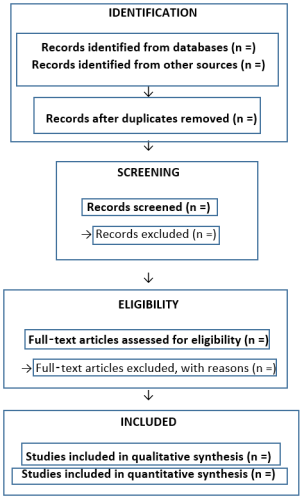
Stage | Activity | Key Output/Focus |
|---|---|---|
1. Systematic Literature Synthesis | Analyzing peer-reviewed articles from major databases (2015-2025) | Data categorized into: sensor performance, catalytic degradation, and operational feasibility |
2. Computational Modeling Review | Reviewing density functional theory (DFT) models from recent studies. | Predicting molecular adsorption energies and charge-transfer dynamics. |
3. Comparative Evaluation | Benchmarking Graphene–MOF, Plasmonic, and CNT sensors, and TiO2Pd catalytic systems | Determining optimal performance metrics (detection limit, response time, recyclability) |
4. Contextual Application | Assessing findings against Nigeria’s national defense framework | Informing policy relevance and deployment readiness considering high humidity and limited infrastructure |
Sensor Type | Key Nanomaterials | Detection Limit (LOD) | Response Time | Operational Advantage | Source of Data |
|---|---|---|---|---|---|
Graphene- MOF Hybrids | Functionalized Graphene, MOFs | Below 0.5ppb (for nitroaromatics) | Sub-second electronic response | Ultra-trace sensitivity; Enhanced molecular adsorption | Patel et al. (2021) |
Electrochemical Sensors | Carbon Nanotubes (CNTs), Metal Oxides | Reliable Response | Within 30 seconds | High Operational stability (200 cycles); ideal for field-deployable platforms | Ibrahim & Noor (2019) |
Plasmonic Sensors | Gold/ Silver Nanoparticles | Comparable sensitivity | Fast (Spectral shift) | High signal amplification via LSPR | Zhang & Lee (2020) |
Catalyst System | Degradation Target | Activation Mechanisms | Key Performance Metric | Sustainability Advantage | Source of Data |
|---|---|---|---|---|---|
Photocatalytic TiO2Pd | RDX, TNT | UV/ Visible light Irradiation | ~ 40% reduction in activation energy compared to unmodified TiO2 | Converts hazardous materials into harmless products (CO2, N2, H2O) | Kumar et al. (2020) |
Nanoalloys | General Energetic Compounds | Thermocatalytic / Chemical | Consistent activity across five recycles | High recyclability; By-products show low toxicity | Hassan & Ramakrishna (2020) |
Strategic Pillar | Recommended Action | Key Objective |
|---|---|---|
Governance & Coordination | Establish the National Nanotechnology Defence Framework (NNDF) | Harmonize research priorities, safety standards, and defense procurement |
Human Capital Development | Embed nanotechnology modules in defense and engineering curricula | Develop local expertise and capacity through hands-on training and industry partnerships |
Commercialization | Foster Public- Private Partnerships (PPPs) and support innovation clusters | Enhance local manufacturing of nanosensors, reduce reliance on imports, and encourage commercialization |
Oversight & Ethics | Enforce nanoparticles safety protocols and ethical environmental guidelines | Ensure safe adoption aligned with OECD best practices and green chemistry principles |
Intelligence Integration | Combine nanosensors analytics with AI-driven threat recognition | Establish predictive counterterrorism intelligence capabilities |
ACS | American Chemical Society |
AI | Artificial Intelligence |
CNT | Carbon Nanotube |
CSRS | Centre for Strategic Research and Studies |
DFT | Density Functional Theory |
DICON | Defence Industries Corporation of Nigeria |
DNT | Dinitrotoluene |
HMX | High Melting Explosive (High Melting eXplosive) |
IED | Improvised Explosive Device |
IEEE | Institute of Electrical and Electronics Engineers |
LCA | Life Cycle Assessment |
LOD | Limit of Detection |
LSPR | Localized Surface Plasmon Resonance |
MOF | Metal–Organic Framework |
MOFs | Metal–Organic Frameworks |
NASENI | National Agency for Science and Engineering Infrastructure |
NDC | National Defence College |
NNDF | National Nanotechnology Defence Framework |
OECD | Organisation for Economic Co-operation and Development |
ONSA | Office of the National Security Adviser |
PCA | Principal Component Analysis |
Pd | Palladium |
PETN | Pentaerythritol Tetranitrate |
PRISMA | Preferred Reporting Items for Systematic Reviews and Meta-Analyses |
ppb | Parts Per Billion |
PPP | Public–Private Partnership |
RDX | Research Department Explosive (Cyclotrimethylenetrinitramine) |
RMRDC | Raw Materials Research and Development Council |
SDG | Sustainable Development Goal |
SEM | Scanning Electron Microscope (if mentioned in the final version) |
TiO2 | Titanium Dioxide |
TNT | Trinitrotoluene |
TATP | Triacetone Triperoxide |
UN | United Nations |
UV | Ultraviolet |
VOCs | Volatile Organic Compounds |
| [1] | Chen, W., Zhang, H., & Lin, Y. (2021). Graphene-based nanocomposites for advanced sensing of hazardous materials. Nano Today, 38, 101204. |
| [2] | Eze, N., Musa, I., & Adeyemi, K. (2023). Emerging nanotechnologies for counterterrorism and defense innovation in West Africa. Defence and Security Analysis, 39(2), 150–169. |
| [3] | Hassan, T. A., & Ramakrishna, S. (2020). Sustainable nanomaterials for environmental remediation and security applications. Journal of Cleaner Production, 259, 120822. |
| [4] | Ibrahim, S., & Noor, H. (2019). Electrochemical nanosensor arrays for explosive vapour detection. Sensors and Actuators B: Chemical, 290, 380–392. |
| [5] | Kumar, R., Singh, P., & Zhao, L. (2020). Photocatalytic degradation of energetic materials using TiO2-based nanocomposites. Journal of Hazardous Materials, 397, 122739. |
| [6] | Mensah, A. K., & Okoye, C. (2022). Barriers to adoption of advanced detection technologies in Sub-Saharan Africa. Security Technology Review, 9(1), 45–63. |
| [7] | Muthalif, A. G., & Abubakar, L. (2022). Computational modeling of nanostructured materials for energetic compound sensing. Computational Materials Science, 206, 111249. |
| [8] | Okafor, C. J., & Adebayo, M. O. (2021). Nanotechnology for national security: Opportunities and ethical considerations in Nigeria. African Journal of Science, Technology, Innovation and Development, 13(6), 711–724. |
| [9] | Patel, G., Osei, E., & Tan, J. (2021). Metal–organic frameworks and graphene hybrids for trace explosive sensing. Analytical Chemistry, 93(14), 5823–5834. |
| [10] | Zhang, Y., & Lee, D. (2020). Plasmonic nanoparticle sensors for nitroaromatic explosive detection. ACS Nano, 14(5), 6104–6116. |
APA Style
Haruna, A. S., Esuh, B. E., Rimfat, L. J. (2026). Sustainable Nanocomposites for Explosive Detection and Neutralization: A Critical Review Integrating Material Science into National Security. Science Discovery Materials, 1(2), 64-70. https://doi.org/10.11648/j.sdm.20260102.11
ACS Style
Haruna, A. S.; Esuh, B. E.; Rimfat, L. J. Sustainable Nanocomposites for Explosive Detection and Neutralization: A Critical Review Integrating Material Science into National Security. Sci. Discov. Mater. 2026, 1(2), 64-70. doi: 10.11648/j.sdm.20260102.11
@article{10.11648/j.sdm.20260102.11,
  author = {Aminu Sanusi Haruna and Bassey Etuk Esuh and Lois John Rimfat},
  title = {Sustainable Nanocomposites for Explosive Detection and Neutralization: A Critical Review Integrating Material Science into National Security},
  journal = {Science Discovery Materials},
  volume = {1},
  number = {2},
  pages = {64-70},
  doi = {10.11648/j.sdm.20260102.11},
  url = {https://doi.org/10.11648/j.sdm.20260102.11},
  eprint = {https://article.sciencepublishinggroup.com/pdf/10.11648.j.sdm.20260102.11},
  abstract = {The increasing sophistication of explosive threats has intensified the demand for advanced, sustainable, and environmentally responsible technologies for explosive detection and neutralization. This review critically examines the emerging role of sustainable nanocomposites in addressing these challenges, with particular emphasis on green nanotechnology, environmental sustainability, and their strategic relevance to national security. Unlike conventional detection systems, which often suffer from limited sensitivity, slow response times, poor selectivity, and reduced performance under harsh tropical conditions, nanocomposite materials—including graphene-based sensors, metal–organic framework (MOF) hybrids, plasmonic nanoparticles, carbon nanomaterials, and TiO2-based photocatalysts—offer superior trace-level detection, rapid electron-transfer capabilities, high selectivity, and environmentally benign degradation of explosive residues. The review explores the fundamental sensing mechanisms, photocatalytic and catalytic neutralization pathways, material synthesis approaches, and sustainability considerations associated with these advanced nanomaterials. It further evaluates practical deployment challenges, including false-positive responses, cross-sensitivity to environmental interferents, long-term material stability, scalability, production costs, and potential environmental and health implications. Existing research gaps are identified, highlighting the need for improved material durability, field validation, and the integration of artificial intelligence and smart sensing technologies to enhance detection accuracy and operational efficiency. In addition, the paper proposes a Nigeria-focused National Nanotechnology Defence Framework aimed at promoting indigenous research, technological innovation, institutional collaboration, and policy development for defence and homeland security applications. The review concludes that sustainable nanocomposites represent a promising frontier for next-generation explosive detection and neutralization technologies, offering significant opportunities to strengthen environmental stewardship, public safety, and national security while advancing sustainable technological development.},
 year = {2026}
}
TY  - JOUR
T1  - Sustainable Nanocomposites for Explosive Detection and Neutralization: A Critical Review Integrating Material Science into National Security
AU  - Aminu Sanusi Haruna
AU  - Bassey Etuk Esuh
AU  - Lois John Rimfat
Y1  - 2026/07/28
PY  - 2026
N1  - https://doi.org/10.11648/j.sdm.20260102.11
DO  - 10.11648/j.sdm.20260102.11
T2  - Science Discovery Materials
JF  - Science Discovery Materials
JO  - Science Discovery Materials
SP  - 64
EP  - 70
PB  - Science Publishing Group
SN  - 3143-6927
UR  - https://doi.org/10.11648/j.sdm.20260102.11
AB  - The increasing sophistication of explosive threats has intensified the demand for advanced, sustainable, and environmentally responsible technologies for explosive detection and neutralization. This review critically examines the emerging role of sustainable nanocomposites in addressing these challenges, with particular emphasis on green nanotechnology, environmental sustainability, and their strategic relevance to national security. Unlike conventional detection systems, which often suffer from limited sensitivity, slow response times, poor selectivity, and reduced performance under harsh tropical conditions, nanocomposite materials—including graphene-based sensors, metal–organic framework (MOF) hybrids, plasmonic nanoparticles, carbon nanomaterials, and TiO2-based photocatalysts—offer superior trace-level detection, rapid electron-transfer capabilities, high selectivity, and environmentally benign degradation of explosive residues. The review explores the fundamental sensing mechanisms, photocatalytic and catalytic neutralization pathways, material synthesis approaches, and sustainability considerations associated with these advanced nanomaterials. It further evaluates practical deployment challenges, including false-positive responses, cross-sensitivity to environmental interferents, long-term material stability, scalability, production costs, and potential environmental and health implications. Existing research gaps are identified, highlighting the need for improved material durability, field validation, and the integration of artificial intelligence and smart sensing technologies to enhance detection accuracy and operational efficiency. In addition, the paper proposes a Nigeria-focused National Nanotechnology Defence Framework aimed at promoting indigenous research, technological innovation, institutional collaboration, and policy development for defence and homeland security applications. The review concludes that sustainable nanocomposites represent a promising frontier for next-generation explosive detection and neutralization technologies, offering significant opportunities to strengthen environmental stewardship, public safety, and national security while advancing sustainable technological development.
VL  - 1
IS  - 2
ER  -
Department of Science and Technology, Centre for Strategic Research and Studies, National Defence College Nigeria, Abuja

Information


 Share This Article
 Twitter
 Linked In
 Facebook
 Copy
Copy Download