Abstract
This ethnographic study investigates how youths in Bulchana Woreda of Shashemene city, a place affected by volatile conflict, a multi-ethnic and multi-religious setting, actively regenerate social cohesion through everyday practices of care, cooperation, and morality. The paper argues that youths are relational social actors, arguing that the dominant narratives of youth as an active demographic category are associated with violence. It conceptualizes youths as social subjects whose agency is fundamentally shaped by and defined through their ongoing interactions, connections, and interdependence with other society members. Drawing on Giardiello’s social generativity and Kearns and Forrest’s dimensions of social cohesion, the study analyzes how youth-led activities are produced through care amid persistent social tension rather than through shared identity or consensus. The findings reveal that generativity operates as moral labor of emotional efforts, not given consistent attention or credit, and is structurally restricted rather than just participation. Youth activities also temporarily eradicate ethnic, religious, and political divisions, and their capacity to sustain cohesion was limited by unemployment, politicization, bureaucratic mistrust, and gender inequality in recognizing and giving them authority. Foregrounding youths’ fragile nature of generativity, relational and procession, this study contributes to the anthropological debates on youth civicity, social cohesion, and moral agency in the urban context of Africa. It argues for rethinking youth as active producers of moral and social life under conditions of uncertainty rather than a social problem to be managed.
|
Published in
|
American Journal of Anthropology (Volume 1, Issue 1)
|
|
DOI
|
10.11648/j.aja.20260101.12
|
|
Page(s)
|
6-14 |
|
Creative Commons
|

This is an Open Access article, distributed under the terms of the Creative Commons Attribution 4.0 International License (http://creativecommons.org/licenses/by/4.0/), which permits unrestricted use, distribution and reproduction in any medium or format, provided the original work is properly cited.
|
|
Copyright
|
Copyright © The Author(s), 2026. Published by Science Publishing Group
|
Keywords
Youth Agency, Relational Social Actors, Social Generativity, Moral Labor, Urban Ethiopia
1. Introduction
Urban youth constitute one of the most dynamic social groups across contemporary African societies, often occupying contradictory positions in public discourse. International development and policy literature frequently associate youth with unemployment, political unrest, or violent conflict
. Studies across Liberia, Sudan, DR Congo, Somalia, and Ethiopia repeatedly link large youth populations with instability when economic decline, poor governance, or ethnic polarizations with instability when economic decline, poor governance, or ethnic polarization are present
. Ethiopian scholarship similarly highlights how youth mobilizations such as
Qeerroo, Fano, Ejeto, Berberta, and others have shaped major political events, ethnic tensions, and localized violence
| [10] | Feleke Habtamu, (2020). Inter-Ethnic Conflict and Eviction in Post-1991 Ethiopia: The Case of Oromia. Available at SSRN 3681326. |
| [15] | Kearns, A., & Forrest, R. (2000). Social cohesion and multilevel urban governance. Urban studies, 37(5-6), 995-1017. |
| [24] | Mulualem, Daba T. (2019). ‘Qeerroo Fi Qarree’: The Engine Of Current Transition In Ethiopia Politics. International Journal of Scientific and Research Publications, 9(5), 534-543. |
| [25] | Østebø, T., Haustein, J., Gedif, F., KIdir, K. J., Jemal, M., & Tesfaye, Y. A. (2021). Religion, Ethnicity, and Charges of Extremism: The Dynamics of Inter-communal Violence in Ethiopia. Brussels: European Institute of Peace. |
[10, 15, 24, 25]
. These perspectives have contributed to a dominant narrative in which youth are framed primarily as drivers of disorder rather than contributors to community wellbeing.
Yet, a growing body of international research reveals that youth frequently act as bridges rather than dividers, strengthening relations across social, ethnic, or religious lines through volunteering, civic action, and neighborhood participation
| [9] | Epure, M., & MIHӐEȘ, L. (2014, October). Youth and Social Cohesion. In International Conference on Economic Sciences and Business Administration (Vol. 1, No. 1, pp. 136-141). Spiru Haret University. |
| [19] | Laurence, J. (2020). Cohesion through participation? Youth engagement, interethnic attitudes, and pathways of positive and negative intergroup contact among adolescents: A quasi-experimental field study. Journal of Ethnic and Migration Studies, 46(13), 2700-2722. |
| [17] | Kuhnt, J., Rischke, R., David, A., & Lechtenfeld, T. (2017). Social cohesion in times of forced displacement-the case of young people in Jordan (No. 243). Discussion Papers. |
| [29] | Thomas, K. T. (2022). Bridging social boundaries and building social connectedness: Through youth development programs. Equality, Diversity and Inclusion: An International Journal, 41(7), 976-992. |
[9, 19, 17, 29]
. Studies show that youth engagement can increase positive intergroup contact
| [18] | Kvale, S., & Brinkmann, S. (2009). Interviews: Learning the craft of qualitative research interviewing. sage. |
[18]
, expand social networks, reduce prejudice, and support community resilience during displacement or urban stress
| [17] | Kuhnt, J., Rischke, R., David, A., & Lechtenfeld, T. (2017). Social cohesion in times of forced displacement-the case of young people in Jordan (No. 243). Discussion Papers. |
[17]
. These findings align with long-standing sociological and anthropological thought that emphasizes the role of shared values, social support, and reciprocal practices in sustaining cohesion
| [7] | Durkheim, E. (1912/1995). The elementary forms of religious life (K. E. Fields, Trans.). Free press. (Original work published in 1912). |
| [11] | Fonseca, X., Lukosch, S., & Brazier, F. (2019). Social cohesion revisited: a new definition and how to characterize it. Innovation: The European Journal of Social Science Research, 32(2), 231-253. |
| [28] | Putnam, R. D. (2000). Bowling alone: The collapse and revival of American community. Simon Schuster. |
[7, 11, 28]
.
Despite these developments, research in Ethiopia continues to focus overwhelmingly on youth either as conflict actors or as passive beneficiaries of NGO-led peace building and livelihood programs
| [20] | Mesele Mengsteab, D. A. Dow, J. Springman, J. F. Tellez, Sewareg A., Fitsum H., (2023). Final Technical Report: The Effect of Social Ties on Engagement & Cohesion: Evidence from Ethiopian University Students. West Lafayette, IN: Long-term Assistance and Services for Research - Partners for University-Led Solutions Engine (LASER PULSE Consortium). |
| [27] | PlanBørnefonden. (2022). Youth Driving Change: Supporting youth livelihoods and social cohesion in urban Ethiopia. |
[20, 27]
. Existing Ethiopian studies tend to emphasize youth participation in peace building initiatives
| [1] | Abyew Teshome, (2021). The Demand for a Holistic Approach to Peace: Recognizing the Role of Youth in Peace Building in Ethiopia. Annals of the Romanian Society for Cell Biology, 18659-18669.
http://annalsofrscb.ro/index.php/journal/article/view/8356 |
| [3] | Benti Mekonnen & Girma Dinagde (2022). Exploring Youth Involvement in Peace Building: The Case of Mandi Town, West Wallaga Zone, Oromia National Regional State. Journal of Positive School Psychology, 6(3), 9418-9429.
https://mail.journalppw.com/index.php/jpsp/article/view/5346/3529 |
| [31] | Yosef Beyene, (2020). Assessing youth involvement in peace building: The Case of Fagita Lekoma Woreda, Awi Administrative Zone, Amhara national Regional State (Doctoral dissertation, MA thesis, Addis Ababa University, Addis Ababa, Ethiopia).
https://etd.aau.edu.et/server/api/core/bitstreams/62e3ab01-d6b4-4315-a2af-948f89f454b5/content |
[1, 3, 31]
but rarely explore youth as generators of social cohesion through every day acts of care, mutual aid, cultural engagement, and neighborhood cooperation. Moreover, the social drivers that motivate youth participation, such as moral norms of help, neighborhood solidarities, or intergenerational relationships, remain analytically underdeveloped. No existing study has ethnographically examined how urban Ethiopian youth conflict-affected towns/cities build social cohesion across the multiple dimensions identified by
| [15] | Kearns, A., & Forrest, R. (2000). Social cohesion and multilevel urban governance. Urban studies, 37(5-6), 995-1017. |
[15]
: shared values and civic culture, social order, solidarity, social networks, and place attachment.
This gap is especially striking in Bulchana Woreda of Shashemene city, a context repeatedly affected by inter-ethnic, religious, and political tensions
| [16] | Kebede Bekere, (2020). RESTORING THE BROKEN BRIDGE: RECONCILING MULTI-ETHNO-RELIGIOUS CONFLICT IN SHASHEMENE, ETHIOPIA. Inter-Religious Council of Ethiopia (IRCE). |
| [25] | Østebø, T., Haustein, J., Gedif, F., KIdir, K. J., Jemal, M., & Tesfaye, Y. A. (2021). Religion, Ethnicity, and Charges of Extremism: The Dynamics of Inter-communal Violence in Ethiopia. Brussels: European Institute of Peace. |
[16, 25]
. While public discourse often portrays local youth as contributions to disorder, everyday life in Bulchana reveals a different reality: young people (youth or individuals aging between 15-29 as of
organizing cultural peace events, participating in community cleanups, assisting vulnerable households, and mobilizing peers around collective responsibilities. Such generativity practices resonate with
| [13] | Giardiello, M. (2014). The generative theory of social cohesion and civic integration. European Scientific Journal. |
[13]
theory of social generativity, which conceptualizes cohesion not merely as structural stability but as the ongoing reproduction of moral responsibility, care, and meaning social bonds.
By integrating Kearns and Forrest's multidimensional model of cohesion with Giardiello's generativity perspective, this study approaches youth not as potential threats but as active moral and social agents who produce community life. This conceptual approach enables a more nuanced understanding of how cohesion is enacted through practice, feeling, obligation, and interdependence, dimensions often invisible in policy-oriented research. Accordingly, this ethnographic study investigates the constructive roles of youths in building social cohesion in Bulchana Woreda. It asks:
1) How do young people contribute to the multiple dimensions of social cohesion in their everyday lives?
2) What moral values, social relationships, and institutional arrangements enable youth participation?
3) What challenges constrain the continuity and impact of youth-led cohesion initiatives?
By addressing these questions, the study provides the first ethnographic account in Ethiopia that documents youth-led generative practices across all five social cohesion dimensions. It challenges deficit-based portrayals of youth, contributes theoretical insights to anthropological debates on cohesion and generativity, and offers practical implications for strengthening inclusive youth engagement in conflict-affected urban settings.
Theoretical Framework
This study is guided by two complementary conceptual perspectives of Giardiello's notion of social generativity and
| [15] | Kearns, A., & Forrest, R. (2000). Social cohesion and multilevel urban governance. Urban studies, 37(5-6), 995-1017. |
[15]
multidimensional model of social cohesion. Together, these frameworks provide an interpretive lens for understanding how youths in Bulchana enact moral responsibility, sustain community life, and negotiate the social conditions that shape their participation.
Conceptualizes social generativity as the capacity of individuals and groups to reproduce care, moral obligation, and interdependence within a community
| [13] | Giardiello, M. (2014). The generative theory of social cohesion and civic integration. European Scientific Journal. |
[13]
. Generativity emphasizes four interrelated processes: ethical responsibility towards others, reciprocal relations and mutual care, commitment to collective wellbeing, and the transmission of shared values across generations.
In contexts marked by political uncertainty and social fragmentation, such as contemporary Ethiopian generativity, it is particularly useful for illustrating how people mobilize moral norms to maintain community continuity. Rather than viewing youth through the lens of risk, protest, or political manipulation, generativity focuses on their potential as moral agents capable of sustaining social life through everyday practices of assistance, cooperation, and engagement. This lens aligns with anthropological scholarship that situates cohesion not primarily in formal institutions, but in lived relationships, emotional commitments, and shared moral worlds.
Model offers a complementary structural lens by identifying five interrelated dimensions of social cohesion of common values and civic culture, social order and control, social solidarity and reduction of inequality, social networks and social capital, and place attachment and identity
| [15] | Kearns, A., & Forrest, R. (2000). Social cohesion and multilevel urban governance. Urban studies, 37(5-6), 995-1017. |
[15]
.
These dimensions help unpack how societies maintain relational stability and collective belonging. They also provide analytical categories for examining how youth actions such as voluntary service, cultural initiatives, peace activities, or neighborhood cooperation interact with wider social norms, power relations, and spatial identities. The framework is well-suited to ethnographic research because it directs attention both to observable practices and to the underlying systems of values, meaning, and interdependence that make such practices socially significant.
Although distinct, the two frameworks intersect productively. Social generativity illustrates the moral drives behind youth participation or the motivations, ethical commitment, and affective bonds that sustain action. The cohesion model clarifies the social effect of these practices across multiple domains of community life. Generativity explains why young people feel compelled to act; cohesion explains how those actions reinforce trust, solidarity, networks, shared identities, and local order. Using these frameworks together enables a holistic interpretation of youth engagement that is attentive to both lived moral experience and broader socio-structural processes.
In this study, the integration of generativity with the cohesion model allows for an analysis that captures: the moral energies that guide youth practices, the social relationships and networks that enable or constrain them, and the community-level outcomes through which cohesion is strengthened or weakened. This conceptual pairing, therefore, aligns directly with the study's aims and provides a robust analytical basis for interpreting the ethnographic findings.
2. Methods
2.1. Research Design and Approach
This study employed a qualitative ethnographic design to examine how youths in Bulchana Woreda enact and sustain social cohesion through practices, relationships, and moral commitments. Ethnography is well-suited for exploring lived experience, inter-subjective meaning, and situated social action, as emphasized by classic anthropological methodology
| [8] | Emerson, R., Fretz, R. & Shaw, L. (2011). Writing Ethnography Fieldnotes (2nd ed). University of Chicago Press. |
| [14] | Hammersley, M., & Atkinson, P. (2019). Ethnography: principles in practice (4th ed.). Routledge. |
[8, 14]
. This approach aligns with the study's theoretical framing, grounded in social generativity and multidimensional cohesion, providing the immersion necessary to observe cooperation, moral reasoning, and community engagement in their natural contexts.
2.2. Study Setting
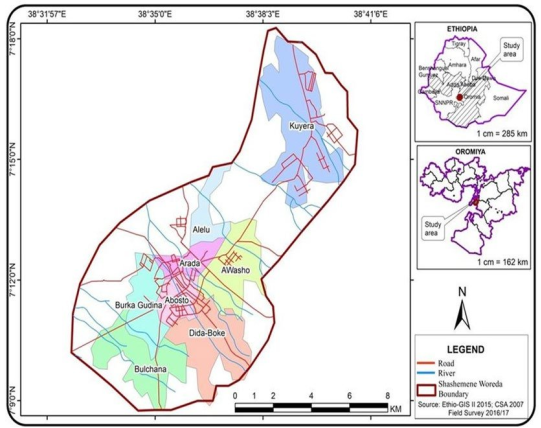
Fieldwork was conducted in Bulchana Woreda, a socially diverse and rapidly urbanizing area within Shashemene City. The site is characterized by ethnic and religious plurality, periodic political tension, and longstanding traditions of mutual aid. Its complex social ecology required a flexible, immersive ethnographic approach capable of capturing interactions and moral worlds.
2.3. Participants and Sampling Strategy
Purposive and snowball sampling were used to recruit participants with experience relevant to the research focus, consistent with standard practice in qualitative research
| [26] | Patton, M. Q. (2015). Qualitative Research & Evaluation Methods (4th ed.). Sage. |
[26]
. Initial contacts included youth leaders, elders, religious figures, and Shashemene youth and sport officers who facilitated broader access to community members.
A total of 98 participants (50 females and 48 males) contributed to the study. Key informant informants of 13 (8 males and 5 females) drawn from Bulchana elders, Shashemene youth and sport Office representatives, and community leaders. Youth interviews with 61 youths (29 males and 32 females) captured their experiences with voluntary support, cultural events, environmental campaigns, religious activities, and educational initiatives.
Three FGDs, each with 8 participants, the first with youths (4 males and 4 females), the second with Vulnerable/helpless residents receiving youth support (5 males and 4 females), and the third a group from all community members (4 males and 4 females). This participant structure allowed triangulation across actors with varying perspectives.
2.4. Data Collection Methods
An extended participant observation was conducted in various youth-led activities, following ethnographic best practice
| [6] | Dewalt, K., & Dewalt, B. (2010). Participant Observation (2nd ed.). Bloomsbury. |
[6]
. Field notes captured social interaction patterns, cooperative behavior, moral reasoning, and responses from community members. In-depth or semi-structured interviews explored participants' motivations, values, perceptions of youth agency, and understandings of social cohesion. This method enabled deep, narrative-rich accounts consistent with qualitative interviewing standards
| [18] | Kvale, S., & Brinkmann, S. (2009). Interviews: Learning the craft of qualitative research interviewing. sage. |
[18]
.
FDGs facilitated collective reflection, allowing observation of group norms and shared moral interpretations. This is effective for understanding collective meaning-making
| [23] | Morgan, D. L. (1997). Focus Groups as Qualitative Research (2nd ed.). Sage. |
[23]
. Key informant interviews with elders, religious leaders, and public officials provided contextual and institutional insight into youth involvement, intergenerational expectations, and broader community dynamics. Document review of local administrative records, youth association documents, and community guidelines was conducted to contextualize youth participation within institutional frameworks.
2.5. Data Management and Analysis
All data were transcribed and analyzed using inductive thematic analysis. Initial open coding identified patterns related to reciprocity, solidarity, community trust, leadership, institutional relations, and challenges. Codes were iteratively clustered into broader themes aligned with the theoretical lenses of social generativity
| [13] | Giardiello, M. (2014). The generative theory of social cohesion and civic integration. European Scientific Journal. |
[13]
and social cohesion dimensions
| [15] | Kearns, A., & Forrest, R. (2000). Social cohesion and multilevel urban governance. Urban studies, 37(5-6), 995-1017. |
[15]
. The iterative nature of analysis followed ethnographic standards of constant comparison and interpretation
| [4] | Charmaz, K. (2014). Constructing grounded theory. (2nd ed.). Sage. |
[4]
. Triangulation across interviews, FGDs, participant observation, and documents enhanced analytic rigor and credibility.
2.6. Ethical considerations
The research adhered to established standards for ethical anthropological fieldwork. Participants were informed about the study's purpose, and informed consent (written or verbal) was obtained, based on
| [2] | American Anthropological Association. (2012). principles of professional responsibility. |
[2]
. Pseudonyms were used to safeguard confidentiality. Given the sensitivity of political tension and youth vulnerability, careful attention was paid to minimizing risk, avoiding coercion, and ensuring comfort during all interactions. The researcher maintained reflexive awareness of positionality and power dynamics, consistent with contemporary reflexive ethnographic practice as per
| [5] | Davies, C. A. (2012). Reflexive ethnography (2nd ed.). Routledge. |
[5]
.
3. Results and Discussion
3.1. Youths' Involvement in the Activities of Building Social Cohesion
3.1.1. Voluntary Mutual Aid for Vulnerable Groups
Youth groups in Bulchana organize feeding programs, home repairs, and blood donation initiatives for elderly people, individuals with disabilities, and orphaned children. These activities strengthen intergenerational relationships by transforming everyday moral values such as reciprocity and compassion into practical support. As one youth group leader noted:
"Youths organize feeding programs for helpless elders through contributions from the community and from their own pockets."
(Interview with P1, Shashemene, January 18, 2024).
Such initiatives cultivate trust between youths and elders and demonstrate what Giardiello describes as generative action as a practice that reproduces care and responsibility across generations. At times, contributions from wealthier residents are inconsistent, which creates strain on youth groups. This highlights the need for shared moral commitment to sustain volunteer programs. Overall, voluntary mutual aid is a central mechanism through which young people translate moral norms into collective well-being.
3.1.2. Peace Promotion Through Cultural Events
Youth in Bulchana play a central role in organizing festivals, sports events, and peace forums that bring together residents from diverse backgrounds. These events create informal spaces where people interact positively and temporarily set aside political or ethnic tensions. One participant described:
"When we dance together wearing different traditional clothes, people forget politics and see that we belong to one community."
(FGD with G1P3, Shashemene, February 4 2024).
These interactions act as bridging encounters that expand social connections and strengthen civic relations. They illustrate a generative form of peace building in which young people use cultural creativity to foster a shared identity. However, attempts by political actors to use cultural creativity to foster shared identity, however, attempts by political actors to use such events for partisan visibility sometimes discourage participation. Despite this, cultural events remain vital youth-led platforms for reinforcing everyday social cohesion.
3.1.3. Environmental Stewardship and Collective Action
Youth groups regularly organize environmental cleanup campaigns locally known as Magaala Qulqulluu to clean markets, streets, and the surroundings of churches and mosques. These activities bring together youths, elders, and community leaders in shared physical labor. An elder explained:
“When we clean the street together with elders and neighbors, it feels like we are part of one big family. Everyone working together makes us forget our differences."
(FGD with G2P1, Shashemene, December 30 2023).
These campaigns strengthen local pride and reinforce place-based solidarity. They also demonstrate generativity by linking care for the environment with care for the community. Limited equipment and inconsistent municipal cooperation sometimes slow progress, yet youth groups continue to mobilize residents through collective commitment. Environmental action thus becomes both a practical and symbolic expression of local cohesion.
3.1.4. Voluntary Education and Social Awareness
During school breaks/summer, youth volunteers provide tutoring and life-skills training to children who lack educational support. Others lead awareness campaigns on hygiene, peaceful behavior, and civic responsibility. One youth explained:
"We don't want another generation to suffer from ignorance or conflict. We teach them about peace and how to care for them."
(FGD with G1P7, Shashemene February 4 2024).
These initiatives strengthen intergenerational continuity by passing knowledge and moral values to younger children. Young women often take leading roles in these educational efforts, expanding the reach of youth-led community care. Voluntary teaching thus contributes to equality of opportunity and reinforces shared norms that support local cohesion.
3.2. The social Factors for Youths' Involvement
3.2.1. Community-Based Trust and Reciprocity
Long-standing traditions of mutual help provide the foundation for youth participation in Bulchana. Elders, idir associations, and neighborhood leaders regularly support youth initiatives by offering moral guidance, symbolic blessings, or small material contributions. As one elder explained:
"When youths ask us to help elders or organize peace programs, we see it as our duty. They are the hope of this Woreda."
(Interview with P12, Shashemene, January 9 2024).
These relationships reinforce reciprocal obligations and give youths' activities social legitimacy. While political tensions occasionally strain collaboration, indigenous institutions often mediate such moments and sustain trust. Overall, community-based reciprocity enables youths to organize confidently and embed their actions within established moral expectations.
3.2.2. Shared Moral Values of Care and Humanity
A widely shared ethic of compassion motivates youths' involvement in voluntary work. Many participants referred to local sayings emphasizing collective responsibility and the duty to support those in need, one youth explained:
"Our elders taught us that helping others means helping ourselves."
(Discussions with G1P2, Shashemene, February 4 2024).
Youth-led feeding programs, medical support drives, and home renovations reflect these values in practice. These actions resonate with community expectations of fairness and demonstrate youths' commitment to maintaining social well-being. Although contributions from wealthier households can be inconsistent, public recognition and gratitude help sustain motivation. Moral values of care, therefore, function as a key driver of youth engagement.
3.2.3. Institutional Partnership
Youth groups work closely with local government offices, religious institutions, and indigenous authorities such as Abba Gada and Haadha Siinqee. These institutions provide venues, equipment, training, and administrative support. A youth affairs officer described:
"We work with youth groups to help them organize peace forums and environmental campaigns. Even with limited budgets, we offer halls or sponsorship letters."
(Interview with P8, Shashemene, April 27 2024).
Such partnerships give youths' initiatives legitimacy and help expand their reach. However, bureaucratic delays and uneven support sometimes create frustration among volunteer groups. Despite these challenges, institutional cooperation remains a crucial enabler of youth engagement and enhances the sustainability of their activities.
3.2.4. Youth Solidarity Networks
Youth associations, friendship groups, and volunteer teams form the most active social spaces supporting cohesion-building activities in Bulchana. These networks encourage participation through peer influence and shared expectations of responsibility. One participant noted:
"If my friends are cleaning the street or helping elders, I cannot stay home. We motivate each other."
(FGD with G1P5, Shashemene, February 4 2024).
These groups create a sense of belonging and mobilize youths across ethnic, religious, and economic backgrounds. Young women frequently lead caregiving and educational activities, while men often manage logistics or public events in a role that complements rather than constrains participation. Youth solidarity networks, therefore, function as everyday engines of cooperation, motivation, and civic identity.
3.3. Youths' Challenges in Building Social Cohesion
3.3.1. Lack of Sustainable Support and Funding
A major constraint on youth initiatives is the absence of consistent financial and logistical support. Many volunteer programs, such as feeding activities, peace festivals, and environmental campaigns, rely on small personal contributions or short-term donations. As one youth leader explained:
"We are committed, but our projects stop when resources finish. Using our own savings cannot continue for long."
(Interview with P19, Shashemene, January 15 2024).
Local offices sometimes provide venues or letters for sponsorship, but funding gaps limit the continuity and growth of youth-led projects. Without predictable support, activities often become episodic rather than sustained, placing pressure on volunteers and reducing their long-term impact.
3.3.2. Youth Unemployment and Economic Insecurity
High levels of unemployment reduce the ability of young people to participate consistently in voluntary activities. Many youths express that while they value community service, sustaining such work without stable livelihoods is difficult. One participant noted:
"We want to help our community, but we also need to survive. Without a job, it's hard to volunteer all the time."
(FGD with G1P2, Shashemene, February 4 2024).
Economic pressure limits both the time and financial resources youths can contribute. Despite these challenges, many continue to participate, showing a strong commitment to their community. However, addressing unemployment is essential for ensuring long-term and reliable engagement in cohesion-building efforts.
3.3.3. Ethnic and Political Divisions
Ethnic and political tensions occasionally undermine youth efforts to promote community cohesion. Some politicized youth structures of formal or semi-formal youth associations, committees, or organizational bodies that are influenced, controlled, or used by political actors, parties, or government agencies to advance political agendas rather than community needs. As a result, a number of youths avoid associations because they fear political labeling or surveillance. Some respondents reported that voluntary activities are sometimes questioned or interpreted through partisan or ethnic assumptions. One youth explained:
"Sometimes people ask which political or ethnic groups are behind an event. Some youths also become tools for political parties and religious fundamentalists, being against coexistence. That kills the spirit of unity we want to show."
(Interview with P5, Shashemene, February 3 2024).
Suspicions reduce participation and create symbolic boundaries among residents. Although youth groups intentionally design events to be inclusive, political polarization continues to pose challenges for collective action.
3.3.4. Distrust and Misperceptions of the Authorities
Youth groups often face bureaucratic suspicion when requesting permission for voluntary events. Some officials interpret gatherings as potential political actions rather than community service. A participant described:
"When we ask permission to hold a campaign, they think we are organizing a protest. We just want to clean or feed people."
(Interview with P7, Shashemene, April 27 2024).
These misperceptions delay activities and discourage volunteers. A lack of open communication also reduces recognition for youth contributions. Building trust between youth groups and local authorities would help transform voluntary activities into more collaborative and sustainable efforts.
3.3.5. Gender-based Exclusion
Although young women play important roles in caregiving, awareness campaigns, and educational activities, leadership positions within formal youth structures are still largely dominated by men. One female volunteer explained:
"We women do most of the caregiving work, but when it comes to decision-making or speaking at events, men take the front."
(Interview with P22, Shashemene, January 2 2024).
This imbalance restricts women's ability to shape program design and public representation. However, field observations show that young women are increasingly assuming coordination roles in education and peace activities, gradually challenging existing hierarchies. Strengthening gender-inclusive practices would enhance the diversity and effectiveness of youth participation.
4. Conclusion
This ethnographic study shows that youths in Bulchana Woreda are central actors in sustaining community cohesion. Through voluntary mutual aid, cultural peace events, environmental campaigns, and educational initiatives, young people translate local moral values of reciprocity, care, and responsibility into concrete collective practices. These activities strengthen trust between generations, expand bridging social ties, and deepen residents' sense of belonging to a shared place.
The findings also demonstrate that youth-led initiatives operate within a broader moral and institutional landscape involving elders, indigenous associations, religious institutions, and local government offices. These relationships provide legitimacy and resources that help sustain youth efforts, while also illustrating the collaborative nature of cohesion-building in Bulchana.
However, the generative contributions of youths remain vulnerable to structural constraints. Inconsistent financial support, high unemployment, political polarization, bureaucratic mistrust, and gendered barriers limit the continuity and effectiveness of youth participation. Addressing these challenges is essential for ensuring that youth-led civic action becomes a durable part of local governance and community life.
Overall, the study highlights the importance of recognizing youths not as sources of instability but as active contributors to social cohesion in conflict-affected settings. By foregrounding their everyday practices and the moral commitment that underpins them, this research provides an alternative perspective on youth agency in Ethiopia and contributes to broader debates on the cultural and institutional foundations of cohesive societies.
The study opens pathways for further investigation. Comparative research across different Ethiopian towns or rural-urban settings could illuminate how youth generativity varies across contexts. Longitudinal ethnography would reveal how youth civic engagement changes over time, especially in relation to shifting economic and political conditions. Future studies could also explore gendered dimensions of youth engagement more deeply, examining how young women navigate leadership roles within youth structures. Finally, qualitative or mixed methods research could help measure the broader social impacts of youth-led cohesion-building efforts.
5. Implications and Recommendations
5.1. Implications
5.1.1. Theoretical Implications
This study contributes to scholarship on youth and social cohesion by demonstrating how young people in urban Ethiopia enact social generativity through every day voluntary practices. The findings provide empirical evidence that generativity, traditionally applied to intergenerational caregiving, can also describe youth-led civic action in contexts of social strain. Youths' involvement in feeding programs, cultural peace events, environmental campaigns, and voluntary education illustrates how moral values of care, reciprocity, and responsibility are reproduced through collective practice. This expands Giardiello's framework by showing that generativity is not merely a psychological or familial process but also an urban civic process embedded in local moral economies.
The study also refines Kearns and Forrest's multidimensional model of social cohesion. It demonstrates that cohesion is produced not only through formal institutions but also through informal, small-scale acts of care and cooperation performed by young people. Youth-led practices in Bulchana intersect directly with cohesion dimensions, including solidarity, social networks, civic culture, and place attachment. These findings suggest that social cohesion literature in African urban settings must pay closer attention to youth agency and the moral repertoires underlying everyday civic life. In doing so, this study argues that youths are relational social actors, arguing that the dominant narratives of youth as an active demographic category are associated with violence. Together these theoretical contributions highlight the importance of understanding youth not simply as beneficiaries of development programs or potential sources of conflict, but as active producers of social order, solidarity, and moral continuity.
5.1.2. Empirical and Practical Implications
The findings point to several practical implications for community development, peace building, and civic engagement programming. First, youth-led voluntary action fills gaps left by limited formal service delivery. Feeding the vulnerable, renovating homes, organizing cultural events, and providing informal education demonstrate how young people respond to community needs with creativity and commitment. This indicates that youth groups are important local assets that should be recognized as partners in community governance.
Second, the study shows that intergenerational relationships remain central to youth civic participation. Elders, Idir associations, indigenous authorities, and religious institutions provide moral support and social legitimacy for youth initiatives. Programs that strengthen these intergenerational linkages, for example, by integrating elders as advisors or cultural mentors, can amplify the reach and acceptance of youth activities.
Thirdly, the findings reveal that youth participation is shaped by a mix of enabling and constraining forces. Shared moral values, peer solidarity networks, and institutional partnerships create strong foundations for youth-led cohesion. However, unemployment, inconsistent funding, political polarization, mistrust of authorities, and gender-based exclusion limit the continuity and impact of youth initiatives. Any intervention that aims to enhance youth civic action must address these structural barriers.
Finally, the study suggests that youth-led civic engagement is most effective when it emerges organically from local moral worlds rather than being imposed through externally designed programs. Supporting youth initiatives, therefore, requires an approach that respects local values, social networks, and indigenous forms of legitimacy.
5.1.3. Policy Implications
Several policy actions can strengthen youth contributions to social cohesion:
Establish predictable small-grant mechanisms for youth groups. Small, consistent funding streams from local government or NGOs can enable youth initiatives to move beyond episodic volunteerism and achieve sustained impact.
Integrate youth groups into local development and peace structures. Including youth representatives in Woreda-level committees or peace councils would enhance collaboration and reduce bureaucratic mistrust.
Support youth livelihood programs linked to civic engagement. Skill-building, microenterprise support, and employment pathways can reduce the economic strain that currently limits voluntary participation.
Promote gender-inclusive youth leadership. Policies should ensure that young women have access to leadership training, public speaking opportunities, and decision-making roles within youth structures.
Strengthen the partnership between youth, elders, religious leaders, and indigenous institutions. Formal recognition of these partnerships can build on existing social capital and reinforce trust across generations.
Develop local guidelines that prevent political interference in youth initiatives. Clear boundaries can protect youth groups from partisan manipulation and encourage broader community participation.
5.2. Recommendations
Based on the findings, the following practical recommendations are proposed:
Local government and NGOs should provide material support (clean equipment, venues, and educational materials) to strengthen ongoing youth initiatives.
Youth-friendly administrative procedures (simple approval processes and clear communication channels) should be established to reduce suspicion and bureaucratic delays.
Peer-led capacity building, including training on project management, conflict resolution, fundraising, and event organization, should be provided to youth groups.
Recognition programs (awards, public acknowledgements, and certificates) can motivate youths and reinforce social legitimacy for their contributions.
Community forums that bring together youth, elders, and local officials can reduce mistrust and enable joint planning for social cohesion activities.
Abbreviations
FGD | Focus Group Discussion |
NGO | Non-governmental Organization |
P1 | Participant One |
G1P2 | Group One Participant Two |
DR | Democratic Republic |
Author Contributions
Awraris Girma is the sole author. The author read and approved the final manuscript.
Conflicts of Interest
The authors declare no conflicts of interest.
References
| [1] |
Abyew Teshome, (2021). The Demand for a Holistic Approach to Peace: Recognizing the Role of Youth in Peace Building in Ethiopia. Annals of the Romanian Society for Cell Biology, 18659-18669.
http://annalsofrscb.ro/index.php/journal/article/view/8356
|
| [2] |
American Anthropological Association. (2012). principles of professional responsibility.
|
| [3] |
Benti Mekonnen & Girma Dinagde (2022). Exploring Youth Involvement in Peace Building: The Case of Mandi Town, West Wallaga Zone, Oromia National Regional State. Journal of Positive School Psychology, 6(3), 9418-9429.
https://mail.journalppw.com/index.php/jpsp/article/view/5346/3529
|
| [4] |
Charmaz, K. (2014). Constructing grounded theory. (2nd ed.). Sage.
|
| [5] |
Davies, C. A. (2012). Reflexive ethnography (2nd ed.). Routledge.
|
| [6] |
Dewalt, K., & Dewalt, B. (2010). Participant Observation (2nd ed.). Bloomsbury.
|
| [7] |
Durkheim, E. (1912/1995). The elementary forms of religious life (K. E. Fields, Trans.). Free press. (Original work published in 1912).
|
| [8] |
Emerson, R., Fretz, R. & Shaw, L. (2011). Writing Ethnography Fieldnotes (2nd ed). University of Chicago Press.
|
| [9] |
Epure, M., & MIHӐEȘ, L. (2014, October). Youth and Social Cohesion. In International Conference on Economic Sciences and Business Administration (Vol. 1, No. 1, pp. 136-141). Spiru Haret University.
|
| [10] |
Feleke Habtamu, (2020). Inter-Ethnic Conflict and Eviction in Post-1991 Ethiopia: The Case of Oromia. Available at SSRN 3681326.
|
| [11] |
Fonseca, X., Lukosch, S., & Brazier, F. (2019). Social cohesion revisited: a new definition and how to characterize it. Innovation: The European Journal of Social Science Research, 32(2), 231-253.
|
| [12] |
Gemeda, B. S., Abebe, B. G., & Cirella, G. T. (2019). The role of land speculators around the urban edge of Shashemene City, Ethiopia. European Journal of Sustainable Development Research, 4(1), em0108.
|
| [13] |
Giardiello, M. (2014). The generative theory of social cohesion and civic integration. European Scientific Journal.
|
| [14] |
Hammersley, M., & Atkinson, P. (2019). Ethnography: principles in practice (4th ed.). Routledge.
|
| [15] |
Kearns, A., & Forrest, R. (2000). Social cohesion and multilevel urban governance. Urban studies, 37(5-6), 995-1017.
|
| [16] |
Kebede Bekere, (2020). RESTORING THE BROKEN BRIDGE: RECONCILING MULTI-ETHNO-RELIGIOUS CONFLICT IN SHASHEMENE, ETHIOPIA. Inter-Religious Council of Ethiopia (IRCE).
|
| [17] |
Kuhnt, J., Rischke, R., David, A., & Lechtenfeld, T. (2017). Social cohesion in times of forced displacement-the case of young people in Jordan (No. 243). Discussion Papers.
|
| [18] |
Kvale, S., & Brinkmann, S. (2009). Interviews: Learning the craft of qualitative research interviewing. sage.
|
| [19] |
Laurence, J. (2020). Cohesion through participation? Youth engagement, interethnic attitudes, and pathways of positive and negative intergroup contact among adolescents: A quasi-experimental field study. Journal of Ethnic and Migration Studies, 46(13), 2700-2722.
|
| [20] |
Mesele Mengsteab, D. A. Dow, J. Springman, J. F. Tellez, Sewareg A., Fitsum H., (2023). Final Technical Report: The Effect of Social Ties on Engagement & Cohesion: Evidence from Ethiopian University Students. West Lafayette, IN: Long-term Assistance and Services for Research - Partners for University-Led Solutions Engine (LASER PULSE Consortium).
|
| [21] |
Ministry of Youth, Sports and Culture (2004). National Youth Policy. Retrieved from:
https://www.youthpolicy.org/national/Ethiopia_2004_National_Youth_Policy.pdf
|
| [22] |
Mnyaka, B., Bradshaw, G., & Breakfast, N. (2022). Conflict and Social Cohesion: Problems of Nation-building among Black Youth in Motherwell Cityship, South Africa. Journal of Nation-Building and Policy Studies, 6(3), 23.
|
| [23] |
Morgan, D. L. (1997). Focus Groups as Qualitative Research (2nd ed.). Sage.
|
| [24] |
Mulualem, Daba T. (2019). ‘Qeerroo Fi Qarree’: The Engine Of Current Transition In Ethiopia Politics. International Journal of Scientific and Research Publications, 9(5), 534-543.
|
| [25] |
Østebø, T., Haustein, J., Gedif, F., KIdir, K. J., Jemal, M., & Tesfaye, Y. A. (2021). Religion, Ethnicity, and Charges of Extremism: The Dynamics of Inter-communal Violence in Ethiopia. Brussels: European Institute of Peace.
|
| [26] |
Patton, M. Q. (2015). Qualitative Research & Evaluation Methods (4th ed.). Sage.
|
| [27] |
PlanBørnefonden. (2022). Youth Driving Change: Supporting youth livelihoods and social cohesion in urban Ethiopia.
|
| [28] |
Putnam, R. D. (2000). Bowling alone: The collapse and revival of American community. Simon Schuster.
|
| [29] |
Thomas, K. T. (2022). Bridging social boundaries and building social connectedness: Through youth development programs. Equality, Diversity and Inclusion: An International Journal, 41(7), 976-992.
|
| [30] |
USAID. (2005). YOUTH & CONFLICT A TOOLKIT FOR INTERVENTION Key Issues Lessons Learned Program Options Monitoring and Evaluation Resources.
https://inee.org/sites/default/files/resources/Youth_and_Conflict_A_Toolkit_for_Intervention.pdf
|
| [31] |
Yosef Beyene, (2020). Assessing youth involvement in peace building: The Case of Fagita Lekoma Woreda, Awi Administrative Zone, Amhara national Regional State (Doctoral dissertation, MA thesis, Addis Ababa University, Addis Ababa, Ethiopia).
https://etd.aau.edu.et/server/api/core/bitstreams/62e3ab01-d6b4-4315-a2af-948f89f454b5/content
|
| [32] |
Zakaria, Y. (2006). Youth, conflict, security, and development. The Reality of Aid 2006.
https://www.realityofaid.org/wp-content/uploads/2013/02/RoA-Report-2006-Part-II.pdf
|
Cite This Article
-
APA Style
Girma, A. (2026). Generations of Care: An Ethnographic Account of Youths' Social Generativity and Civic Engagement in Shashemene, Ethiopia. American Journal of Anthropology, 1(1), 6-14. https://doi.org/10.11648/j.aja.20260101.12
 Copy
|
Copy
|
 Download
ACS Style
Girma, A. Generations of Care: An Ethnographic Account of Youths' Social Generativity and Civic Engagement in Shashemene, Ethiopia. Am. J. Anthropol. 2026, 1(1), 6-14. doi: 10.11648/j.aja.20260101.12
Copy
|
Download
AMA Style
Girma A. Generations of Care: An Ethnographic Account of Youths' Social Generativity and Civic Engagement in Shashemene, Ethiopia. Am J Anthropol. 2026;1(1):6-14. doi: 10.11648/j.aja.20260101.12
Copy
|
Download
-
@article{10.11648/j.aja.20260101.12,
  author = {Awraris Girma},
  title = {Generations of Care: An Ethnographic Account of Youths' Social Generativity and Civic Engagement in Shashemene, Ethiopia},
  journal = {American Journal of Anthropology},
  volume = {1},
  number = {1},
  pages = {6-14},
  doi = {10.11648/j.aja.20260101.12},
  url = {https://doi.org/10.11648/j.aja.20260101.12},
  eprint = {https://article.sciencepublishinggroup.com/pdf/10.11648.j.aja.20260101.12},
  abstract = {This ethnographic study investigates how youths in Bulchana Woreda of Shashemene city, a place affected by volatile conflict, a multi-ethnic and multi-religious setting, actively regenerate social cohesion through everyday practices of care, cooperation, and morality. The paper argues that youths are relational social actors, arguing that the dominant narratives of youth as an active demographic category are associated with violence. It conceptualizes youths as social subjects whose agency is fundamentally shaped by and defined through their ongoing interactions, connections, and interdependence with other society members. Drawing on Giardiello’s social generativity and Kearns and Forrest’s dimensions of social cohesion, the study analyzes how youth-led activities are produced through care amid persistent social tension rather than through shared identity or consensus. The findings reveal that generativity operates as moral labor of emotional efforts, not given consistent attention or credit, and is structurally restricted rather than just participation. Youth activities also temporarily eradicate ethnic, religious, and political divisions, and their capacity to sustain cohesion was limited by unemployment, politicization, bureaucratic mistrust, and gender inequality in recognizing and giving them authority. Foregrounding youths’ fragile nature of generativity, relational and procession, this study contributes to the anthropological debates on youth civicity, social cohesion, and moral agency in the urban context of Africa. It argues for rethinking youth as active producers of moral and social life under conditions of uncertainty rather than a social problem to be managed.},
 year = {2026}
}
Copy
|
Download
-
TY  - JOUR
T1  - Generations of Care: An Ethnographic Account of Youths' Social Generativity and Civic Engagement in Shashemene, Ethiopia
AU  - Awraris Girma
Y1  - 2026/01/29
PY  - 2026
N1  - https://doi.org/10.11648/j.aja.20260101.12
DO  - 10.11648/j.aja.20260101.12
T2  - American Journal of Anthropology
JF  - American Journal of Anthropology
JO  - American Journal of Anthropology
SP  - 6
EP  - 14
PB  - Science Publishing Group
UR  - https://doi.org/10.11648/j.aja.20260101.12
AB  - This ethnographic study investigates how youths in Bulchana Woreda of Shashemene city, a place affected by volatile conflict, a multi-ethnic and multi-religious setting, actively regenerate social cohesion through everyday practices of care, cooperation, and morality. The paper argues that youths are relational social actors, arguing that the dominant narratives of youth as an active demographic category are associated with violence. It conceptualizes youths as social subjects whose agency is fundamentally shaped by and defined through their ongoing interactions, connections, and interdependence with other society members. Drawing on Giardiello’s social generativity and Kearns and Forrest’s dimensions of social cohesion, the study analyzes how youth-led activities are produced through care amid persistent social tension rather than through shared identity or consensus. The findings reveal that generativity operates as moral labor of emotional efforts, not given consistent attention or credit, and is structurally restricted rather than just participation. Youth activities also temporarily eradicate ethnic, religious, and political divisions, and their capacity to sustain cohesion was limited by unemployment, politicization, bureaucratic mistrust, and gender inequality in recognizing and giving them authority. Foregrounding youths’ fragile nature of generativity, relational and procession, this study contributes to the anthropological debates on youth civicity, social cohesion, and moral agency in the urban context of Africa. It argues for rethinking youth as active producers of moral and social life under conditions of uncertainty rather than a social problem to be managed.
VL  - 1
IS  - 1
ER  -
Copy
|
Download





 Share This Article
 Twitter
 Linked In
 Facebook