
This research addresses critical challenges in aviation supply chain risk. In terms of AHP methodology, the research provides goals and performance evaluation of the organizations, covering eleven sub-factors, using expert judgments from professionals who have domain experience of 16-20+ years. This hierarchical arrangement allows for a systematic prioritization of complex, interdependent criteria through the use of pairwise comparisons, validation, and verification for consistencies. The findings of the real-world assessments make it clear that Operational Risk Control is the most dominant strategy at 42.5%, and that Supply Disruption is formally presented as the most critical risk factor at 35.2%. Quality & Safety Compliance is here presented as the most critical performance dimension at 45.2%-well adorned for this industry. Among considerations of financial stability, Cost Efficiency is the first priority at 38.5%-With more shows of concern, Working Capital Optimization (28.9%) and Risk Mitigation Cost (19.8%) presents balance. For supply disruption, the robust results show Supplier Diversification (50.7%) to be the most effective solution, with Advanced Tracking Technology (35.4%) and Improved Demand Forecasting (38.2%) close or pulling equal strengths in terms of meeting performance requirements for delivery reliability. All cases have been found to have CRs smaller than or equal to 0.1, which completes the validation process. Proper delineation for decision-making efficacy is, therefore, put at the disposal of aviation industry stakeholders willing to pursue an increased-resilience agenda in its supply chains with a variance on prioritization strategy instead of one-size-fits-all. This study contributes to the further development of academia in the guise of an applied method of analytical process development using the AHP methodology while deliberating with the industry on proactive reshaping of aviation supply chain resilience under exponentially risky operational environments-an indication that in this industry, considerations of quality and safety far outweigh traditional measures of efficiency.
| Published in | American Journal of Management Science and Engineering (Volume 11, Issue 1) |
| DOI | 10.11648/j.ajmse.20261101.11 |
| Page(s) | 1-14 |
| Creative Commons |
This is an Open Access article, distributed under the terms of the Creative Commons Attribution 4.0 International License (http://creativecommons.org/licenses/by/4.0/), which permits unrestricted use, distribution and reproduction in any medium or format, provided the original work is properly cited. |
| Copyright |
Copyright © The Author(s), 2026. Published by Science Publishing Group |
Aviation Supply Chain, Risk Assessment, Analytic Hierarchy Process, Performance Evaluation, Supply Chain Resilience
Category | Risk Factor | AHP Weight | Priority Level | Key Impact Description |
|---|---|---|---|---|
Supply-Side / External | Supply Disruption | 35.2% | Critical | Can ground entire aircraft fleets immediately |
Operational / Internal | Logistics & Delay | 24.8% | High | Delays maintenance and part replacements |
External / Strategic | Regulatory Compliance | 18.5% | Medium-High | Results in fines and operational restrictions |
Demand-Side / External | Demand Imbalance | 12.7% | Medium | Causes inventory imbalances and cost issues |
Strategic / External | Environmental & ESG | 8.8% | Low | Long-term regulatory and reputation impacts |
Expert | Experience (Years) | Specialty Area | Avg. Consistency Ratio (CR) |
|---|---|---|---|
1 | 20 | Supply Chain Operations | 0.08 |
2 | 18 | Procurement & Logistics | 0.05 |
3 | 16 | Risk Management | 0.12 |
4 | 17 | Operations Management | 0.09 |
Panel Aggregate | 17.75 | - | 0.085 |
Factor | Original Rank | Rank Stability | Sensitivity Level |
|---|---|---|---|
Supply Disruption | 1 | Very High | Low |
Quality & Safety Compliance | 2 | High | Low |
Cost Efficiency | 5 | Medium | Medium |
Quadrant | Factors | Strategic Action | Resource Allocation Priority |
|---|---|---|---|
High Risk-High Impact | 4 | Immediate mitigation required | High Priority |
Low Risk-High Impact | 1 | Leverage and optimize | Medium Priority |
Low Risk-Low Impact | 3 | Maintain and review | Minimal Priority |
Strategy | Global Effectiveness | Implementation Timeframe | Key Implementation Challenge |
|---|---|---|---|
Supplier Diversification | 50.7% | 6-9 months | Identifying and qualifying alternative suppliers |
Improved Demand Forecasting | 38.2% | 4-8 months | Data integration and system implementation |
Safety Stock Optimization | 18.3% | 1-3 months | Balancing inventory costs with service levels |
Risk | Supply Disruption | Logistics Delay | Regulatory Compliance | Demand Imbalance |
|---|---|---|---|---|
Supply Disruption | 1.00 | 0.80 | 0.45 | 0.35 |
Logistics Delay | 0.80 | 1.00 | 0.60 | 0.25 |
Regulatory Compliance | 0.45 | 0.60 | 1.00 | 0.15 |
Demand Imbalance | 0.35 | 0.25 | 0.15 | 1.00 |
Priority | Recommendation | Strategic Impact | Time to Value | Key Performance Indicator Target |
|---|---|---|---|---|
1 | Implement Supplier Diversification Program | Very High | 12-18 months | 30% reduction in single-source dependencies |
2 | Enhance Quality & Safety Compliance Systems | Very High | 9-12 months | Zero major non-conformities in audits |
3 | Deploy Advanced Tracking Technology | High | 6-9 months | 100% real-time shipment visibility |
4 | Optimize Inventory & Safety Stock Levels | Medium-High | 3-6 months | 95% critical part availability |
AHP | Analytic Hierarchy Process |
MCDM | Multi-Criteria Decision-Making |
SCRM | Supply Chain Risk Management |
SRM | Safety Risk Management |
ESG | Environmental, Social, and Governance |
CR | Consistency Ratio |
CI | Consistency Index |
RI | Random Index |
RPN | Risk Priority Number |
BOCR-ANP | Benefits, Opportunities, Costs, Risks - Analytic Network Process |
| [1] | Barbosa, C., C. Malarranha, A. Azevedo, A. Carvalho and A. Barbosa-Povoa, A hybrid simulation approach applied in sustainability performance assessment in make-to-order supply chains: The case of a commercial aircraft manufacturer. Journal of Simulation, 2023. 17(1): p. 32-57. |
| [2] | Guerra, J., F. Souza, S. Pires, M. Salgado and A. Sá, Supply chain risk management (SCRM) process: an analysis in the aerospace industry. Benchmarking: An International Journal, 2024. 32. |
| [3] | Guerra, J., F. Souza, S. Pires and A. Sá, A maturity model for supply chain risk management. Supply Chain Management: An International Journal, 2023. 29. |
| [4] | Swamy, A. and S. K. Mishra, Assessment and prioritization of Supply Chain Risk: Development of AHP model in Aerospace Industry. Turkish Online Journal of Qualitative Inquiry, 2021. 12(6). |
| [5] | Singh, R., R. Mau and J. Marion, Supply chain risk management in aviation and aerospace manufacturing industry - an empirical study. International Journal of Supply Chain and Operations Resilience, 2015. 1: p. 300. |
| [6] | Raj, A. and S. K. Srivastava, Sustainability performance assessment of an aircraft manufacturing firm. Benchmarking: An International Journal, 2018. 25(5): p. 1500-1527. |
| [7] | Yelken, E. and A. Kucuk Yilmaz, Risk identification to lean supply chain applicability analysis at ground handling organization with BOCR-ANP method. Quality Management Journal, 2025. 32(4): p. 261-279. |
| [8] | Basahel, A., From the prospective of ergonomics: Estimating overall stressors and task demands in the construction sites in Saudi Arabia using an analytical hierarchy process (AHP). J. Sci. Ind. Res, 2019. 78: p. 651-658. |
| [9] | Omidvari, F., M. Jahangiri, R. Mehryar, M. Alimohammadlou and M. Kamalinia, Fire risk assessment in healthcare settings: Application of FMEA combined with multi‐criteria decision making methods. Mathematical Problems in Engineering, 2020. 2020(1): p. 8913497. |
| [10] | Garg, C. and V. Agrawal, Evaluation of key performance indicators of Indian airlines using fuzzy AHP method. International Journal of Business Performance Management, 2023. 24: p. 1. |
| [11] | Saaty, T. L., Analytic hierarchy process, in Encyclopedia of operations research and management science. 2013, Springer. p. 52-64. |
| [12] | Crawford, G. and C. Williams, A note on the analysis of subjective judgment matrices. Journal of mathematical psychology, 1985. 29(4): p. 387-405. |
| [13] | Saaty, T. L., A scaling method for priorities in hierarchical structures. Journal of mathematical psychology, 1977. 15(3): p. 234-281. |
| [14] | Saaty, T. L. and L. G. Vargas, Models, Methods, Concepts & Applications of the Analytic Hierarchy Process [electronic resource]. |
| [15] | Aczél, J. and T. L. Saaty, Procedures for synthesizing ratio judgements. Journal of mathematical Psychology, 1983. 27(1): p. 93-102. |
| [16] | Rowe, G. and G. Wright, Expert opinions in forecasting: the role of the Delphi technique, in Principles of forecasting: A handbook for researchers and practitioners. 2001, Springer. p. 125-144. |
| [17] | Ravi Sankar, N. and B. S. Prabhu, Modified approach for prioritization of failures in a system failure mode and effects analysis. International journal of quality & reliability management, 2001. 18(3): p. 324-336. |
| [18] | Liu, H.-C., L. Liu and N. Liu, Risk evaluation approaches in failure mode and effects analysis: A literature review. Expert systems with applications, 2013. 40(2): p. 828-838. |
| [19] | Triantaphyllou, E., Multi-criteria decision making methods, in Multi-criteria decision making methods: A comparative study. 2000, Springer. p. 5-21. |
| [20] | Hwang, C.-L. and K. Yoon, Methods for multiple attribute decision making, in Multiple attribute decision making: methods and applications a state-of-the-art survey. 1981, Springer. p. 58-191. |
| [21] | Saltelli, A., K. Chan and E. M. Scott, Sensitivity analysis: Gauging the worth of scientific models. 2000: John Wiley & Sons. |
| [22] | Triantaphyllou, E. and A. Sánchez, A sensitivity analysis approach for some deterministic multi‐criteria decision‐making methods. Decision sciences, 1997. 28(1): p. 151-194. |
| [23] | Butler, J., J. Jia and J. Dyer, Simulation techniques for the sensitivity analysis of multi-criteria decision models. European Journal of Operational Research, 1997. 103(3): p. 531-546. |
| [24] | Ishizaka, A. and P. Nemery, Multi-criteria decision analysis: methods and software. 2013: John Wiley & Sons. |
| [25] | Kendall, M. G. and B. B. Smith, The problem of m rankings. The annals of mathematical statistics, 1939. 10(3): p. 275-287. |
| [26] | Saaty, T. L., How to make a decision: the analytic hierarchy process. European journal of operational research, 1990. 48(1): p. 9-26. |
| [27] | Levine, H. A., Project portfolio management: a practical guide to selecting projects, managing portfolios, and maximizing benefits. 2005: John Wiley & Sons. |
| [28] | Forman, E. H. and M. A. Selly, Decision by objectives: how to convince others that you are right. 2001: World Scientific. |
| [29] | Saaty, T. L., Decision making with the analytic hierarchy process. International journal of services sciences, 2008. 1(1): p. 83-98. |
| [30] | Saaty, T. L. and Y. Wind, Marketing applications of the analytic hierarchy process. Management science, 1980. 26(7): p. 641-658. |
| [31] | Zavadskas, E. K., Z. Turskis and S. Kildienė, State of art surveys of overviews on MCDM/MADM methods. Technological and economic development of economy, 2014. 20(1): p. 165-179. |
| [32] | Wang, Y.-M., K.-S. Chin, G. K. K. Poon and J.-B. Yang, Risk evaluation in failure mode and effects analysis using fuzzy weighted geometric mean. Expert systems with applications, 2009. 36(2): p. 1195-1207. |
| [33] | Saaty, T. L., Theory and applications of the analytic network process: decision making with benefits, opportunities, costs, and risks. 2005: RWS publications. |
| [34] | Gurnani, H., A. Mehrotra and S. Ray, Supply chain disruptions: Theory and practice of managing risk. 2012: Springer. |
| [35] | Nardo, M., M. Saisana, A. Saltelli and S. Tarantola, Tools for composite indicators building. European Comission, Ispra, 2005. 15(1): p. 19-20. |
| [36] | Cooper, R., S. Edgett and E. Kleinschmidt, Portfolio management for new product development: results of an industry practices study. r&D Management, 2001. 31(4): p. 361-380. |
| [37] | Berg, E., D. Knudsen and A. Norrman, Assessing performance of supply chain risk management programmes: a tentative approach. International Journal of Risk Assessment and Management, 2008. 9(3): p. 288-310. |
| [38] | Loska, D. and J. Higa, The risk to reconstitution: supply chain risk management for the future of the US Air Force’s organic supply chain. Journal of Defense Analytics and Logistics, 2020. 4(1): p. 19-40. |
| [39] | AbdelAziz, N. M., D. Mohamed and H. Soliman, A Multi-Criteria Decision-Making Methodology for Improving the Supply Chain Management: Aviation Fuels Case Study. International Journal of Computers and Informatics (Zagazig University), 2025. 8: p. 69-94. |
| [40] | Kanmaz, Ü. and C. Kütahya, Prioritizing Risk Mitigation Strategies in Air Cargo Freight Operations: A Fuzzy TOPSIS Approach. Journal of Aviation, 2025. 9: p. 181-195. |
| [41] | Ma’Arif, S., I. A. Maulidan and V. R. B. Kurniawan. A Risk Assessment Model for Supply Chain Using a Hybrid Fault Tree Analysis and Analytic Hierarchy Process. in 2024 International Seminar on Application for Technology of Information and Communication (iSemantic). 2024. IEEE. |
| [42] | Ewertowski, T., M. Berlik and M. Sławińska, The Effectiveness of Operational Residual Risk Assessment: The Case of General Aviation Organizations in Enhancing Flight Safety in Alignment with Sustainability. Sustainability, 2024. 16(23): p. 10606. |
| [43] | Sumrit, D. and J. Keeratibhubordee, Risk Assessment Framework for Reverse Logistics in Waste Plastic Recycle Industry: A Hybrid Approach Incorporating FMEA Decision Model with AHP-LOPCOW- ARAS Under Trapezoidal Fuzzy Set. Decision Making: Applications in Management and Engineering, 2024. 8: p. 42-81. |
| [44] | Fernández Ocamica, V., D. Zambrana-Vasquez and J. C. Díaz Murillo, Optimizing Circular Economy Choices: The Role of the Analytic Hierarchy Process. Sustainability, 2025. 17(15): p. 6759. |
| [45] | Mosaddeque, A. I., Z. M. Guria, N. Morshed, M. A. Sufian, A. Ahamed and S. T. H. Rimon. Transforming AI and Quantum Computing to Streamline Business Supply Chains in Aerospace and Education. in 2024 International Conference on TVET Excellence & Development (ICTeD). 2024. IEEE. |
| [46] | Yusriza, F. A., N. A. Abdul Rahman, L. Jraisat and A. Upadhyay, Airline catering supply chain performance during pandemic disruption: a Bayesian network modelling approach. International Journal of Quality & Reliability Management, 2023. 40(5): p. 1119-1146. |
| [47] | Rajaratnam, D. and F. Sunmola, Adaptations in SCOR based performance metrics of airline catering supply chain during COVID-19 pandemic. 2021, 2021. 14(4): p. 22. |
| [48] | Gwako, Z., Supply chain performance measurement in the aviation industry: a case study of Kenya airways ltd. 2008. |
| [49] | Al-Balushi, Z. and C. M. Durugbo, Management strategies for supply risk dependencies: empirical evidence from the gulf region. 2020, 2020. 50(4): p. 457-481. |
| [50] | Al-Gahtani, K. S., et al., The Impact of Dynamic Risk Interdependencies on the Saudi Precast Concrete Industry. 2024, 2024. 14(4): p. 875. |
| [51] | Alqahtani, H. S., A Case Study of Crisis Management Training Needs: Saudi Airlines. 2019, 2019. Retrieved from: |
| [52] | Syed, S. A., Resilient Supply Chains in the Post-Pandemic Era: A Comparative Review of Global Disruption Management Frameworks in Aviation Industry. 2025, 2025. 11(6): p. 168. |
| [53] | Alhamad, A. and H. Mabkhot, Determinants of Product Innovation Performance in Aviation Industry in Saudi Arabia. 2023, 2023. 11(2): p. 57. |
| [54] | Yusriza, F. A., et al., Airline catering supply chain performance during pandemic disruption: a Bayesian network modelling approach. 2023, 2023. 40(5): p. 1119-1146. |
| [55] | Wang, L., Y. Wang, and Y. Ding, Risk Analysis and Resilience of Humanitarian Aviation Supply Chains: A Bayesian Network Approach. 2025, 2025. 15(19): p. 10508. |
| [56] | D'Silva, Nicole, Towards Net-Zero: Analyzing Sustainability Reports of Global Airlines. 2024. |
| [57] | Hooda, Sanjay Kumar and Shweta Yadav, Green Finance for Sustainable Aviation: Stakeholder Perspectives and Systematic Review. International Journal of Professional Business Review, 2023. 8(5): p. e01897. |
| [58] | Dimitrokalli, Evangelia, ESG and Financial Performance in the Aviation Sector: A comparative analysis between Aegean Airlines and Ryanair. 2025, Master's thesis, Hellenic Open University. |
| [59] | Weber, Olaf, Donna Jones and Abolade Makinde, The Connection between Sustainability Ratings and Financial Performance in the Aviation Industry. 2025. Available at SSRN: |
| [60] | Liu, Yujiao, Research on Sustainable Development of AL Airlines Cargo Transportation. 2025, Metropolia University of Applied Sciences. URN: |
| [61] | Marintseva, Kristina and Roxani Athousaki, Assessment of aircraft leasing efficiency: An airline perspective. Journal of the Air Transport Research Society, 2024. 3: p. 100039. |
| [62] | Cheung, Tommy, Bo Li and Zheng Lei, A paradigm shift in the aviation industry with digital twin, blockchain, and AI technologies, in Handbook on Digital Transformation and Innovation. 2023, Edward Elgar Publishing. p. 323–346. |
| [63] | Li, Xue, Po-Lin Lai, Ching-Chiao Yang and Kum Fai Yuen, Determinants of blockchain adoption in the aviation industry: Empirical evidence from Korea. Journal of Air Transport Management, 2021. 97: p. 102139. |
| [64] | Haq, Inam Ul, Vandita Nandal and Himani Uppal, Blockchain Applications in Aviation Securing Transactions, Streamlining Operations, and Improving Passenger Experience, in Blockchain in the Tourism Industry: A New Era of Secure and Transparent Travel Solutions. 2025, Springer. p. 131–154. |
| [65] | Jiang, Yirui, Trung Hieu Tran and Leon Williams, A Surveillance-and-Blockchain-based Tracking System for Mitigation of Baggage Mishandling at Smart Airports. Journal of Airline Operations and Aviation Management, 2023. 2(2). |
| [66] | Joeaneke, Princess Chimmy, Titilayo Modupe Kolade, Onyinye Obioha Val, Anthony Obulor Olisa, Sunday Abayomi Joseph and Oluwaseun Oladeji Olaniyi, Enhancing Security and Traceability in Aerospace Supply Chains through Block Chain Technology. Journal of Engineering Research and Reports, 2024. 26(10): p. 114-135. |
| [67] | Shahab, Sana, Vladimir Simic, Ashit Kumar Dutta, Dragan Pamucar and Mohd Anjum, Evaluating blockchain-based waste management investments in smart cities using a multi-criteria decision support framework. Scientific Reports, 2026. |
| [68] | Li, David C., Matthew John Beck and Rico Merkert, Willingness to pay for voluntary airline carbon offsets and sustainable aviation fuel. Transportation Research Part A: Policy and Practice, 2026. 204: p. 104824. |
| [69] | Yilmaz, Ayse Aslı, AI-Driven Data Analysis and Knowledge Management in Aviation Organizations, in Artificial Intelligence and Business Management. 2024, World Scientific. |
| [70] | Clementi, Marina Dehez, Nicolas Larrieu, Emmanuel Lochin, Mohamed Ali Kaafar and Hassan Asghar, When Air Traffic Management Meets Blockchain Technology: a Blockchain-based concept for securing the sharing of Flight Data, in 2019 IEEE/AIAA 38th Digital Avionics Systems Conference (DASC). 2019, IEEE. |
| [71] | Muruganantham, A. and Bino Joseph, Smart Airline Baggage Tracking and Theft Prevention with Blockchain Technology. The Mattingley Publishing Co., Inc., 2020. 83: p. 3436-3440. |
| [72] | de Andrés-Sánchez, Jorge, Mario Arias-Oliva, Mar Souto-Romero and Miguel Llorens-Marín, Integrating Machine Learning Techniques and the Unified Theory of Acceptance and Use of Technology to Evaluate Drivers for the Acceptance of Blockchain-Based Loyalty Programmes. Computational Economics, 2026. |
APA Style
Barabea, Y. A., Basahel, A., Hameed, A. Z. (2026). Risk Assessment and Performance Evaluation of Supply Chain Operations in Aviation Sector in Saudi Arabia. American Journal of Management Science and Engineering, 11(1), 1-14. https://doi.org/10.11648/j.ajmse.20261101.11
ACS Style
Barabea, Y. A.; Basahel, A.; Hameed, A. Z. Risk Assessment and Performance Evaluation of Supply Chain Operations in Aviation Sector in Saudi Arabia. Am. J. Manag. Sci. Eng. 2026, 11(1), 1-14. doi: 10.11648/j.ajmse.20261101.11
@article{10.11648/j.ajmse.20261101.11,
  author = {Yasser Abdullah Barabea and Abdulrahman Basahel and Abdul Zubar Hameed},
  title = {Risk Assessment and Performance Evaluation of Supply Chain Operations in Aviation Sector in Saudi Arabia},
  journal = {American Journal of Management Science and Engineering},
  volume = {11},
  number = {1},
  pages = {1-14},
  doi = {10.11648/j.ajmse.20261101.11},
  url = {https://doi.org/10.11648/j.ajmse.20261101.11},
  eprint = {https://article.sciencepublishinggroup.com/pdf/10.11648.j.ajmse.20261101.11},
  abstract = {This research addresses critical challenges in aviation supply chain risk. In terms of AHP methodology, the research provides goals and performance evaluation of the organizations, covering eleven sub-factors, using expert judgments from professionals who have domain experience of 16-20+ years. This hierarchical arrangement allows for a systematic prioritization of complex, interdependent criteria through the use of pairwise comparisons, validation, and verification for consistencies. The findings of the real-world assessments make it clear that Operational Risk Control is the most dominant strategy at 42.5%, and that Supply Disruption is formally presented as the most critical risk factor at 35.2%. Quality & Safety Compliance is here presented as the most critical performance dimension at 45.2%-well adorned for this industry. Among considerations of financial stability, Cost Efficiency is the first priority at 38.5%-With more shows of concern, Working Capital Optimization (28.9%) and Risk Mitigation Cost (19.8%) presents balance. For supply disruption, the robust results show Supplier Diversification (50.7%) to be the most effective solution, with Advanced Tracking Technology (35.4%) and Improved Demand Forecasting (38.2%) close or pulling equal strengths in terms of meeting performance requirements for delivery reliability. All cases have been found to have CRs smaller than or equal to 0.1, which completes the validation process. Proper delineation for decision-making efficacy is, therefore, put at the disposal of aviation industry stakeholders willing to pursue an increased-resilience agenda in its supply chains with a variance on prioritization strategy instead of one-size-fits-all. This study contributes to the further development of academia in the guise of an applied method of analytical process development using the AHP methodology while deliberating with the industry on proactive reshaping of aviation supply chain resilience under exponentially risky operational environments-an indication that in this industry, considerations of quality and safety far outweigh traditional measures of efficiency.},
 year = {2026}
}
TY  - JOUR
T1  - Risk Assessment and Performance Evaluation of Supply Chain Operations in Aviation Sector in Saudi Arabia
AU  - Yasser Abdullah Barabea
AU  - Abdulrahman Basahel
AU  - Abdul Zubar Hameed
Y1  - 2026/01/29
PY  - 2026
N1  - https://doi.org/10.11648/j.ajmse.20261101.11
DO  - 10.11648/j.ajmse.20261101.11
T2  - American Journal of Management Science and Engineering
JF  - American Journal of Management Science and Engineering
JO  - American Journal of Management Science and Engineering
SP  - 1
EP  - 14
PB  - Science Publishing Group
SN  - 2575-1379
UR  - https://doi.org/10.11648/j.ajmse.20261101.11
AB  - This research addresses critical challenges in aviation supply chain risk. In terms of AHP methodology, the research provides goals and performance evaluation of the organizations, covering eleven sub-factors, using expert judgments from professionals who have domain experience of 16-20+ years. This hierarchical arrangement allows for a systematic prioritization of complex, interdependent criteria through the use of pairwise comparisons, validation, and verification for consistencies. The findings of the real-world assessments make it clear that Operational Risk Control is the most dominant strategy at 42.5%, and that Supply Disruption is formally presented as the most critical risk factor at 35.2%. Quality & Safety Compliance is here presented as the most critical performance dimension at 45.2%-well adorned for this industry. Among considerations of financial stability, Cost Efficiency is the first priority at 38.5%-With more shows of concern, Working Capital Optimization (28.9%) and Risk Mitigation Cost (19.8%) presents balance. For supply disruption, the robust results show Supplier Diversification (50.7%) to be the most effective solution, with Advanced Tracking Technology (35.4%) and Improved Demand Forecasting (38.2%) close or pulling equal strengths in terms of meeting performance requirements for delivery reliability. All cases have been found to have CRs smaller than or equal to 0.1, which completes the validation process. Proper delineation for decision-making efficacy is, therefore, put at the disposal of aviation industry stakeholders willing to pursue an increased-resilience agenda in its supply chains with a variance on prioritization strategy instead of one-size-fits-all. This study contributes to the further development of academia in the guise of an applied method of analytical process development using the AHP methodology while deliberating with the industry on proactive reshaping of aviation supply chain resilience under exponentially risky operational environments-an indication that in this industry, considerations of quality and safety far outweigh traditional measures of efficiency.
VL  - 11
IS  - 1
ER  -
Industrial Engineering Department, King Abdulaziz University, Jeddah, Saudi Arabia
Industrial Engineering Department, King Abdulaziz University, Jeddah, Saudi Arabia
Industrial Engineering Department, King Abdulaziz University, Jeddah, Saudi Arabia
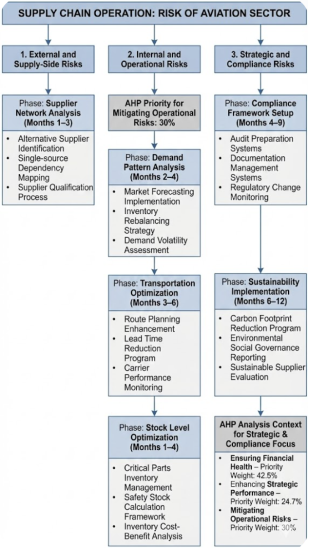
Figure 1. Three-Phase Implementation of AHP-Derived Aviation Supply Chain Strategies.
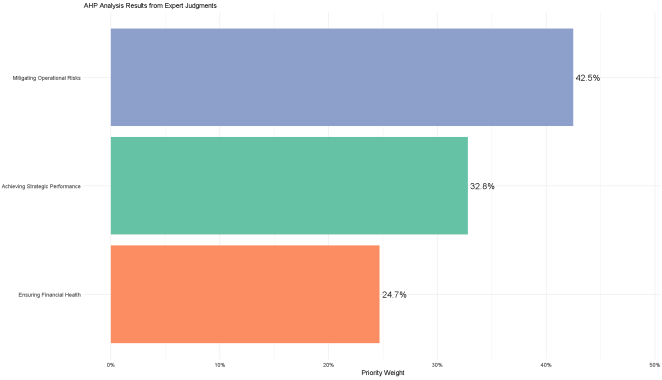
Figure 2. Priority weights of main objectives for aviation supply chain resilience.
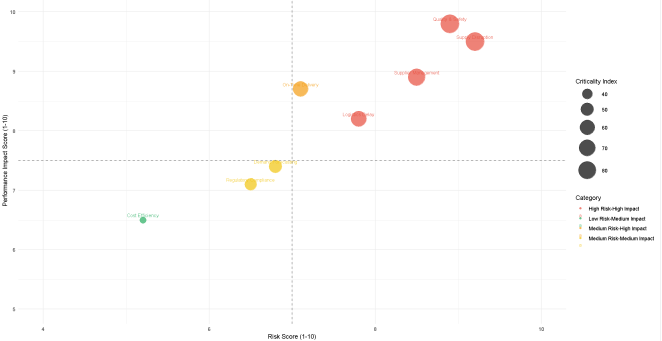
Figure 3. Risk-performance matrix for aviation supply chain factors.
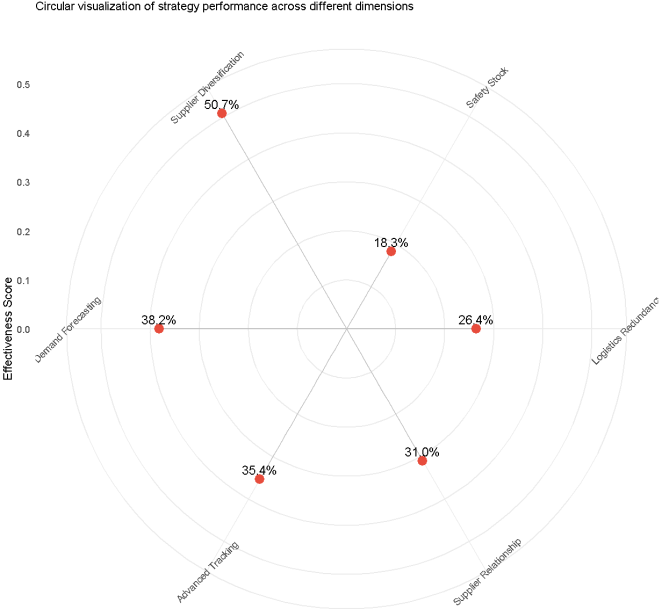
Figure 4. Radar chart comparing mitigation strategy effectiveness.
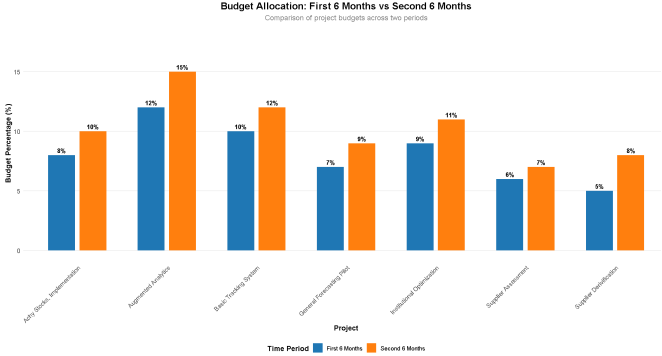
Figure 5. Implementation roadmap and phased timeline.

Information



 Share This Article
 Twitter
 Linked In
 Facebook
 Copy
Copy Download