Abstract
Background: Scabies affects over 200 million people globally, with an estimated 5-50% of children living in communities of limited resources. Scabies is a widespread issue in Ethiopia, particularly during natural or man-made disasters like flooding, drought, and conflict, as well as when there is a lack of access to clean water and sanitary facilities and congested living circumstances. This study aimed to determine the scabies and its determinants among preschool children in East Badawacho District, Hadiya Zone of Central Ethiopia. Methods: A facility-based, unmatched case-control study with 348 participants compared scabies-infested preschool children to non-scabies preschool children for their past exposure to scabies in East Badawacho District, Central Ethiopia. The children's nutritional status was measured anthropometrically and analyzed using WHO Anthro software. Data were entered into EPI Data Version 3.1 and exported to SPSS Version 25 for analysis. Bivariable and multivariable analyses were used to identify determinants of scabies, with statistical significance declared at a P-value less than 0.05. Result: The prevalence of stunting was 50.5% among cases and 45.2% among controls, while the prevalence of underweight was 24.3% among cases and 18% among controls. The prevalence of wasting was 17.8% in cases and 9.3% in controls. Severe wasting [AOR = 2.4, 95% CI: 1.32, 5.47], mothers of preschool children who used less than 20 liters of water for daily activities [AOR = 2.5, 95% CI: 1.02, 6.27], children who shared clothes with someone affected by scabies [AOR = 6.7, 95% CI: 2.98, 15.08], and children who wash their bodies with water only [AOR = 3.4, 95% CI: 1.37, 6.77] were the significant independent predictors associated with scabies infestation. Conclusion: Preschool children who were severely wasted, amount of water utilized for daily activity < 20 litres, sharing of cloth with scabies infected person, washing body with water only had significant role for the transmission of scabies. Therefore, scabies control programs should incorporate nutritional, and water sanitation interventions.
Keywords
Malnutrition, Pre-school Children, Scabies, Hadiya, Ethiopia
1. Introduction
Scabies is derived from a Latin term that means, "To scratch," and caused by the human itch mite (Sarcoptes scabiei var.hominis) infesting the skin
. It is commonly connected with overcrowding, low socioeconomic standards, a lack of education, and inadequate hygiene is a neglected parasite disease that is a global public health issue, and particularly in resource-limited areas
| [1] | Tefera Haile, Tadesse Sisay TJ. Scabies and its associated factors among under 15. Pan Afr Med J [Internet]. 2020; 37(224): 1-11. Available from:
https://www.panafrican-med-journal.com/content/article/37/224/full |
| [3] | Karimkhani C, Colombara D V, Drucker AM, Norton SA, Hay R, Engelman D, et al. Article The global burden of scabies : a cross-sectional analysis from the Global Burden of Disease Study 2015. Lancet Infect Dis [Internet]. 2015; 17(12): 1247-54. Available from:
http://dx.doi.org/10.1016/S1473-3099(17)30483-8 |
| [4] | Reta MW, Derseh BT, Sahilu BY. Determinants of Scabies among Primary School Children in Habru District : a Case-Control Study. BMC Dermatol. 2020; 15(8): 46-53. |
[1, 3, 4]
. It affects people of all age groups, races and socio economic levels
| [4] | Reta MW, Derseh BT, Sahilu BY. Determinants of Scabies among Primary School Children in Habru District : a Case-Control Study. BMC Dermatol. 2020; 15(8): 46-53. |
[4]
and affects people all around the world, with an estimated 300 million cases per year
| [5] | Town G, Yassin ZJ, Dadi AF, Nega HY, Derseh BT, Asegidew W. Scabies Outbreak Investigation among “Yekolo Temaris” in. Electron J Biol. 2017; 13(June): 203-9. |
[5]
. It has been added to the WHO's list of Neglected Tropical Diseases (NTDs) in recognition of the extremely high disease burden
| [6] | Mitra AK, Mawson AR. Neglected Tropical Diseases : Epidemiology and Global Burden. 2020; (January 2012). |
| [7] | Azene AG, Aragaw AM, Wassie GT. Prevalence and associated factors of scabies in Ethiopia: Systematic review and Meta-analysis. BMC Infect Dis. 2020; 20(1): 1-10. |
| [8] | Id EPA, Senghore E, Id SD, Id MB, Camara J, Bah S, et al. High burden and seasonal variation of paediatric scabies and pyoderma prevalence in The Gambia : A cross-sectional study. 2019; 1-16. |
[6-8]
.
Scabies affects at least 200 million people worldwide at any moments, with an estimated 5-50% of children living in communities of limited resources
| [9] | Seidelman J, Garza RM, Smith CM, Fowler VG. More than a Mite Contagious : Crusted Scabies. Am J Med [Internet]. 130(9):1042-4. Available from:
http://dx.doi.org/10.1016/j.amjmed.2017.05.007 |
| [10] | Niode NJ, Adji A, Gazpers S, Kandou RT, Pandaleke H, Trisnowati DM, et al. Crusted Scabies, a Neglected Tropical Disease : Case Series and Literature Review. 2022; 479-91. |
[9, 10]
. Each year, cutaneous illnesses like scabies infect over one million people
| [4] | Reta MW, Derseh BT, Sahilu BY. Determinants of Scabies among Primary School Children in Habru District : a Case-Control Study. BMC Dermatol. 2020; 15(8): 46-53. |
| [11] | Sara J, Haji Y, Gebretsadik A. Scabies Outbreak Investigation and Risk Factors in East Badewacho District, Southern Ethiopia: Unmatched Case Control Study. Dermatol Res Pract. 2018; 2018. |
[4, 11]
. Furthermore, 10% of children in low-resource nations like sub-Saharan Africa suffer from scabies infection
| [12] | Hay RJ, Johns NE, Williams HC, Bolliger IW, Dellavalle RP, Margolis DJ, et al. The global burden of skin disease in 2010: An analysis of the prevalence and impact of skin conditions. J Invest Dermatol [Internet]. 2014; 134(6): 1527-34. Available from: http://dx.doi.org/10.1038/jid.2013.446 |
[12]
. Malnutrition is a major public health issue in many developing countries
| [13] | Archipelago B, Id MM, Sammut T, Cabral MG, Teixeira E, Nakutum J, et al. The prevalence of scabies, pyoderma and other communicable dermatoses in the. 2019; 121: 1-9. |
| [14] | Walker SL, Lebas E, Sario V De, Deyasso Z, Doni N, Marks M, et al. The prevalence and association with health- related quality of life of tungiasis and scabies in schoolchildren in southern Ethiopia. 2017; 1-11. |
[13, 14]
. In the developing world, nearly 30.0% of the human population is currently suffering from one or more of the various kinds of malnutrition
| [15] | Wochebo W, Haji Y, Asnake S. Scabies outbreak investigation and risk factors in Kechabira district, Southern Ethiopia: Unmatched case control study. BMC Res Notes [Internet]. 2019; 12(1): 12-7. Available from:
https://doi.org/10.1186/s13104-019-4317-x |
[15]
. Children who are undernourished have compromised immune systems, are vulnerable to long-term developmental disruptions, and are five to twenty times more likely to die than children who are well-nourished
| [16] | Gone T, Lemango F, Eliso E, Yohannes S, Yohannes T. The association between malaria and malnutrition among under-five children in Shashogo District, Southern Ethiopia: A case-control study. Infect Dis Poverty [Internet]. 2017; 6(1): 4-11. Available from: http://dx.doi.org/10.1186/s40249-016-0221-y |
[16]
. In Sub-Saharan Africa, a UNICEF report states that 9.0% of preschool-aged children have acute malnutrition or wasting, while 38.0% of children under the age of five experience chronic malnutrition or stunting
| [16] | Gone T, Lemango F, Eliso E, Yohannes S, Yohannes T. The association between malaria and malnutrition among under-five children in Shashogo District, Southern Ethiopia: A case-control study. Infect Dis Poverty [Internet]. 2017; 6(1): 4-11. Available from: http://dx.doi.org/10.1186/s40249-016-0221-y |
[16]
.
Scabies is the most common diagnosis of clinically confirmed skin diseases in Ethiopia, where the weighted prevalence is 22.5%
| [17] | Kaburi BB, Ameme DK, Adu-asumah G, Dadzie D, Tender EK, Addeh SV, et al. Outbreak of scabies among preschool. BMC Public Health. 2019; 1-9. |
[17]
. Scabies is a widespread issue in Ethiopia, particularly during natural or man-made disasters like flooding, drought, and conflict, as well as when there is a lack of access to clean water and sanitary facilities and congested living circumstances
| [12] | Hay RJ, Johns NE, Williams HC, Bolliger IW, Dellavalle RP, Margolis DJ, et al. The global burden of skin disease in 2010: An analysis of the prevalence and impact of skin conditions. J Invest Dermatol [Internet]. 2014; 134(6): 1527-34. Available from: http://dx.doi.org/10.1038/jid.2013.446 |
[12]
. It is becoming a public health concern, affecting a greater geographic region and population groups, especially in areas hit by drought and malnutrition hot spot areas, according to the public health emergency measures surveillance report
| [18] | Kline K, McCarthy JS, Pearson M, Loukas A, Hotez PJ. Neglected Tropical Diseases of Oceania: Review of Their Prevalence, Distribution, and Opportunities for Control. PLoS Negl Trop Dis. 2013; 7(1): 1-9. |
[18]
.
Due to acute and secondary consequences, Scabies impose a huge but mostly under-recognized socioeconomic impact on affected individuals and communities. Scabies frequently infest children with poor nutritional status and in overcrowded communities, particularly in tropical climates
| [19] | Misganaw B, Nigatu SG, Gebrie GN, Kibret AA. Prevalence and determinants of scabies among school-age children in Central Armachiho district, Northwest, Ethiopia. PLoS One [Internet]. 2022; 17(6 June): 1-14. Available from:
http://dx.doi.org/10.1371/journal.pone.0269918 |
| [20] | Oktarina C, Surya D, Sukma PMG, Manurung THP, Widaty S. Association between nutritional status and scabies infestation in a boarding school in Indonesia: a cross-sectional study. Iran J Dermatology. 2021; 24(4): 280-5. |
[19, 20]
. Moreover, some groups of the population such as preschool, school children, immune-compromised, elderly, disabled, or debilitated persons are at risk of a severe form of scabies
| [4] | Reta MW, Derseh BT, Sahilu BY. Determinants of Scabies among Primary School Children in Habru District : a Case-Control Study. BMC Dermatol. 2020; 15(8): 46-53. |
| [21] | Ciftci IH, Karaca S, Dogru O, Cetinkaya Z, Kulac M. Prevalence of pediculosis and scabies in preschool nursery children of Afyon, Turkey. Korean J Parasitol. 2006; 44(1): 95-8. |
[4, 21]
. However, now the problem is being addressed by the Federal Ministry of Health (FMoH), in collaboration with partners, has been working to stop community level transmission of scabies outbreak using multi-sectorial intervention approach and preschool children are the most likely to be affected by both burdens in tropical and developing countries
| [15] | Wochebo W, Haji Y, Asnake S. Scabies outbreak investigation and risk factors in Kechabira district, Southern Ethiopia: Unmatched case control study. BMC Res Notes [Internet]. 2019; 12(1): 12-7. Available from:
https://doi.org/10.1186/s13104-019-4317-x |
[15]
. This study aimed to determine the scabies and its determinants among preschool children in East Badawacho District, Hadiya Zone of Central Ethiopia.
2. Methods and Materials
2.1. Study Setting, Study Design and Period
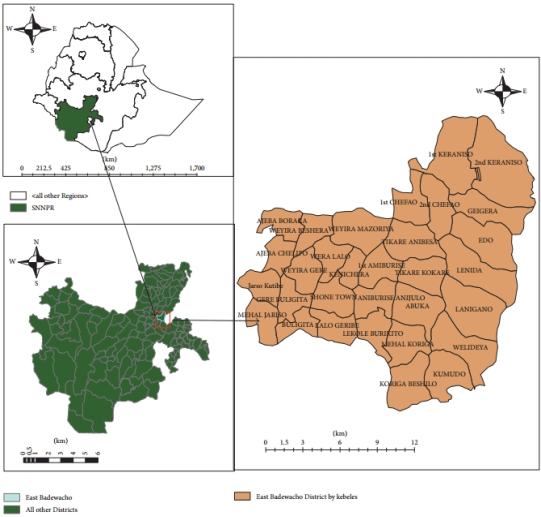
The study was conducted in Eastern Badawacho Woreda. East Badawacho woreda is one of the thirteen woredas in the Hadiya zone, central Ethiopia; which is located 345 kilometers away from Addis Ababa to the south direction through Shashemene and 100 km from the Zonal capital Hosanna
| [11] | Sara J, Haji Y, Gebretsadik A. Scabies Outbreak Investigation and Risk Factors in East Badewacho District, Southern Ethiopia: Unmatched Case Control Study. Dermatol Res Pract. 2018; 2018. |
[11]
.
The woreda is divided in to 27 kebeles (the smallest Administrative unit in Ethiopia) and has an estimated population of 139,009(49.7% males and 50.3% females). Among these 18,123 are found in the age group of 24 to 59 months. The projected population estimation for 2024 consisted of 66,885 (50.6%) women and 66,035(49.4%) men. Currently, the district has 6 health centers, 27 health posts, and 3 private clinics.
A facility based un-matched case-control (1:2 ratios) study was employed from January 1 – February 30 2024.
2.2. Source Population
All preschool children who have lived in East Badawacho District for at least six months were considered as the source population.
2.3. Study Population
For cases: All selected preschool children with scabies who sought health care in health posts in East Badawcho district during the study period.
For controls: All selected preschool children who visited the health posts for medical reasons and did not have scabies.
2.4. Inclusion Criteria
For cases: All children aged 24-59 months with clinically confirmed scabies who visited selected health posts in East Badawacho district during the data collection period and whose mother/caregiver was present, able, and willing to participate were included in the study.
For controls: all children aged 24-59 months who had no scabies and attended selected health posts in the East Badawacho district during the data collecting period, as well as their mothers/caregivers who were present, able, and willing to participate.
2.5. Exclusion Criteria
Preschool children who were sick due to pneumonia, diarrhea and measles in the last 2 weeks were excluded for both cases and controls.
2.6. Operational and Term Definitions
Cases: defined as pre-school children with at least three indications of scabies infestation, namely papules, vesicles, and linear burrows with concomitant pruritus and scratch marks in the axilla, belt line, legs, feet, and buttock in the selected health posts
| [22] | Shikur B, Deressa W, Lindtjørn B. Association between malaria and malnutrition among children aged under-five years in Adami Tulu District, south-central Ethiopia: A case-control study. BMC Public Health [Internet]. 2016; 16(1): 1-8. Available from: http://dx.doi.org/10.1186/s12889-016-2838-y |
[22]
.
Confirmed case of scabies: a child who has a skin scraping in which mites, mite eggs, or mite feces have been identified by microscopy was considered as a confirmed case
| [23] | Haile T, Sisay T, Jemere T. Scabies and its associated factors among under 15 years children in Wadila district, northern Ethiopia, 2019. Pan Afr Med J. 2020 Sep; 37: 1-11. |
[23]
. Both definitions were applied on this study.
Controls: defined as preschool children who are without sign and symptoms of scabies infestation.
Pre-school children: The children whose age is between 24 and 59 months
| [17] | Kaburi BB, Ameme DK, Adu-asumah G, Dadzie D, Tender EK, Addeh SV, et al. Outbreak of scabies among preschool. BMC Public Health. 2019; 1-9. |
| [21] | Ciftci IH, Karaca S, Dogru O, Cetinkaya Z, Kulac M. Prevalence of pediculosis and scabies in preschool nursery children of Afyon, Turkey. Korean J Parasitol. 2006; 44(1): 95-8. |
[17, 21]
.
Overcrowding: More than four persons living in one room is considered a high risk of disease transmission
| [24] | Wodaje M. Determinants Of Scabies Among Primary School Children In Habru District, North Wollo Zone, Amhara Regional State, Ethiopia. PLoS Negl Trop Dis. 2019; 67(19): e1563. |
[24]
.
Malnourished: A preschooler who exhibits stunting, wasting, or underweight is considered to be malnourished. The malnutrition indicators analyzed in this study are defined below.
Stunting: HAZ< -2 Z-score based on WHO reference group
| [22] | Shikur B, Deressa W, Lindtjørn B. Association between malaria and malnutrition among children aged under-five years in Adami Tulu District, south-central Ethiopia: A case-control study. BMC Public Health [Internet]. 2016; 16(1): 1-8. Available from: http://dx.doi.org/10.1186/s12889-016-2838-y |
[22]
.
Under-weight: WAZ < -2 Z-score, based on WHO reference group
| [22] | Shikur B, Deressa W, Lindtjørn B. Association between malaria and malnutrition among children aged under-five years in Adami Tulu District, south-central Ethiopia: A case-control study. BMC Public Health [Internet]. 2016; 16(1): 1-8. Available from: http://dx.doi.org/10.1186/s12889-016-2838-y |
[22]
.
Wasting: was defined as WHZ < -2 Z-score
| [22] | Shikur B, Deressa W, Lindtjørn B. Association between malaria and malnutrition among children aged under-five years in Adami Tulu District, south-central Ethiopia: A case-control study. BMC Public Health [Internet]. 2016; 16(1): 1-8. Available from: http://dx.doi.org/10.1186/s12889-016-2838-y |
[22]
.
Sever wasting was defined as WHZ < -3 Z-score
| [22] | Shikur B, Deressa W, Lindtjørn B. Association between malaria and malnutrition among children aged under-five years in Adami Tulu District, south-central Ethiopia: A case-control study. BMC Public Health [Internet]. 2016; 16(1): 1-8. Available from: http://dx.doi.org/10.1186/s12889-016-2838-y |
[22]
.
2.7. Sample Size and Sampling Procedure
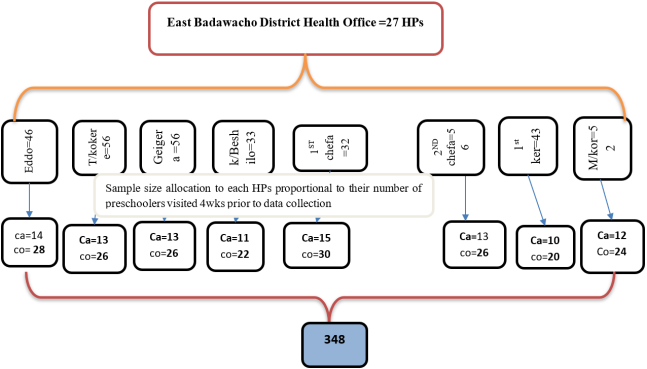
The sample size for these preschool children was calculated by Epi Info™ version 7 statistical program using unmatched case control formula and this study was designed to have 80% statistical power with level of significance at 5% and a case to control ratio of 1:2. Assuming an independent factor of bed sharing with scabies infestation 25.3% for controls and 39.8% for cases, the calculated sample size was 354 (118 cases and 236 controls).
Initially, nine health posts out of 27 were selected by a simple random sampling (lottery method) from the district health office. The most recent four weeks' data of children aged 24-59 months in health posts was obtained to allocate samples and calculate their sharing (systematic random sampling). When one clinically confirmed scabies case was found, two controls of parents (caretakers) were interviewed and their child’s anthropometric status had measured based on their order of visiting that health posts where they fulfilled the inclusion criteria. Finally, cases and controls were consecutively selected from each health posts. (
Figure 2)
2.8. Data Collection Method and Tool
The instrument of data collection was a pretested interviewer-administered structured questionnaire. The collected data was through face-to face interview with caregivers. The questionnaire contains the demographic and socio-economic factors of the child and the caretaker, Anthropometric and nutritional information of the child, environmental factors, and behavioral factors.
A total of nine health officers and one supervisor were recruited as data collectors, and they had got two days of training on the aims of the study, data collecting tools, anthropometric measurements, interviewing procedures, and recruiting study participants by the principal investigator. The data collectors were fluent speakers of the Hadiyisa language.
The child's weight was determined using a digital weighing scale, and his /her height was measured standing up using a column-mounted height stadiometer. The children were weighed barefoot and wearing tiny clothing. The weight and height measurements were rounded to the nearest 0.1 kg and 0.1 cm, respectively. Weighing scales are often calibrated. A local calendar was created to improve accuracy in predicting the ages of the children.
2.9. Data Processing and Analysis
Collected data from a structured questionnaire was checked, coded, and entered into EpiData version 3.1 before being exported to SPSS version 25 for analysis. The anthropometric data was exported to the WHO Anthro statistical program, which was used to analyze nutritional indicators. When HAZ, WAZ, and WHZ were less than minus three Z-score, sever stunting, underweight, and wasting were evaluated.
A descriptive analysis of the socio-demographic status of the respondents was made by using tables to see the participant’s characteristics and all independent variables associated with scabies infestation on bivariate analyses with P < 0.25 were candidate for multivariable logistic analysis. Multivariable logistic regression analyses were done for those variables with p-value < 0.25 in the bivariate analysis to control for all possible confounders and to identify factors associated with scabies. The absences of multi-collinearity between different explanatory variables were checked using variance inflation factor (VIF=2.15-2.84) and tolerance (0.5). An adjusted Odds ratio along with 95% CI was estimated to measure the strength of the association. Having a p-value < 0.05 was used to declare the presence of statistically significant association between the independent and dependent variables.
2.10. Data Quality Control
To ensure data quality, data was collected using a structured and pre-tested questionnaire. Pre-test was done in 5% of the calculated sample size at Wera Boya health post, west Badawacho woreda before the actual data collection started to check appropriateness, consistency of the tool and to estimate the time needed for each questionnaire. The necessary adjustments were made in light of the results of the pre-test.
The structured questionnaire was translated into Hadiyyisa, and again translated back to English to check the questionnaire consistency. Two days intensive training was provided about the instruments, ways of data collection, ethical issues and aims of the study for data collectors and supervisor by the principal investigator. To keep completeness and consistency, data collectors is closely supervised before and during the data collection process by the supervisor. The principal investigator supervised the correct implementation of the procedure and checked completeness and logical consistency after data collection.
3. Results
3.1. Socio-Demographic Characteristics of the Study Participants
This study interviewed 348 child caretakers/mothers, with a response rate of 98.3% for cases and controls. The mean age of children was found to be 40 10.1 months for both cases and controls. Nearly half of the respondents were between the ages of 35 years and 44 years with 54 (46.6%) cases and 100 (42.9%) controls. The majority of study participants, 322 (92.5%), were from rural areas, with 26 (7.5%) residing in semi-urban areas for both groups. Regarding marital status, 308 (88.5%) of the mothers in both groups were married. More than half of mothers had a primary education, while 37.8% were illiterate across both categories. The mother's occupation was house wife in three quarters of the cases 88 (75.9%) and 172 (74.2%) of the controls. Regarding to family size, 44 (18.9%) were controls and 103 (88.8%) cases were made up the majority of families larger than five. Thatched roofs were found on 76.6% of cases and 50.2% of control homes.
Table 1.
Demographic and Socio-economic characteristics of the caretakers by study group in East Badawacho woreda. Socio demographic characteristics | Caretakers of Cases n (%) | Control n (%) | Total n (%) |
Age of mother | | | |
15-24 year | 16 (13.8) | 16 (6.9) | 32 (9.2) |
25-34 year | 37 (30.9) | 106 (45.7) | 143 (41.1) |
35-44 year | 54 (46.6) | 100 (43.1) | 154 (44.3) |
>= 45 year | 9 (7.8) | 10 (4.3) | 19 (5.4) |
Residence | | | |
Rural | 113 (97.4) | 209 (90.1) | 322 (92.5) |
Semi-urban | 3 (2.6) | 23 (4.9) | 26 (7.5) |
Marital status of mothers | | | |
Married | 107 (92.2) | 201 (86.7) | 308 (88.5) |
Single | 4 (3.4) | 13 (5.6) | 17 (4.9) |
Divorced | 3 (2.6) | 7 (3.0) | 10 (2.9) |
Widowed | 1 (0.9) | 7 (3.0) | 8 (2.3) |
Separated | 1 (0.9) | 4 (1.7) | 5 (1.4) |
Educational status of mother | | | |
Illiterate | 95 (81.9) | 83 (35.6) | 178 (51.0) |
Primary(1-8) | 14 (12.1) | 127 (54.9) | 141 (40.7) |
Secondary(9-12) | 6 (5.2) | 20 (8.6) | 26 (7.4) |
Tertiary | 1 (0.9) | 2 (0.09 | 3 (0.9) |
Occupational status of mother | | | |
Housewife | 88 (75.9) | 172 (74.2) | 260 (74.8) |
Farmer | 10 (7.8) | 32 (10.7) | 42 (9.7) |
Government employee | 9 (7.8) | 17 (7.3) | 26 (7.4) |
Merchant | 9 (7.8) | 11 (3.9) | 20 (5.2) |
Family size | | | |
<= 5 | 13 (11.2) | 188 (81.1) | 201 (57.9) |
> 5 | 103 (88.8) | 44 (18.9) | 147 (42.1) |
Roof of the house made | | | |
Thatched | 83 (76.6) | 117 (50.2) | 200 (57.3) |
Corrugated iron | 33 (28.4) | 115 (49.8) | 148 (42.7) |
Household average monthly income | | | |
<= 1500 ETB(<= 26.29 USD) | 82 (70.7) | 154 (66.5) | 236 (67.9) |
> 1500 ETB(> 26.29 USD) | 34 (29.3) | 78 (33.5) | 112 (32.1) |
NB: USD; United States Dollar, n (%); number and percentage |
3.2. Clinical Presentation of the Child (for Cases Only)
Of mothers who had their cases 82.8% said that the itching was worst at night. The majority of cases 86.2% still had a rash. More than half of the cases 55.2% had itching lasting more than eight days. The hand was the most commonly affected body part by scabies 64.7%. (
Table 2)
Table 2.
Clinical presentation of the child (for cases only) in East Badawacho woreda. Explanatory Variables | Categories | n (%) |
Time itching intense | Day time | 20 (17.2) |
Night time | 96 (82.8) |
Duration of itching | < 8 days | 52 (44.8) |
>= 8 days | 64 (55.2) |
Still have rash | Yes | 100 (86.2) |
No | 16 (13.8) |
Mostly affected body part | The hand | 75 (64.7) |
Feet | 19 (16.4) |
Elbow | 19 (16.4) |
Axillaries | 3 (1.7) |
NB: n (%); number and percentage |
3.3. Childs Characteristics and Nutritional Status
Out of the 348 preschoolers who were enrolled in the study, more than half (59.5%) of cases were female and more than half (56.9%) of controls were males. The child's age varied from 34 to 43 months for 49 (42.2%) cases and 32.5% controls. The age group of 54–59 months had the lowest percentages of cases and controls, 9.5% and 14.2%, respectively. The prevalence of stunting was 31.9% in cases and 28.0% in controls. 33.6% cases and 28.9% controls had severe stunting. In general, 211 (60.6%) of children under five were underweight, with 104 (29.9%) severely underweight. Overall, 227 (65.2%) of children under five were wasted, with 118 (33.9%) severely wasted. 38 (32.8%) cases and 71 (30.6%) controls were wasted. According to WHZ, 48 (41.4%) cases and 70 (30.2%) controls were severely wasted.
Table 3.
Child’s characteristics and Nutritional Status in East Badawacho District. Explanatory Variables | Categories | Cases n (%) | Controls n (%) | Total n (%) |
Age of the child | 24-33 months | 19 (16.4) | 74 (31.9) | 93 (26.7) |
34-43 months | 49 (42.2) | 75 (32.5) | 124 (35.6) |
44-53 months | 37 (31.9) | 50 (21.6) | 87 (25.0) |
54-59 months | 11 (9.5) | 33 (14.2) | 44 (12.0) |
Sex of the child | Male | 47 (40.5) | 132 (56.9) | 179 (51.4) |
Female | 69 (59.5) | 100 (43.1) | 169 (48.6) |
Stunting | WAZ <-3 | 39 (33.6) | 67 (28.9) | 106 (30.5) |
-3 ≤ HAZ < -2 | 37 (31.9) | 65 (28.0) | 102 (29.3) |
HAZ ≥-2 | 40 (34.5) | 100 (43.1) | 140 (40.2) |
Underweight | WAZ < -3 | 35 (30.2) | 69 (29.7) | 104 (29.9) |
-3 ≤ WAZ < -2 | 34 (29.3) | 73 (31.5) | 107 (30.7) |
WAZ ≥ -2 | 47 (40.5) | 90 (38.8) | 137 (39.4) |
Wasting | WHZ < - 3 | 48 (41.4) | 70 (30.2) | 118 (33.9) |
-3 ≤ WHZ < -2 | 38 (32.8) | 71 (30.6) | 109 (31.3) |
WHZ ≥ -2 | 30 (25.9) | 91 (39.2) | 121 (34.8) |
NB: WAZ; Weight for Age, HAZ; Height for Age, WHZ; Weight for Height, n (%); number and percentage |
3.4. Factors Associated with Scabies Among Preschool Children’S East Badawacho District; Hadiya Zone, Central Ethiopia
In the multivariable analysis after adjusting for possible confounding factors the result of multivariable logistic regression analysis showed that, severely wasting, amount of water for daily activity < 20 litres, child sharing of cloth with scabies infected person, and using only water as detergent were found to be significant determinants of scabies.
Severely wasted children (WHZ < −3) had a 2.4 times higher risk of scabies infestation compared to non-wasted children [AOR = 2.4, 95% CI: 1.32, 5.47].
Daily water consumption of less than 20 liters was identified as an independent predictor of scabies. Children from households with less than 20 liters of water per day were 2.5 times more likely to be infected with scabies than children from households with more than 20 liters per day [AOR = 2.5; 95% CI: 1.02, 6.27].
The odds of having a scabies infestation were 6.7 times higher among children who had shared any clothes with someone with scabies than those who had not [AOR = 6.7, 95% CI: 2.98, 15.08]. The odds of getting scabies infestation were 3.4 times higher in children who washed their bodies with water alone than in children who washed their bodies with soap and water [AOR = 3.4, 95% CI: 1.37, 6.77]. (
Table 4)
Table 4.
Bivariable and Multivariable logistic regression analysis of determinants associated with scabies among pre-school children in East Badawacho districts. Variables | Categories | Cases n (%) | Controls n (%) | AOR (95% CI) |
Residence | Semi-urban | 113 (97.4) | 209 (90.1) | 1 |
Rural | 3 (2.6) | 23 (4.9) | 5.1 (0.82,31.86) |
Family size | <= 5 | 13 (11.2) | 188 (81.0) | 2.3 (0.85,4.75) |
> 5 | 103 (88.8) | 44 (19.0) | 1 |
Sex of the child | Male | 47 (40.5) | 132 (56.9) | 3.4 (0.55,7.40) |
Female | 69 (59.5) | 100 (43.1) | 1 |
Roof of the house made | Thatched | 83 (76.6) | 117 (50.2) | 0.48 (0.21,1.07) |
Corrugated iron | 33 (28.4) | 115 (49.8) | 1 |
Amount of water for daily basis | >= 20 litres | 12 (10.3) | 70 (30.2) | 1 |
< 20 litres | 104 (89.7) | 162 (69.8) | 2.5 (1.02,6.27)* |
Child shared clothes | No | 90 (77.6) | 82 (35.3) | 1 |
Yes | 26 (22.4) | 150 (64.7) | 6.7 (2.98,15.1)* |
Child sleeping with scabies infested person | No | 78 (67.2) | 112 (48.3) | 1 |
Yes | 38 (32.8) | 120 (51.7) | 1.1 (0.49,2.31) |
Having animal inside the house | Yes | 92 (79.3) | 189 (81.5) | 0.48 (0.51,4.75) |
No | 24 (20.7) | 43 (18.5) | 1 |
Detergents used | Water with Soap | 61 (52.6) | 57 (24.6) | 1 |
Water only | 55 (47.4) | 175 (75.4) | 3.0 (1.37,6.77)* |
Stunting | Severe stunting | 39 (33.6) | 67 (28.9) | 2.0 (1.32,5.47) |
Moderate stunting | 37 (31.9) | 65 (28.0) | 3.0 (0.37,6.77) |
No stunting | 40 (34.5) | 100 (43.1) | 1 |
Wasting | Severe wasting | 48 (41.4) | 70 (30.2) | 2.4 (1.32,5.47)* |
Moderate wasting | 38 (32.8) | 71 (30.6) | 3.0 (0.37,6.77) |
No wasting | 30 (25.9) | 91 (39.2) | 1 |
Underweight | Severe underweight | 35 (30.2) | 69 (29.7) | 2.4 (1.32,5.47) |
Moderate underweight | 34 (29.3) | 73 (31.5) | 3.0 (0.37,6.77) |
No underweight | 47 (40.5) | 90 (38.8) | 1 |
Note: AOR; Adjusted odds ratio, COR; Crude odds ratio, CI; Confidence Interval, * indicates significant variables at p-value <0.05 |
4. Discussion
Scabies is a neglected skin infestation occurring worldwide and significantly impacts health and quality of life. The prevalence is high among children, especially those who live in area of low economic status
| [18] | Kline K, McCarthy JS, Pearson M, Loukas A, Hotez PJ. Neglected Tropical Diseases of Oceania: Review of Their Prevalence, Distribution, and Opportunities for Control. PLoS Negl Trop Dis. 2013; 7(1): 1-9. |
[18]
. This study addressed scabies and its determinants among children living in the East Badawacho district. The findings from our study showed that severely wasting, amount of water for daily activity < 20 litres, child sharing of cloth with scabies infected person, and using only water as detergent are determinant factors for scabies.
This study compared the prevalence of malnutrition in preschool children between scabies cases and controls to see the association between malnutrition and scabies. After adjusting for potential confounders, there was a statistically significant association between sever wasting and scabies infestation in preschool children. Severely wasted children were two times more likely to develop scabies compared to non-wasted preschool children.
Understanding how malnutrition affects infections in general is a critical step toward understanding how malnutrition affects scabies specifically. It is well established that malnutrition raises susceptibility to infection, while infection has an adverse effect on nutritional status
| [6] | Mitra AK, Mawson AR. Neglected Tropical Diseases : Epidemiology and Global Burden. 2020; (January 2012). |
| [16] | Gone T, Lemango F, Eliso E, Yohannes S, Yohannes T. The association between malaria and malnutrition among under-five children in Shashogo District, Southern Ethiopia: A case-control study. Infect Dis Poverty [Internet]. 2017; 6(1): 4-11. Available from: http://dx.doi.org/10.1186/s40249-016-0221-y |
| [22] | Shikur B, Deressa W, Lindtjørn B. Association between malaria and malnutrition among children aged under-five years in Adami Tulu District, south-central Ethiopia: A case-control study. BMC Public Health [Internet]. 2016; 16(1): 1-8. Available from: http://dx.doi.org/10.1186/s12889-016-2838-y |
[6, 16, 22]
. Malnutrition reduces immunity, increasing infection susceptibility. In contrast to the findings, a prior cross-sectional study conducted in Indonesia
| [20] | Oktarina C, Surya D, Sukma PMG, Manurung THP, Widaty S. Association between nutritional status and scabies infestation in a boarding school in Indonesia: a cross-sectional study. Iran J Dermatology. 2021; 24(4): 280-5. |
[20]
, found no significant association between malnutrition and scabies infestation. The discrepancies might be explained by differences in, sample technique and procedure, adjustment for confounding variables, or variations in scabies prevalence and nutritional status among the study populations. Additionally, socio-economic status and geographical variations, access to health care, and other factors may influence the observed outcomes. Whereas the nutritional status represented by stunting and underweight has no association with the occurrence of scabies infestation in preschool children in this study.
In order to successfully tackle the children's scabies infestation in Ethiopia in general, and in the current study areas in particular, it appears necessary to analyze the contribution of a number of scabies-influencing factors. As a result, this study attempted to investigate factors associated with scabies in the study area while included as many risk factors as possible.
Our study revealed that sharing of clothes with someone who has had an itchy skin lesion in the last two months is one of the major risk factors for scabies. The finding is supported by studies done in Ethiopia
| [1] | Tefera Haile, Tadesse Sisay TJ. Scabies and its associated factors among under 15. Pan Afr Med J [Internet]. 2020; 37(224): 1-11. Available from:
https://www.panafrican-med-journal.com/content/article/37/224/full |
| [15] | Wochebo W, Haji Y, Asnake S. Scabies outbreak investigation and risk factors in Kechabira district, Southern Ethiopia: Unmatched case control study. BMC Res Notes [Internet]. 2019; 12(1): 12-7. Available from:
https://doi.org/10.1186/s13104-019-4317-x |
| [19] | Misganaw B, Nigatu SG, Gebrie GN, Kibret AA. Prevalence and determinants of scabies among school-age children in Central Armachiho district, Northwest, Ethiopia. PLoS One [Internet]. 2022; 17(6 June): 1-14. Available from:
http://dx.doi.org/10.1371/journal.pone.0269918 |
| [24] | Wodaje M. Determinants Of Scabies Among Primary School Children In Habru District, North Wollo Zone, Amhara Regional State, Ethiopia. PLoS Negl Trop Dis. 2019; 67(19): e1563. |
| [25] | Yassin ZJ, Dadi AF, Nega HY, Derseh BT, Asegidew W. Scabies Outbreak Investigation among “Yekolo Temaris” in Gondar Town. Electron J Biol. 2015; 13(3): 203-9. |
| [26] | Sanei-dehkordi A, Soleimani-ahmadi M, Zare M, Jaberhashemi SA. Risk factors associated with scabies infestation among primary schoolchildren in a low socio-economic area in southeast of Iran. 2021; 1-10. |
[1, 15, 19, 24-26]
. This could be due to increasing interaction between persons and shared clothing or bedding, as there may be insufficient resources in the home. Sharing of clothes with someone with scabies facilitates the transmission and therefore the spread of scabies mites from infested person to healthy children and children sharing clothes with infected person were more susceptible to severe and repeated infection due to the fundamental role of contact in disease transmission. Since the mites could stay alive on cloth for prolonged time unless complete removal have been made such as bedding and clothing laundered properly, children who are sharing cloths could get the disease easily although medication has been made.
In this study, using simply water to wash the body and clothes was associated with an increased risk of scabies infestation. Previous studies found that using water with soap for hands and clothes on a regular basis prevented scabies infestations more effectively than simply using water. This is in line with a study carried out in Dabat, Ethiopia
| [27] | Henok D, Awrajaw D, Bikes D, Worku YW, Zemichael G. Prevalence and associated factors of scabies among schoolchildren in Dabat district, northwest Ethiopia, 2018. Environ Health Prev Med. 2019; 24(67): 1-8. |
| [28] | Worku ED, Asemahagn MA, Endalifer ML. Determinants of scabies outbreak in takusa district of amhara region, Northwest Ethiopia. J Public Health Africa. 2020; 11(2): 122-6. |
[27, 28]
. The possible assumption could be since detergents are an easy way to get rid of scabies mites, and it is crucial to remove immature mites from the skin to lower the risk of transmission by reducing the mite density.
Amount of water < 20 litres for daily activity was found to be independent determinants of scabies. According to this study, those who consumed less water on a regular basis were also more likely to have scabies. This may be explained by the fact that these homes did not have enough water to do basic household tasks like cleaning the house and washing clothes and bodies with soap. Regarding this, there is proof that bathing with soap on a regular basis can significantly lower the incidence of scabies. Therefore, inadequate domestic and personal hygiene, which may be brought on by a lack of water, could be the cause of this finding. This result is consistent with a matching analysis conducted in rural Ethiopia
| [29] | Melese F, Malede A, Sisay T, Geremew A, Gebrehiwot M, Woretaw L, et al. Cloth sharing with a scabies case considerably explains human scabies among children in a low socioeconomic rural community of Ethiopia. Trop Med Health [Internet]. 2023; 51(1). Available from:
https://doi.org/10.1186/s41182-023-00544-6 |
[29]
.
5. Strength of the Study
An anthropometric technique to assessing nutritional status (the key exposure variable) reduces the recall biases found in case control studies and a case-control study, which has been more effective in assessing the determinant factors. Because the main exposure factors (age, weight, and height) are measured objectively, there is a small likelihood of recall, selection, or interviewer bias.
6. Limitation of the Study
The diagnosis was made only on clinical grounds; burrow scraping and microscopic investigation were not used to confirm findings. Other variables (apart from anthropometric data) contribute to information bias. Recall bias, and sampling biases are some of limitations of study design.
7. Conclusion
The present study revealed that the major exposure variable (nutritional status) represented by severe wasting has a significant impact on the scabies infestation of preschool children.
The study also shown that child sharing of cloth with scabies infected person, amount of water for daily activity < 20 litres, detergent of water only used were identified as an independent predictors of scabies among preschool children in East Badawacho district.
The government should focus on poverty reduction efforts, and woreda health office should pay special attention for severely acute malnourished children in the prevention and control of scabies. Health professionals should provide health education and sensitization to mothers and caregivers to restrict the sharing of clothing among children and the use of adequate detergents for washing their children's bodies, particularly in families with scabies.
Since malnutrition, particularly sever wasting, has been identified as a significant risk factor for scabies infestation. Therefore, community should focus on improving nutritional status of children through balanced diet, and seeking support from health facilities when necessary.
Further studies at the community level to better understanding of additional factors driving the infestation by scabies.
Abbreviations
AOR | Adjusted Odds Ratio |
CI | Confidence Interval |
DHIS | Demographic Health Information System |
EDHS | Ethiopian Demographic Health Survey |
HFA | Height for Age |
ICCM | Integrated Community Case Management |
NTD | Neglected Tropical Dieses |
PEM | Protein Energy Malnutrition |
SDG | Sustainability Development Goal |
SNNPRS | Southern Nations Nationalities and Peoples Regional State |
USA | United States of America |
WASH | Water Hygiene and Sanitation |
WFA | Weight for Age |
WFH | Weight for Height |
WHO | World Health Organization |
Conflicts of Interest
The authors declare that they have no competing interest.
References
| [1] |
Tefera Haile, Tadesse Sisay TJ. Scabies and its associated factors among under 15. Pan Afr Med J [Internet]. 2020; 37(224): 1-11. Available from:
https://www.panafrican-med-journal.com/content/article/37/224/full
|
| [2] |
Kouotou EA, Nansseu JRN, Kouawa MK, Bissek A cécile Z kanyi. Prevalence and drivers of human scabies among children and adolescents living and studying in Cameroonian boarding schools. Parasit Vectors [Internet]. 2016; 4-9. Available from:
http://dx.doi.org/10.1186/s13071-016-1690-3
|
| [3] |
Karimkhani C, Colombara D V, Drucker AM, Norton SA, Hay R, Engelman D, et al. Article The global burden of scabies : a cross-sectional analysis from the Global Burden of Disease Study 2015. Lancet Infect Dis [Internet]. 2015; 17(12): 1247-54. Available from:
http://dx.doi.org/10.1016/S1473-3099(17)30483-8
|
| [4] |
Reta MW, Derseh BT, Sahilu BY. Determinants of Scabies among Primary School Children in Habru District : a Case-Control Study. BMC Dermatol. 2020; 15(8): 46-53.
|
| [5] |
Town G, Yassin ZJ, Dadi AF, Nega HY, Derseh BT, Asegidew W. Scabies Outbreak Investigation among “Yekolo Temaris” in. Electron J Biol. 2017; 13(June): 203-9.
|
| [6] |
Mitra AK, Mawson AR. Neglected Tropical Diseases : Epidemiology and Global Burden. 2020; (January 2012).
|
| [7] |
Azene AG, Aragaw AM, Wassie GT. Prevalence and associated factors of scabies in Ethiopia: Systematic review and Meta-analysis. BMC Infect Dis. 2020; 20(1): 1-10.
|
| [8] |
Id EPA, Senghore E, Id SD, Id MB, Camara J, Bah S, et al. High burden and seasonal variation of paediatric scabies and pyoderma prevalence in The Gambia : A cross-sectional study. 2019; 1-16.
|
| [9] |
Seidelman J, Garza RM, Smith CM, Fowler VG. More than a Mite Contagious : Crusted Scabies. Am J Med [Internet]. 130(9):1042-4. Available from:
http://dx.doi.org/10.1016/j.amjmed.2017.05.007
|
| [10] |
Niode NJ, Adji A, Gazpers S, Kandou RT, Pandaleke H, Trisnowati DM, et al. Crusted Scabies, a Neglected Tropical Disease : Case Series and Literature Review. 2022; 479-91.
|
| [11] |
Sara J, Haji Y, Gebretsadik A. Scabies Outbreak Investigation and Risk Factors in East Badewacho District, Southern Ethiopia: Unmatched Case Control Study. Dermatol Res Pract. 2018; 2018.
|
| [12] |
Hay RJ, Johns NE, Williams HC, Bolliger IW, Dellavalle RP, Margolis DJ, et al. The global burden of skin disease in 2010: An analysis of the prevalence and impact of skin conditions. J Invest Dermatol [Internet]. 2014; 134(6): 1527-34. Available from:
http://dx.doi.org/10.1038/jid.2013.446
|
| [13] |
Archipelago B, Id MM, Sammut T, Cabral MG, Teixeira E, Nakutum J, et al. The prevalence of scabies, pyoderma and other communicable dermatoses in the. 2019; 121: 1-9.
|
| [14] |
Walker SL, Lebas E, Sario V De, Deyasso Z, Doni N, Marks M, et al. The prevalence and association with health- related quality of life of tungiasis and scabies in schoolchildren in southern Ethiopia. 2017; 1-11.
|
| [15] |
Wochebo W, Haji Y, Asnake S. Scabies outbreak investigation and risk factors in Kechabira district, Southern Ethiopia: Unmatched case control study. BMC Res Notes [Internet]. 2019; 12(1): 12-7. Available from:
https://doi.org/10.1186/s13104-019-4317-x
|
| [16] |
Gone T, Lemango F, Eliso E, Yohannes S, Yohannes T. The association between malaria and malnutrition among under-five children in Shashogo District, Southern Ethiopia: A case-control study. Infect Dis Poverty [Internet]. 2017; 6(1): 4-11. Available from:
http://dx.doi.org/10.1186/s40249-016-0221-y
|
| [17] |
Kaburi BB, Ameme DK, Adu-asumah G, Dadzie D, Tender EK, Addeh SV, et al. Outbreak of scabies among preschool. BMC Public Health. 2019; 1-9.
|
| [18] |
Kline K, McCarthy JS, Pearson M, Loukas A, Hotez PJ. Neglected Tropical Diseases of Oceania: Review of Their Prevalence, Distribution, and Opportunities for Control. PLoS Negl Trop Dis. 2013; 7(1): 1-9.
|
| [19] |
Misganaw B, Nigatu SG, Gebrie GN, Kibret AA. Prevalence and determinants of scabies among school-age children in Central Armachiho district, Northwest, Ethiopia. PLoS One [Internet]. 2022; 17(6 June): 1-14. Available from:
http://dx.doi.org/10.1371/journal.pone.0269918
|
| [20] |
Oktarina C, Surya D, Sukma PMG, Manurung THP, Widaty S. Association between nutritional status and scabies infestation in a boarding school in Indonesia: a cross-sectional study. Iran J Dermatology. 2021; 24(4): 280-5.
|
| [21] |
Ciftci IH, Karaca S, Dogru O, Cetinkaya Z, Kulac M. Prevalence of pediculosis and scabies in preschool nursery children of Afyon, Turkey. Korean J Parasitol. 2006; 44(1): 95-8.
|
| [22] |
Shikur B, Deressa W, Lindtjørn B. Association between malaria and malnutrition among children aged under-five years in Adami Tulu District, south-central Ethiopia: A case-control study. BMC Public Health [Internet]. 2016; 16(1): 1-8. Available from:
http://dx.doi.org/10.1186/s12889-016-2838-y
|
| [23] |
Haile T, Sisay T, Jemere T. Scabies and its associated factors among under 15 years children in Wadila district, northern Ethiopia, 2019. Pan Afr Med J. 2020 Sep; 37: 1-11.
|
| [24] |
Wodaje M. Determinants Of Scabies Among Primary School Children In Habru District, North Wollo Zone, Amhara Regional State, Ethiopia. PLoS Negl Trop Dis. 2019; 67(19): e1563.
|
| [25] |
Yassin ZJ, Dadi AF, Nega HY, Derseh BT, Asegidew W. Scabies Outbreak Investigation among “Yekolo Temaris” in Gondar Town. Electron J Biol. 2015; 13(3): 203-9.
|
| [26] |
Sanei-dehkordi A, Soleimani-ahmadi M, Zare M, Jaberhashemi SA. Risk factors associated with scabies infestation among primary schoolchildren in a low socio-economic area in southeast of Iran. 2021; 1-10.
|
| [27] |
Henok D, Awrajaw D, Bikes D, Worku YW, Zemichael G. Prevalence and associated factors of scabies among schoolchildren in Dabat district, northwest Ethiopia, 2018. Environ Health Prev Med. 2019; 24(67): 1-8.
|
| [28] |
Worku ED, Asemahagn MA, Endalifer ML. Determinants of scabies outbreak in takusa district of amhara region, Northwest Ethiopia. J Public Health Africa. 2020; 11(2): 122-6.
|
| [29] |
Melese F, Malede A, Sisay T, Geremew A, Gebrehiwot M, Woretaw L, et al. Cloth sharing with a scabies case considerably explains human scabies among children in a low socioeconomic rural community of Ethiopia. Trop Med Health [Internet]. 2023; 51(1). Available from:
https://doi.org/10.1186/s41182-023-00544-6
|
Cite This Article
-
APA Style
Wakeyo, M. U., Mekonnen, M., Asfaw, A. (2026). Scabies and Its Determinants Among Pre-school Children in East Badawacho District, Hadiyya Zone, Central Ethiopia: A Case Control Study. Science Discovery Health, 1(1), 38-48. https://doi.org/10.11648/j.sdh.20260101.15
 Copy
|
Copy
|
 Download
ACS Style
Wakeyo, M. U.; Mekonnen, M.; Asfaw, A. Scabies and Its Determinants Among Pre-school Children in East Badawacho District, Hadiyya Zone, Central Ethiopia: A Case Control Study. Sci. Discov. Health 2026, 1(1), 38-48. doi: 10.11648/j.sdh.20260101.15
Copy
|
Download
AMA Style
Wakeyo MU, Mekonnen M, Asfaw A. Scabies and Its Determinants Among Pre-school Children in East Badawacho District, Hadiyya Zone, Central Ethiopia: A Case Control Study. Sci Discov Health. 2026;1(1):38-48. doi: 10.11648/j.sdh.20260101.15
Copy
|
Download
-
@article{10.11648/j.sdh.20260101.15,
  author = {Mamud Umer Wakeyo and Melese Mekonnen and Amenu Asfaw},
  title = {Scabies and Its Determinants Among Pre-school Children in East Badawacho District, Hadiyya Zone, Central Ethiopia: A Case Control Study},
  journal = {Science Discovery Health},
  volume = {1},
  number = {1},
  pages = {38-48},
  doi = {10.11648/j.sdh.20260101.15},
  url = {https://doi.org/10.11648/j.sdh.20260101.15},
  eprint = {https://article.sciencepublishinggroup.com/pdf/10.11648.j.sdh.20260101.15},
  abstract = {Background: Scabies affects over 200 million people globally, with an estimated 5-50% of children living in communities of limited resources. Scabies is a widespread issue in Ethiopia, particularly during natural or man-made disasters like flooding, drought, and conflict, as well as when there is a lack of access to clean water and sanitary facilities and congested living circumstances. This study aimed to determine the scabies and its determinants among preschool children in East Badawacho District, Hadiya Zone of Central Ethiopia. Methods: A facility-based, unmatched case-control study with 348 participants compared scabies-infested preschool children to non-scabies preschool children for their past exposure to scabies in East Badawacho District, Central Ethiopia. The children's nutritional status was measured anthropometrically and analyzed using WHO Anthro software. Data were entered into EPI Data Version 3.1 and exported to SPSS Version 25 for analysis. Bivariable and multivariable analyses were used to identify determinants of scabies, with statistical significance declared at a P-value less than 0.05. Result: The prevalence of stunting was 50.5% among cases and 45.2% among controls, while the prevalence of underweight was 24.3% among cases and 18% among controls. The prevalence of wasting was 17.8% in cases and 9.3% in controls. Severe wasting [AOR = 2.4, 95% CI: 1.32, 5.47], mothers of preschool children who used less than 20 liters of water for daily activities [AOR = 2.5, 95% CI: 1.02, 6.27], children who shared clothes with someone affected by scabies [AOR = 6.7, 95% CI: 2.98, 15.08], and children who wash their bodies with water only [AOR = 3.4, 95% CI: 1.37, 6.77] were the significant independent predictors associated with scabies infestation. Conclusion: Preschool children who were severely wasted, amount of water utilized for daily activity < 20 litres, sharing of cloth with scabies infected person, washing body with water only had significant role for the transmission of scabies. Therefore, scabies control programs should incorporate nutritional, and water sanitation interventions.},
 year = {2026}
}
Copy
|
Download
-
TY  - JOUR
T1  - Scabies and Its Determinants Among Pre-school Children in East Badawacho District, Hadiyya Zone, Central Ethiopia: A Case Control Study
AU  - Mamud Umer Wakeyo
AU  - Melese Mekonnen
AU  - Amenu Asfaw
Y1  - 2026/04/07
PY  - 2026
N1  - https://doi.org/10.11648/j.sdh.20260101.15
DO  - 10.11648/j.sdh.20260101.15
T2  - Science Discovery Health
JF  - Science Discovery Health
JO  - Science Discovery Health
SP  - 38
EP  - 48
PB  - Science Publishing Group
UR  - https://doi.org/10.11648/j.sdh.20260101.15
AB  - Background: Scabies affects over 200 million people globally, with an estimated 5-50% of children living in communities of limited resources. Scabies is a widespread issue in Ethiopia, particularly during natural or man-made disasters like flooding, drought, and conflict, as well as when there is a lack of access to clean water and sanitary facilities and congested living circumstances. This study aimed to determine the scabies and its determinants among preschool children in East Badawacho District, Hadiya Zone of Central Ethiopia. Methods: A facility-based, unmatched case-control study with 348 participants compared scabies-infested preschool children to non-scabies preschool children for their past exposure to scabies in East Badawacho District, Central Ethiopia. The children's nutritional status was measured anthropometrically and analyzed using WHO Anthro software. Data were entered into EPI Data Version 3.1 and exported to SPSS Version 25 for analysis. Bivariable and multivariable analyses were used to identify determinants of scabies, with statistical significance declared at a P-value less than 0.05. Result: The prevalence of stunting was 50.5% among cases and 45.2% among controls, while the prevalence of underweight was 24.3% among cases and 18% among controls. The prevalence of wasting was 17.8% in cases and 9.3% in controls. Severe wasting [AOR = 2.4, 95% CI: 1.32, 5.47], mothers of preschool children who used less than 20 liters of water for daily activities [AOR = 2.5, 95% CI: 1.02, 6.27], children who shared clothes with someone affected by scabies [AOR = 6.7, 95% CI: 2.98, 15.08], and children who wash their bodies with water only [AOR = 3.4, 95% CI: 1.37, 6.77] were the significant independent predictors associated with scabies infestation. Conclusion: Preschool children who were severely wasted, amount of water utilized for daily activity < 20 litres, sharing of cloth with scabies infected person, washing body with water only had significant role for the transmission of scabies. Therefore, scabies control programs should incorporate nutritional, and water sanitation interventions.
VL  - 1
IS  - 1
ER  -
Copy
|
Download





 Share This Article
 Twitter
 Linked In
 Facebook