Research Article | | Peer-Reviewed

Spatial Assessment of Petrol Stations in Ibadan Metropolis Nigeria

Received: 18 November 2025     Accepted: 30 December 2025     Published: 29 January 2026
Views:       Downloads:
Abstract

The number of petrol stations in Nigerian cities like Ibadan is growing rapidly without adhering to spatial planning regulations, particularly minimum distance requirements that raise safety concerns, such as petrol station fire risk, and emphasizes the need for spatial analysis to support sustainable urban growth. This study uses Geographic Information System techniques, government location criteria, and supporting literature to evaluate the spatial distribution of petrol stations in Ibadan Metropolis. A handheld Global Positioning System was used to obtain the coordinates of petrol stations, and the Nearest Neighbour Analysis was used to evaluate spatial patterns. GIS analysis reveals widespread overlapping buffers of petrol stations, implying areas of high cumulative risk following disregard for the required 400m buffer between petrol stations. Nearest Neighbour Analysis reveals clustering of petrol stations because the expected mean distance between petrol stations was 473.9 meters, whereas the observed mean distance was 346.1 meters. A statistically significant deviation from randomness was established by a Nearest Neighbour Ratio of 0.730542 and a Z-score of –6.164390. These findings demonstrate the inadequacies of current planning frameworks and the inadequate application of spatial planning regulations. The report suggests enforcing petrol station siting requirements and bolstering urban regulatory organizations to improve emergency readiness to lessen the effects of associated risks. Equally, further studies utilizing sophisticated spatial analytics and routine environmental evaluations are required.

Published in Urban and Regional Planning (Volume 11, Issue 1)
DOI 10.11648/j.urp.20261101.12
Page(s) 12-20
Creative Commons

This is an Open Access article, distributed under the terms of the Creative Commons Attribution 4.0 International License (http://creativecommons.org/licenses/by/4.0/), which permits unrestricted use, distribution and reproduction in any medium or format, provided the original work is properly cited.

Copyright

Copyright © The Author(s), 2026. Published by Science Publishing Group

Keywords

Petrol Stations, GIS, Cluster, Urbanisation, Regulations

1. Introduction
The retail sector, otherwise known as the downstream sector of the petroleum industry in Nigeria, has entrenched private individuals or groups into marketing petroleum products such as Premium Motor Spirit (PMS) to teeming consumers. To meet the rising energy demand driven by rapid urbanization in Nigerian cities such as Ibadan, petrol stations have proliferated across the metropolis, often developing without strict adherence to spatial planning regulations or safety guidelines in terms of minimum distance between petrol stations. Since petrol filling stations have spatial dimensions, they are expected to be sited in an organised and sustainable manner. It is, however, noticeable that despite the availability of standards regulating the location of petrol filling stations in Nigeria’s urban centres, most petrol stations are still located in a manner that is chaotic and in a manner that can engender hazards . The foregoing highlights the incapacity of the majority of governments and regulatory bodies to implement the necessary laws that promote city sustainability and achieve pertinent Sustainable Development Goals (SDGs) targets, such as SDG 11 (Resilient and Sustainable Cities) .
In the meantime, disasters like fires connected to petrol stations are regarded as a major threat to urban sustainability because of the dense population in these locations that could be impacted . Importantly, more than 2.3 million lives and properties worth about 4.5 billion are lost to fire outbreaks emanating from petroleum-related issues. Hence, considering the high risk and dangers associated with petroleum products as highly inflammable products, issues such as adhering to petroleum product retailing location standards must be understood .
Therefore, siting petrol stations in accordance with spatial laws is essential for maintaining public safety, environmental protection, and promoting orderly urban expansion. For example, minimum distances from other petrol stations are an example of regulations that help prevent petrol station hazards, lower pollution concerns, and decrease traffic congestion in densely populated regions .
In the Ibadan metropolis, the adherence to the rules guiding the location of petrol stations, like the minimum distance between petrol stations, is evaluated in this study using a spatial analytical tool like Geographic Information System (GIS).
2. Literature Review and Theoretical Framework
2.1. Literature Review
Spatial analysis of petrol station location patterns in contemporary times has provided a basis for understanding adherence to petrol station location requirements in urban areas and has been a focus of academic research. In Nigeria, the Department of Petroleum Resources (DPR), now replaced by the Nigerian Upstream Petroleum Regulatory Commission (NUPRC), oversees the procedures for granting approvals to construct and operate petroleum product retail outlets, ensuring that all applications comply with established petrol station location standards . According to , the procedures or guides from the NUPRC for approvals to construct and operate a Petrol Filling Station (PFS) are not limited to the following:
1) Land should be zoned for commercial/industrial use or be designated specifically for the purpose in a subdivision.
2) The parcel of land should not be less than 33 x 33 square meters or equivalent to two plots of land, allowing for the free flow of traffic.
3) A petrol filling station should be sited 400 meters away from the next petrol station.
4) A petrol station should be sited 50 meters away in all angles of the built-up areas to create a buffer zone for the residential house.
While this study relies on the exploration of regulation in item (iii) to understand adherence to stipulated regulations guiding the location of petrol stations in Nigerian cities, the item further enhances the basis for understanding the spatial analysis of petrol stations. In particular, assessed the adherence to the regulations guiding the establishment of petrol stations in Kaduna using a GIS-based query and found that several petrol stations deviate from location requirements, with about 24% of petrol stations defaulting on adhering to the 400m requirement between petrol stations. Using z ratio analysis , equally examined the conformance of petrol station locations in Obio Akpor, Nigeria. The study found that the study area's petrol stations did not meet the necessary distances of 400 meters. Among other things, the report suggests that the regulating body, the DPR, strengthen its ability to ensure that petrol outlets adhere to established guidelines. In a related study conducted in Ota, Ogun State, assessed the location of 50 PFS and used nearest neighbour analysis to find a clustering pattern (Rn value 0.405547). The study found that Central Business District, residential areas and key roadways were home to the majority of the petrol stations which failed in all locational requirements, including 400-meter distance standard, defaulted by 16% of the petrol stations. assessed Geospatial Distribution and Environmental Health of PFS Risks in Part of Urban Core Area of Ibadan Metropolis, Oyo State, Southwest Nigeria. The data employed are statistical data on health implications of petrol stations location and spatial data on location of petrol stations. Environmental Health impacts were analyzed using Chi-square and it shows a significant effect on residential houses, public institutions and people’s health. Equally, ArcGIS 10.4 (Arcmap 10.4), which aided the study image processing and field data analysis, shows that twenty-three 32.86% of filling stations comply with the International Standard of 1km distance to one another, and the rest forty-seven 67.14% did not comply. Other requirements were equally defaulted by 84% of the petrol stations. The same can be said of Onitsha North and South local governments, where GIS-based analysis by showed a clustered pattern of petrol station locations. Although the study observed partial (45%) compliance of the petrol stations' adherence to the 15-meter setback rule, only 13 petrol stations complied with the 400-meter spacing rule, while 104 did not.
The foregoing portends varying risk to the immediate environment and inhabitants around clustered petrol stations. , modelled scenarios of Liquefied Petroleum Gas (LPG) storage tanks in a fuel station in the Korfez district of Kocaeli industrial province using the average atmospheric data for varying weather conditions. Aerial Locations of Hazardous Atmospheres (ALOHA) software employed to model threat zones in the atmosphere without an incident of a burning jet fire, but as a result of a leak in the LPG tank and Boiling Liquid Expanding Vapor Explosion (BLEVE) conditions to engender a possible jet fire. The overpressure effects inform of cloud explosion could be seen within a distance of about 362m threat zones. The scenario thus implies a risky outcome around clustered petrol stations. The aforementioned is predicated on 's claim that petrol station explosions are feasible, with multiple incidents in Nigerian cities being linked to inadequate safety procedures and disregard for current placement rules.
Furthermore, asserts that the clustering of petrol stations can result in increased dangers because of cumulative emissions linked to overall sales volume; clustered stations are more likely to enhance explosion and other related risks than a single petrol station within an area.
While opined that non-adherence to petrol location guidelines results in safety risks, and urban chaos, there are differences in the root causes of non-adherence to the regulations. For instance, studies have blamed ineffective authority on poor spatial planning and governance failures for the emergence of petrol stations in unauthorized places. The development that has always constituted diverse risks within the nations’ metropolis . In the meantime, GIS scholars provide spatial empirical data to analyze issues around non-adherence of petrol stations to the stipulated location standards and offer a basis for understanding the spatial dimension of petrol stations’ associated risks.
The foregoing empirical evidence from GIS-based studies of spatial clustering of petrol stations in Nigerian urban areas are established, important gaps remain. For example, similar studies were done in other Nigerian cities to establish the locational pattern of petrol stations and produced similar outcomes. In the Ibadan metropolis, employed international safety requirements of 1km distance between one petrol station to another and found that petrol stations in Ibadan contravened international safety requirements. Although the study found deviations in the requirements (international) for establishing petrol stations but NUPRC regulatory requirements, including the 400m distance between petrol stations which reflects local realities, was not employed to analyze the spatial characteristics of petrol stations in Ibadan Metropolis. In particular, disregard for the 400m distance requirement between petrol stations provides an avenue to visualize the locational pattern and better understand and address the risks associated with clustered petrol stations in a given area using the benchmark of NUPRC. In order to better understand petrol stations' location pattern in the Ibadan metropolis, ArcGIS NNA was employed for relevant analysis. While revealing whether petrol stations' distribution pattern and helping planners to identify safety risks, regulatory noncompliance. NNA's capacity to measure spatial patterns would also guarantee evidence-based urban planning and well-informed decision-making for fuel delivery networks that are safer and more effective.
2.2. Risk Society Theory
Risk Society theory of Ulrich Beck offers a useful framework for comprehending and mirroring the implications of contemporary societies’ characterized risk of the proliferation of petrol stations. Beck’s theory is relevant in highlighting the difference between modern-day and pre-industrial hazards which are engendered by urban growth that accelerated the proliferation of petrol stations in Nigerian cities. The theory’s establishment of societal risk emanating not from natural factors but from the adoption of modernity, infrastructure and facilities such as petrol stations which are often concentrated in mixed areas underscores its relevance in understanding environmental risk like fire outbreaks. Empirical studies in Nigerian cities have established violation of rules and regulations guiding the location of petrol stations, causing the location pattern of the petrol retailing facilities to be clustered in a manner that exposes residents to the associated risks of petrol stations. The theory presents a perspective of the techno-environmental risks and other ecological problems faced by ‘double-risk’ societies that have failed to address some important social changes at the global structural level . In the meantime, handling these ‘risks,’ requires our societies to be scientific and technologically inclined to have an even greater need for conceptual and technical tools to enable mankind to grasp, identify, quantify, classify and guard against such risks . In this regard, enhancing understanding, identifying, and mapping societies for petrol stations location would lessen the impacts of the risks emanating thereof. The theory thus asserts that the risks, dangers, and threats, which are products of contemporary societies, could be addressed through reflexive modernization .
2.3. Study Area
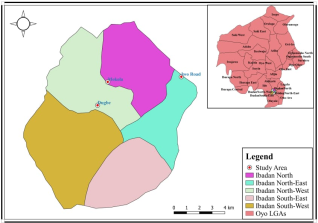
The study was conducted in the five LGAs that make up the Ibadan urban area or Ibadan metropolis, Ibadan, Oyo State, Nigeria; they are known as Ibadan Northwest, Ibadan Northeast, Ibadan North, Ibadan Southwest, and Ibadan Southeast. According to the 2006 Nigerian census, Ibadan is the administrative capital of Oyo State and the third-largest metropolitan region in Nigeria in terms of population, behind Lagos and Kano. In order to satisfy the present demand, the city's residents are particularly supportive of the expansion of petrol stations.
The city's overall population was 1,829,300 in 1999, growing at a rate of 1.65%. According to the 2006 census, there were 1.34 million residents and by 2019, that number had increased to 3,464,000, up 2.39% from 2018 . The metropolis boundary area of about 5,266.255 hectares and is located between 7°23′47 N and 3°55′0 E. The climate of Ibadan is tropically wet and dry, with a long wet season and year-round temperatures that are comparatively consistent. March to October is Ibadan's wet season; precipitation seems to linger around August.
Figure 1. Map showing the study area, Ibadan metropolis.
2.4. Method
In this study, the coordinates of 146 petrol stations in Ibadan metropolis were obtained as primary data using a handheld Gemini GPS at the center of the petrol stations. Equally, indepth interview was conducted with a ranking official at the Ministry of Lands, Housing and Urban Development to elicit information regarding developmental issues in the metropolis. Secondary information from textbooks, journals, and pertinent documents about the consequences of indiscriminately locating facilities complemented the primary data.
Coordinates of petrol stations were harmonized with spatial layers into ArcGIS for data query and manipulation to understand the petrol stations locational pattern and adherence to regulations guiding the location of petrol stations after generating regulatory-based buffer zones (such as 400m for this study). Further analysis was done using Geographic Information System (ArcGIS) Nearest Neighbour Analytics (NNA), a Euclidean distance tool, to determine how the facilities were positioned in relation to each other . The Euclidean distance tool, which helps understand object suitability and provide information on data on distance from a particular object, such as a case for minimum distance or setback for petrol stations, gives an understanding of the ratio between the observed mean distances among petrol stations to produce a Nearest Neighbour Ratio (NNR). NNR quantitatively indicates clustering (NNR < 1), randomness (NNR ≈ 1), or dispersion (NNR > 1) . According to , NNA is especially helpful for determining the geographical distribution of phenomena and provides information about the locational pattern of the objects under consideration.
3. Results
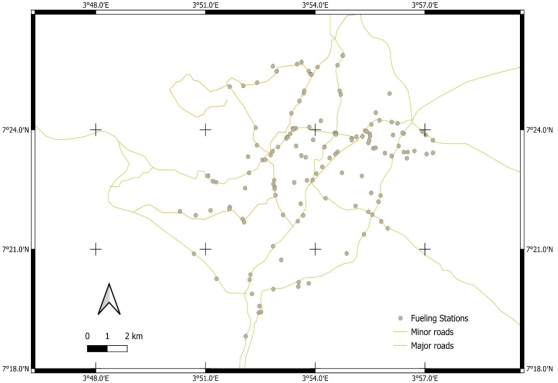
Below are the results obtained from this study. The results are presented in the form of maps and map query as well as Euclidean statistics on distances between petrol stations.
Table 1. Names, coordinates and address of a few of the petrol stations in Ibadan Metropolis in Ibadan Metropolis.

Filling Station

Easting

Northing

Address/Location

October 1 Filling Station

596038.14

811117.92

Oluyole Ibadan

Adolakfilling Station

603938.9

816759.65

Old Oyo Road Samonda, Ibadan

Agboola Petrol Station

604930.48

816956.5

Old Ife Road, Ibadan

Agip Filling Station

599790.59

817274.59

Yemetu Oja, Ibadan

Alleluya Petrol

598731.4

814103.5

Orita Apeerin-Beere Road, Ibadan

Amazing Filling Station

597626

812040

Fajerninsin Cresent, Ibadan

Ap Station

595675.78

813931.1

New Gra, Ibadan

Ap Station

598069.27

817882.79

Oyo Road, Ibadan

Ascon Petrol Station

595697.48

820098.75

Sango, Eleyele Road Ibadan

Azeez Ayinla Petroleum Ltd

597228.83

810682.32

Lagos Ojoo Express Way

Bee Deen Oil And Gas

595946.08

816816.13

Forestry Road, Jericho, Ibadan

Bigropet Nigeria Ltd

602002.76

817464.03

Agodi Gate, Ibadan

Bigropet Filling Station

602071.92

817882.53

Odejayi Street, Ibadan

Bovas

603239.76

817832.86

Iwo Road Ibadan

Bovas

603173.47

818434.97

Idera Close, Iwo Road

Bovas Filling Station

593942.4

815927.62

Odo Ona, Apata Road Ibadan

Bovas

600445.67

821058.18

Kenneth Dike Road, Ibadan

Bovas

597917.84

817736.35

Queen Elizabeth Road, Mokola Ibadan

Bovas Fuel Station

599778.36

817260.51

Adeoyo Street, Off Yemetu, Ibadan

Bovas Petrol Station

597191.53

817067.01

Yemetu Oja, Ibadan

Bovas Service Station

597187.78

821007.77

Royejo St, Dugbe, Ibadan

Bovas Service Station

600305.39

817924.57

Queen Elizabeth Road, Mokola Ibadan

Bumad Petrol Station

600298.37

817918.98

Total Garden, Ibadan

Citee

598484.19

810801.91

Soka Area, Off Lagos/Ibadan Expressway

Conoil Station

597218.62

812672.02

Ogunmola Street Ibadan

Conoil Station

596391.23

817343.12

54, Magazine Road, Ibadan

Conoil Station

598194.13

818141.79

Oyo Road, Ibadan

Conoil Station

598455.25

813833.4

Ogunmola Street Ibadan

Conoil Station

599386.33

816040.63

Sabo Road, Ibadan

Conoil Station

600454.92

817043.01

Irefin Oje Ibadan

Figure 2. Map showing location of Petrol stations in Ibadan metropolis.
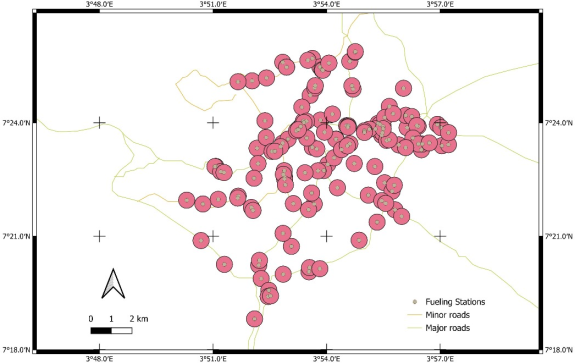
Figure 3. Petrol stations buffered at 400m.
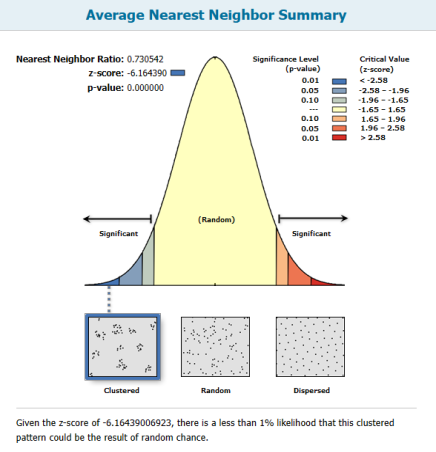
Figure 4. Nearest Neighbour Analysis of Petrol Stations in Ibadan.
Table 2. Nearest Neighbour Ratio of Ibadan Petrol Stations.

Nearest Neighbor Ratio:

0.730542

z-score:

-6.164390

p-value:

0.000000

Given the z-score of -6.16439006923, there is a less than 1% likelihood that this clustered pattern could be the result of random chance.
Table 3. Mean Distance of Ibadan Petrol Stations.

Observed Mean Distance:

346.1773 Meters

Expected Mean Distance:

473.8636 Meters

Nearest Neighbor Ratio:

0.730542

z-score:

-6.164390

p-value:

0.000000

4. Discussion of Results
Spatial Analysis of Petrol Stations in the Study Area
The spatial pattern of petrol stations in the city was analyzed using ArcGIS tool to locate petrol stations. In this regard, petrol stations within a buffer of 400m were integrated to visualize all petrol stations that intersect or those that are within the buffer. The outcome reveals spatial interaction of the petrol stations similar to findings in Nigerian cities where petrol stations location pattern is clustered along the roads. Equally, the results are consistent with the findings of , where many petrol stations do not follow the regulation that stipulates location of only one petrol station within 400 meters. As shown in Figure 3, overlapping buffers indicate that petrol stations do not adhere to the 400-meter rule between petrol station locations, causing the facilities in the study region to cluster. The study results and those of other related studies show gross noncompliance to the NUPRC/DPR buffer of 400m minimum distance between petrol stations across many cities. This may be due to weak regulatory enforcement, political influence, disjointed institutions, and financial incentives that drive approval of illegal petrol stations along busy corridors. The scenario portends safety issues such as ignition that could engender fire and explosion risk around the cities where the petrol stations are clustered as a result of overpressure effects and can make events more catastrophic and difficult for emergency responders to control
In the meantime, officials in charge of urban and regional development are becoming more aware of the pervasive disregard for the necessary regulations that guide petrol stations in Nigerian cities, as in-depth interviews showed that illegal petrol outlets have to pay fines to remain operational. This justification was captured in the excerpt below:
“Petrol stations are very close to one another along some major roads. If we know the station does not meet some conditions, we normally penalize the developer and the penal fee payable will be added to statutory payment. Equally, most stations do not have planning approvals.” (Oyo State Ministry of Urban Development Official, Interview, 2023).
Pattern of Petrol Stations Location
Assessment of inter-petrol station distances with a view to understanding patterns of petrol stations location in the study was achieved using Nearest Neighbour Analysis (NNA). NNA objectively assessed petrol stations, which are already known to be clustered (See Figure 4). NNA successfully detects considerable spatial concentration, facilitating evidence-based planning and safety control, according to studies . The location pattern of petrol stations in this study validated the cluster location pattern of petrol stations in the city. In Figure 4, the study found that the average distance between petrol stations is 346.1 meters, significantly less than the projected distance of 473.9 meters. The study Nearest Neighbour Ratio of 0.7 and a Z-score of -6.2 indicate a significant clustering pattern. This value, which is much less than 1.0, indicates that the petrol stations are closer together than would be expected from a random distribution thus highlighting a limited or intentional locational pattern. While the negative Z-score confirms that the pattern is not random, a probability of less than 1%, affirms clustering is statistically significant, indicating that the geographic distribution of petrol stations is highly clustered and unlikely to be the product of chance. This thus aids the relevant authority to identify safety risks, regulatory noncompliance while relying on evidence-based out of NNA for well-informed decision-making for petrol retail outlets planning for safer and sustainable urban growth.
5. Conclusion
The position of the petrol stations in the study area clearly deviates from the petrol station location guidelines established by NURPC. It is clear from the GIS buffers analysis that there is a compromise in maintaining the 400-meter minimum distance between petrol stations. Equally, the NNA value of less than 1.0 highlights a petrol stations much closer than expected. The locations with many nearby petrol stations are represented by the overlapped buffers, which may amplify the impact of occurrences related to these stations in the research area.
Given the aforementioned, there is a tendency for increased, unhealthy competition, congestion, environmental risks and waned land-use efficiency that can engender public health concerns with respect to pollutions and proximity to residential areas.
6. Recommendations
The following recommendations were made to improve planning practice in light of the study's findings:
To prevent instances of petrol stations being located illegally, laws pertaining to petrol station location criteria should be implemented. According to the report, petrol stations were located haphazardly following the developer's capacity to pay fines. Disasters linked to petrol stations can be avoided if the appropriate authorities enforce relevant laws.
To lessen exposure concerns and guarantee sufficient separation between petrol stations, minimum buffer distances should be implemented. By directing better site decisions and bolstering general compliance with planning requirements, enforcing these buffers would help minimize fire threats, reduce pollution exposure, and promote safer, more sustainable urban growth.
The study's identification of a distinct clustering of petrol stations across the city underscores the need for routine assessments of environmental risk. Leakage, fire danger, and exposure to neighboring communities are just a few of the many risks that these assessments assist in early detection. Additionally, routine assessments bolster regulatory compliance, offer proof for focused mitigation strategies, and promote safer, more sustainable urban development.
To better understand the effects of clustering petrol stations on the environment, public health, and safety, more research is advised. Extensive research employing sophisticated spatial analytics and longitudinal data will yield more robust evidence to direct regulators, increase sustainable urban planning practices, and improve siting decisions.
The aforementioned recommendations will help Nigerian cities achieve the global objective of resilient and sustainable cities by reducing the likelihood that the risks associated with the current petrol stations scenario are better managed.
Abbreviations

ALOHA

Aerial Locations of Hazardous Atmospheres

BLEVE

Boiling Liquid Expanding Vapor Explosion

DPR

Department of Petroleum Resources

LPG

Liquefied Petroleum Gas

NNA

Nearest Neighbour Analysis

NNR

Nearest Neighbour Ratio

NUPRC

Nigerian Upstream Petroleum Regulatory Commission

PFS

Petrol Filling Station

PMS

Premium Motor Spirit

SDGs

Sustainable Development Goals

Author Contributions
Siji Ayodeji Joseph is the sole author. The author read and approved the final manuscript.
Conflicts of Interest
The author declares no conflicts of interest.
References
[1] Adebayo, A. S. Ojo, A. S. Sustainable Urban Development and Location of Petroleum Stations in Akure Metropolis, Ondo State Nigeria.” International Journal of Advances in Engineering and Management (IJAEM) 2021 10(3) 804-812.
[2] Adedeji, O. H., Olayinka, O. O., Badejo, A. A., & Osunde, E. O. Spatial distribution and environmental risk assessment of petrol stations in Abeokuta metropolis, Ogun state, Nigeria. Journal of Applied Sciences and Environmental Management, 2022 26(11), 1843-1850.
[3] Adelekan, I. O. Urban dynamics, everyday hazards and disaster risks in Ibadan, Nigeria. Environment and Urbanization 2020 32(1): 213–232.
[4] Adewuyi, G K, Sanni, T B, and Abudulawal, K A. Geospatial Distribution and Assessment of Filling Stations and Environmental Health Risks in Part of Urban Core Area of Ibadan Metropolis, Oyo State, Southwest Nigeria. International Journal of Geo-informatics and Geological Science. 2021 8(3). 12-21.
[5] Afolabi, O T., Olajide, F O. and Omotayo, S K. Assessment of Safety Practices in Filling Stations in Ile-Ife, South Western Nigeria. Journal of Community Medicine and Primary Health Care. 2011 23(1&2).
[6] Arokoyu, S B, Mark, O and Jochebed, A O. Petrol Filling Stations’ Location and Minimum Environmental Safety Requirements in Obio Akpor LGA, Nigeria. International Journal of Scientific Research and Innovative Technology. 2015 2(11).
[7] Boudia S, Jas N. Introduction: Risk and ‘risk society’in historical perspective. History and Technology. 2007 Dec 1; 23(4): 317-31.
[8] Çetinyokuş, S., and Pamuk, E. Consequence Analysis of an Industrial Accident at a Fuel Station. GU Journal of Science, 2023 Part A, 10(4), 378-391.
[9] Desriani, R W. and Samyahardja, P Urban Resilience to Fire Disaster in High Density Urban Area. In Equity, Equality and Justise in Urban Housing Development, edited by Andreas Matzarakis and Beta Paramita, 2018 202-230. UPI Press.
[10] Enwezor, F V O and Ojiako, J C GIS-based analysis of filling stations in Onitsha north and south local government areas in Anambra State, Nigeria. World Journal of Advanced Research and Reviews, 2024, 22(03), 141–147,
[11] Gong, J, Lee, J Zhou, S and Li, S Toward Measuring the Level of Spatiotemporal Clustering of Multi-Categorical Geographic Events International Journal of Geo Information 2020 9, 440;
[12] Güntay V. Rethinking The Global Politics and Leadership: Ulrich Beck’s Risk Society Versus Postmodern Politics. PAUSBED. May 2021;(44): 405-418.
[13] Hasan, M N Techno-environmental risks and ecological modernisation in “double-risk” societies: reconceptualising Ulrich Beck’s risk society thesis. Local Environment 258-275 23(3) Routledge
[14] Hsieh, P Y, Shearston, J A. and Hilpert, M Benzene emissions from gas station clusters: a new framework for estimating lifetime cancer risk. Journal of Environmental Health Science and Engineering 2021 19: 273–283.
[15] Joseph, S A. Vulnerability and Preparedness of Energy Stations Fire Outbreaks in Ibadan and Warri, Nigeria. Individual Research Project Draft Report submitted to the Research Management Department, Nigerian Institute of Social and Economic Research. 2022 Unpolished.
[16] Jia, N, Nwaogazie, I L. and Mmom, P.. Assessment of Locational Compliance Status of Petroleum Products Handling Facilities in Niger Delta Region, Nigeria. Journal of Environmental Protection, 2022 13, 750-765.
[17] Macrotrends LLC Ibadan, Nigeria Population 1950-2020. 2020 Retrieved from
[18] Mohammed, M. U. Musa, I. J. and Jeb, D. N. GIS-Based Analysis of the Location of Filling Stations in Metropolitan Kano against the Physical Planning Standards. American Journal of Engineering Research (AJER) 2014 e-, pp-147-158
[19] Ogunkan, D V Geographies of Fuel Dispensing: Locational Analysis and Conformity of Petrol Filling Stations (PFS) to Planning Standards in Ota, Nigeria. Research Square. 2022
[20] O'Sullivan, D., and Unwin, D. J. Geographic Information Analysis (2nd ed.). 2010 Wiley.
[21] Qonono, K. and Lunga, W., ‘Assessing land-use regulations for petrol stations in South Africa’s major cities’, Jàmbá: Journal of Disaster Risk Studies 2025, 17(1), a1898.
[22] Qonono, K. Analysis of the Fire Hazard Posed by Petrol Stations in Stellenbosch and the Degree of Risk Acknowledgement in Land-Use Planning. International Journal of Architectural and Environmental Engineering. 2024. 18(2).
[23] Tah, D S GIS-Based Locational Analysis of Petrol Filling Stations in Kaduna Metropolis. Science World Journal 2017 12(2)
[24] Yusuf, Y. Y. Sawa, B. A. Usman, A. K. Olorunsola K. Spatial Analysis of Petroleum Filling Stations’ Compliance to Regulatory Standards in Bauchi Metropolis, Nigeria. American Journal of Energy and Natural Resources (AJENR). 2024 3(1),
Cite This Article
  • APA Style

    Joseph, S. A. (2026). Spatial Assessment of Petrol Stations in Ibadan Metropolis Nigeria. Urban and Regional Planning, 11(1), 12-20. https://doi.org/10.11648/j.urp.20261101.12

    Copy | Download

    ACS Style

    Joseph, S. A. Spatial Assessment of Petrol Stations in Ibadan Metropolis Nigeria. Urban Reg. Plan. 2026, 11(1), 12-20. doi: 10.11648/j.urp.20261101.12

    Copy | Download

    AMA Style

    Joseph SA. Spatial Assessment of Petrol Stations in Ibadan Metropolis Nigeria. Urban Reg Plan. 2026;11(1):12-20. doi: 10.11648/j.urp.20261101.12

    Copy | Download

  • @article{10.11648/j.urp.20261101.12,
      author = {Siji Ayodeji Joseph},
      title = {Spatial Assessment of Petrol Stations in Ibadan Metropolis Nigeria},
      journal = {Urban and Regional Planning},
      volume = {11},
      number = {1},
      pages = {12-20},
      doi = {10.11648/j.urp.20261101.12},
      url = {https://doi.org/10.11648/j.urp.20261101.12},
      eprint = {https://article.sciencepublishinggroup.com/pdf/10.11648.j.urp.20261101.12},
      abstract = {The number of petrol stations in Nigerian cities like Ibadan is growing rapidly without adhering to spatial planning regulations, particularly minimum distance requirements that raise safety concerns, such as petrol station fire risk, and emphasizes the need for spatial analysis to support sustainable urban growth. This study uses Geographic Information System techniques, government location criteria, and supporting literature to evaluate the spatial distribution of petrol stations in Ibadan Metropolis. A handheld Global Positioning System was used to obtain the coordinates of petrol stations, and the Nearest Neighbour Analysis was used to evaluate spatial patterns. GIS analysis reveals widespread overlapping buffers of petrol stations, implying areas of high cumulative risk following disregard for the required 400m buffer between petrol stations. Nearest Neighbour Analysis reveals clustering of petrol stations because the expected mean distance between petrol stations was 473.9 meters, whereas the observed mean distance was 346.1 meters. A statistically significant deviation from randomness was established by a Nearest Neighbour Ratio of 0.730542 and a Z-score of –6.164390. These findings demonstrate the inadequacies of current planning frameworks and the inadequate application of spatial planning regulations. The report suggests enforcing petrol station siting requirements and bolstering urban regulatory organizations to improve emergency readiness to lessen the effects of associated risks. Equally, further studies utilizing sophisticated spatial analytics and routine environmental evaluations are required.},
     year = {2026}
    }
    

    Copy | Download

  • TY  - JOUR
    T1  - Spatial Assessment of Petrol Stations in Ibadan Metropolis Nigeria
    AU  - Siji Ayodeji Joseph
    Y1  - 2026/01/29
    PY  - 2026
    N1  - https://doi.org/10.11648/j.urp.20261101.12
    DO  - 10.11648/j.urp.20261101.12
    T2  - Urban and Regional Planning
    JF  - Urban and Regional Planning
    JO  - Urban and Regional Planning
    SP  - 12
    EP  - 20
    PB  - Science Publishing Group
    SN  - 2575-1697
    UR  - https://doi.org/10.11648/j.urp.20261101.12
    AB  - The number of petrol stations in Nigerian cities like Ibadan is growing rapidly without adhering to spatial planning regulations, particularly minimum distance requirements that raise safety concerns, such as petrol station fire risk, and emphasizes the need for spatial analysis to support sustainable urban growth. This study uses Geographic Information System techniques, government location criteria, and supporting literature to evaluate the spatial distribution of petrol stations in Ibadan Metropolis. A handheld Global Positioning System was used to obtain the coordinates of petrol stations, and the Nearest Neighbour Analysis was used to evaluate spatial patterns. GIS analysis reveals widespread overlapping buffers of petrol stations, implying areas of high cumulative risk following disregard for the required 400m buffer between petrol stations. Nearest Neighbour Analysis reveals clustering of petrol stations because the expected mean distance between petrol stations was 473.9 meters, whereas the observed mean distance was 346.1 meters. A statistically significant deviation from randomness was established by a Nearest Neighbour Ratio of 0.730542 and a Z-score of –6.164390. These findings demonstrate the inadequacies of current planning frameworks and the inadequate application of spatial planning regulations. The report suggests enforcing petrol station siting requirements and bolstering urban regulatory organizations to improve emergency readiness to lessen the effects of associated risks. Equally, further studies utilizing sophisticated spatial analytics and routine environmental evaluations are required.
    VL  - 11
    IS  - 1
    ER  - 

    Copy | Download

Author Information